
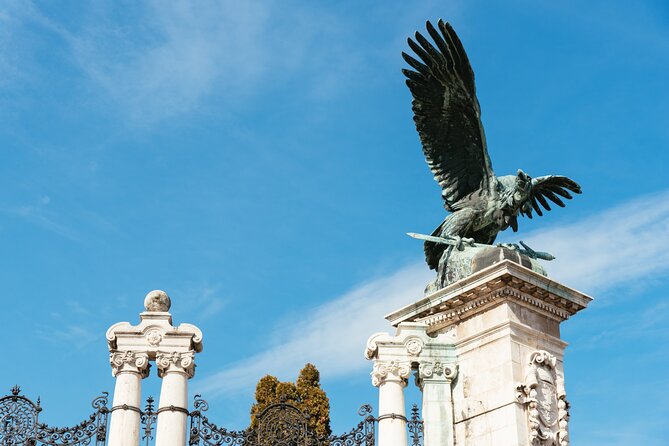
Review · BUDA CASTLE DISTRICT
Buda Castle’s Secrets with a Historian
Castles have a way of telling the truth. On this Buda Castle tour, you walk the Castle District with a historian who connects architecture to Hungarian turning points, from old dynasties to wartime scars. I really like the small group pace, and I love that the tour includes an inside visit to Matthias Church. One thing to keep in mind, some stops involve walking on uneven stone and getting in and out of viewpoints, so plan for a steady but not lazy stroll.
You’ll cover a lot in about 2 hours 30 minutes, hitting the major sights around Castle Hill plus the panoramic payoffs people come for. The tour is offered in English, you’ll get a mobile ticket, and you start at the Holy Trinity Statue area and end at the Fountain of King Matthias.
It’s also a tour with stories, not just photos. Guides like Petra, Monika, Judith, Gabor, and Rajmund come up in past groups for their clear explanations and friendly question time, so if history is your thing, you’ll likely have plenty to talk about as you go.
In This Review
- Key highlights to pay attention to
- Entering Castle Hill With a Historian, Not a Script
- Holy Trinity Column: How Budapest’s Power Gets Written in Stone
- Fisherman’s Bastion: The Myth, the Real Role, and the Best Angles
- Matthias Church Inside: The Included Ticket You Actually Want
- The National Archives Pass-By: WWII Marks You Can See
- Sándor Palace and the President’s Office: Power in a Courtyard Setting
- Buda Hill Funicular: Panoramas That Feel Like a Cheat Code
- Prince Eugene of Savoy Statue: Why Habsburgs Still Matter
- Buda Castle and the Royal Palace Terrace: The View That Closes the Loop
- Fountain of King Matthias: A Strong, Friendly Ending Point
- Price and Tickets: Is $65.31 Worth It?
- The Small-Group Advantage: When Your Questions Actually Matter
- Who This Tour Fits Best
- Should You Book Buda Castle’s Secrets with a Historian?
- FAQ
- How long is Buda Castle’s Secrets with a Historian?
- What language is the tour offered in?
- How big is the group?
- Where does the tour start and end?
- What admission tickets are included?
- Do I need extra tickets for other stops?
- Can I cancel for a full refund?
- Is the tour suitable for children and people with limited mobility?
Key highlights to pay attention to
- Historian-led storytelling across the Castle District, not just sight-by-sight facts
- Small group feel with room to ask questions without feeling rushed
- Matthias Church included so you do not lose time hunting tickets
- Real wartime context you see nearby through the WWII marks on major buildings from the outside
- Panorama time from the funicular and from the Royal Palace terrace viewpoint
- Ending in the right place at the Fountain of King Matthias for easy onward exploring
Entering Castle Hill With a Historian, Not a Script
Buda Castle District can be a blur if you wander alone. Streets curve, staircases appear, and every building looks important, because they are. What makes this tour different is that your guide uses each stop as a piece in the bigger story of Hungary, which helps everything click.
I also like that the pacing is built for real questions. You will not just be herded from one wall to another. The small group size, up to 10 people in the way the tour is described, with a stated maximum of 15, makes the tour feel personal rather than factory-made.
One practical note: it is not a full bus tour. The route is a walking tour with some moderate physical demands, and that matters on a day when you want to move comfortably. If you’re the type who likes taking photos often, this is still doable, but you will want good shoes.
Holy Trinity Column: How Budapest’s Power Gets Written in Stone
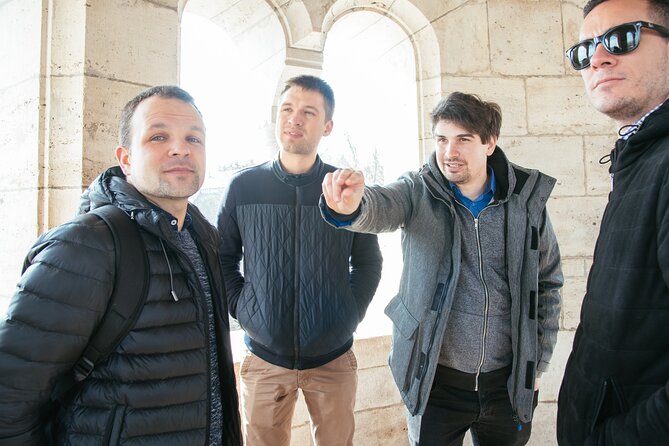
The tour begins at the Holy Trinity Column in Castle Hill. It is a strong first stop because it immediately sets a tone: Budapest’s story is not only about kings and battles, it is also about how communities mark meaning in public space.
Your guide gives you context on the history of Budapest and Hungary while you’re surrounded by impressive architecture. This is the kind of introduction that pays off later, because you’ll start noticing patterns in the way buildings, symbols, and locations point to different eras.
There is no admission ticket needed for this stop, so you can focus on the walk and the talk rather than managing another line. It’s also a good place to get your bearings before you move deeper into the district’s maze of courtyards and viewpoints.
Up on Castle Hill, a few other ways to do it
- Budapest: Buda Castle District Vampires and Myths Night Tour
★ 4.6 · 3,830 reviews - Budapest: Buda Castle Walk with Saint Stephen’s Hall
★ 4.5 · 3,012 reviews - Budapest: Buda Castle District Walking Tour
★ 4.6 · 2,108 reviews - Budapest: 3-Hour Grand City Tour and Castle Walk
★ 4.3 · 1,437 reviews
Fisherman’s Bastion: The Myth, the Real Role, and the Best Angles

Next up is Fisherman’s Bastion. You’ll hear its story and, importantly, its true function, which is the sort of detail that makes a photo spot feel smarter. A lot of people treat this as pure scenery, but a guided explanation helps you understand why it looks the way it does.
You also get time to take in the views. Even though Fisherman’s Bastion is famous for looks, the bigger reason to stop is what you can see and what that means historically and geographically. The district sits in a prime spot to look across toward the Pest side, which is exactly why this area matters.
Admission is not included for Fisherman’s Bastion, so you should be ready for possible extra costs depending on what’s required during your visit. If you’re trying to keep your day budget-controlled, it helps to mentally separate what’s included from what you may need to pay at the gate.
Matthias Church Inside: The Included Ticket You Actually Want
Then comes the highlight that feels like a payoff: Matthias Church. This is the only stop in the schedule where an entrance ticket is explicitly included, so you’re not left scrambling or deciding last-minute. And yes, you will get inside, which is where the church becomes more than a postcard.
The tour includes about 30 minutes at Matthias Church. You’ll see it from the inside and hear legends and stories shared by your licensed guide. The church is described as arguably the most beautiful in Budapest, and even if you have seen your share of famous churches in Europe, it is the kind of interior that makes you pause.
A small tip based on what I’ve seen in similar church visits: give yourself a moment before listening starts. Look up, take a slow scan, and then let the story tie the details together. When you hear the legends with the visuals in front of you, the “wow” lasts longer.
Matthias Church tickets are included, so plan your day around the idea that this stop is already paid for. If other parts of the tour have optional costs, this one does not.
The National Archives Pass-By: WWII Marks You Can See

You do not spend long here, but you do pass by the National Archives, a stunning building where the past shows through in the form of WWII marks. Bullet holes and physical scars on a major structure are the kind of reminder that history is not only dates and names.
This stop works because it adds tension after the more decorative moments. You move from the religious and royal to the wartime and civic. Even without going inside, the building’s visible damage can help your historian guide explain how the 20th century left real marks on Hungary’s landscape.
If your mind likes cause and effect, pay attention here. WWII was a turning point across Europe, and it reshaped how people lived, rebuilt, and remembered afterward.
Sándor Palace and the President’s Office: Power in a Courtyard Setting
Sándor Palace is next, the Office of the Hungarian President. Even if you are not focused on politics, it’s a meaningful contrast point within the Castle District, because it puts “who runs things” into the conversation in a modern way.
You’ll stroll along historic cobblestone streets and alleyways within the castle complex, then slowly make your way toward Sándor Palace. Admission is not included here, so you should think of this as a guided look and a context stop rather than a paid interior visit.
What I like about stops like this is that they help you read the area as a living place, not only a museum. The same hill that once belonged to kings now hosts institutions tied to today’s Hungary. That continuity can be hard to catch on your own.





Buda Hill Funicular: Panoramas That Feel Like a Cheat Code
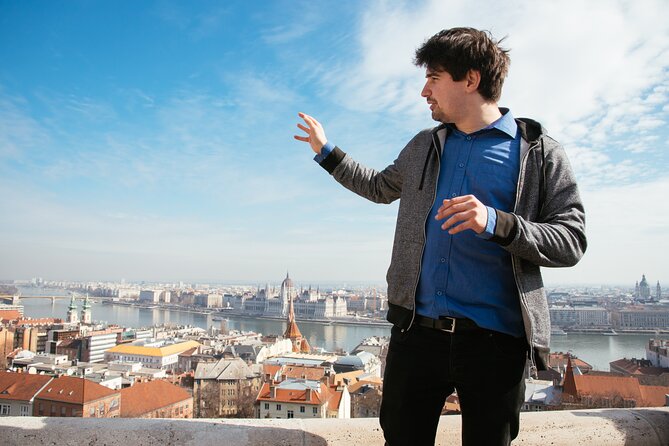
At some point, you’ll ride the Buda Hill Funicular for panoramic views. This is one of the most practical parts of the tour because it saves you from some of the vertical fatigue while giving you a big payoff.
From the funicular’s top station, you get views toward Parliament and the Pest side. It’s short, about 10 minutes in the schedule, and admission is not included, so again: think of it as a paid add-on you might need to budget for.
I suggest using this segment strategically. Take a breath, look around, and mentally label what you’re seeing. When you later reach the Royal Palace terrace, you’ll understand the geography faster.
Prince Eugene of Savoy Statue: Why Habsburgs Still Matter
You then stop at the equestrian statue of Prince Eugene of Savoy. This short stop, about 10 minutes, is not just a photo pose. Your guide explains a decisive military campaign that influenced European history, and ties it to the Habsburgs and their connection and attitude toward Hungary.
That’s the kind of context that makes later conversations about Hungary more clear. Hungary’s history is complicated, shaped by empires and their power games, and this statue helps anchor that story in a real name and a real figure.
Admission is free for this stop, which makes it easy to stay present. You don’t have to split your attention between money decisions and meaning decisions.
Buda Castle and the Royal Palace Terrace: The View That Closes the Loop
The tour reaches Buda Castle, including a look at the Royal Palace, the former seat of kings and emperors. You’ll spend about 20 minutes here, and you should treat this as both architecture time and viewpoint time.
The best part is the panorama from the Royal Palace’s terrace. You’ll get views that include Margaret’s Island, Parliament, the Chain bridge, St. Stephan’s Basilica, Budapest Eye, and Elizabeth bridge. That is a lot of landmarks in one sweep, which is why this terrace is a big reason people love Castle Hill.
Because this part is not included with admission in the schedule, you may need to think about any required entry costs depending on what access is open. Still, even if you treat it as a viewpoint moment, it’s one of the most efficient ways to orient yourself for the rest of Budapest.
Fountain of King Matthias: A Strong, Friendly Ending Point
The tour finishes at the Fountain of King Matthias. It’s a fitting close because you’ll hear legends and the reason Matthias is considered a favorite king of many Hungarians.
This ending point is practical, too. The tour ends at the Fountain of King Matthias on Szent György u., which is a solid spot to continue walking, pop into nearby streets, or connect to other sights on your own.
The schedule gives about 10 minutes here, and that is usually enough time to read the symbolism your guide points out and then move on without dragging the day into the evening.
Price and Tickets: Is $65.31 Worth It?
At $65.31 per person, you are paying for a historian guide plus a defined route with multiple stops that would be slower to stitch together on your own. For me, the biggest value is that your time on Castle Hill is guided and structured, not random.
Also, one admission ticket is included: Matthias Church. That matters because churches can become the bottleneck on a busy day. If you’re the type who hates waiting and debating ticket timing, having the one key paid stop handled for you is a real plus.
A drawback to factor in is that several other stops list admission as not included, including Fisherman’s Bastion, Sándor Palace, and the funicular. The Holy Trinity Column, Prince Eugene of Savoy statue, and the Fountain of King Matthias are free stops. So your final day cost might depend on how many paid elements you choose to enter.
If you want a simple budget, I suggest planning on additional small ticket expenses for the paid sites and transit parts. Then the guide value makes the overall experience feel like a bargain rather than a complicated add-on.
The Small-Group Advantage: When Your Questions Actually Matter
Most guided tours give you a few seconds of questions at the end. This one is set up so you can ask as you walk. Past participants highlight that guides are friendly and interactive, and the group is small enough that you don’t feel like you’re asking into a void.
This is where the historian approach matters. If you’re curious why something was built, repurposed, or damaged, you’ll get answers that connect the dots. It can also make the day more fun if you are not a history encyclopedia type.
If you do like details, there is plenty to latch onto: Matthias Church inside, the true function of Fisherman’s Bastion, the WWII marks visible on major buildings from the outside, and the Habsburg-era context tied to Prince Eugene of Savoy.
Who This Tour Fits Best
This is a great fit if you want your Budapest day to feel like a guided story with strong stops and real context. It’s especially good for first-timers who want an efficient orientation on Castle Hill plus big views over the city.
It is also ideal if you prefer smaller groups. When the group stays under control, you spend more time listening and less time trying to stay close to the person in front.
If your travel style is mostly about wandering at your own speed, you might find this tour too structured. Also, the route has a moderate fitness requirement, so if you need very flat walking only, you may want to think twice.
Should You Book Buda Castle’s Secrets with a Historian?
If you want Castle Hill to make sense, this tour is a smart booking. The historian guide ties together royal power, religious meaning, military history, and the visible reminders of WWII, all while you get the panoramic views that make Buda feel cinematic.
Book it if you like walking tours, enjoy asking questions, and want an included inside visit to Matthias Church. Consider skipping or switching plans if you want minimal walking or you hate the idea of extra paid admissions at some stops. For most people, though, the mix of structure, views, and guided interpretation hits a sweet spot for a single half-day slot.
FAQ
How long is Buda Castle’s Secrets with a Historian?
The tour lasts about 2 hours 30 minutes.
What language is the tour offered in?
The tour is offered in English.
How big is the group?
It is described as an intimate small-group experience, with up to 10 people mentioned in the highlights, and a maximum of 15 travelers stated.
Where does the tour start and end?
The tour starts at the Holy Trinity Statue (Budapest, Szentháromság u., 1014 Hungary) and usually finishes at the Fountain of King Matthias (Budapest, Szent György u., 1013 Hungary).
What admission tickets are included?
Entrance ticket to Matthias Church is included.
Do I need extra tickets for other stops?
Admission tickets are not included for Fisherman’s Bastion, Sándor Palace, Buda Hill Funicular, and Buda Castle stops in the schedule. The Holy Trinity Column, Prince Eugene of Savoy’s Equestrian Statue, and Fountain of King Matthias are listed as free.
Can I cancel for a full refund?
Yes. There is free cancellation up to 24 hours in advance for a full refund.
Is the tour suitable for children and people with limited mobility?
Children must be accompanied by an adult, and the tour lists a moderate physical fitness level requirement. Service animals are allowed.
More Tour Reviews in Budapest





Still on Castle Hill




Reviewed recently around Budapest
- Audio visual multi-sensory chefs journey dinner experience★ 5.0 · 3 reviews
- Tapolca Cave Lake and Tihany/ Balaton private tour from Budapest★ 4.5 · 3 reviews
- SzentEndre-SaintAndrew City Privately Shopping and Picturesque★ 4.5 · 3 reviews
- Sightseeing flight over Budapest★ 5.0 · 3 reviews
- Self Guided Tour In Budapest With 100 Captivating Audio Stories★ 5.0 · 3 reviews
- Private Danube Bend Visegrad and Szentendre Tour With Transport★ 5.0 · 3 reviews
Buda Castle District, compared.
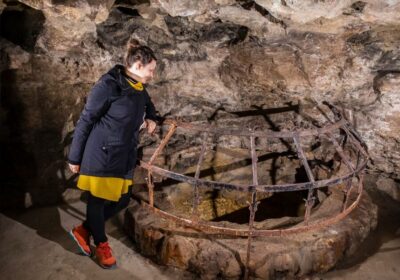 ★ 4.7Buda Castle Cave TourFrom $195,677 reviews
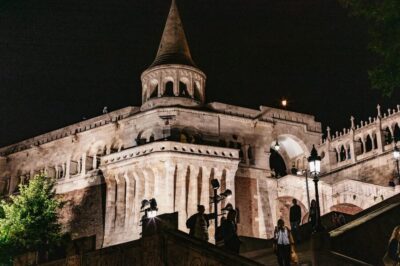 ★ 4.6Buda Castle District Vampires and Myths Night TourFrom $233,830 reviews
 ★ 4.5Buda Castle Walk with Saint Stephen’s HallFrom $293,012 reviews
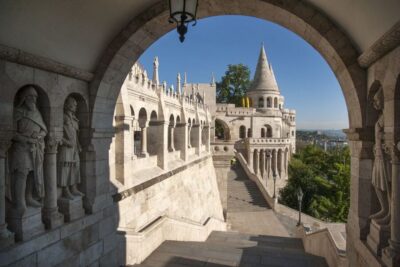 ★ 4.6Buda Castle District Walking TourFrom $142,108 reviews
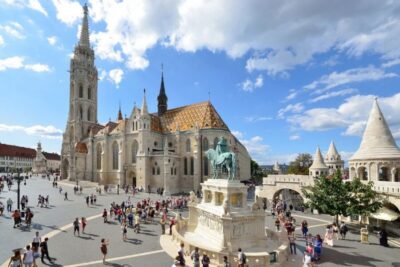 ★ 4.33-Hour Grand City Tour and Castle WalkFrom $491,437 reviews
 ★ 4.5Buda Castle District Dark History, Legends and Vampire Night TourFrom $211,240 reviews
 ★ 4.9Buda Castle District Walking Tour with a HistorianFrom $63867 reviews
 ★ 5.0Budapest Castle District Walking TourFrom $3630 reviews
Browse the lists this tour appears in