

Review · CRUISES & BOAT TOURS
Budapest’s TOP Sights Evening Cruise & Welcome Drink
Night lights make the Danube feel alive. This Budapest TOP Sights evening cruise gives you an easy, guided look at the city’s biggest landmarks from the water, plus a welcome drink to start the night.
Two things I really like: the staff and captain help make the whole experience feel smooth, and you get a fast hit of major sights without the stress of navigating streets in the dark. One thing to consider is timing and comfort, because the ride can be more bright early in the evening and reflections can make photos tricky from the boat.
In This Review
- The Main-Event Highlights You Will Actually Care About
- Shoes on the Danube: the simplest start and the round-trip design
- How a one-hour Danube cruise hits Budapest’s top sights fast
- Parliament to Margaret Bridge: red dome landmarks and the oldest bridge story
- Matthias Church and the Buda Castle terraces: why these two belong together
- Gellért Hill and the Citadella: fortress views plus a statue with a date
- Gellért Spa, BME, and the culture landmarks you spot from the river
- Liberty Bridge and the end of the cruise: timing and crowding
- The drinks, WiFi, and onboard comfort that make the price feel fair
- Audio, reflections, and when to choose a later departure
- Where the Panorama Terrace fits, and how to use it for photos
- The free Kossuth Museum ship: a nice add-on before or after
- Who should book this cruise, and who might want something else
- Should you book the Budapest TOP Sights Evening Cruise & Welcome Drink?
- FAQ
- Where does the cruise start and end?
- How long is the Budapest evening cruise?
- Are drinks included?
- Is WiFi available on the boat?
- Is there a restroom on the cruise?
- What top sights will I see during the trip?
- Is there a free stop included for the Kossuth Museum ship?
- What is the maximum group size?
The Main-Event Highlights You Will Actually Care About
- Quick route, big payoff: A 1-hour loop that still covers more than 20 top sights from the Danube
- Photo moment planned in: A Panorama Terrace stop built for night pictures
- Friendly, coordinated crew: Many riders call out the welcome and on-board guidance, including Captain Barney
- Landmarks are the point: From the Parliament Building to Matthias Church, you see the icons in sequence
- Drinks are part of the deal: You get included beverages (and you can buy more at the bar)
- Easy meeting point: It starts and ends at Shoes on the Danube Bank, a well-known spot on foot
Shoes on the Danube: the simplest start and the round-trip design
The tour starts at Shoes on the Danube Bank (1054 Hungary). That matters because it is an easy landmark to find, and it is close to public transportation.
It also ends back at the same general area, so you are not stuck figuring out how to get yourself home after dark. The whole experience is set up as a roundtrip cruise, with the boat returning to the same pier area.
How a one-hour Danube cruise hits Budapest’s top sights fast
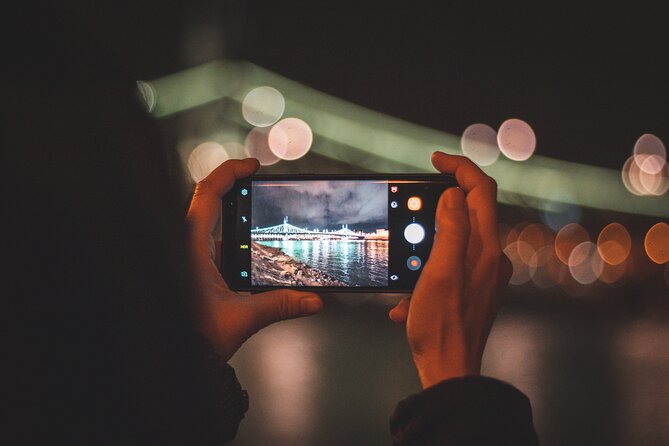
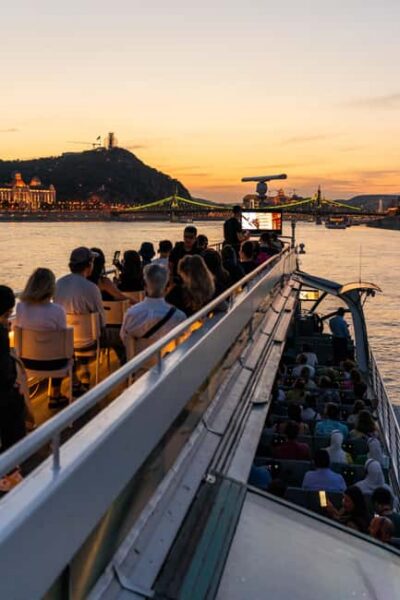
This is a group evening tour designed for people who want the highlights without spending hours on buses or walking uphill. From the water, Budapest is all angles, domes, terraces, and bridges, so even a short ride feels like a lot.
You will also get the benefit of onboard guidance while you go by. There is background music, and you get audio commentary synced with what you pass, so you are not just staring at buildings like a tourist statue.
You will see key stops like the Hungarian Parliament Building, Margaret Bridge, Matthias Church, Buda Castle, and Gellért Hill, plus additional landmarks along the route. The cruise is about 1 hour, so if you are choosing between this and a longer tour, think of this as your quick orientation and night views combo.
Anything that floats: our other Budapest boat reviews
- Budapest: City Highlights Cruise with Welcome Drink
★ 4.6 · 35,610 reviews - Budapest: Unlimited Prosecco, Beer and Aperol Spritz Cruise
★ 4.8 · 25,310 reviews - Budapest: Nighttime or Daytime Sightseeing Cruise
★ 4.2 · 21,062 reviews - Budapest: 1-Hour Evening Sightseeing Cruise with Drink
★ 4.5 · 8,330 reviews
Parliament to Margaret Bridge: red dome landmarks and the oldest bridge story
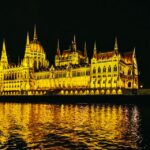
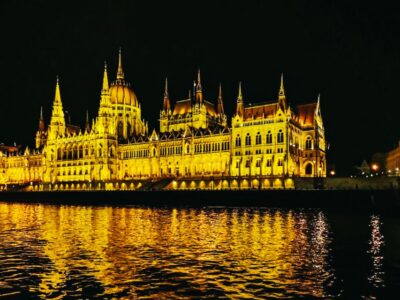
Your first big anchor is the Hungarian Parliament Building. It was completed in 1904 and has that dramatic red dome topping the skyline, around 96 meters tall. Architecturally, it blends Gothic Revival and Renaissance Revival styles, and the building’s scale is a major part of why it looks so powerful on the river.
From there, you glide toward the Margaret Bridge. It is the second oldest public bridge in Budapest, completed in 1876, and it connects Buda and Pest over the Danube.
What I find interesting here is the human story attached to the bridge name. It is named for Princess Margaret, daughter of King Béla IV, who lived on nearby Margaret Island in the 13th century. During World War II the bridge took heavy damage and was rebuilt in a simplified design, and you can still sense how old infrastructure survived and evolved.
Matthias Church and the Buda Castle terraces: why these two belong together
Matthias Church is one of Budapest’s best-looking churches from the Danube side. The site goes back to the 13th century: the original church was Romanesque in the early 1200s, then rebuilt in Gothic style in the 14th century.
Even if you only spot it from the water, you can recognize the look that draws people in. The church mixes Gothic, Renaissance, and Baroque elements, and it is known for colorful stained glass windows and a distinctive patterned tile roof that photographers love.
Matthias Church also ties into the big ceremonial side of Hungary. It was a site for royal weddings and coronations, so the building is not just pretty, it is symbolic. A major restoration by Frigyes Schulek helped return the church to the glory people photograph today.
Then comes Buda Castle, and this is where the cruise view changes. The Buda Castle complex sits on top of the city’s old power center, and the story of the castle is one of repeated destruction and rebuilding since the 14th century.
Today, it is part of a UNESCO World Heritage Site, and it houses major museums such as the Hungarian National Gallery and the Budapest History Museum. From the cruise, you get the castle’s massing and courtyards as part of the skyline, and the terrace viewpoints are a big reason this area remains a top stop.
A practical note: castle-area lighting looks great, but it can also make glass reflections more annoying from the boat. If you care about photos, you will get better results by aiming your shots early, when you can still see details cleanly.
Gellért Hill and the Citadella: fortress views plus a statue with a date
Gellért Hill rises about 235 meters above the river, and it gives Budapest that unmistakable silhouette. The hill is named for Saint Gellért, a bishop martyred in Hungary in the 11th century, which helps explain why the whole area feels tied to national identity.
As you look up from the water, you can spot two landmarks that make the hill worth attention: the Citadella fortress and the Liberty Statue. The Citadella was built by the Habsburgs in the mid-19th century and later served as a military barracks and prison before becoming a tourist attraction.
The Liberty Statue is the other anchor. It is about 14 meters tall and shows a woman holding a palm frond. The statue was erected in 1947 to commemorate the Soviet liberation from Nazi occupation during World War II, which gives it strong historical weight.
From my perspective, this stop is valuable because it turns the Danube view from just buildings into a full city story, hilltop to riverside. You see how Budapest’s geography shaped what people built and how they defended power.
Gellért Spa, BME, and the culture landmarks you spot from the river
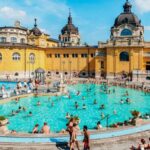
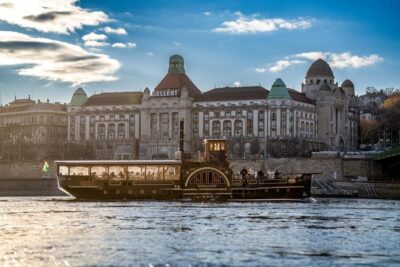
The cruise also passes the area associated with Gellért Spa, one of Budapest’s most famous thermal baths. The spa was built in Art Nouveau style in 1918, and it is known for mosaics, stained glass windows, and thermal pools.
The concept matters even if you are not stepping inside. Budapest is famous for using thermal water in public life, and seeing Gellért Spa from the Danube gives you that instant “this city runs on thermal culture” feeling.
Gellért Spa has both indoor and outdoor pools and offers saunas, steam rooms, and massage services. It is open daily, which makes it easy to plan around even if you do not book this cruise on a schedule you control.
The skyline also includes Budapest University of Technology and Economics (BME). BME is Hungary’s oldest and largest technical university, founded in 1782 as the Institutum Geometrico-Hydrotechnicum. It is known for engineering, computer science, natural sciences, economics, and management.
It is also tied to famous names, including Nobel Prize-winning physicist Albert Szent-Györgyi and Hungarian politician Viktor Orbán. You may not stop here, but seeing the campus presence from the river helps ground Budapest as a living, working city, not only a museum town.
Two other cultural stops can appear in the sights from the water: the Museum of Contemporary Arts and the National Theater of Hungary. Even without going inside, these landmarks help explain why Budapest feels like it has both heritage and modern creative life stacked side-by-side.
After dark in Budapest, our other picks
Liberty Bridge and the end of the cruise: timing and crowding
The route brings you to the Liberty Bridge, known in Hungarian as Szabadság híd. It is a suspension bridge built between 1894 and 1896 and originally named after Emperor Franz Joseph I of Austria-Hungary.
You will likely notice its green color. That color was added during a renovation in the 1980s, which is a nice detail because it shows how a landmark can be visually redesigned without changing its core identity.
World War II left a mark too. The bridge was damaged by retreating German forces, then rebuilt and renamed the Liberty Bridge in 1945 to honor Hungary’s liberation from Nazi occupation.
When the cruise finishes, keep expectations realistic. Some departures can feel busy at the end, especially if multiple boats are tied to the same pier area and people squeeze toward one exit. If you want a stress-free finish, plan to take your time after docking, not rush to be first off.
The drinks, WiFi, and onboard comfort that make the price feel fair
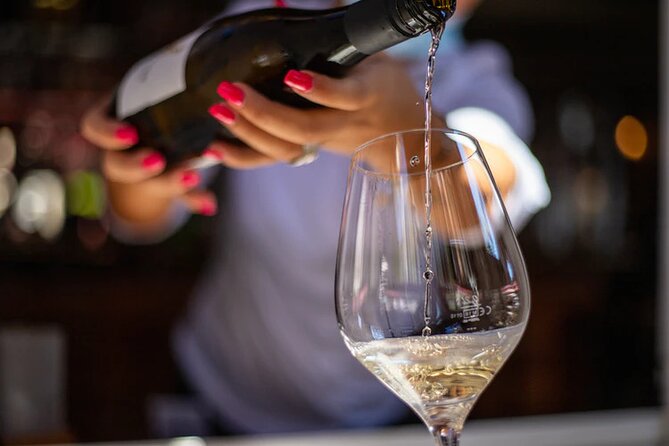
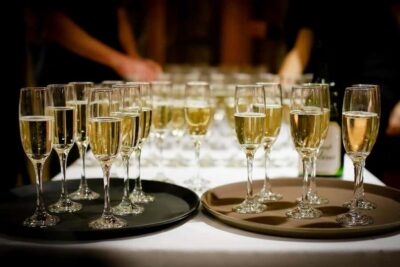
The package includes a welcome drink, with alcoholic options available alongside soda/pop. You also get coffee and/or tea, and there is onboard WiFi plus a restroom on board.
There is also music in the background, which sounds simple, but it changes the mood when you are standing outside with a cold breeze. In multiple accounts, the boat itself is described as warm, which is a big deal on Danube evenings.
One more comfort point: the tour includes an air-conditioned vehicle. Even if you are not spending lots of time in transit, that can help if you are meeting up before the cruise and the weather turns.
About drinks: the included beverages can work through drink tokens or coupons, and the key detail is getting them at check-in before the program starts. A few unhappy moments in feedback happened when tokens were not available immediately, often because check-in steps were missed. If drinks are important to your plan, arrive early and confirm you have what you need for the first round.
Also, there is a bar onboard where you can purchase extra drinks. That is a smart option if you want to turn the cruise into a full little night out rather than a quick sightseeing stop.
Audio, reflections, and when to choose a later departure
The commentary is part of the value, but it can be imperfect depending on seating, lighting, and crowd behavior. Some people loved the way the narration is delivered and synced to what you pass, and others found the audio less clear, including moments where it seemed hard to identify which building was being discussed.
One fix is practical: if the volume is too low, ask the crew to turn it up. If you want to hear well, pick a seat where you feel less blocked by other passengers talking close by, because human voices can overwhelm speaker audio quickly.
Photos are where the lighting strategy matters most. Some departures still had enough daylight that the “fully lit” effect was weaker, and reflections from the boat can interfere with camera shots. If you can choose your time slot, aim for closer to when the city lights are really on.
Temperature is a mixed bag. One account says it was cold but worth it, and another describes the boat as incredibly hot. Pack like a realist, bring a layer you can peel on arrival, and be ready for changing conditions.
Where the Panorama Terrace fits, and how to use it for photos
The cruise includes time for photos from the Panorama Terrace. This is the kind of planned photo moment that makes a short tour feel more intentional, because it gives you a clear place and angle for night shots.
Use that time wisely. If you are trying to capture Parliament dome glow or the river lights, set up your shot early and do not waste time scrolling through settings while everyone else is moving.
If you are traveling with someone who wants classic skyline photos, this is also the moment that keeps the cruise from feeling like nonstop viewing. It adds a small pause you can anchor your photos around.
The free Kossuth Museum ship: a nice add-on before or after
There is a mention of the Kossuth Museum ship as a free stop you can visit before or after the cruise. That is a helpful detail because it gives you a way to extend the evening without paying for another big guided activity.
If you enjoy learning while you walk, this kind of add-on makes sense. If you prefer to keep the night simple, you can skip it and just use the cruise as your main river time.
Who should book this cruise, and who might want something else
I think this cruise is best for first-timers who want a guided skyline tour without logistical stress. It is also a good match if you like the idea of a one-hour plan with included drinks, restrooms, and a chance to photograph multiple icons in one go.
It is less ideal if your priority is a quiet, cinematic dark ride every time, because timing affects lighting. It may also frustrate people who want ultra-clear audio identification for every building, since some riders noted confusion about what was being pointed out at certain moments.
Families often like it because it is straightforward and does not require museum stamina. Couples like it because Budapest looks romantic from the water, and the ride is short enough that you can pivot to dinner right after.
Should you book the Budapest TOP Sights Evening Cruise & Welcome Drink?
I would book it if you want value and convenience in a short evening plan. The price is hard to argue with when you factor in a welcome drink, coffee or tea, onboard WiFi, and the fact that you see big-name sights like Parliament, Matthias Church, and Buda Castle without planning a route.
I would also book it if you can pick a later departure, because that gives you the best chance of seeing the city in its full lights. And if drinks matter, treat check-in as part of the experience, because included beverages can depend on receiving tokens or coupons at the start.
If you are sensitive to crowding at the end of the pier, or you care about flawless photo conditions from the boat, you may want to pair this with a walk afterward in a calmer spot. But for most people, this is one of those “sit back and let the city come to you” nights in Budapest that you will feel happy you did.
FAQ
Where does the cruise start and end?
It starts at Shoes on the Danube Bank in Budapest (1054 Hungary) and ends there as well, returning to the same pier area.
How long is the Budapest evening cruise?
The cruise is about 1 hour.
Are drinks included?
Yes. The experience includes alcoholic beverages, soda/pop, and coffee or tea, and there is also a welcome drink. Extra drinks can be purchased onboard at the bar.
Is WiFi available on the boat?
Yes, WiFi is available onboard.
Is there a restroom on the cruise?
Yes, there is a restroom on board.
What top sights will I see during the trip?
You will pass major landmarks such as the Hungarian Parliament Building, Margaret Bridge, Matthias Church, Buda Castle, Gellért Hill, Liberty Bridge, and also see the Gellért Spa area, the Museum of Contemporary Arts, and the National Theater of Hungary.
Is there a free stop included for the Kossuth Museum ship?
Yes, you can stop by the free Kossuth Museum ship before or after the cruise.
What is the maximum group size?
The tour has a maximum of 150 travelers.
After Dark in Budapest

Back Out on the Water


More Tour Reviews in Budapest
Reviewed recently around Budapest
- Audio visual multi-sensory chefs journey dinner experience★ 5.0 · 3 reviews
- Tapolca Cave Lake and Tihany/ Balaton private tour from Budapest★ 4.5 · 3 reviews
- SzentEndre-SaintAndrew City Privately Shopping and Picturesque★ 4.5 · 3 reviews
- Sightseeing flight over Budapest★ 5.0 · 3 reviews
- Self Guided Tour In Budapest With 100 Captivating Audio Stories★ 5.0 · 3 reviews
- Private Danube Bend Visegrad and Szentendre Tour With Transport★ 5.0 · 3 reviews
Cruises & Boat Tours, compared.
 ★ 4.6City Highlights Cruise with Welcome DrinkFrom $1435,610 reviews
 ★ 4.8Unlimited Prosecco, Beer and Aperol Spritz CruiseFrom $2825,310 reviews
 ★ 4.2Nighttime or Daytime Sightseeing CruiseFrom $1421,062 reviews
 ★ 4.51-Hour Evening Sightseeing Cruise with DrinkFrom $288,330 reviews
 ★ 4.5Budapest Danube Cruise and Dinner Options, Live Music and DanceFrom $547,428 reviews
 ★ 4.7Historic Cruise with Welcome DrinkFrom $126,512 reviews
 ★ 4.1Budapest By Night Sightseeing CruiseFrom $165,835 reviews
 ★ 4.1Evening Cruise including Drinks and Live MusicFrom $245,512 reviews
Browse the lists this tour appears in