
Review · HUNGARY
Hungary today: a no-taboo conversation
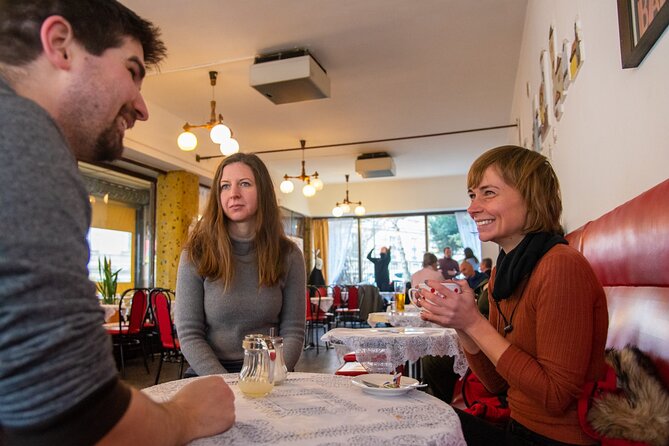
Hungary talks back, 90 minutes at a café. This no-taboo conversation format uses one local setting to unpack Hungary’s last 30 years, from Communism to democracy, and into today’s debates about illiberal democracy, with room for real questions. It is the kind of experience that treats politics as something people live with, not something stuck in a textbook.
I love two things about how this is built. First, it is capped at a maximum of 6 guests, so the discussion does not get diluted. Second, the host starts with facts and their point of view, then hands the floor to you for anything you want to ask, whether it is history, the economy, or the future.
One possible drawback: if you want a classic sightseeing tour with lots of stops and photo ops, this is not that. You get a cafe conversation, and the quality depends on your curiosity and how much you jump in with questions.
In This Review
- Key takeaways before you go
- Bambi Café, the unchanging room for a big talk
- A 90-minute format that goes beyond headlines
- From Communism to democracy: the timeline you can actually use
- The present-day politics section: ask the hard stuff
- Economy and daily life: why it shows up in politics
- How much you get out depends on how you participate
- Host vibe: facts first, opinions second
- Price and value: why $40.52 can be worth it
- Best times to book and pair with the rest of your day
- Who should book this conversation tour
- Short practical tips to get more from it
- Should you book this Hungary no-taboo conversation?
- FAQ
- How long is the experience?
- Where does the conversation start?
- What is the group size limit?
- Do I need to pay for the cafe admission?
- Is there a set start time?
- Can I get a full refund if my plans change?
Key takeaways before you go

- Bambi Café as the setting: a cult cafe feel that has changed close to none since the 1970s.
- Small group size: maximum 6 guests, which keeps the discussion personal.
- Last 30 years, front to back: the host frames modern Hungary through historical, economic, and political threads.
- Q and A is the point: ask about controversial politics, the turbulent past, or uncertain future.
- Honesty first, answers second: the format is designed to respond to what you actually wonder about.
- A focused 90 minutes: short enough for a busy day, long enough to go beyond headlines.
Bambi Café, the unchanging room for a big talk
The meeting spot is Bambi Café at Frankel Leó út 2-4, 1027, right in Budapest. What I like about the choice of location is that it is not a museum room or a lecture hall. You’re in a cafe atmosphere, which matters when the subject is a country’s identity and shifting political mood.
The cafe itself is described as a cult place that has changed close to none since the 1970s. That single detail sets the tone. Hungary’s story in the last few decades is full of turns, breaks, and reinventions, so it is telling that your conversation starts in a space that keeps its character. Even before anyone answers a question, you feel how place can hold memory.
Practical note: it is near public transportation, so you can slot this into your afternoon without overthinking the logistics. The start time is 2:00 pm, and it ends back at the meeting point.
A 90-minute format that goes beyond headlines
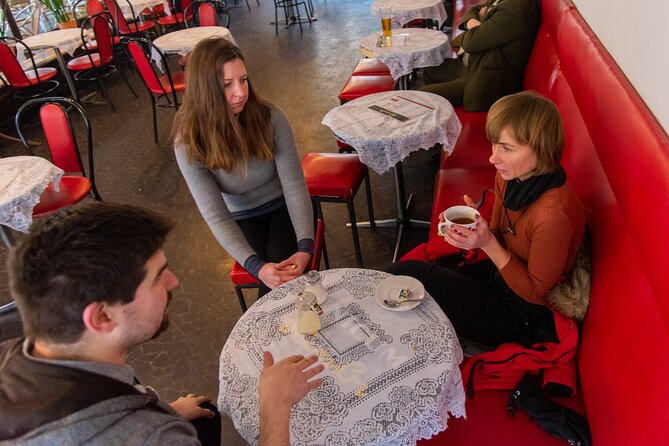
This experience is sold as a no-taboo conversation, and that is exactly what the structure suggests. You’re not paying for a monologue where you nod and move on. There is an intro, but it is meant to get the discussion going, then you steer it.
The conversation begins with an overview of Hungary’s modern era, mainly focused on the last 30 years. The framing covers historical, economical, and political aspects first. That order is smart for first-timers, because it helps you understand why present-day arguments sound the way they do. If you start with the history, you can actually follow the logic behind today’s slogans and policy debates, instead of just collecting random facts.
Then you shift into question mode. The experience explicitly invites you to ask anything you’ve ever wanted to know about Hungary, including controversial politics. The host aims to answer questions, not just redirect them. And the size cap means your questions have a real chance to land.
In short, the duration is about 1 hour 30 minutes. That is long enough for back-and-forth, but short enough that you can still do dinner plans afterward. If you’ve only got a couple of hours in Budapest and you want something that feels human and current, this format is a strong fit.
Still weighing options? Here is what else pulls a crowd in Budapest.
- Budapest: City Highlights Cruise with Welcome Drink
★ 4.6 · 35,610 reviews - Budapest: Unlimited Prosecco, Beer and Aperol Spritz Cruise
★ 4.8 · 25,310 reviews - Budapest: Széchenyi Spa Day Ticket with Optional Upgrades
★ 4.3 · 23,911 reviews - Budapest: Nighttime or Daytime Sightseeing Cruise
★ 4.2 · 21,062 reviews
From Communism to democracy: the timeline you can actually use
One of the most helpful parts of this experience is that it focuses on Hungary’s shift from Communism to democracy, then moves forward to the idea of illiberal democracy in recent years. Even if you already know the basics, you’ll likely appreciate the way the host connects these phases, because modern politics is rarely a single straight line.
Why this matters to you as a visitor: when you read about Hungary abroad, you usually get one theme at a time. The news cycle loves winners and villains, but real political change is messier. The conversation structure helps you see the transition as a set of choices, tradeoffs, and reactions, not just a before-and-after.
The intro is where you get context for later questions. You can ask about what changed in everyday life, how institutions behaved, or why certain disputes keep coming back. If you’re the type who wants more than surface-level context, this first segment is the backbone that supports your later Q and A.
Also, the experience is designed to be opinion-forward. You’re not being asked to adopt one interpretation. The guide shares their take on the past and present, and then lets you test it with your own questions.
The present-day politics section: ask the hard stuff
The second half, the discussion part, is where the tour earns its name. You’re encouraged to bring questions, including ones that can feel uncomfortable. That includes controversial politics, turbulent past, and uncertain future.
I like that the experience does not treat these topics as off-limits. If you’ve spent any time in Budapest, you know politics is not just dinner conversation for insiders. It shows up in how people talk about media, Europe, borders, and the economy. A no-taboo setup gives you permission to ask what you’re actually thinking.
A smart move before you go: write down two or three questions that you genuinely want answered. Keep them short. For example:
- What does illiberal democracy mean in everyday terms?
- How do economic pressures shape political choices?
- How do Hungarians compare Hungary’s past to its present?
You can also go more personal. The experience is built around the idea that the host can discuss Hungary with a citizen’s point of view, plus a wider lens that links Hungary to international realities.
Economy and daily life: why it shows up in politics
Even though the experience is political by design, it is not just ideology. The overview includes economical aspects in the initial part, which is useful because it helps you understand why political disputes can intensify when people feel squeezed.
This matters if you want to travel intelligently. You can walk Budapest streets for days, but without economic context you might miss why certain arguments resonate. The conversation setting makes it easier to connect what you read online to what you see and hear in real life.
You might come away noticing patterns: talk about work, wages, energy costs, or investment tends to show up when people talk about power and trust. The experience’s structure makes it easier to ask follow-up questions in plain language, without feeling like you need a degree in political science.
How much you get out depends on how you participate
The experience notes that it depends on you. That can sound vague, but it is actually practical advice. This is a discussion tour. If you show up with curiosity and follow-up questions, it becomes a tailored conversation. If you show up hoping for a guided lecture with all the answers delivered, you might feel like you wanted more structure.
Here’s how to make it work in your favor. Think of it as a conversation with guardrails: there is an intro that sets the stage, and then you steer. If you do not have exact questions yet, that’s fine. The host still covers a modern-Hungary introduction in the first part. But if you want the most value, bring at least a couple of topics.
The maximum group size also supports better interaction. With up to 6 people, you’re less likely to be stuck listening while someone else monopolizes the time. You can ask, react, and ask again.




Host vibe: facts first, opinions second
The experience is explicitly built on honesty, and it tries to answer questions. That kind of approach tends to produce better discussions, because you are not being fed only a single safe narrative.
The reviews associated with this experience highlight that the host can talk with depth not only about Hungary but about the wider world. You might expect a mix of historical grounding and a current political view, with room for your own doubts and clarifications.
You may also recognize the host name Daniel from past bookings. One comment describes the host as friendly and informative, and also suggests the conversation could have continued for hours. That feedback matches the format, because the host is not trying to rush you through points. It is set up to go where your curiosity goes.
And of course, the provider behind it signs off as Raymond and the Budapest Explorers, which is a small detail but one that gives the experience a human, local feeling.
Price and value: why $40.52 can be worth it
At $40.52 per person, this is not priced like a long walking tour with multiple paid entries. So you have to judge it differently.
Here’s the value math that makes sense for this format:
- You are paying for a focused 1 hour 30 minute conversation.
- The group is small, up to 6 guests.
- You get a structured intro plus open Q and A.
- The meeting place admission is free, meaning you are not paying extra just to be in the cafe.
If you want to compare it to standard tours, think of this as “buying time with informed perspective.” In Budapest, it is easy to spend hours moving between landmarks. This experience is for when you want understanding, and you want it while you can still ask questions.
For me, the best sign of value is that the format does not trap you in a rigid script. If you ask good questions, you get something closer to what you would get from a long conversation with a Hungarian friend who actually knows the timeline and can connect it to today.
Best times to book and pair with the rest of your day
With a 2:00 pm start, you can pair this with a morning of wandering and a night of softer reflection. This is a good second activity after you’ve already seen a few Budapest highlights, because you can then ask more grounded questions.
If you have already read about Hungary and you feel confused by the political shorthand, this tour is a great reset. The intro gives you a storyline: Communism to democracy, then illiberal democracy debates. After that, your questions can be sharper because you have the baseline.
If you are the type who plans based on emotions, not just facts, you’ll also like how the experience’s pace works. Ninety minutes in a cafe is a comfortable way to process heavy topics without feeling trapped.
Who should book this conversation tour
This experience is a strong match if:
- You enjoy questions and back-and-forth discussion.
- You want context for Hungary’s recent past and present, not only monuments.
- You’ve been to Budapest before and you want the country behind the photos.
- You prefer depth over sightseeing checklists.
It may not be the best fit if:
- You want a typical guided route with many stops.
- You’re looking for pure entertainment rather than challenging topics.
- You dislike political discussions, even in an open, respectful format.
Short practical tips to get more from it
You’ll get the most out of it if you do a little prep:
- Bring 2 to 4 questions, written down.
- If politics feels overwhelming, start with something simple like how daily life relates to political choices.
- If you’ve got strong views, keep them as questions, not arguments. You’ll get better answers.
Also, wear comfortable walking shoes even if this is only one stop. Budapest cafes and transit can involve a bit of walking from public transport, and you’ll want to arrive relaxed.
Should you book this Hungary no-taboo conversation?
Book it if you want real perspective on Hungary’s modern era, especially the shift from Communism to democracy and the debates around illiberal democracy. The small group and the built-in Q and A are the big reasons to choose it, because you’re not stuck listening, you’re shaping the conversation.
Pass if your ideal day is a long list of landmarks and guided photo stops. This is a cafe discussion tour, and it works best when you show up ready to ask, listen, and follow where the talk goes.
If you’re in Budapest and you want one experience that helps you understand the country beyond the usual headlines, this is the kind of 90 minutes that can stay with you longer than a single viewpoint.
FAQ
How long is the experience?
It lasts about 1 hour 30 minutes.
Where does the conversation start?
You meet at Bambi Café, Frankel Leó út 2-4, 1027 Hungary, and it ends back at the same meeting point.
What is the group size limit?
The experience has a maximum of 6 travelers.
Do I need to pay for the cafe admission?
The cafe admission is listed as ticket free for the stop, and the experience uses a mobile ticket.
Is there a set start time?
Yes, the start time is 2:00 pm.
Can I get a full refund if my plans change?
Yes. There is free cancellation, and you can cancel up to 24 hours in advance for a full refund.
More Tour Reviews in Budapest





Reviewed recently around Budapest
- Audio visual multi-sensory chefs journey dinner experience★ 5.0 · 3 reviews
- Tapolca Cave Lake and Tihany/ Balaton private tour from Budapest★ 4.5 · 3 reviews
- SzentEndre-SaintAndrew City Privately Shopping and Picturesque★ 4.5 · 3 reviews
- Sightseeing flight over Budapest★ 5.0 · 3 reviews
- Self Guided Tour In Budapest With 100 Captivating Audio Stories★ 5.0 · 3 reviews
- Private Danube Bend Visegrad and Szentendre Tour With Transport★ 5.0 · 3 reviews