
Review · BUDA CASTLE DISTRICT
Buda Castle Tour: Fisherman’s bastion and hidden gems
Budapest’s Castle District rewards you fast. This small-group, English walk strings together the big icons plus practical local stops, all paced for a 2-hour visit. Expect sweeping river views, royal-era landmarks, and a couple of quirky moments that make the hill feel personal.
I love how Fisherman’s Bastion turns into a viewpoint session, not just a quick photo pit stop. I also like the guide-led detours to places like Ruszwurm Confectionery, plus history you can actually connect to what you see around Holy Trinity Square and Buda Castle.
One drawback: you will deal with hills and steps on Castle Hill, so comfortable shoes matter, especially if the weather gets extreme.
In This Review
- Key highlights worth planning for
- A paced 2-hour circuit on Buda Castle Hill
- Matthias Church: outside photos and why the details matter
- Fisherman’s Bastion panoramas without the fuss
- Holy Trinity Square: plague memorials and quick culture
- Ruszwurm Confectionery: a classic Budapest sweet break
- The bronze horse and the “touch for luck” tradition
- Residential lanes and the Setany feeling on Arpád Tóth Promenade
- Hospital in the Rock pass-by: context without extra tickets
- Sandor Palace and Karmelita Kolostor: power in historic walls
- Funicular and Királyi Lovarda: the hill’s practical side
- Matthias Fountain and Buda Castle: where your time should go next
- Price and logistics: why the value is unusually strong
- Walking, weather, and comfort tips that actually matter
- Who this Budapest Castle District walk is best for
- Should you book this Buda Castle Tour?
- FAQ
- Is the tour offered in English?
- How long is the Buda Castle Tour?
- Where does the tour start and end?
- Do I need an admission ticket for Matthias Church?
- Does the tour include Hospital in the Rock entry?
- Can I cancel for free?
Key highlights worth planning for
- Small group size (max 10) keeps the tour moving and questions actually get answered.
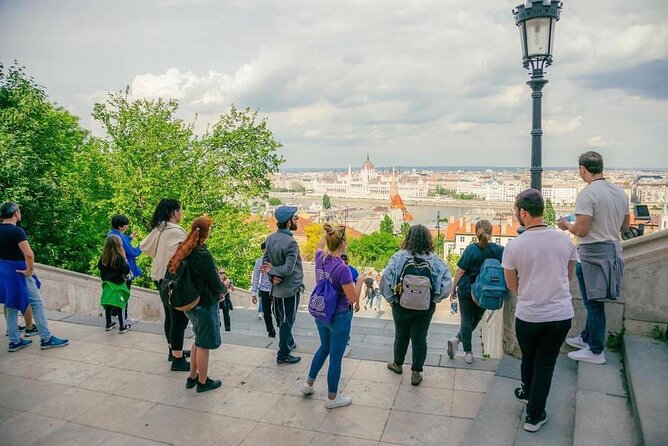
- Panoramic photo stops at Fisherman’s Bastion and several squares give you payoff without rushing.
- Quirky local traditions, like touching the shiny bronze horse at the Hadik statue for good luck.
- A sweet stop at Ruszwurm Confectionery in the Castle District, guided so you’re not just passing by.
- Old-school transport vibes with the Buda Hill Funicular, dating to 1870.
- Pass-by viewing of Hospital in the Rock, so you still get the context without committing to an extra ticketed visit.
A paced 2-hour circuit on Buda Castle Hill
This tour is designed as a tight loop in Budapest’s Castle District, with an approximate 2 hours on your feet. Each stop is short, usually 5 to 15 minutes, so you get variety without feeling trapped for hours in one museum line. The pace works best if you show up ready to walk, look up, and move when the group moves.
You’ll start at Szentháromság tér and finish near Buda Castle, Szent György tér, at the entrance of the National Gallery. It’s offered in English, and you’ll use a mobile ticket. An average booking window of about 15 days in advance also makes sense here, because Castle Hill is popular and the group size stays small.
Value-wise, the standout is that you’re not only doing landmarks. You’re also getting a sense of how the hill connects: squares, residential lanes, and the transport that ties it all together. If you like your sightseeing with a little structure, this delivers.
Matthias Church: outside photos and why the details matter
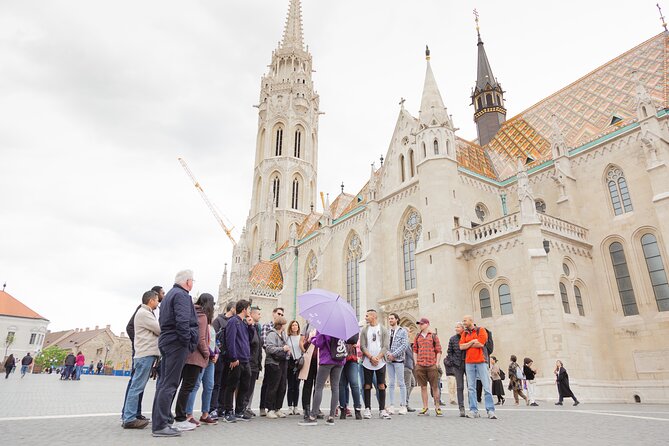
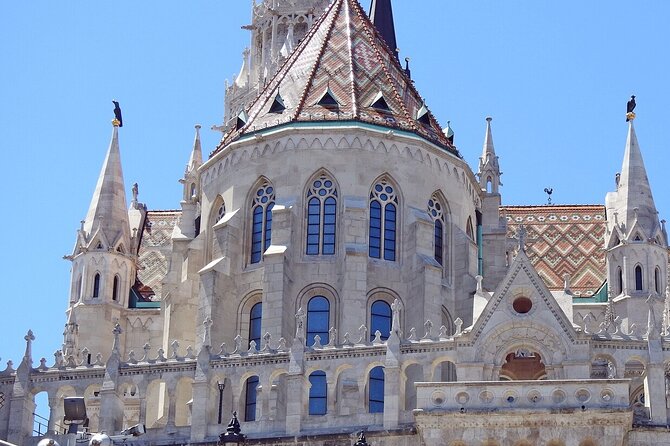
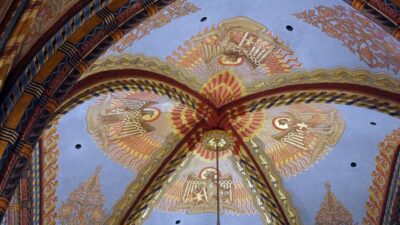
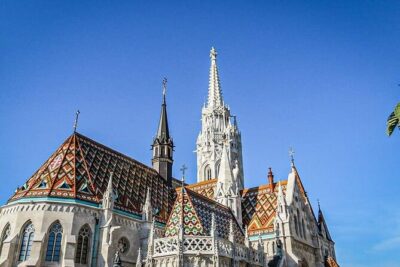
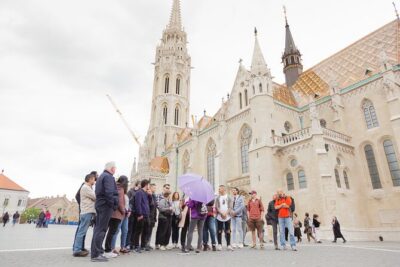
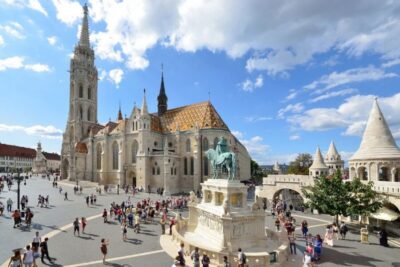
Matthias Church is the perfect warm-up. It’s a striking Gothic Revival church in the Castle District, with a roof full of color and patterns, plus spires that pull your eyes upward. The tour keeps it practical: you take photos outside, with Matthias Church admission not included.
Why I like this approach for first-timers: even from the outside you can read the church like a visual headline. The tiled roof and the ornate exterior are the kind of details you would miss if you were just rushing to the next view.
If you plan to go inside on your own later, you’ll be grateful you saw it first on this walk. But if you just want the exterior plus context, the short timing still feels complete.
Up on Castle Hill, a few other ways to do it
- Budapest: Buda Castle District Vampires and Myths Night Tour
★ 4.6 · 3,830 reviews - Budapest: Buda Castle Walk with Saint Stephen’s Hall
★ 4.5 · 3,012 reviews - Budapest: Buda Castle District Walking Tour
★ 4.6 · 2,108 reviews - Budapest: 3-Hour Grand City Tour and Castle Walk
★ 4.3 · 1,437 reviews
Fisherman’s Bastion panoramas without the fuss
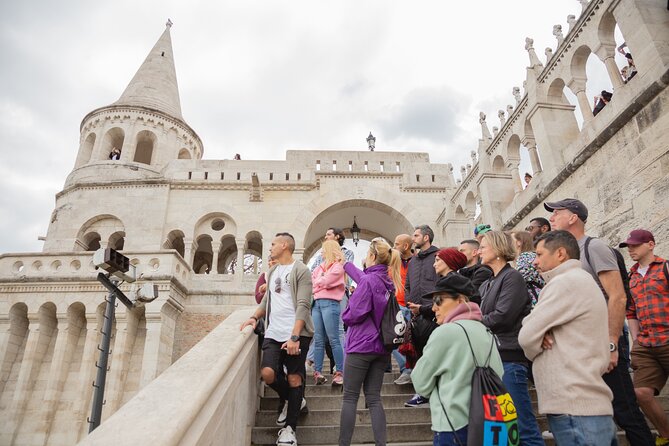
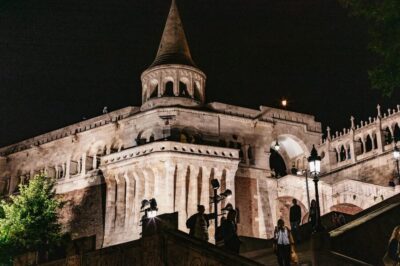
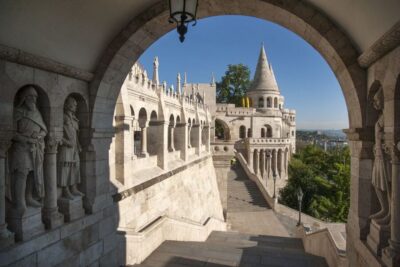
Then comes the payoff. Fisherman’s Bastion is a fairy-tale terrace built for views, with neo-Gothic and neo-Romanesque elements like arches and turret-like shapes. You get about 15 minutes here, and it’s free as listed, so the value is in your time on the viewpoints rather than paying for access.
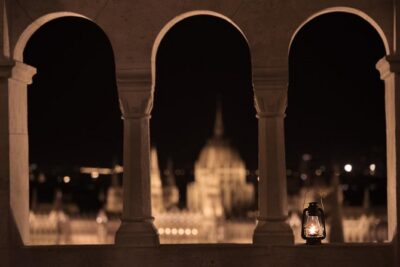
I like this stop because it resets your perspective on the whole hill. You look out toward the Danube and the city skyline, and suddenly the rest of Castle District history makes more sense. You can also slow down here to take photos with different angles, rather than trying to do everything at Matthias Church.
If you’re traveling in busy season, this kind of timed, viewpoint-centered stop is a smart way to keep your energy up. You’re not stuck in a long queue, and you’re not forced into an all-day museum plan.
Holy Trinity Square: plague memorials and quick culture
Next you’ll pass the Holy Trinity Column, a monument commemorating the end of the 18th-century plague. It’s a powerful centerpiece in Trinity Square, and it’s also the kind of thing you might overlook if you didn’t have a guide explaining why it’s there.
You also get a short stop at the iconic building area around Holy Trinity Square, keeping this part of the tour tight. The benefit of a 5-minute stop here is that it gives you context without dragging you away from the next photo moment.
This stop is about meaning as much as it is about aesthetics. In a district full of royal symbolism, the plague memorial adds a human scale, a reminder that history here includes survival, not just celebrations.
Ruszwurm Confectionery: a classic Budapest sweet break
When a tour includes a stop at Ruszwurm Confectionery, I pay attention. It’s a pastry shop in the Castle District that has been serving sweets since 1827, and it’s known for a long-standing local reputation. You’ll get about 10 minutes here, and the stop itself is listed as free.
What you can do with that time is flexible. You can grab a traditional Hungarian dessert like Dobos torta or krémes, or you can simply use the pause to slow down and enjoy the setting while your feet reset.
A practical note: this is not described as a tasting included in the tour price. Think of it as guided access to a historic sweet spot, with time to choose what fits your budget.
If you want a more food-focused day later, this stop also gives you a helpful reference point: it tells you the kind of place Castle District food culture has been built around for generations.
The bronze horse and the “touch for luck” tradition
Right near the residential streets and monuments, you’ll stop at the Statue of Mounted András Hadik. And yes, there’s a tradition attached. Touching the horse’s shiny bronze is said to bring good luck, and it’s one of those little rituals that instantly makes a statue feel less untouchable.
The fun part is that the statue honors András Hadik, a legendary Hungarian soldier and Maria Theresa’s favorite general. The guide also covers the story of why he’s remembered, so you’re not just doing a tourist tap for a photo. This is quick, about 5 minutes, and it’s free.
I like stops like this because they give you a social cue. You know you’re allowed to participate, not just observe. It also helps you break up the hillwalking rhythm so you don’t feel like you’re rushing from one monument to the next.
The Bastion and Matthias Church, compared across tours


Residential lanes and the Setany feeling on Arpád Tóth Promenade
After the major viewpoints and squares, you shift into a more local feel with the Árpád Tóth Promenade (Setany). This is a residential portion of Buda Castle hill, and that change of scenery is important. It’s easy to think of Castle District as only palaces and terraces, but the hill is also lived in.
You’ll have about 10 minutes here. The practical payoff is that you get a better sense of how the streets connect to the tourist core. It also makes the whole area feel less like a stage set.
If you love small details, this part gives you breathing room to look at street-level architecture and the way people move through the hill. It’s not flashy in the postcard way, but it’s memorable in the lived-in way.
Hospital in the Rock pass-by: context without extra tickets
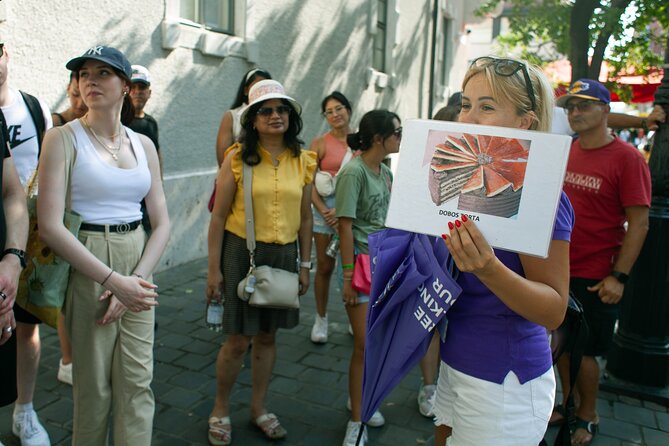
You’ll hear the story of Hospital in the Rock, but you won’t go inside. The tour specifically states that on this route you pass by, even though the museum offers private guided tours in English.
That’s a smart compromise if you’re short on time or you don’t want to add another ticketed commitment. You still learn what the place represents, so when you see the entrance area, it has meaning instead of being just another bunker-shaped building.
If Hospital in the Rock feels like a must-do after this, you’ll be well positioned to decide later. You’ll at least know what it is and why it matters, which can make any follow-up visit more satisfying.
Sandor Palace and Karmelita Kolostor: power in historic walls
Then you move into the layer where history turns political. You’ll stop at Sandor Palace, the official residence of Hungary’s President. It’s named after Count Sándor Móricz, a horseman known as the Devil’s Rider for daring equestrian stunts.
This is brief, about 5 minutes, and listed as free. But that short stop matters because it shows you that the Castle District isn’t only about dead kings. It’s still where national leadership lives and works.
Next is Karmelita Kolostor (Carmelite Monastery). It has changed roles over time: monastery, then a theater and concert hall, and today it houses the Hungarian Prime Minister’s Office. You’ll get about 10 minutes, also listed as free.
For me, this is one of the most interesting parts of the tour, because it forces you to notice how buildings adapt. Stone stays, purpose shifts. You end up seeing continuity with change, not just a museum-like freeze frame.
Funicular and Királyi Lovarda: the hill’s practical side
At Buda Hill Funicular, you get a taste of the hill’s old infrastructure. The funicular has been operating since 1870, and it connects the Chain Bridge to the Castle District. The tour includes a 10-minute stop, and it’s listed as free.
Even if you’re not riding for the full experience, the funicular stop is useful. It reminds you that this area was never meant to be reached only by foot. It’s a place that uses technology to manage steep terrain, just like any real city district would.
You’ll also see Királ y i Lovarda (Riding Hall), a beautifully restored building that originally served as a royal equestrian facility. This is a short stop, about 5 minutes, and it helps you tie the earlier equestrian story behind Sandor Palace to the broader theme of horse culture in the castle era.
Together, these stops add variety to the walking rhythm. They also keep the day from becoming only churches and towers.
Matthias Fountain and Buda Castle: where your time should go next
Back in the heart of the district, you’ll encounter the Fountain of King Matthias. It’s a Baroque-style monument dedicated to King Matthias Corvinus, with a central sculpture of the king riding a horse. You’ll spend about 10 minutes here, listed as free.
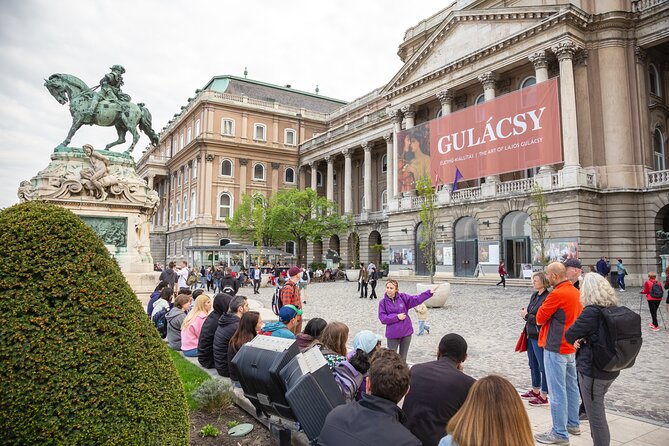
From there you reach Buda Castle itself. The Royal Palace complex is home to several museums, including the Hungarian National Gallery, the Budapest History Museum, and the National Library. Your tour time at the palace area is about 15 minutes, listed as free.
This is where I think the tour is especially useful: it gives you a museum map in your head, even if you do not have time to pick one on the spot. If you’re trying to decide what to visit later, this “arrive with context” approach can save you from wandering aimlessly or paying for a museum that doesn’t fit your interests.
Your guide can also offer tailored suggestions for what to prioritize based on what you’ve already seen during the walk.
Price and logistics: why the value is unusually strong
At $3.63 per person, the price is low enough that you should assume you’re paying mainly for guiding time, structure, and recommendations, not for museum admissions. That matches what’s listed: Matthias Church admission is not included, while most other stops are free.
Tips are also not included. So if you want to show appreciation for the guide, budget for that even if it’s not required.
The tour is booked about 15 days in advance on average, which signals demand. If you like small groups, booking ahead is smart. A mobile ticket also means you’re not fighting for paper confirmations at the meeting point.
Also worth noting: the tour includes professional guides and tailor-made recommendations for restaurants, bars, and museums. In real terms, that can be more valuable than one more photo stop, because you get help turning your day into a plan.
Walking, weather, and comfort tips that actually matter
Castle Hill can be steep, and the tour explicitly involves hills and steps. That means your best “bring” list is not fancy. It’s practical: comfortable shoes with grip, water, and a layer for changing conditions.
The guides are described as able to keep things moving even when weather turns, from heavy rain to scorching heat. Your job is to come prepared. If rain is possible, pack an umbrella or a rain shell. If it’s hot, bring sun protection and take the slow pauses the guide gives you.
Also, this tour is short stops on purpose. If you feel wiped out, it’s usually better to rest through the next view than to force it and lose the rest of your day. The route is designed to keep you engaged without requiring an all-day commitment.
Who this Budapest Castle District walk is best for
I’d book this if you want a 2-hour introduction to Buda Castle that covers both the obvious hits and the context around them. It works well for history lovers who prefer stories tied to real places, not just lectures.
Because the group maxes at 10 travelers, it’s also a good fit if you dislike crowds. It’s also a good choice if you want English guidance without adding a long museum itinerary.
I’d think twice if you have mobility limits that make stairs hard. The tour says most travelers can participate, and service animals are allowed, but it’s still a hill walk through Castle District terrain.
If you’re a first-time visitor, this tour is a smart way to get bearings fast. If you’ve already been to Pest, it helps you understand why Buda feels like a different city.
Should you book this Buda Castle Tour?
Yes, if you want a guided Castle Hill overview that blends views, landmarks, and a couple of local touches like Ruszwurm and the bronze-horse luck ritual. The pricing is the big surprise, because it’s low compared to what you’d usually pay for a structured guide plus multiple major stops.
Book it especially if you’re traveling in a smaller window and want to leave with both photos and a next-step plan for museums and food. The short timing means you won’t feel trapped, and the guide recommendations can steer your evening or your follow-up day.
If your top priority is a long indoor museum day, you might treat this as pre-game. But as a focused introduction to Budapest’s Castle District, it’s one of the easiest “time well spent” choices on the hill.
FAQ
Is the tour offered in English?
Yes. The tour is offered in English.
How long is the Buda Castle Tour?
It’s approximately 2 hours.
Where does the tour start and end?
It starts at Budapest, Szentháromság tér, 1014 Hungary and ends at Buda Castle, Szent György tér, 1014 Hungary, at the entrance of the National Gallery.
Do I need an admission ticket for Matthias Church?
Matthias Church admission is not included, and you only take photos outside.
Does the tour include Hospital in the Rock entry?
No. You are told the story of Hospital in the Rock, but the tour does not enter it. You pass by.
Can I cancel for free?
Yes. You can cancel up to 24 hours in advance for a full refund.
More Tour Reviews in Budapest





Bastion and Church, Keep Going




Still on Castle Hill




Reviewed recently around Budapest
- Audio visual multi-sensory chefs journey dinner experience★ 5.0 · 3 reviews
- Tapolca Cave Lake and Tihany/ Balaton private tour from Budapest★ 4.5 · 3 reviews
- SzentEndre-SaintAndrew City Privately Shopping and Picturesque★ 4.5 · 3 reviews
- Sightseeing flight over Budapest★ 5.0 · 3 reviews
- Self Guided Tour In Budapest With 100 Captivating Audio Stories★ 5.0 · 3 reviews
- Private Danube Bend Visegrad and Szentendre Tour With Transport★ 5.0 · 3 reviews
Buda Castle District, compared.
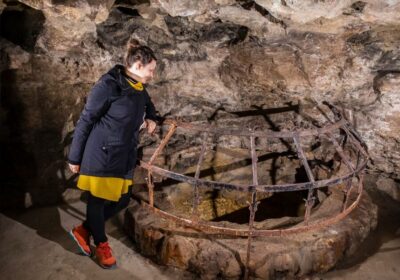 ★ 4.7Buda Castle Cave TourFrom $195,677 reviews
 ★ 4.6Buda Castle District Vampires and Myths Night TourFrom $233,830 reviews
 ★ 4.5Buda Castle Walk with Saint Stephen’s HallFrom $293,012 reviews
 ★ 4.6Buda Castle District Walking TourFrom $142,108 reviews
 ★ 4.33-Hour Grand City Tour and Castle WalkFrom $491,437 reviews
 ★ 4.5Buda Castle District Dark History, Legends and Vampire Night TourFrom $211,240 reviews
 ★ 4.9Buda Castle District Walking Tour with a HistorianFrom $63867 reviews
 ★ 5.0Budapest Castle District Walking TourFrom $3630 reviews
Browse the lists this tour appears in