
Review · DANUBE RIVER CRUISES
Budapest: Danube River Views Bike Ride
Budapest by bike hits different, fast. This 2.5-hour ride strings together big sights on both sides of the Danube while staying easy enough for a relaxed pace. I especially like how the route blends classic landmarks like the Hungarian State Opera House with bridge-hops that make the city feel walkable and human. The one thing to plan for is the terrain can include some uphill sections, and there can be bike swaps if standard bikes are in short supply.
You’ll get an English-speaking guide telling the stories behind the views, and that’s where the tour really pays off. When the guide is Beka, the whole experience leans more funny than formal, with clear background that helps you connect what you’re seeing to Budapest’s past. Still, this is mostly continuous light biking for up to about 3 hours, so if you hate sitting in the saddle, you’ll want to think twice.
In This Review
- Key things to know before you pedal
- Danube Views by Bike: what this 2.5-hour loop does best
- Meeting at Yellow Zebra Bikes and Segways, Karoly krt
- Andrássy Avenue and the Hungarian State Opera House
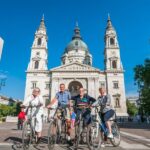
- Pest highlights: St. Stephen’s Basilica, the Great Synagogue, and Liberty Square
- Parliament and the bridges: Chain Bridge and Elisabeth Bridge
- Crossing to Buda via Margit Bridge and the Ottoman-era story
- Clark Ádám Square, Hotel Gellért, and Rudas Thermal Baths
- Back to Pest and the Andrássy Avenue finish
- How the ride feels: pace, hills, and the small-group advantage
- Price and value: what you get for about $41
- Who this tour suits best, and who should rethink it
- Quick practical tips so you enjoy it more
- Should you book this Budapest Danube River Views Bike Ride?
- FAQ
- How long is the Budapest Danube River Views bike ride?
- What is included with the tour price?
- Are entrance fees to sights and museums included?
- Is there a live guide, and what language is it in?
- What should I bring?
- Is the tour suitable for children?
- Does the tour run in bad weather?
Key things to know before you pedal
- Two riverside worlds: You ride along the Danube promenades and across key bridges, so you see Pest and Buda without guessing where to go next.
- Andrássy Avenue is more than a street: UNESCO World Heritage status gives you a sense of why this grand corridor matters.
- Major monuments in one loop: Opera House, Parliament, St. Stephen’s Basilica, Chain Bridge, and more are built into the ride.
- Guide stories make it stick: The best moments are the cultural and historical explanations, delivered in English with personality.
- Light fitness required: Expect steady pedaling with short breaks, plus some uphill bits.
- Bike hire is included: You get the bike, and an optional helmet is there if you want it.
Danube Views by Bike: what this 2.5-hour loop does best
If you want Budapest highlights without spending your whole day on buses, this is a smart format. In just 2.5 hours, you move across the river, pop into the big-picture downtown feel of Pest, and then roll into the Buda side where the city’s geography starts to explain its history.
What I like is the balance between spectacle and structure. You’re not just cruising. You’re following a route that strings together the places that anchor Budapest’s identity, with enough time on bikes to cover ground and still hear the guide’s story.
The other strong point is that the ride is built around the Danube’s public spaces. When you move along those promenades and bike lanes, you get views that feel open and airy, not boxed in like many sightseeing tours.
Meeting at Yellow Zebra Bikes and Segways, Karoly krt
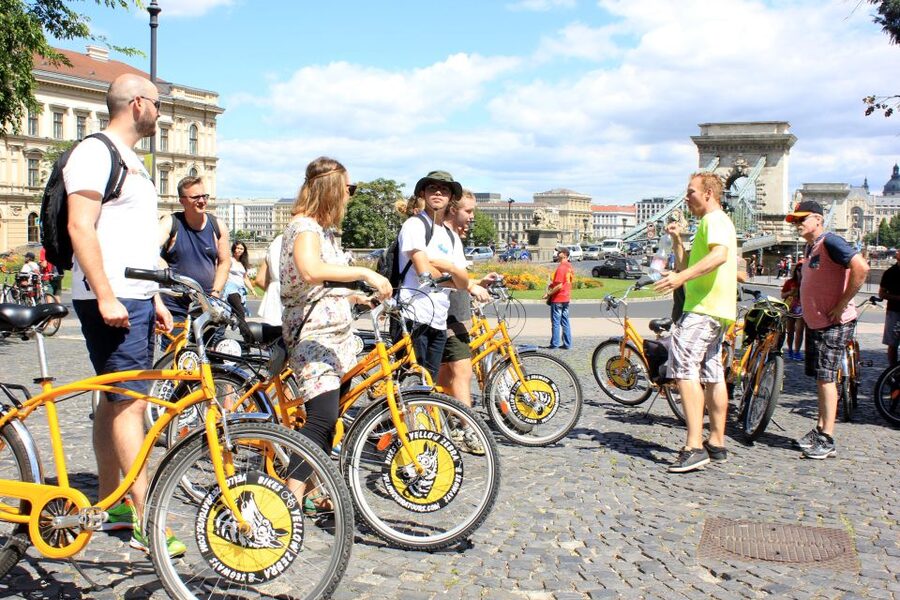
The tour starts at Yellow Zebra Bikes & Segways at Karoly korut 16. It’s in the courtyard, and there’s a doorbell noted at the meeting point, so give yourself a moment to find it without rushing.
This location matters because you’re not starting at a far-flung edge of town. You’re already set up close to the parts of Budapest that connect into the big sights, including the grand corridor of Andrássy Avenue.
In practice, I’d show up ready to ride. Bring comfortable shoes and weather-appropriate clothing, since you’ll be on the bike for most of the time, not just waiting for stops.
More time on the water? Other Budapest Danube sailings we rated
- Budapest: Nighttime or Daytime Sightseeing Cruise
★ 4.2 · 21,062 reviews - Budapest: 1-Hour Evening Sightseeing Cruise with Drink
★ 4.5 · 8,330 reviews - Budapest Danube Cruise and Dinner Options, Live Music and Dance
★ 4.5 · 7,428 reviews - Budapest By Night Sightseeing Cruise
★ 4.1 · 5,835 reviews
Andrássy Avenue and the Hungarian State Opera House
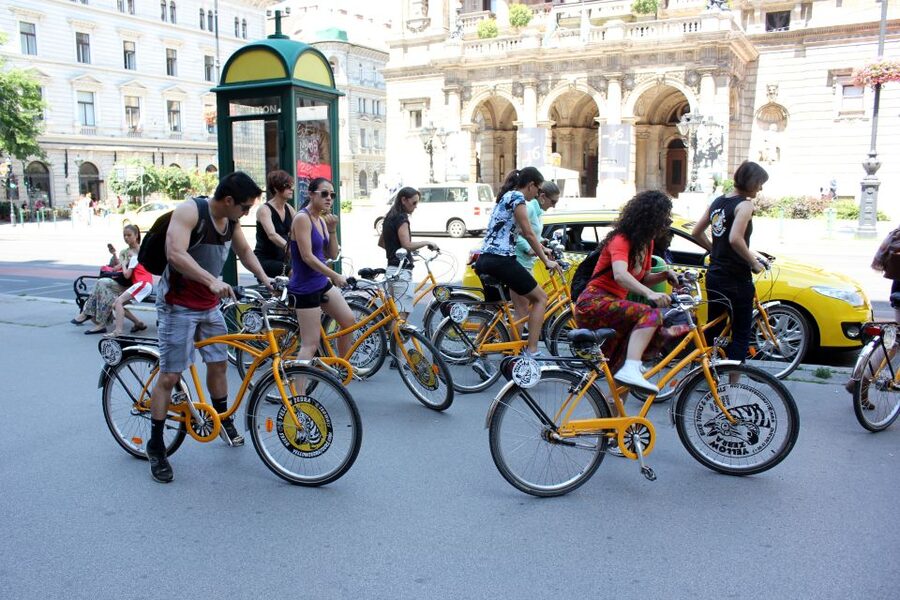
Andrássy Avenue is one of Budapest’s headline streets, and this tour treats it that way. The guide takes you along this famous stretch, which is recognized as a UNESCO World Heritage Site, so it’s not just pretty scenery. It’s part of the city’s formal, architectural story.
The highlight here is the Hungarian State Opera House on Andrássy Avenue. Even if you don’t go inside, seeing it from the street gives you a strong sense of 19th-century ambition, when Budapest’s leaders wanted the city to look and perform like a major European capital.
A quiet tip: look up as you ride. This street is all about proportions, facades, and the way buildings line up visually as you move. On a bike, you get that slow-moving “walk by it” feel, without needing to stop every few seconds.
Pest highlights: St. Stephen’s Basilica, the Great Synagogue, and Liberty Square
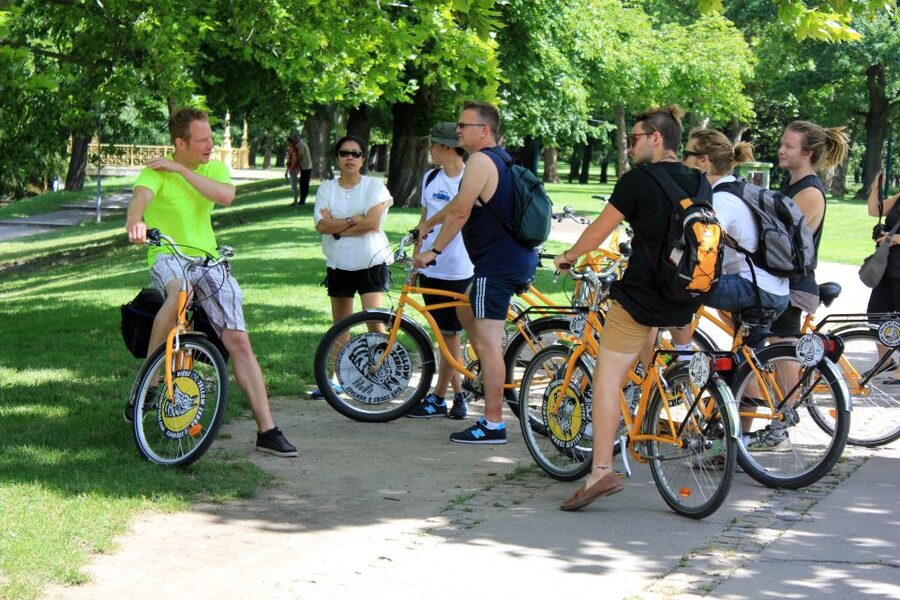
Once you’re in Pest, the tour leans into landmarks that define the city’s skyline and civic identity. You’ll see the St. Stephen’s Basilica, plus the Great Synagogue, and you’ll get the downtown feel around Liberty Square and Parliament.
The basilica is a classic “you can’t miss it” sight, but biking past it helps you understand the surrounding neighborhood layout. You notice the street rhythms and how the route flows, which makes it easier to come back later on your own for a longer look.
The Great Synagogue adds a different type of visual weight. You get contrast in architecture and scale, and the guide’s context helps you see it as a cultural statement, not just a photo stop.
Liberty Square and the Parliament area also hit a useful angle for first-time visitors. You see where power and public life sit, and you get a sense of why the Danube and the civic core are linked in Budapest’s design.
Parliament and the bridges: Chain Bridge and Elisabeth Bridge
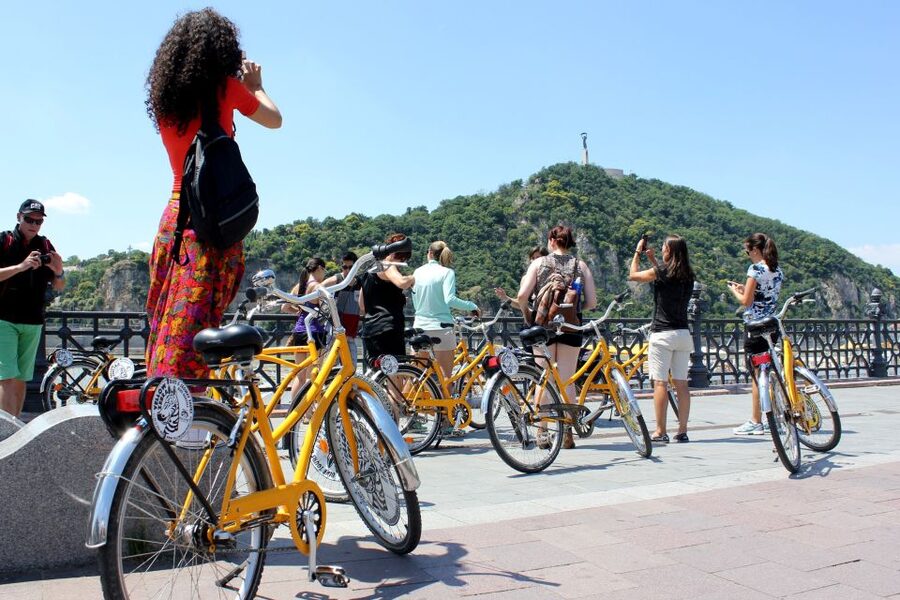
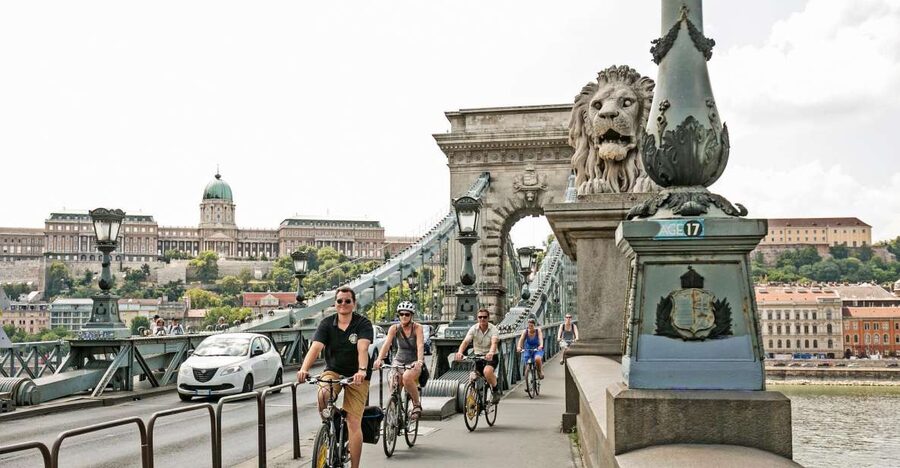
Budapest’s best “how did they build this?” moments often happen at the bridges. This tour rides across major links like the Széchenyi Chain Bridge and the Elisabeth Bridge, and that matters because bridges are where Budapest’s geography becomes obvious.
Crossing the Chain Bridge gives you that big Danube view with both the river and the skyline in play. You also get a sense of how the city’s two halves cooperate visually. From Pest you can appreciate the flat grandeur, then you feel the pull toward the Buda side as you cross.
Then there’s the Elisabeth Bridge, which is important because it connects your route logic. The ride uses these crossings as transitions between “Pest sights” and “Buda atmosphere,” so you’re not just sightseeing. You’re moving through the city’s structure.
And here’s a practical bonus: bridge rides are perfect for short photo checks. You get a stable viewpoint, you’re not crowd-stuck for long, and then you keep going.
Crossing to Buda via Margit Bridge and the Ottoman-era story
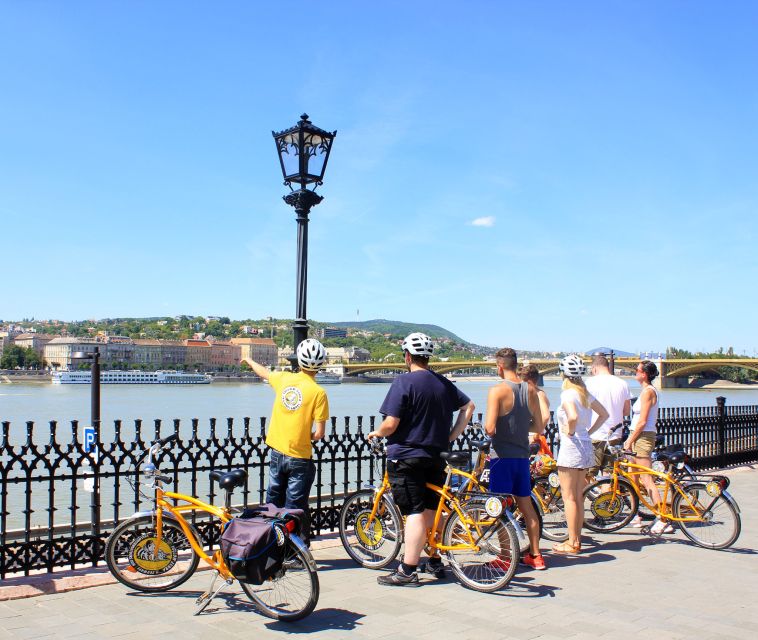
One of the more interesting parts of the ride is the way it shifts your focus when you cross into Buda. You head over via Margit Bridge to the west bank, where the city’s hills and historical layers start to make more sense.
The guide talks about Buda’s history through the Ottoman expansion, including the siege cycles that nearly decimated the city’s population. That historical framing changes how you see the Buda side. You stop thinking of it as only scenic and start thinking of it as a place shaped by survival and rebuilding.
Also, the biking setup helps you feel what that shift is like. On foot, hills can slow you down and make the route feel heavy. On a bike, you get momentum while still tasting the change in terrain.
This is the moment where the ride becomes more than a photo tour. It becomes a short, guided orientation to how Budapest’s past and landscape are linked.
Two wheels, other routes in Budapest
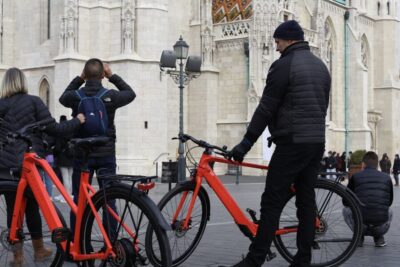
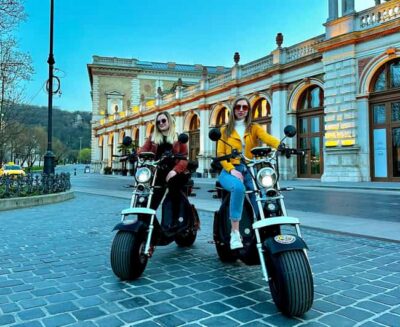
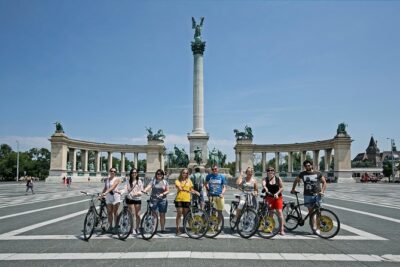
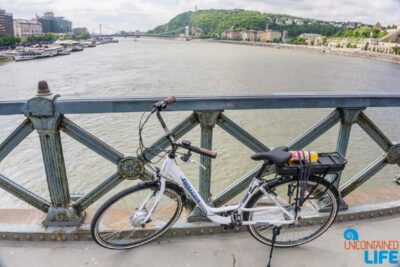
Clark Ádám Square, Hotel Gellért, and Rudas Thermal Baths
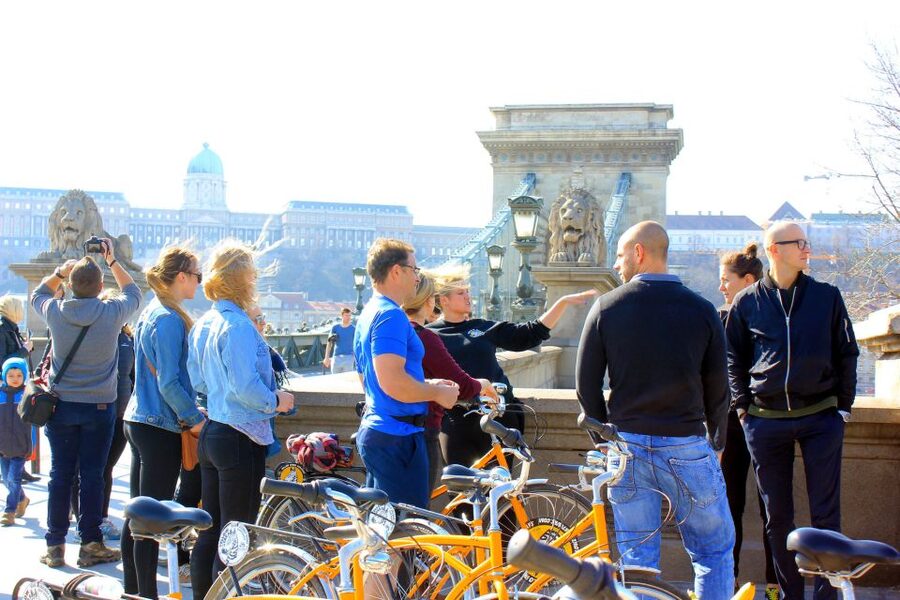
As you move deeper into Buda, the route includes stops that blend viewpoint energy with “Budapest is different” vibes. You’ll zip over to Clark Ádám Square, pass the famous Hotel Gellért, and head toward the area near Rudas Thermal Baths.
Clark Ádám Square is one of those places where a quick pause helps you reset your perspective. You see more of the city in a single sweep, and it gives your brain a new reference point for where you are.
Hotel Gellért is a landmark name you’ll recognize from lots of Budapest conversations, and riding past it gives you that sense of heritage without needing a ticket or a long stop. Rudas Thermal Baths bring in the thermal culture angle, reminding you that Budapest’s identity is not only historical buildings, it’s also bathing and everyday rituals tied to the city.
A helpful travel mindset here: if you don’t have time for museum tickets, these “outside the building” moments still deliver value. You’re learning the place without losing half your day to lines and entry fees.
Back to Pest and the Andrássy Avenue finish
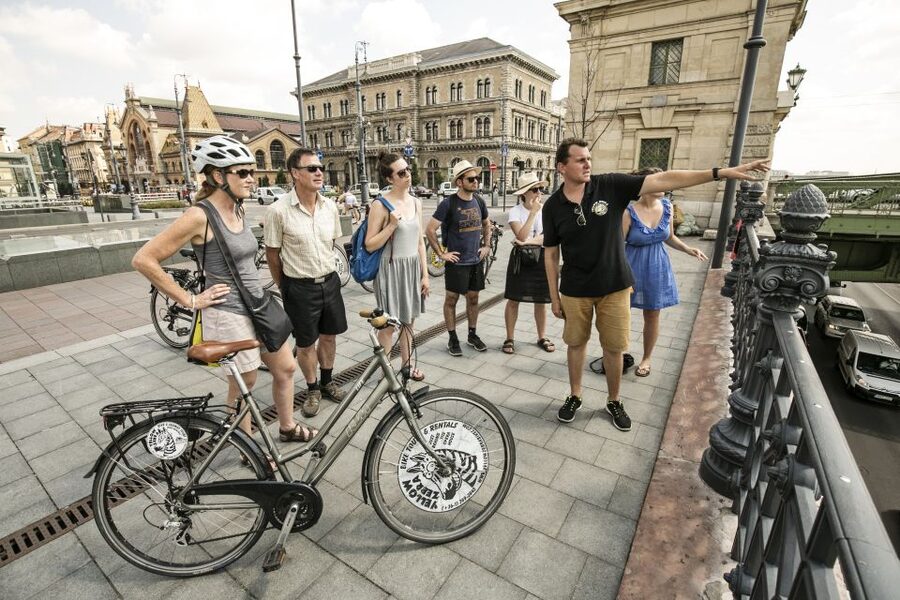
The tour brings you back toward Pest by crossing the Elisabeth Bridge again, then continuing through the downtown feel before wrapping up back at Andrássy Avenue. That ending point is practical because it puts you near a major landmark again, the Opera House area, where it’s easy to plan what to do next.
Ending where you started is underrated. It gives you a clean way to build the rest of your itinerary. You can hop on local transit, walk a little, or even just linger around the avenue if you want more time in that 19th-century corridor mood.
And because the tour hits both sides of the river, your mental map improves. You’ll find yourself noticing bridge connections and sight lines that you likely would have missed if you only stayed in one half of the city.
How the ride feels: pace, hills, and the small-group advantage
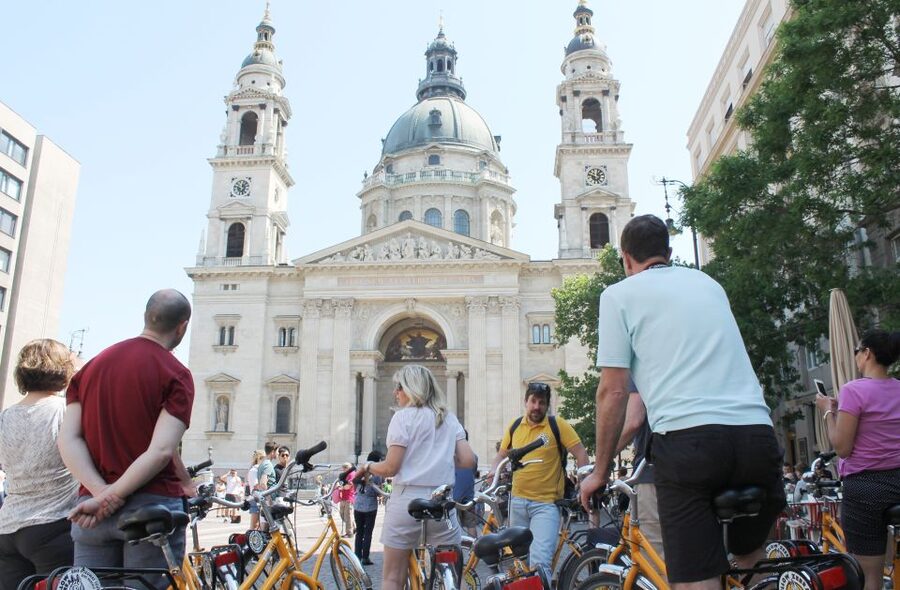
This is listed as light biking with short breaks, and you should plan for mostly continuous pedaling for up to about 3 hours. It’s not a leisurely stroll, and it’s not a high-intensity training ride either.
You might run into uphill stretches. One rider called out that the tour includes parts that feel like a climb, which is normal in Budapest as you move around between Buda and Pest. If hills make you nervous, pick a day when you feel well-rested, and let the guide know early if you want to slow down.
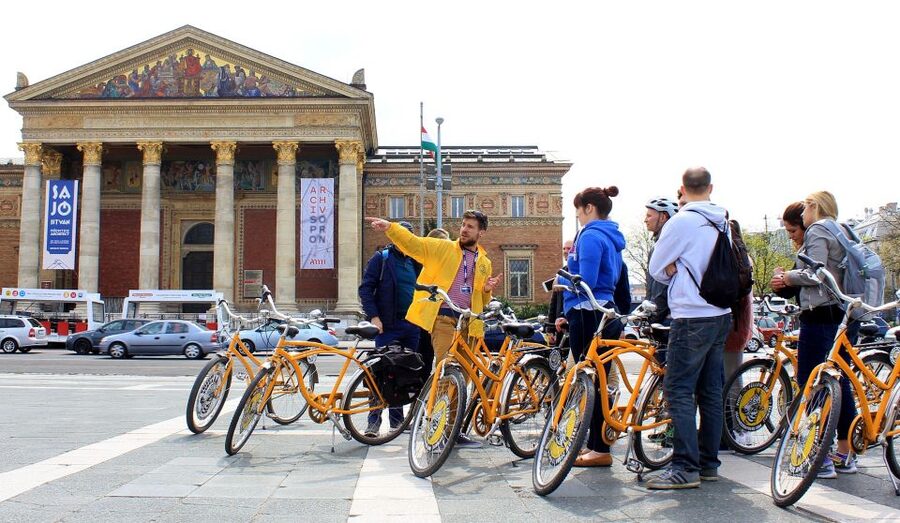
The small group is capped at 10 participants, which helps in two ways. First, you’re less likely to get stuck behind a slow pack. Second, the guide can keep an eye on you, making quick adjustments without turning the experience into a scramble.
One more practical note: I’ve seen reports of a scheduling mix-up that resulted in an e-bike instead of the regular bike. I can’t promise it will happen, but it’s a reminder to be flexible. If you end up on an e-bike, you’ll still cover the same key sights, just with less effort at the harder bits.
Price and value: what you get for about $41
At $41 per person for a 2.5-hour experience, the math is fairly straightforward. You get a bike hire included, plus an optional helmet, and you get a live English-speaking guide taking you across multiple major landmarks efficiently.
You do not get entrance fees, food, or public transport tickets to and from the start and end points. That’s actually a good thing for many visitors. It means the tour is focused on movement and views, not turning into a museum day.
For value, the big win is concentration. Instead of spending hours figuring out routes and transport, you’re guided along a loop that hits Opera, Parliament, Basilica, and iconic bridges. If you’re in Budapest for only a short time, that saves both time and mental energy.
If you do plan to add museum visits later, this tour works as the “first map” layer. You’ll know where things are, so your paid entries after the ride feel more intentional.
Who this tour suits best, and who should rethink it
This ride fits best if you want a first look at Budapest’s highlights and you like seeing big landmarks close up, from street-level. You also want a guide who can connect what you see to the city’s history and culture, without making it a lecture.
I think it’s especially good for adults who enjoy active sightseeing but don’t want to commit to a longer all-day bike plan. The two-bridge crossing rhythm plus the Danube promenade sections keeps it from feeling repetitive.
It’s not suitable for children under 12, and it also has a firm rule against intoxication. If either of those applies, look for a different option that matches your group needs.
If you dislike biking for long stretches, consider this a hard no. Even with short breaks, it’s mostly continuous riding, and the terrain can include some uphill segments.
Quick practical tips so you enjoy it more
A few small choices make a real difference here.
- Wear comfortable shoes you can pedal in.
- Choose weather-appropriate clothing because the tour runs in all weather conditions.
- Bring a water bottle if you tend to get thirsty, since food and beverages aren’t included.
- If you’re nervous about hills, go slower at the start and let the guide pace you.
Also, keep an eye on how your energy feels. The tour is designed for light, mostly continuous biking. If you push too hard early, you’ll feel it later on bridge crossings and Buda sections.
Should you book this Budapest Danube River Views Bike Ride?
Book it if you want a fast, well-paced introduction to Budapest’s key landmarks, with a guide who tells stories that make the views click. The route choice is smart, especially the combination of Andrássy Avenue and major bridge crossings that show you both sides of the Danube.
Skip it if you want mostly flat biking, or if you know you struggle with steady riding for up to around 3 hours. Also skip if your day is better spent on slow wandering rather than cycling.
FAQ
How long is the Budapest Danube River Views bike ride?
It runs for 2.5 hours.
What is included with the tour price?
Bike hire is included, and there’s an optional helmet.
Are entrance fees to sights and museums included?
No. Entrance fees are not included.
Is there a live guide, and what language is it in?
Yes, there is a live tour guide, and the tour is in English.
What should I bring?
Bring comfortable shoes and weather-appropriate clothing.
Is the tour suitable for children?
No, it is not suitable for children under 12.
Does the tour run in bad weather?
The tour proceeds in all weather conditions, and refunds or exchanges will not be given due to adverse weather.
Pedalling Around Budapest


More Tour Reviews in Budapest



The Danube, Three More Ways


Reviewed recently around Budapest
- Audio visual multi-sensory chefs journey dinner experience★ 5.0 · 3 reviews
- Tapolca Cave Lake and Tihany/ Balaton private tour from Budapest★ 4.5 · 3 reviews
- SzentEndre-SaintAndrew City Privately Shopping and Picturesque★ 4.5 · 3 reviews
- Sightseeing flight over Budapest★ 5.0 · 3 reviews
- Self Guided Tour In Budapest With 100 Captivating Audio Stories★ 5.0 · 3 reviews
- Private Danube Bend Visegrad and Szentendre Tour With Transport★ 5.0 · 3 reviews
Danube River Cruises, compared.
 ★ 4.2Nighttime or Daytime Sightseeing CruiseFrom $1421,062 reviews
 ★ 4.51-Hour Evening Sightseeing Cruise with DrinkFrom $288,330 reviews
 ★ 4.5Budapest Danube Cruise and Dinner Options, Live Music and DanceFrom $547,428 reviews
 ★ 4.1Budapest By Night Sightseeing CruiseFrom $165,835 reviews
 ★ 4.2Big Bus Hop-On Hop-Off Tour & Danube River CruiseFrom $403,794 reviews
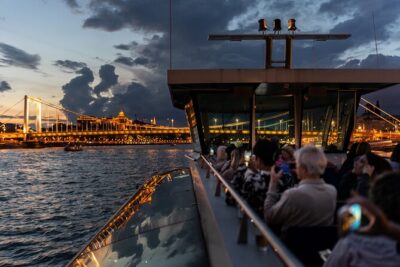 ★ 4.5Budapest Danube River Sightseeing Night Cruise with DrinkFrom $303,553 reviews
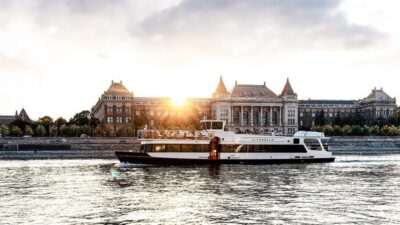 ★ 4.7Premium Sightseeing Cruise with Tokaj FrizzanteFrom $122,510 reviews
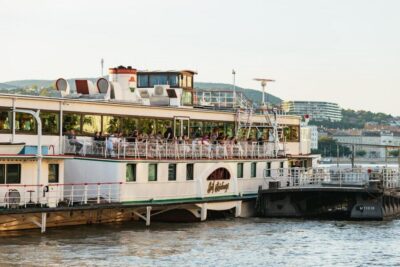 ★ 4.3Danube River Cruise with Dinner and ProseccoFrom $532,471 reviews
Browse the lists this tour appears in