
Review · SEGWAY, SCOOTER AND BIKE TOURS
Budapest: Guided Downtown Electric Bike Tour
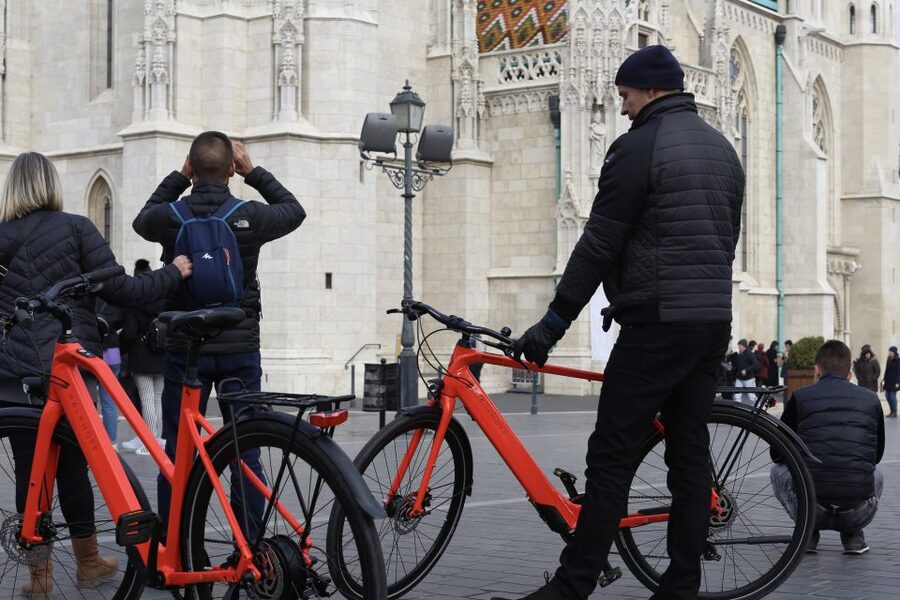
You can get the whole Budapest wow-factor in 3.5 hours. This guided electric bike loop strings together the city’s signature landmarks, plus the Danube and Castle Hill, with a pace that feels efficient instead of rushed.
I especially like the way the route uses bike lanes and small streets, so you actually move like a local instead of inching around with traffic and crowds. And the hill work is handled for you, which makes Castle Hill practical even if your legs are more “vacation mode” than “sports mode.”
The one drawback to plan around is that you need to be able to ride a bike comfortably. If you can’t mount, balance, brake, and steer with confidence, this won’t feel fun, because you’ll be riding through real city turns and junctions.
In This Review
- Key things that make this e-bike tour work
- Electric bikes turn Budapest’s hills into a win
- Starting in the Jewish Quarter at Bike and Relax
- The Andrássy Avenue run: Opera, Terror stories, Heroes’ Square
- City Park and the Széchenyi Thermal Bath area: viewpoints with variety
- Downtown landmarks: Basilica, Liberty Square, Parliament, and the Danube view
- Shoes on the Danube and Chain Bridge: big photos, real-world limits
- Castle Hill climb: the e-bike moment everyone talks about
- Baths and bridges: Rudas, Gellért, and Liberty Bridge
- Market Hall and National Museum: finishing on the cultural circuit
- Bike comfort, pacing, and how the tour keeps you from feeling rushed
- Price and value: $63 for e-bikes, guide time, and a full-day feel
- Who should book, and who should skip the e-bike loop
- Should you book this Andrássy Avenue to Castle Hill tour?
- FAQ
- How long is the Budapest guided downtown e-bike tour?
- What’s included in the $63 price?
- Do you enter any of the landmarks during the tour?
- Where does the tour start?
- Which languages are offered for the live guide?
- Do you need to pedal on the e-bike?
- Who is the tour not suitable for?
Key things that make this e-bike tour work
- Andrássy Avenue as the launch point, so you start with Budapest’s most iconic boulevard feel
- Castle Hill without the leg punishment, thanks to electric assist for the climb
- Photo stop rhythm, with plenty of chances to pause for views and quick walks
- Big sight coverage in one loop, including Parliament, the Danube, and Buda’s viewpoints
- Small groups (up to 10), which helps the guide keep a human pace
Electric bikes turn Budapest’s hills into a win
Budapest is gorgeous, but it also loves elevation changes. That’s where an e-bike earns its keep. You still pedal, but the electric support smooths out the steep stretches so you arrive at viewpoints feeling like you can look around, not just survive the slope.
You’ll cover a lot of ground in a short time. That matters on a first trip, because Budapest is split into Buda and Pest, and the best photos keep bouncing between heights and rivers. This route strings together those best moments so you get an “aha” overview, then know where to return later.
Starting in the Jewish Quarter at Bike and Relax
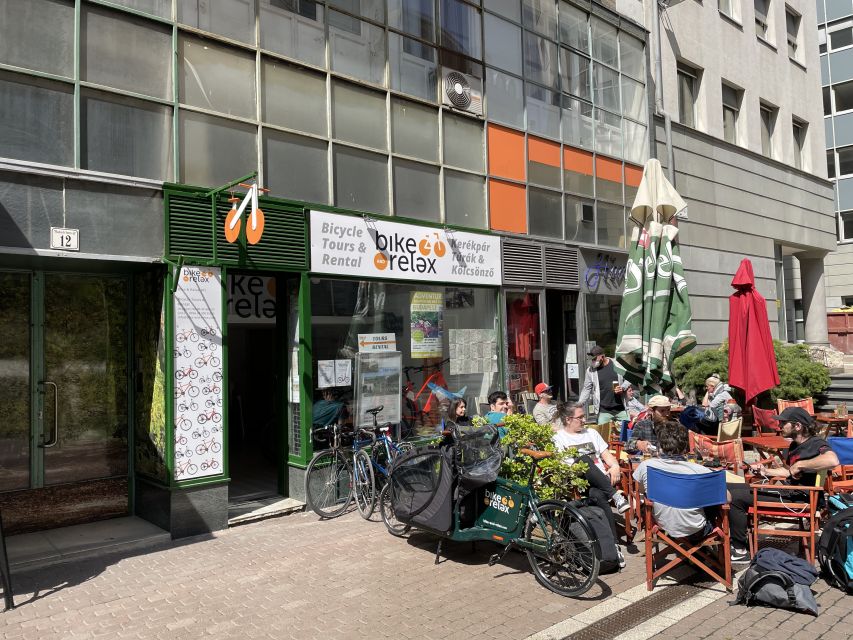
Meet at Bike & Relax in the center of the Jewish District, near the connection between Madách Színház (Madach Ter Square) and Gozsdu udvar court. Look for Café Hivatal beside the shop.
The closest transit point listed is Deák Ferenc tér on the M1, M2, M3 lines, plus trams 47, 48, 49. If you’re coming from the airport, the Airport bus 100E also stops near there.
What to do before you roll: wear comfortable shoes and clothes. This tour does not allow luggage or large bags, so travel light. Also note the bikes have open chains that may touch clothing, so avoid anything that’s likely to snag.
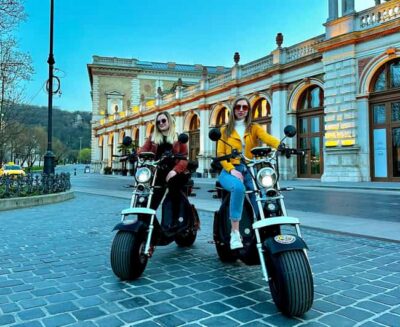
Rolling instead of walking, a few other options
- Budapest Small-Group Guided Tour on MonsteRoller e-Scooter
★ 5.0 · 1,517 reviews - Budapest: MonsteRoller E-Scooter Tour
★ 4.9 · 1,038 reviews - Budapest: Grand Sightseeing Bike Tour
★ 4.8 · 984 reviews - Budapest Highlights️ Live Guided Segway Tour
★ 5.0 · 898 reviews
The Andrássy Avenue run: Opera, Terror stories, Heroes’ Square
The tour kicks off on Andrássy Avenue, which is more than a road here. It’s the grand, straight-shot boulevard where the city’s big architecture and formal energy show up fast.
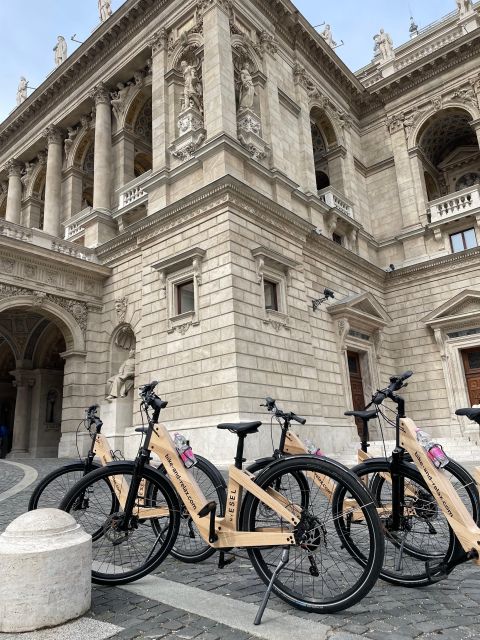
You’ll pass the Hungarian State Opera House, then head toward the House of Terror area for a photo stop. Even without entering, you’ll get the context that makes the streets feel less like scenery and more like lived history.
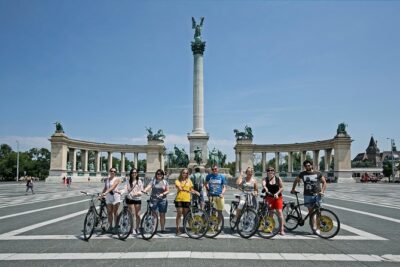
Then it continues to Heroes’ Square, a key landmark where the city’s scale becomes obvious. You’re high enough (or at least positioned) to see how different districts connect, and you get that “now I get it” map in your head.
City Park and the Széchenyi Thermal Bath area: viewpoints with variety
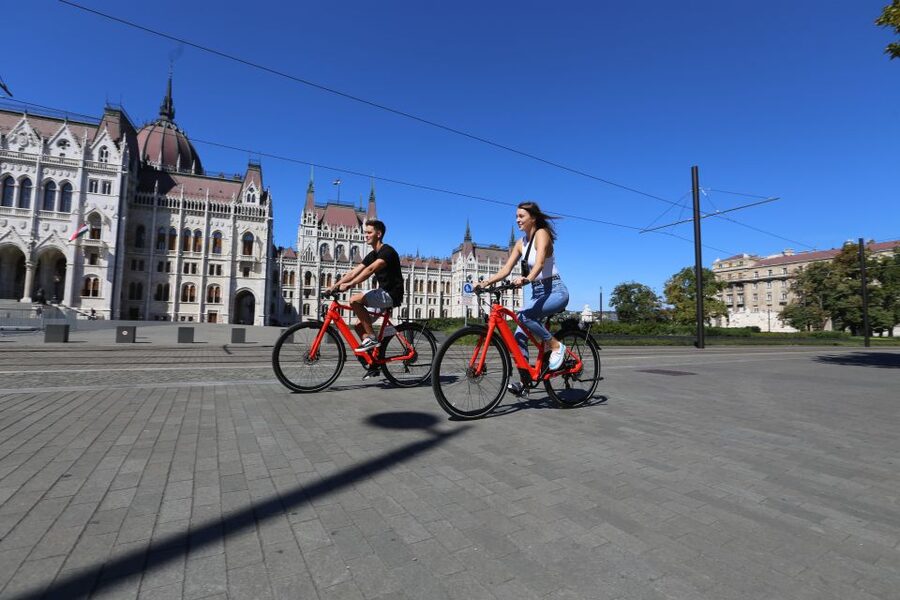
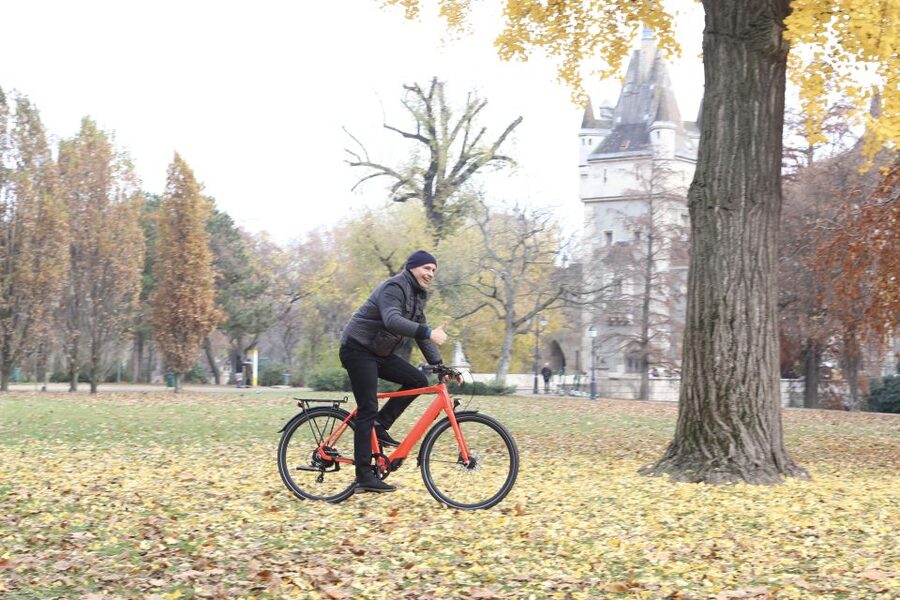
From Heroes’ Square, the route moves into City Park. Expect a quick “wait, that’s not real” moment at the fake castle in the park area, then keep moving because the tour is built around variety, not one long museum-style session.
You’ll also pass by the Széchenyi Thermal Bath, the largest and most popular bath in Budapest. You won’t go inside on this ride, but even the exterior and the surrounding setting help you understand why bath culture is such a defining part of daily life here.
This is also a nice section for an easier rhythm. The bike lanes and smaller streets keep the ride feeling smooth, and it’s a good time to get comfortable if you’re still figuring out your pedal cadence.
Downtown landmarks: Basilica, Liberty Square, Parliament, and the Danube view
Once the route dips downtown, you get the big-ticket religious and civic sights in a sequence that builds momentum.
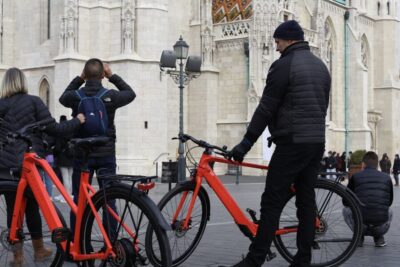
You’ll pass St. Stephen’s Basilica, the largest church in Budapest. It’s impressive from outside, and the guided stories help you notice details you’d otherwise miss when you’re just snapping photos.
Next is Liberty Square, in the financial district. This stop comes with heavy context: it has a bloody history and a disputed Holocaust memorial. The value here is that the guide connects monuments to meaning, so you understand why people argue about memory and space.
Not far from there is the Hungarian Parliament Building. You’ll be able to see why it’s a centerpiece, even without entry. Then the tour heads toward the Danube River and sets you up for a view that feels like the city’s postcard version, but earned by your position.
Shoes on the Danube and Chain Bridge: big photos, real-world limits
At the Danube, you’ll pass the Monument of the Shoes. Important practical note: direct access can’t always be granted, so don’t plan your entire photo plan around getting right up close. Even when you can’t step in beside it, the story and placement along the river still land.
Then you’ll cross the Chain Bridge, which is newly renovated and closed for private cars. This matters because it changes the feel of the crossing. Without private car traffic, it’s easier to concentrate on the views: Pest’s streets opening out in one direction, and the Buda side showing up across the water.
If you’re the type who likes structure, this is also where your mental map really sharpens. You’ve now connected the river to the main landmarks you’ll hear about everywhere in Budapest.
Two wheels, other routes in Budapest
Castle Hill climb: the e-bike moment everyone talks about
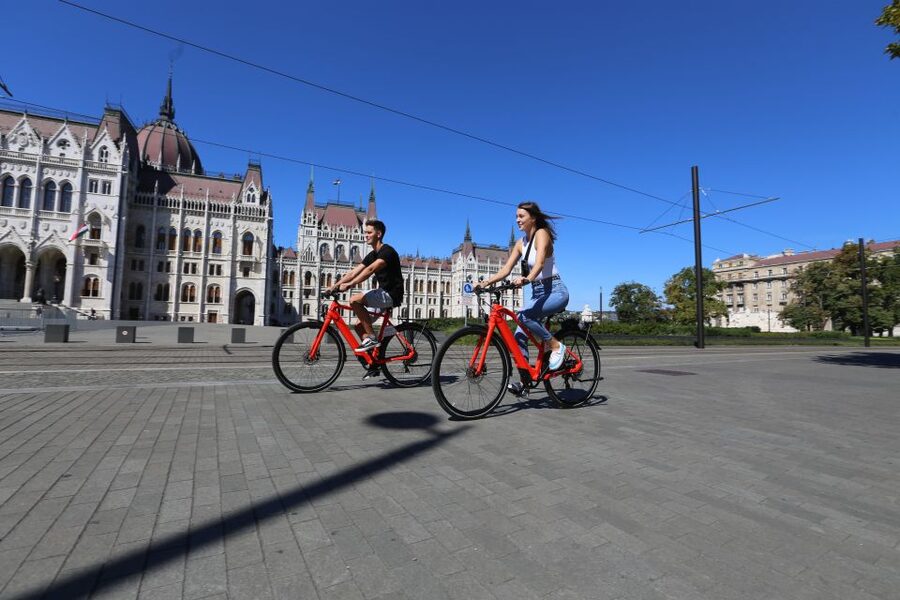
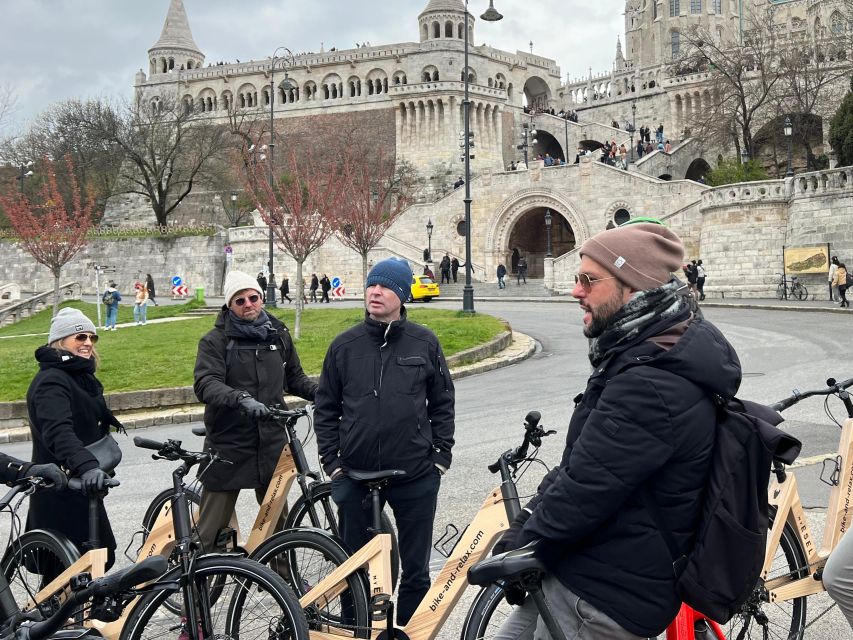
After crossing into Buda, the route starts climbing Castle Hill. This is the part where the e-bike’s electric support earns instant gratitude.
The climb up can be intimidating on foot, but on the bike it becomes manageable. You’ll still pedal, but you won’t feel like you’re losing the whole tour to one hill. This is also a great area to slow down and look, because the panoramic views kick in while you’re still moving.
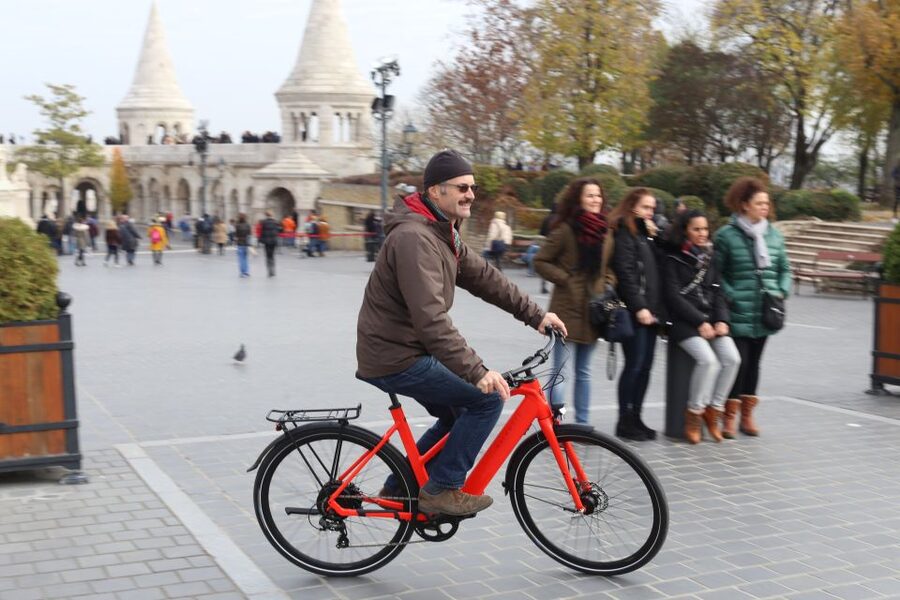
At the top, you’ll admire Matthias Church and head toward Fisherman’s Bastion. These are classic viewpoint stops. You’ll get the postcard skyline feel, plus the guided explanations that help you understand what you’re looking at and why it became so iconic.
One more practical note: you’re not entering the landmarks during the tour. You’ll focus on photos, viewpoints, and short pauses rather than ticket lines.
Baths and bridges: Rudas, Gellért, and Liberty Bridge
On the way back, the tour keeps the “views plus context” strategy.
You’ll pass Rudas Bath along the Danube bank. Then the route reaches Gellért Hill, where you’ll see the Gellért Thermal Bath area. These baths are different in feel, but the common thread is that Budapest builds part of its identity around thermal waters and public life.
Finally, you’ll cross the Liberty Bridge, identified here as the most popular bridge in Budapest. It’s a smart end-of-the-day bridge moment because it helps you see how the city flows between districts without needing to memorize street names.
By now, you should feel like you’ve traced the city’s spine. That’s the real value of biking this route versus randomly grabbing taxis or only doing one side of the river.
Market Hall and National Museum: finishing on the cultural circuit
As you head back into Pest, you’ll hit two very practical sightseeing zones: food and museums.
First is the Central Market Hall. You won’t be doing a full shopping mission on this tour, but you’ll see the scale and vibe, which helps a lot when you want to plan a separate visit later.
Then you’ll pass by the Hungarian National Museum. Again, no entry on this ride, but you get a strong sense of where formal culture sits in the city layout, and how it connects to major squares and transit points.
The ride closes with the Dohány Street Synagogue, the final stop before you head back to Bike and Relax. Even outside, it’s a major visual anchor, and it makes the Jewish Quarter feel like a fitting starting and finishing frame.
Bike comfort, pacing, and how the tour keeps you from feeling rushed
This tour works because it’s built for motion without chaos. The route uses bicycle lanes and small streets, so you’re not constantly stopping at each intersection. And the duration is short enough that you stay fresh for the full loop.
It also helps that the groups are limited to 10 participants. That smaller cap is a big deal in a city where sightseeing can otherwise turn into herding. With a small group, the guide can adjust pacing without losing control of the schedule.
I also like the “you can still do your own exploring later” design. You get photo stops and time to walk a bit at key points, but you’re not stuck in long, indoor segments. For many people, the tour becomes a planning tool: you come away with a shortlist of where you want to spend more time on your own.
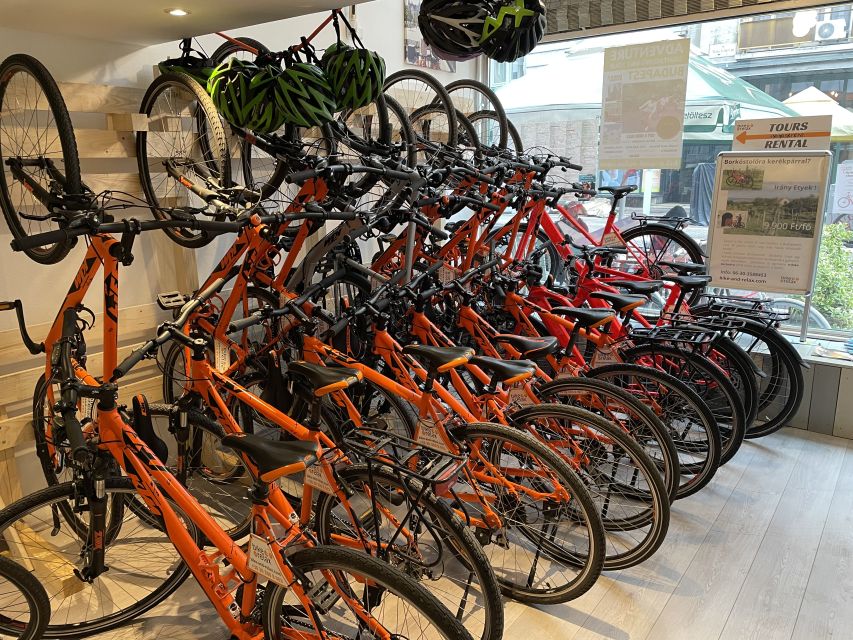
On the bikes themselves, you’ll get either my-esel models with wooden frames or Kalkhoff Berleen e-bikes. The good news is that the seat and riding setup are designed to feel stable for sightseeing, not like a training machine. Still, one note worth keeping in your head: a few people mention seat comfort as the only weak spot. Bring patience for that, and maybe plan for a quick shake-out stretch during breaks.
Price and value: $63 for e-bikes, guide time, and a full-day feel
At $63 per person for about 3.5 hours, this tour isn’t the cheapest way to move around Budapest. But it’s also not trying to be a budget transport service. You’re paying for two things that are hard to DIY quickly: a guided narrative through landmarks across both sides of the city, and access to an e-bike that makes the whole route doable.
What’s included is clear: e-bike rental plus a tour guide. Helmet is listed as optional, and you won’t be paying for meals on top of the price. Food and drinks are not included, so bring water or plan to buy it later.
In terms of value, the price makes more sense if you’re:
- On a short stay and want a structured “greatest hits” loop
- Not thrilled about stair-stepping or sweat-heavy hill walks
- Traveling with someone who wants the sights but may not want a long walking day
- The type who benefits from a guide’s context instead of just photos
Who should book, and who should skip the e-bike loop
This is best for people who can ride a bike confidently. The tour is not suitable if you can’t ride, can’t handle city riding, or if you’re outside the posted size and weight limits (under 160 cm, under 155 cm, or over 110 kg). It also isn’t for children under 13, and it’s not suitable for pregnant women or people with mobility impairments.
If you’re unsure about your fitness level, the e-bike helps a lot. Many guides on this route are described as calm and considerate with pacing, which makes it easier for non-cyclists to keep up. On steep sections, electric assist helps you avoid the “I’m dying on the hill” experience.
Should you book this Andrássy Avenue to Castle Hill tour?
If it’s your first 2 to 4 days in Budapest, I’d book it. The loop hits the city’s major identity points: Andrássy Avenue, Heroes’ Square, the Danube, Castle Hill, and the synagogue, all with a guide guiding your attention where you’ll actually remember details.
I would especially recommend it if you want to get your bearings fast and decide what to revisit. The tour also tends to work well for mixed experience levels because the e-bike support reduces the strain of hills without turning the ride into a stroller.
Skip it only if you already know you hate riding in cities, or if you’re not comfortable balancing on a bike while stopping for photos and navigating turns.
FAQ
How long is the Budapest guided downtown e-bike tour?
It lasts about 3.5 hours, though the exact timing can vary depending on day conditions.
What’s included in the $63 price?
The price includes an e-bike rental and a tour guide. Helmet is optional, and food and drinks are not included.
Do you enter any of the landmarks during the tour?
No. You will not enter the landmarks mentioned on the route. The stops are photo stops and sightseeing from outside.
Where does the tour start?
Meet at Bike and Relax in the center of the Jewish district, near Café Hivatal by the shop, around the corner from Gozsdu udvar court.
Which languages are offered for the live guide?
The live guide is available in German, French, and English.
Do you need to pedal on the e-bike?
Yes. An e-bike provides electric support, but you still pedal.
Who is the tour not suitable for?
It is not suitable for children under 13, pregnant women, people with mobility impairments, and people who cannot ride a bike. There are also height and weight limits listed for safety.
More Tours in Budapest





More Tour Reviews in Budapest





On Two Wheels Around Budapest





Reviewed recently around Budapest
- Audio visual multi-sensory chefs journey dinner experience★ 5.0 · 3 reviews
- Tapolca Cave Lake and Tihany/ Balaton private tour from Budapest★ 4.5 · 3 reviews
- SzentEndre-SaintAndrew City Privately Shopping and Picturesque★ 4.5 · 3 reviews
- Sightseeing flight over Budapest★ 5.0 · 3 reviews
- Self Guided Tour In Budapest With 100 Captivating Audio Stories★ 5.0 · 3 reviews
- Private Danube Bend Visegrad and Szentendre Tour With Transport★ 5.0 · 3 reviews
Segway, Scooter and Bike Tours, compared.
 ★ 5.0Budapest Small-Group Guided Tour on MonsteRoller e-ScooterFrom $721,517 reviews
 ★ 4.9MonsteRoller E-Scooter TourFrom $451,038 reviews
 ★ 4.8Grand Sightseeing Bike TourFrom $44984 reviews
 ★ 5.0Budapest Highlights️ Live Guided Segway TourFrom $3898 reviews
 ★ 5.0Budapest Highlights Bike TourFrom $39770 reviews
 ★ 4.7Guided City Discovery Bike TourFrom $38702 reviews
 ★ 5.01.5 Hour Budapest Segway Tour – To The Castle AreaFrom $47614 reviews
 ★ 4.91.5-Hour Fun Segway SightseeingFrom $53583 reviews
Browse the lists this tour appears in