
Review · HUNGARIAN FOOD TOURS AND TASTINGS
Budapest: Essentials of Hungarian Wine Tasting Class
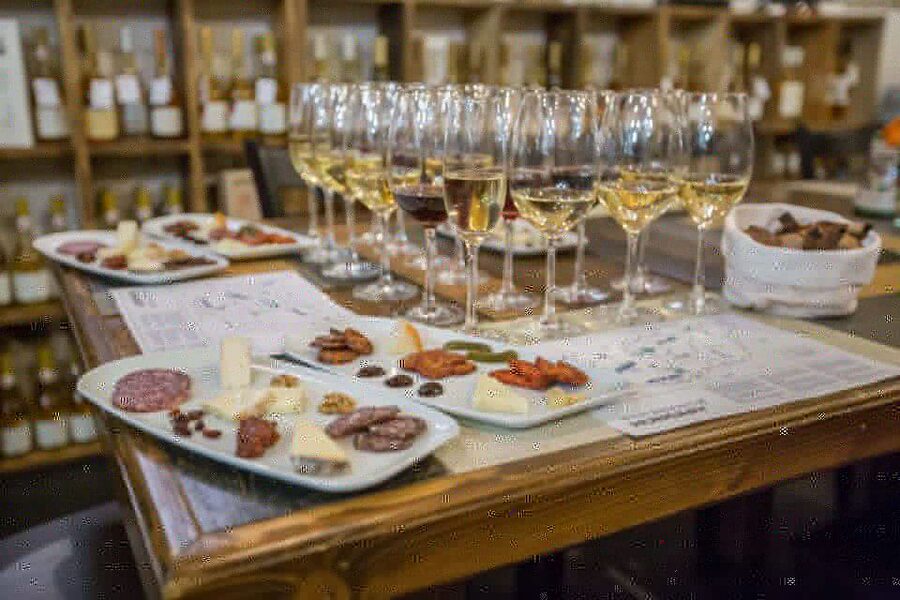
Hungary in two hours, eight pours at a time. This sommelier-led class turns a confusing wine country into a clear story, and it does it with 8 Hungarian wines plus food, right in central Budapest. One thing to consider, the pacing can feel talk-heavy if you prefer a slower, more minimalist format.
I also like the way the tasting is built for real taste, not just lectures. You get Hungarian cheese and charcuterie pairings that make the wines easier to understand, and it all ends with a memorable Tokaj aszú sweet pour.
In This Review
- Key things you will enjoy about this Budapest wine class
- Entering Budapest wine country near the National Museum
- The 2-hour rhythm: aperitif first, then reds and whites, ending with Tokaj aszú
- What you taste: eight Hungarian wines that tell one connected story
- Food pairings that actually help you taste Hungary
- Hungarian wine regions explained without the paperwork
- The sommelier experience, and how to get the most from the host
- Price and value: is $65 a fair deal?
- Who this Budapest tasting is perfect for, and who should think twice
- Practical tips for your tasting night
- Should you book this Budapest Essentials of Hungarian Wine Tasting?
- FAQ
- How long is the Hungarian wine tasting class in Budapest?
- What is included with the $65 per person price?
- Where do I meet for the tasting?
- What time does the tasting usually run?
- What kinds of wines will I taste?
- Do I need to be a wine expert to join?
- Is the host or greeter available in English?
- Is there an age requirement for this experience?
- What if the tour has to be canceled or my plans change?
Key things you will enjoy about this Budapest wine class
- 8 wines with a logical flow from aperitif to reds and whites, then a sweet Tokaj aszú finish
- Sommelier-led explanations tied directly to what you are drinking, not random facts
- Local pairings designed for Hungarian flavors, with mineral water included
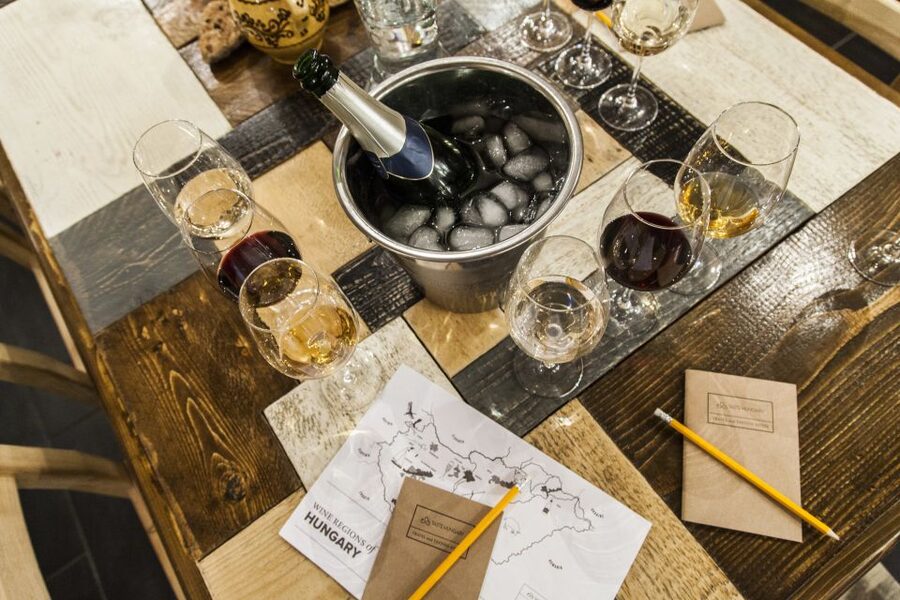
- Tasting sheets with a map of the Hungarian wine regions so you can take notes
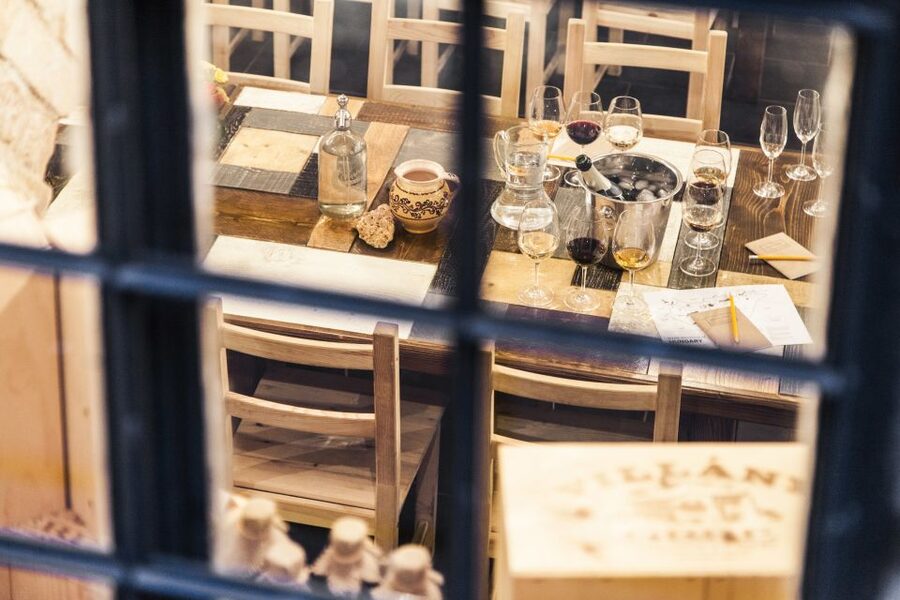
- A charming tasting room setup that keeps the evening social and relaxed
Entering Budapest wine country near the National Museum
This tasting meets at The Tasting Table Budapest, Bródy Sándor utca 9 in District VIII. It is about a five-minute walk from both Astoria (M2) and Kálvin tér (M3), and trams 47 and 49 stop nearby at Astoria and Kálvin tér. If you are already doing museum time, this location is easy to plug into your evening.
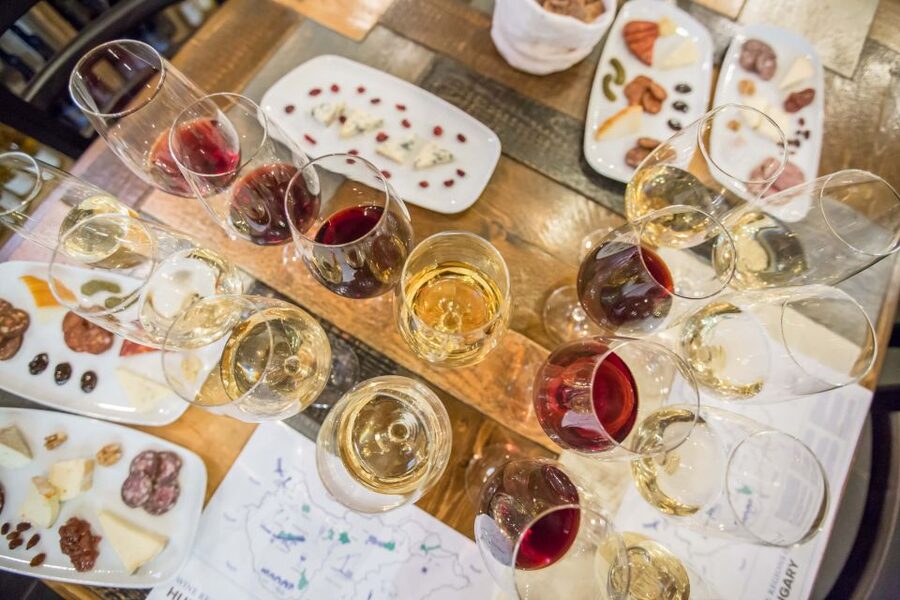
The room itself has that old-cellar feel, with brick arches that make the space feel more like a proper wine tavern than a generic classroom. In practice, that matters because you are going to spend two hours tasting and chatting. A comfortable setting helps you stay focused instead of rushing through it.
One practical note, this is an evening activity most nights from 6:00 PM to 8:00 PM. Plan on arriving a few minutes early so you can get settled before the first pour starts.
The 2-hour rhythm: aperitif first, then reds and whites, ending with Tokaj aszú
The structure is simple, which is why it works. Over about two hours, you taste eight wines in an order that builds your understanding. It typically begins with an aperitif, then moves into whites and reds (and you might also see a rosé in the mix), and it finishes with a sweet botrytised Tokaj aszú wine.
That order is not just tradition, it is palate management. Starting with a lighter style helps your mouth reset before the fuller reds show up. Ending with Tokaj aszú makes sense too, because the sweetness and aroma are a finale, not something you want right at the start.
In a lot of wine tastings, you get the wine and then get a long story after the fact. Here, the teaching stays connected to the glass in front of you, which is the difference between remembering a few general impressions and actually learning what you are tasting.
Keep eating. More Budapest tastings on our list
- Countryside Half-day Gastro-Wine Tour from Budapest Meal & pickup
★ 5.0 · 1,450 reviews - Budapest All in One Small Group Walking Tour with Strudel Stop
★ 5.0 · 1,277 reviews - Budapest: Hungarian Chimney Cake Workshop in the City Center
★ 4.8 · 885 reviews - Budapest: Wine, Cheese, and Charcuterie Tasting
★ 4.9 · 647 reviews
What you taste: eight Hungarian wines that tell one connected story
The headline is eight wines. You are not doing random sampling. Each wine is there for a reason, so by the end you should have a better mental map of where Hungarian wine fits in the bigger world.
You should expect variety across the night: an early aperitif style, several whites, several reds, and that sweet Tokaj aszú at the end. Even if you do not know Hungarian grape names today, you will start to hear patterns, like how certain regions lean toward freshness, or how other areas build richer, warmer profiles.
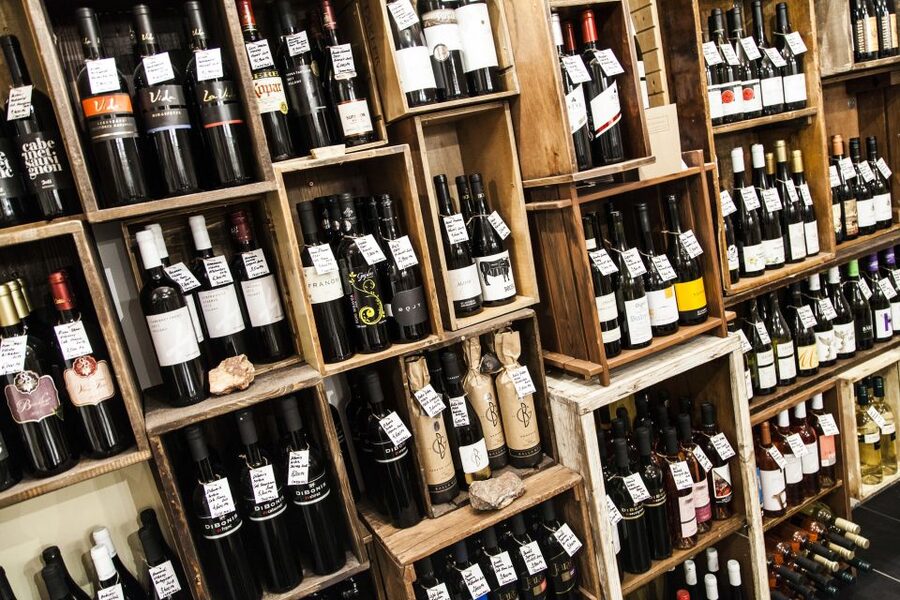
A big value point is that many bottles are from smaller producers. That tends to mean you are tasting more character than mass-market sameness. You also get a sense of why Hungarian wine feels different from what people expect when they only know the global supermarket versions.
Also, the pours are generous. That is great for learning, but it also means your “tasting brain” can get loose faster than you think. If you want to take notes, use the tasting sheets early, then switch to lighter note-taking as the evening rolls on and conversation ramps up.
Food pairings that actually help you taste Hungary
The food is not an afterthought. You get food pairings made with local Hungarian flavors, and that pairing is built into each stage of the flight. Expect cheese and charcuterie-style selections, with bread and items that match well to both white and red wines.
Why this matters: Hungarian food has its own flavors and fat levels, and those change how you perceive acidity, tannin, and aroma. A white that feels sharp on its own might feel cleaner next to the right cheese. A red that tastes heavy alone might feel balanced with the right pairing.
If you want a simple strategy, watch what happens when you switch from wine to food, then back to wine. That back-and-forth is where the learning clicks. Even if you only catch a couple of those moments, you will leave with a better instinct for matching Hungarian wines to the kinds of dishes you will see in restaurants.
One more detail that seems to land well, there are tasting sheets and you can take notes. They include a map of the Hungarian wine regions, which is useful because the talk is not only about taste. It is also about context.
Hungarian wine regions explained without the paperwork
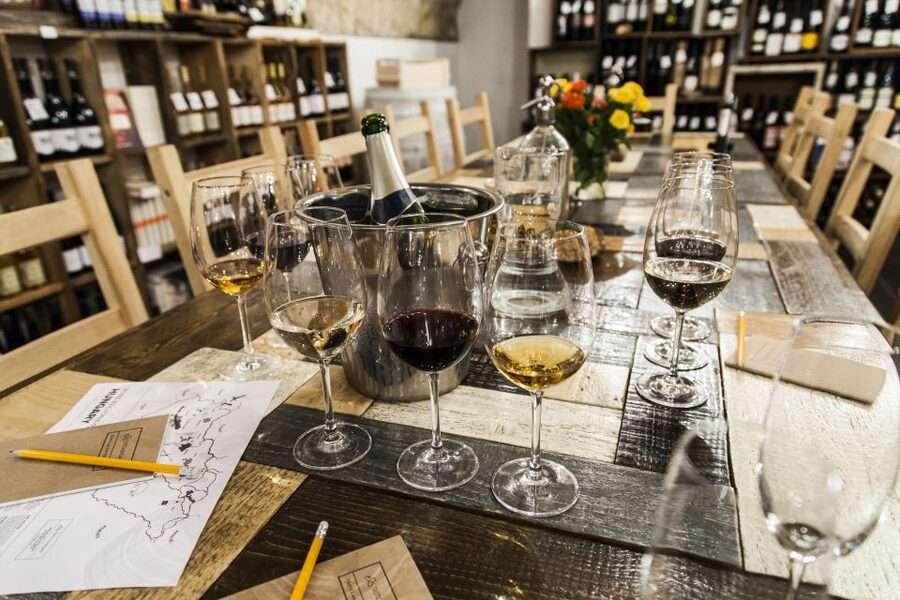
You get a crash course in Hungarian wine: history, major regions, important varietals, and the characteristics and styles that define each area. The goal is not to turn you into a sommelier by the end. The goal is to give you a foundation you can build on later, when you are reading a menu or shopping for a bottle.
On this kind of tasting, the map helps a lot. When you can link a grape or style to a region on paper, you stop thinking in disconnected trivia. You start thinking in patterns: climate, soil, and tradition, then the wine result.
The teaching tends to come in layers. First you taste, then you hear what you are tasting and why it might behave a certain way. You end up with a story you can recall later instead of a list of facts.
There is also a subtle but important advantage here: you are tasting wines that were bought directly from producers. That typically means the flight is built for understanding rather than just filling space with whatever is easiest to pour.
The sommelier experience, and how to get the most from the host
The host is a sommelier, and the experience stays English-led. You may meet different guides on different nights, and names that show up include Somali, Sam, Tomas, John, Carlos, Nikki, Christian, and Sebastian. The common thread is that the explanations are tied to the wines in front of you.
The format often includes short teaching segments, then time to taste and talk before the next wines arrive. That matters for two reasons. One, it keeps the evening from feeling like a nonstop lecture. Two, it gives you space to compare notes with other people at your table.
Still, there is one possible drawback to keep in mind. A few people have noted that the talk can feel like it runs long, and one suggestion that comes up is switching glasses between whites and reds. In real life, glass handling affects how quickly flavors carry over. If you are picky about separation, pay attention to what the staff is doing, and if you want clearer differentiation, ask politely if they can reset glasses between stages.
Also, because this is a social setting, the noise level can vary based on group energy. If you are sensitive to hearing details, choose a seat where you can face the host clearly.
Another glass? Hungarian wine and palinka, reviewed
Price and value: is $65 a fair deal?
At $65 per person for a two-hour evening that includes eight wines, mineral water, and food pairings, this tends to be good value if you want learning plus dinner-like satisfaction in one stop. You are not paying for a single flight with tiny tastes. The pours are more like full tasting glasses, which lets you actually notice differences between styles.
You are also paying for structure. The tasting sheets with region maps are not free-floating handouts, they are part of how the teaching connects to the flight. If you have ever left a tasting still unsure what you drank, this format is designed to prevent that.
Another value factor is the “buy what you like” possibility. The setting includes a shop component, and people have said they returned to buy bottles after tasting. Some sessions also include spirits tasting options if you want to extend the evening further.
If your priority is pure sightseeing only, you might prefer a free neighborhood walk. But if your priority is wine education you can use later, $65 for eight wines plus pairings is a sensible spend.
Who this Budapest tasting is perfect for, and who should think twice
This class fits best if you are:
- Curious about Hungarian wine, but not sure where to start
- Someone who learns by tasting, not by reading
- Planning a wine-focused day or two and want context fast
- Traveling with friends and want an easy group activity that includes food
It may not be ideal if you:
- Want a quiet, minimalist tasting with very little commentary
- Are very detail-driven about glass changes and palate separation
- Prefer to spit or heavily ration pours and would rather do a lighter version
That said, even if you are not a wine person today, the structure is friendly to beginners. The evening is set up as an introduction, and the wines are chosen to teach you what to notice.
Practical tips for your tasting night
A few tips make a noticeable difference.
First, bring your curiosity, not your flashcards. The staff’s job is to connect what you taste to what it means, especially by walking you through regions and styles as the flight progresses.
Second, use the tasting sheets early. Write down quick anchors for each stage, like the wine color, the general flavor impression, and the region name when it is mentioned. After a few pours, your handwriting will slow down, and that is normal.
Third, pace your water. Mineral water is included, and it is there for a reason. It helps you keep your palate steady and prevents the evening from turning into one long blur.
Fourth, plan for the walk back to your hotel. You will be drinking, and it is not a long distance if you are staying central, but still plan responsibly.
Finally, if you care about separate tasting, watch whether staff switches glasses between whites and reds. If not, you can politely ask for a quick reset between sections.
Should you book this Budapest Essentials of Hungarian Wine Tasting?
I think you should book this if you want a two-hour, English-led way to understand Hungarian wine without doing homework first. The best part is the combination: eight wines with a clear order, local food pairings, and a sommelier who keeps the explanation connected to the glass. Add the region map in the tasting sheets, and it becomes a practical intro you can use later when you order or shop.
Book with an open mind if you are okay with a social, talk-forward setting. If you prefer ultra-quiet tastings or you are very sensitive to noise, choose your seat carefully and consider asking the host how they can keep the pacing comfortable for the group.
If your schedule allows a 6:00 PM to 8:00 PM slot, this is an easy evening win near major transit. For many people, it becomes the one wine activity in Budapest that actually changes how they look at menus afterward.
FAQ
How long is the Hungarian wine tasting class in Budapest?
The experience lasts 2 hours.
What is included with the $65 per person price?
You get a guided tasting led by a sommelier, 8 wines, mineral water, food pairings made with local Hungarian flavors, and tasting sheets with notes space and a map of Hungarian wine regions.
Where do I meet for the tasting?
The meeting point is The Tasting Table Budapest, Bródy Sándor utca 9, 1088 Budapest (District VIII). It is about a five-minute walk from Astoria (M2) and Kálvin tér (M3).
What time does the tasting usually run?
This class is available on most evenings from 6:00 PM to 8:00 PM.
What kinds of wines will I taste?
The flight is designed to cover Hungarian wine styles across the evening, usually starting with an aperitif, moving through whites and reds (and possibly rosé), and ending with a sweet botrytised Tokaj aszú.
Do I need to be a wine expert to join?
No. This class is set up as a crash course for people who want to understand relatively unknown Hungarian wines better.
Is the host or greeter available in English?
Yes. The host or greeter offers English.
Is there an age requirement for this experience?
Yes. The legal drinking age is 18 in Hungary, so participants must be at least 18.
What if the tour has to be canceled or my plans change?
Free cancellation is available up to 24 hours in advance for a full refund. There is also a minimum number of guests, and in the event it cannot run you will be offered an alternative or a full refund.
More Tour Reviews in Budapest


Budapest by the Glass
Room for One More Plate in Budapest
Reviewed recently around Budapest
- Audio visual multi-sensory chefs journey dinner experience★ 5.0 · 3 reviews
- Tapolca Cave Lake and Tihany/ Balaton private tour from Budapest★ 4.5 · 3 reviews
- SzentEndre-SaintAndrew City Privately Shopping and Picturesque★ 4.5 · 3 reviews
- Sightseeing flight over Budapest★ 5.0 · 3 reviews
- Self Guided Tour In Budapest With 100 Captivating Audio Stories★ 5.0 · 3 reviews
- Private Danube Bend Visegrad and Szentendre Tour With Transport★ 5.0 · 3 reviews
Hungarian Food Tours and Tastings, compared.
 ★ 5.0Countryside Half-day Gastro-Wine Tour from Budapest Meal & pickupFrom $991,450 reviews
 ★ 5.0Budapest All in One Small Group Walking Tour with Strudel StopFrom $1001,277 reviews
 ★ 4.8Hungarian Chimney Cake Workshop in the City CenterFrom $40885 reviews
 ★ 4.9Wine, Cheese, and Charcuterie TastingFrom $50647 reviews
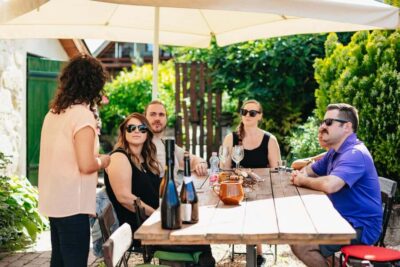 ★ 4.8From Budapest: Etyek Wine Tasting Tour with 3-Course MealFrom $102557 reviews
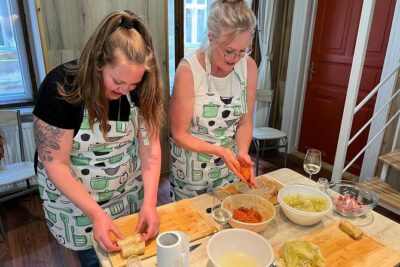 ★ 5.0Budapest Cooking Class & Market Tour with Local Guide & WinesFrom $99553 reviews
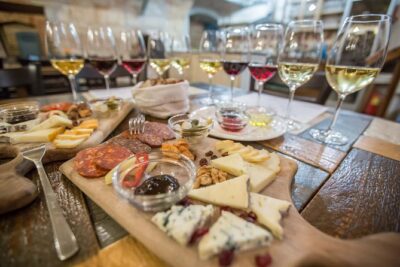 ★ 5.0Hungarian Wine Tasting (with Cheese and Charcuterie) in BudapestFrom $50531 reviews
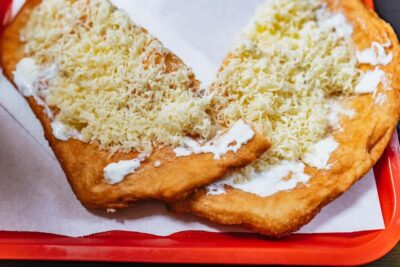 ★ 4.9Guided Foodie Walking Tour with Food and DrinksFrom $70453 reviews
Browse the lists this tour appears in