
Review · PRIVATE
Private Art Nouveau Budapest Tour
Budapest glitters in Art Nouveau stonework. This private, 4-hour tour is built around the city’s most ornate Secessionist-era architecture, from Ödön Lechner’s Museum of Applied Arts to the Art Nouveau focus around Liberty Square. I love the way the route links style to street-level details, and I also love the included coffee-and-cake break in a setting designed for lingering.
One thing to keep in mind: the tour quality can depend heavily on your guide and timing, and there have been occasional problems with guide arrival noted in the broader marketplace.
In This Review
- Key things to know before you go
- Art Nouveau Budapest, why this style still feels personal
- The 4-hour flow: Museum of Applied Arts to Liberty Square
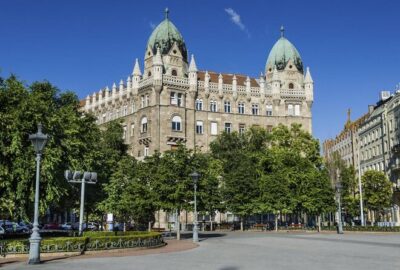
- Starting at the Museum of Applied Arts, Lechner’s Hungarian Gaudí moment
- Walk, then tram: how to see more without getting worn out
- Gresham Palace, luxury you can feel even before you look closely
- Coffee break at the House of Hungarian Art Nouveau, where the details keep going
- Liberty Square, one square, many lessons
- Hungarian State Treasury rooftop, the view you earn by getting close
- Price and value for a private group up to 25
- Guide quality matters, and I’d plan around it
- Practical tips so your tour runs smoothly
- Should you book this Art Nouveau Budapest Tour?
- FAQ
- How long is the Private Art Nouveau Budapest Tour?
- Is this tour private?
- What is the price?
- Where do I meet the guide?
- What’s included in the tour?
- Is there a coffee or cake stop?
- Which languages are available for the live guide?
- What should I bring with me?
- Is free cancellation available?
- Can I reserve without paying immediately?
Key things to know before you go
- Art-historian perspective: You get context for how Hungarian Art Nouveau grew out of European Secession ideas.
- Lechner starting point: The best kickoff is the Museum of Applied Arts, often called the Hungarian Gaudí.
- Smart city pacing: A walk plus a short tram ride helps you see more without sprinting.
- Gresham Palace interior vibe: You spend time with the building’s old-world luxury, not just the facade.
- Liberty Square focus: Several buildings from the same period make the square an easy place to compare styles.
Art Nouveau Budapest, why this style still feels personal
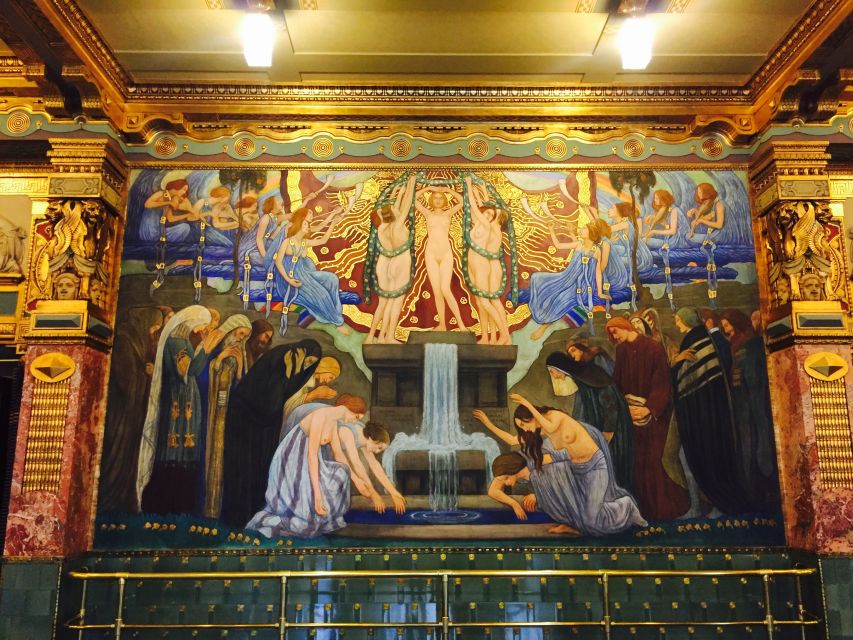
Art Nouveau in Budapest is not just decoration. It’s a whole way of thinking: geometry that curves, surfaces that feel imperfect on purpose, and stained glass that makes light look like it has a personality. When the style took off in the late 1900s, it wasn’t a single look. It was multiple European currents blending together, then eventually turning into a Hungarian “national style” with its own voice.
That’s the real payoff of a guided approach. Without help, you might take photos and move on. With the right guide, you start to notice why the details are the way they are, and how architects borrowed ideas, then transformed them for Budapest. This tour is designed for that moment when buildings stop looking like background and start telling you how the city changed.
You’ll also get the practical benefit of a private format. You can ask questions, linger where you care, and keep the pace comfortable. In 4 hours, that matters.
The 4-hour flow: Museum of Applied Arts to Liberty Square
The tour’s shape is simple, which is good news for your feet. You meet your guide at your hotel, then you head out with a route that can flex based on where you start. The best starting point is the Museum of Applied Arts, because it sets the tone for what you’ll see later.
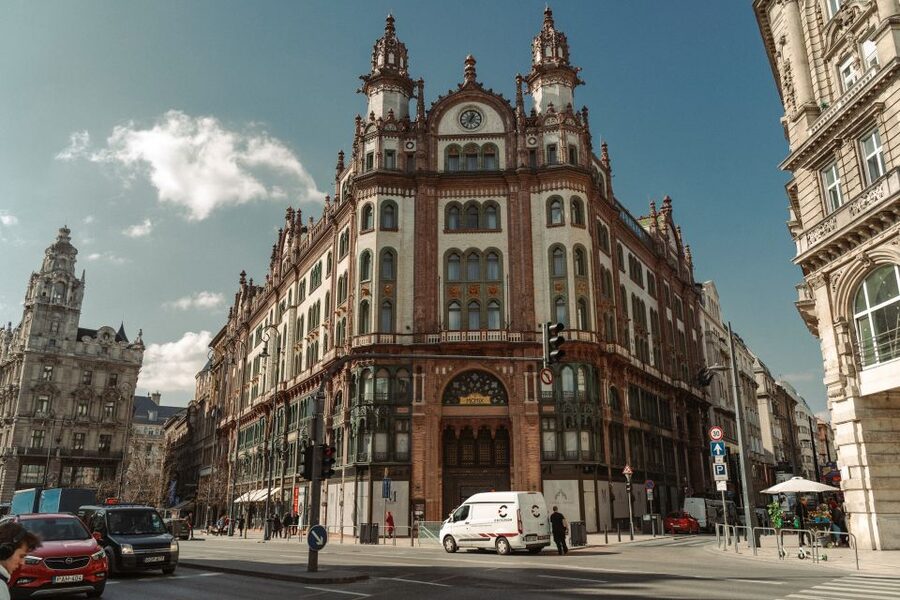
From there, you do a pleasant walk and then take a short tram ride back toward the city center, where many of Budapest’s famous Art Nouveau buildings cluster. Along the way, you’re encouraged to compare older masterworks with newer modern constructions that use similar motifs, especially around Váci street.
After that, the tour turns into a sequence of “pause and look” moments: Gresham Palace for the atmosphere, then a coffee break at the House of Hungarian Art Nouveau, then Liberty Square for the overall square-level comparison. The final highlight is the Hungarian State Treasury, famous for a rooftop that you can’t really appreciate from street level but can get close to during the visit.
Private guides we booked in Budapest
- Private Budapest TukTuk Tour: Custom Route, Hotel Pickup
★ 5.0 · 1,307 reviews - Budapest Essentials Private Tour Highlights and Hidden Gems
★ 5.0 · 861 reviews - Budapest Private Tuk Tuk Half-Day Tour
★ 5.0 · 606 reviews - Budapest One Way Private Transfer to or from Airport
★ 4.5 · 548 reviews
Starting at the Museum of Applied Arts, Lechner’s Hungarian Gaudí moment
If you want one building to anchor your whole Art Nouveau understanding, start here. The Museum of Applied Arts is described as the masterpiece of Ödön Lechner, a name you’ll hear again and again when Hungarian Art Nouveau comes up.
What I like about beginning here is that it gives your eyes a framework. You can connect the wavy facades, rounded stained glass, and colored roof tiles to a bigger story, not just to pretty shapes. Lechner’s work is a good place to understand how Hungarian designers took European ideas and made them feel distinctly local.
Practical note: plan on comfortable, supportive shoes. Even though the walking is “pleasant,” you’ll still be on your feet enough to make footwear matter.
Walk, then tram: how to see more without getting worn out
Budapest’s Art Nouveau sites are spread out enough that you can waste time if you go solo. This tour solves that with a walk-to-tram rhythm. You stroll for the best close-up time, then use public transport to reposition quickly.
The tram hop also helps you understand the city context. You’re not just stepping between museum stops. You’re moving through a living neighborhood and noticing which buildings carry the style and which ones don’t.
One small logistical caution: the tour description mentions a tram ride, but it doesn’t clearly state that transit tickets are included in the essentials list. If you’re planning to use a transit pass, check with the operator ahead of time so there are no surprises.
Gresham Palace, luxury you can feel even before you look closely
Gresham Palace is one of those buildings that changes your mood when you step inside. Even from the outside, it signals Art Nouveau’s ambition, but the best part is how the place reads once you’re in it. The tour includes time to pop into the palace and take in the luxurious atmosphere of the past and present.
This stop works for two reasons:
1) It breaks the rhythm after the earlier architectural viewing.
2) It helps you understand Art Nouveau as a world of materials and interiors, not just exterior ornament.
If you like your sightseeing to include “how it felt” as much as “what it looked like,” this is a strong moment.
Coffee break at the House of Hungarian Art Nouveau, where the details keep going
At Liberty Square, you get a coffee or soft drink plus a cake, served in a setting connected to Art Nouveau in a very direct way. The House of Hungarian Art Nouveau includes a private collection from the time period, so the snack stop isn’t just a break. It’s a small “time machine.”
I like these kinds of pauses because they reset your brain. Art Nouveau detail is visual work. After a while, your eyes can blur shapes into one another. A seated stop gives you a new lens. You can look again with fresh attention, noticing how the architectural style and the interior world match.
This is also where your guide’s personality shows. If you get a guide who tells good stories, the coffee break becomes part of the tour’s theme, not just a perk.


Liberty Square, one square, many lessons
Liberty Square is practical for comparison. The key idea is that many of the buildings around the square come from the same period, which makes it easier to see patterns side by side. You can compare how different architects treated similar influences, and how Hungarian interpretations developed their own look.
This is a great stop if you like pattern recognition. You’ll come out with a clearer mental map of what Hungarian Art Nouveau does differently than the broader European Secession movement.
It also helps that your guide is an art-historian type, because you’re not guessing at meaning. You learn what to look for, and then the square gives you the chance to test that learning immediately.
Hungarian State Treasury rooftop, the view you earn by getting close
The Hungarian State Treasury is famous for a rooftop that is not really visible from street level. The tour addresses that directly by getting you close enough to appreciate what’s going on.
This is the kind of detail that matters because it teaches you a key sightseeing habit: in Budapest, what you can’t see is often part of the story. A good guide plans for that, instead of treating rooftops like random extras.
It’s also a fitting closer. After the square and coffee, you end with a “final look” that makes the last stretch feel purposeful.
Price and value for a private group up to 25
The price is $377 per group, up to 25 people, for a 4-hour private tour. The value depends on how you’re splitting it.
- If you have a smaller group, you’ll feel the cost more, because you’re paying for a private guide and hotel pick-up rather than sharing guide time with strangers.
- If you have a mid-sized group, the price becomes easier to justify, especially because the tour includes a coffee or soft drink and cake, plus guided time at multiple architecturally significant sites.
Either way, the main value is not the list of stops. It’s the way the tour connects those stops into one clear story about how Art Nouveau spread, split into branches, and then took on a Hungarian identity.
For couples, this can still make sense if one of you loves architecture or you’re planning a focused Budapest trip and don’t want to piece together routes on your own.
Guide quality matters, and I’d plan around it
This kind of tour rises or falls on the guide. The most positive experiences connected to real personalities. Names that have stood out include Suzy, Peter Horvath, and Joel.
Here’s what you can learn from that without depending on any one person:
- A great guide brings Art Nouveau history down to human stories and visible details.
- A flexible guide can adjust timing to improve what you can see, even shifting start times when it helps match special access or other guided sessions.
- The best guides are good at finding places that are hard to reach on your own.
A possible drawback is also hinted at by one serious incident in the broader marketplace: a guide not showing up and refund uncertainty. To reduce risk, confirm the day-of contact method and reconfirm your meeting spot close to departure time.
Practical tips so your tour runs smoothly
Bring comfortable shoes. That’s not optional. You’ll do walking plus transit, and Art Nouveau sightseeing rewards attention, which can make you slow down more than you expected.
Plan for timing to be fluid. One of the strengths of private guiding is that your route can shift slightly based on your meeting point, and your guide may adapt the schedule if there’s an opportunity to see something extra.
Also, if you want to be extra prepared:
- If you plan to use transit, ask whether any ticket is included, since only a tram ride is mentioned and transit passes are not listed in the included items.
- Tell your guide what you care about most, exterior vs interior, stained glass vs facades, or rooftop details. It helps them choose pacing and where to pause.
Should you book this Art Nouveau Budapest Tour?
Book it if you want a guided walkthrough of Budapest’s Art Nouveau highlights with an art-historian angle and an easy route that mixes walking with a short tram ride. You’re also likely to enjoy it if you like architecture enough to notice details, not just snap photos.
Skip it or at least manage expectations if you have a tight schedule that can’t tolerate minor timing changes, or if you’re the type who prefers self-guided sightseeing with minimal human coordination.
If you go, here’s the best decision hack: start at the Museum of Applied Arts when possible. That anchor makes everything that comes after feel more coherent, and it turns scattered buildings into a single story you can follow for days.
FAQ
How long is the Private Art Nouveau Budapest Tour?
The tour lasts 4 hours.
Is this tour private?
Yes. It’s listed as a private group tour.
What is the price?
The price is $377 per group, up to 25 people.
Where do I meet the guide?
You meet the guide at your hotel. Hotel pick-up is included.
What’s included in the tour?
The included items are a coffee or a soft drink, hotel pick-up, and a guide.
Is there a coffee or cake stop?
Yes. A coffee or soft drink with cake is included as part of the tour.
Which languages are available for the live guide?
The live tour guide is available in Spanish, English, French, Italian, and Portuguese.
What should I bring with me?
Wear comfortable shoes.
Is free cancellation available?
Yes. You can cancel up to 24 hours in advance for a full refund.
Can I reserve without paying immediately?
Yes. The option is Reserve now and pay later.
If you want, tell me how many people are in your group and what day you’re visiting, and I’ll help you sanity-check whether the per-group price feels fair for your situation.
Private Guides in Budapest





More Tours in Budapest




More Tour Reviews in Budapest




Reviewed recently around Budapest
- Audio visual multi-sensory chefs journey dinner experience★ 5.0 · 3 reviews
- Tapolca Cave Lake and Tihany/ Balaton private tour from Budapest★ 4.5 · 3 reviews
- SzentEndre-SaintAndrew City Privately Shopping and Picturesque★ 4.5 · 3 reviews
- Sightseeing flight over Budapest★ 5.0 · 3 reviews
- Self Guided Tour In Budapest With 100 Captivating Audio Stories★ 5.0 · 3 reviews
- Private Danube Bend Visegrad and Szentendre Tour With Transport★ 5.0 · 3 reviews
Private, compared.
 ★ 5.0Private Budapest TukTuk Tour: Custom Route, Hotel PickupFrom $991,307 reviews
 ★ 5.0Budapest Essentials Private Tour Highlights and Hidden GemsFrom $116861 reviews
 ★ 5.0Budapest Private Tuk Tuk Half-Day TourFrom $178606 reviews
 ★ 5.0Budapest Private Luxury Sightseeing Tour with Guide and TransportFrom $483442 reviews
 ★ 5.0Private Budapest City tour with Classic Russian Jeep or G-Wagon!From $256386 reviews
 ★ 5.0Budapest Private Full Day City Sightseeing Tour Walking or by CarFrom $181299 reviews
 ★ 5.0Private city tour by vanFrom $181273 reviews
 ★ 5.0Private photography photo session at Fisherman BastionFrom $45269 reviews