

Review · HUNGARIAN FOOD TOURS AND TASTINGS
Stretched Strudel Making Class with 2 Different Fillings
Strudel-making in Budapest feels both old-school and hands-on. You learn to stretch the dough thin by hand, then bake two different Hungarian strudels with fillings you choose. It is a small-group class in a local apartment, led in English by Chef Marti, with stories that connect this pastry to Hungarian home life.
I love that you do the full process together, from dough stretching to the oven, and you leave with two finished results. I also love the family-recipe angle, so this is more than just cooking, it is practical know-how you can repeat at home. One thing to consider: it is not a quick, drop-in demo, you need to be ready to work with your hands for the whole 2.5 hours.
In This Review
- Key Takeaways
- Meeting in a Budapest Apartment, Király u. 77
- Why Hungarian Strudel Has Turkish and Habsburg Threads
- Stretching the Dough: The Skill That Makes It Strudel
- Choosing Two Fillings, From Cabbage to Poppy Seed
- Hungarian Snacks and Wine While the Oven Works
- Eating Together, Then Taking Family Recipes Home
- Price and Value: What $90 Buys You in Real Terms
- Who Should Book This Stretched Strudel Class?
- Should You Book It?
- FAQ
- Where does the class meet in Budapest?
- How long is the stretched strudel making class?
- How big is the group?
- What will I make during the class?
- What fillings are used for the strudels?
- What drinks and snacks are included?
- Is this class suitable for children?
Key Takeaways
- Hands-on stretching technique taught step-by-step so you understand what makes stretched strudel work
- Two strudels baked in one class, so you get variety without doubling the time
- Chef Marti’s patient teaching, with small details meant to help you reproduce the results
- Hungarian snacks, wine, and coffee while the strudels bake, so downtime does not feel like downtime
- Family recipes to take home, aimed at recreating the same style of strudel later
Meeting in a Budapest Apartment, Király u. 77
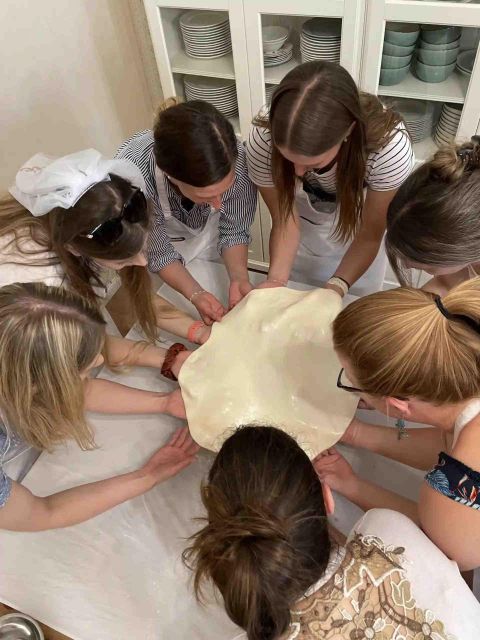
This is the kind of cooking class that feels like you are stepping into someone’s home kitchen, not lining up for a factory-style lesson. The meeting point is in the center of Budapest at Király u. 77, 1077 Hungary, and you go to the local partner’s private apartment. It matters, because the pace tends to be relaxed, the teaching is personal, and you get a real sense of how Hungarian food fits into daily life.
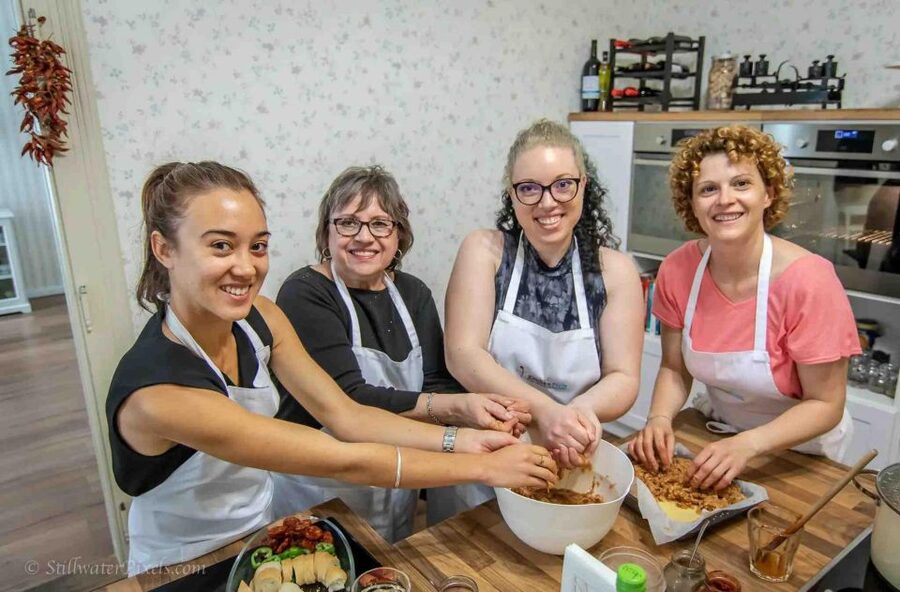
You are in a small group limited to 10 participants, which makes a difference right away. When you are stretching pastry dough, you need feedback. When you are learning a family method, you want questions answered. With a bigger group, you might feel like you are watching more than doing. Here, you should expect to actually handle the dough and work through the steps.
The apartment setting also helps with the lesson’s tone. Chef Marti talks about the background of strudel and how it sits in Hungarian culture, from countryside wedding dinners to the wider Habsburg-era story. That context might sound academic, but it comes with real food knowledge, like why these fillings and customs mattered, and how people carried techniques across generations.
If you are traveling with kids, do note the class is not suitable for children under 10. It is an adult-focused kitchen experience where the work involves hot ovens, sharp tools, and concentration.
Bottom line for logistics: there is no hotel pickup or drop-off, so you will want to plan how you will get to Király u. 77 on your own. If you like small, local, apartment-based experiences in Budapest, this format is a big part of the appeal.
Why Hungarian Strudel Has Turkish and Habsburg Threads
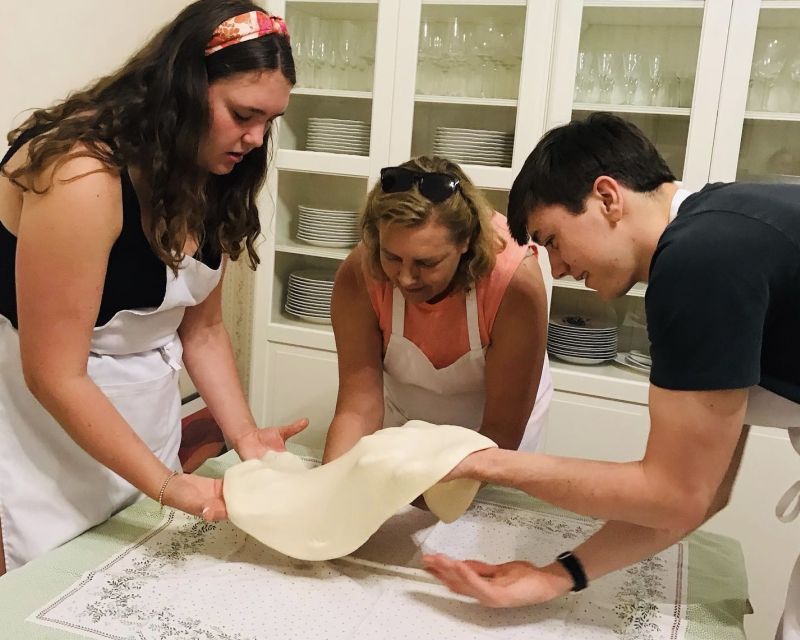
Strudel is one of those foods where the story is part of the flavor. In this class, you get the background that explains why it became a classic in Central Hungary. You will hear how stretched pastry traditions connect to the Turkish influence in Hungary, and how the dessert later became tied to the Habsburg Empire. That is not just trivia, it helps you understand why strudel feels both regional and historically layered.
Chef Marti also shares how strudel shows up in countryside wedding dinners. That detail is worth paying attention to, because it explains the pastry’s role as something special, something meant to feed people on important days, not just a casual snack. In other words, the reason strudel matters is not only technique. It is also culture.
You’ll also learn about the way strudel fits into wider Hungarian cuisine and everyday customs. You might find yourself looking at Hungarian food differently after this, because strudel is one piece in a bigger puzzle: cabbage, poppy seeds, cottage cheese, warm spices, and the kind of homey comfort foods that make sense in real kitchens.
The lesson’s structure supports this history. You will not just listen and then move to kneading. You hear the story, then you stretch the dough, then you fill and bake. That sequence makes the history stick, because it turns into something you can literally taste.
Keep eating. More Budapest tastings on our list
- Countryside Half-day Gastro-Wine Tour from Budapest Meal & pickup
★ 5.0 · 1,450 reviews - Budapest All in One Small Group Walking Tour with Strudel Stop
★ 5.0 · 1,277 reviews - Budapest: Hungarian Chimney Cake Workshop in the City Center
★ 4.8 · 885 reviews - Budapest: Wine, Cheese, and Charcuterie Tasting
★ 4.9 · 647 reviews
Stretching the Dough: The Skill That Makes It Strudel
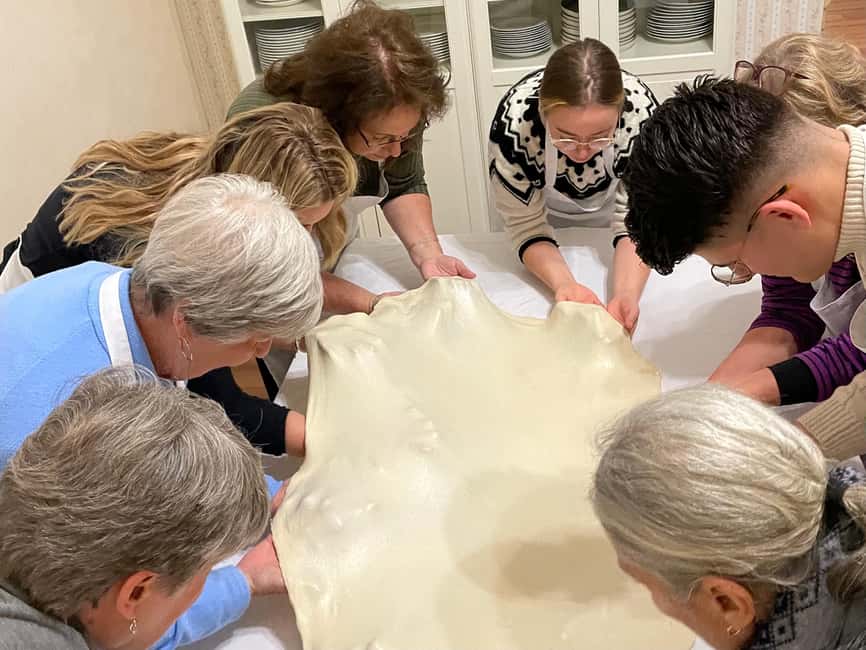
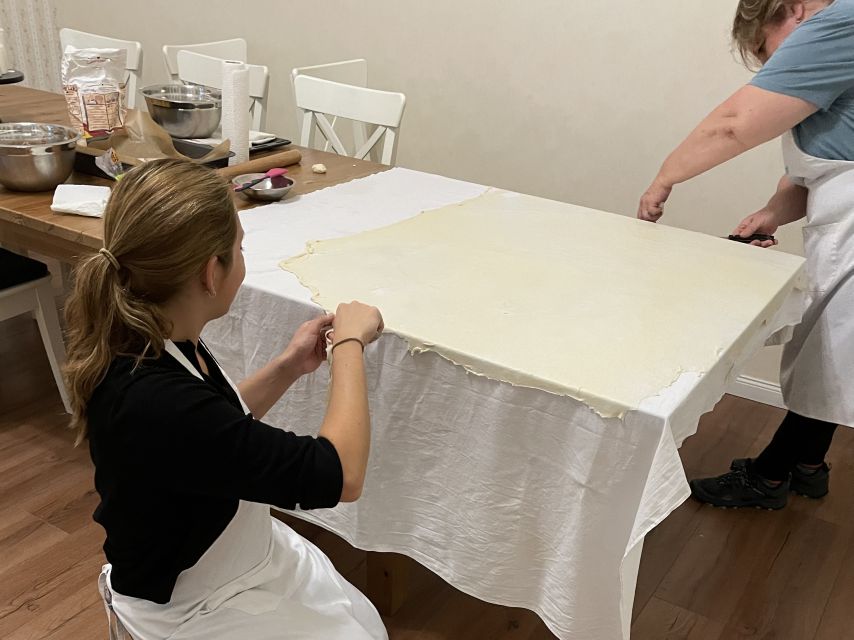
The heart of this experience is learning how to make stretched strudel. The class focuses on the traditional method where you stretch the elastic pastry by hand until it is very thin. Chef Marti guides you through it, and you work alongside the group rather than watching from the sidelines.
That matters because stretched strudel is not like a simple rolled pie crust. It relies on dough that stretches rather than snaps, plus a technique that keeps it even while you expand it. If you have only ever had strudel from a bakery, this is the moment where the pastry stops being magic and becomes something you can understand.
The course gives you structure for the process: you learn the history and context first, then you move into the mother-recipe style method for the stretched version. The class also stresses the practical details, the family tricks and practices that make a difference. Based on the vibe of Chef Marti’s teaching, it is the kind of coaching where you are not just told what to do, you are shown how to adjust when the dough behaves differently than you expected.
You get to make two strudels in the same session. That is a smart way to learn. One strudel helps you focus on the technique. The second lets you repeat the workflow and compare how different fillings play out in the oven. It is also a clear value win for your time: you get variety and practice without needing another booking.
You will also be filling and baking, which keeps the lesson moving. Once the dough is stretched and your filling is added, the oven phase becomes a shared pause. You do not waste it. You taste other Hungarian bites, and you drink while you wait, so the class stays social and fun.
Choosing Two Fillings, From Cabbage to Poppy Seed
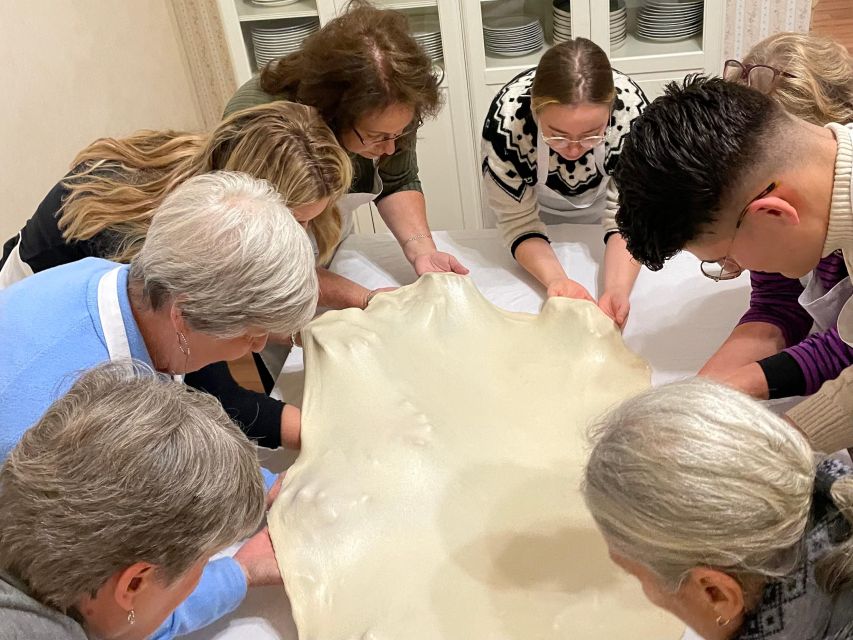
A major perk here is that you make two strudels with two different fillings. You choose your fillings, and the menu includes classic Hungarian options. Expect choices such as:
- Poppy-seed with pumpkin
- Sweet or salty cabbage
- Sweet cottage cheese cream
You also might see other filling combinations offered, including apple and sour cherry paired with cottage cheese. The key point is that you are not limited to one flavor profile. You learn how different fillings behave, how much they need to be balanced, and what tastes best in the stretched pastry format.
From a practical perspective, this matters for two reasons. First, strudel dough can taste neutral, so the filling does most of the work. Second, Hungarian fillings are not all sweet-sugar desserts. Cabbage can be sweet or savory, and cottage cheese brings a creamy, mild backbone. If you like variety, this class gives you that right away.
Chef Marti’s teaching style also connects the fillings to home traditions. You are not only assembling ingredients, you are learning how people think about these flavors at the table. That is where the class feels authentic. It is not a generic cooking workshop where everything is measured the same way for the same cookie-cutter outcome.
Once your two strudels are filled, you put them in the oven and bake them. Then you sit down with your group to eat the results. This shared meal portion is part of what makes the experience satisfying, because you get instant feedback. If a filling tastes too salty or too sweet to your liking, you learn it there, not months later when you try to recreate it.
Hungarian Snacks and Wine While the Oven Works
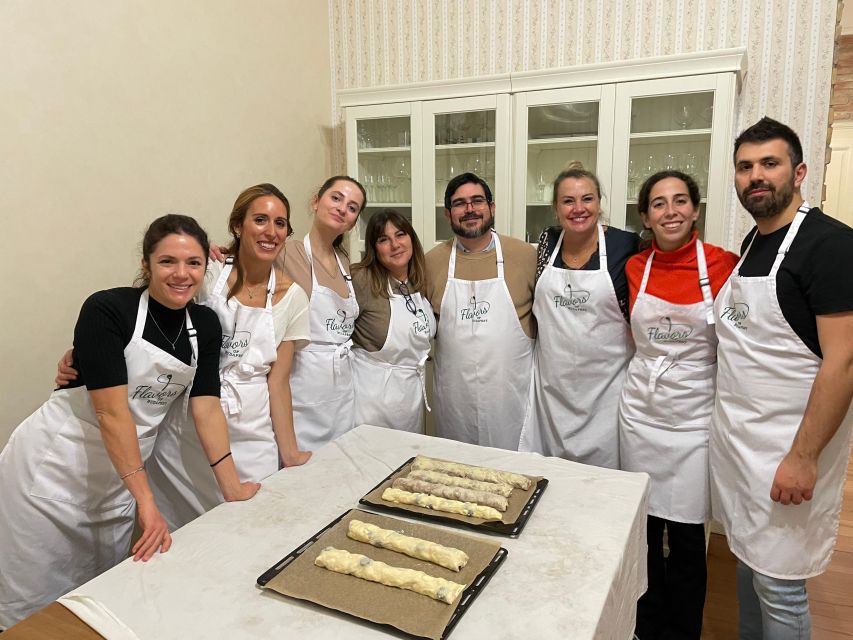
Waiting for strudel to bake can either feel like dead time or like part of the experience. Here, it is the latter. While the oven does its thing, you get to taste other typical Hungarian bites plus drinks that keep the mood friendly.
Included drinks are Hungarian wine (2 dl), soft drinks, mineral water, and coffee. In one of the standout moments from the experience, you may be offered homemade soda with syrup made from family-grown elderberries and raspberries, which is the kind of detail you remember because it feels personal and local rather than packaged.
You are also tasting Hungarian snacks during the baking window. This is smart, because it helps you build a fuller picture of Hungarian flavor beyond strudel. If you go into the class only thinking strudel, you can leave with a broader sense of how Hungarian meals balance creamy, sweet, and savory components.
I like this setup because it lets you relax. You just worked your hands. You learned stretching, filling, and baking. Instead of rushing to the next step, you get a breather with food and conversation. That is one reason the class feels less like schooling and more like a cultural meal in motion.
If you are a bit nervous about cooking, this part helps. You can settle in, talk with the group, and watch how others handle the dough without pressure.
Eating Together, Then Taking Family Recipes Home
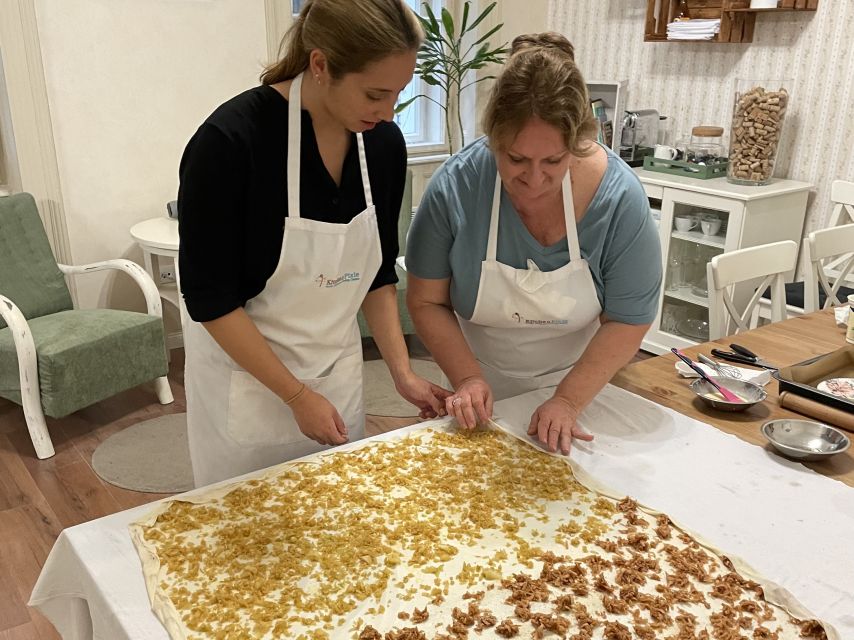
Once your strudels are ready, you sit down and enjoy them with your group. That shared eating time is more than a nice touch. It is where learning becomes real. You taste both baked strudels, and you see how the dough, filling, and bake time come together as a finished dessert or snack.
Then comes the practical payoff: you take the recipes home. The class includes family recipes, which are meant to help you recreate the stretched version later. This is one of the biggest reasons this class feels like value, not just entertainment.
At home, strudel can be intimidating, mostly because stretched dough feels like a skill you either have or do not have. What makes this course useful is that it gives you the method and guidance you need to try again. You are not left with vague memories. You get a reference you can follow when you attempt a second or third bake.
Chef Marti’s teaching style also contributes to this. People are especially impressed by her patient, clear, and professional guidance and her willingness to share details and secrets she learned through making strudel with her mother. Even if you are not a confident cook, that approach should help you avoid the common trap of getting frustrated midway through a dough project.
If you want a souvenir that is actually useful, this is it. A recipe you can cook beats a fridge magnet. And because you make two strudels in one session, you have two flavors to re-create, which makes it easier to stay motivated after the trip.
Other kitchens in Budapest that let you cook


Price and Value: What $90 Buys You in Real Terms
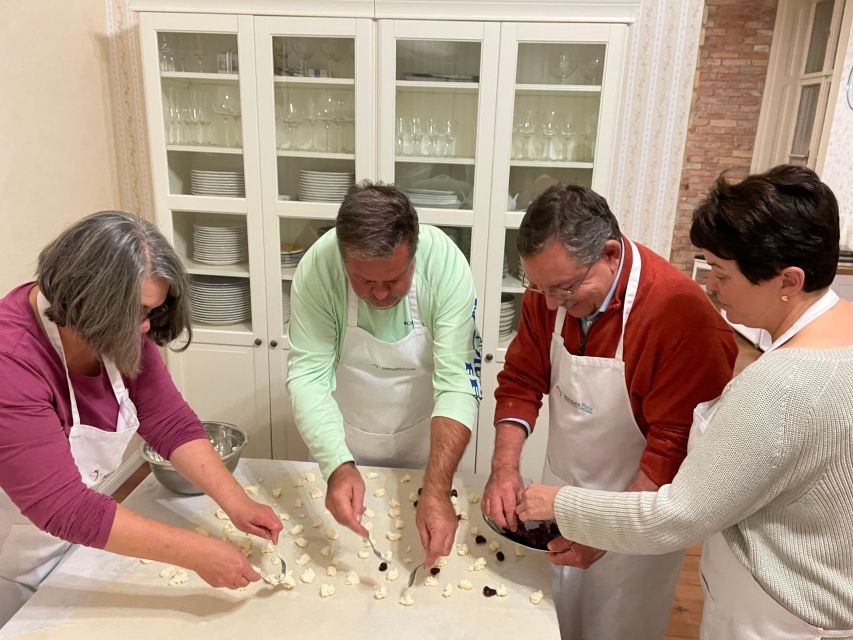
At $90 per person for a 2.5-hour class, the cost might feel like a lot at first glance. Here is why it can still be good value.
You are paying for:
- A hands-on class with active participation, not passive watching
- Ingredients and equipment, so you are not buying supplies upfront
- Help and guidance from a professional chef, which matters when you are stretching thin dough
- Two strudels baked and eaten during the experience
- Drinks including Hungarian wine, soft drinks, mineral water, and coffee
- Typical Hungarian snacks while you wait
- Family recipes to take home
Many food experiences in Europe either give you a bite and a story, or they give you technique but no extra meal and no take-home value. This one aims to cover the full arc: learn, cook, eat, and repeat later.
Also, the small group size (up to 10) is part of the pricing logic. You get more attention during the stretching stage, which is the stage where most cooking classes usually lose people.
If you are the type of traveler who wants your Budapest trip to include a skill you can actually use, this is one of the stronger ways to spend money. If you only want a quick tasting, you might prefer a shorter food tour. But if you want technique plus results, this is a solid fit.
Who Should Book This Stretched Strudel Class?
Book it if you:
- Want a genuinely hands-on Budapest food experience in a small group
- Like learning from local chefs who share family methods, not just general cooking tips
- Want to make dessert or snack that is recognizably Hungarian, with classic fillings like poppy-seed with pumpkin, cabbage, and cottage cheese cream
- Enjoy taking home recipes and actually using them
You might think twice if you:
- Dislike kitchen work or get stressed when you have to handle dough
- Are traveling with kids under 10, since the class is not suitable for them
- Prefer large-group, high-energy tours where you barely touch the food
The best part is how the class balances craft and culture. You are not only learning how to stretch dough. You are learning why it matters in Hungarian life, including the historical roots and the role of strudel in weddings and country dinners.
Should You Book It?
Yes, if you want the kind of experience where you leave with both food and skill. The combination of Chef Marti’s teaching, the focus on true stretched strudel technique, and the fact that you bake two different fillings gives you more learning per hour than many cooking classes.
It is also a smart value if you care about take-home recipes. You will not just taste strudel once. You will have a method you can repeat, with the exact kinds of fillings you learned during your session. If you are planning one “cook something” activity in Budapest, this is the one I would put at the top of your list.
FAQ
Where does the class meet in Budapest?
The class starts at the local partner’s private apartment in central Budapest, located at Király u. 77, 1077 Hungary.
How long is the stretched strudel making class?
The class lasts 2.5 hours.
How big is the group?
It is a small group with a limit of 10 participants.
What will I make during the class?
You will make stretched strudel and bake two strudels, using two different fillings.
What fillings are used for the strudels?
You can choose typical Hungarian fillings such as poppy-seed with pumpkin, sweet or salty cabbage, and sweet cottage cheese cream.
What drinks and snacks are included?
Included drinks are Hungarian wine (2 dl), soft drinks, mineral water, and coffee, plus typical Hungarian snacks while you wait for the strudels to bake.
Is this class suitable for children?
It is not suitable for children under 10.
More Tour Reviews in Budapest





Back in the Kitchen




Room for One More Plate in Budapest



Reviewed recently around Budapest
- Audio visual multi-sensory chefs journey dinner experience★ 5.0 · 3 reviews
- Tapolca Cave Lake and Tihany/ Balaton private tour from Budapest★ 4.5 · 3 reviews
- SzentEndre-SaintAndrew City Privately Shopping and Picturesque★ 4.5 · 3 reviews
- Sightseeing flight over Budapest★ 5.0 · 3 reviews
- Self Guided Tour In Budapest With 100 Captivating Audio Stories★ 5.0 · 3 reviews
- Private Danube Bend Visegrad and Szentendre Tour With Transport★ 5.0 · 3 reviews
Hungarian Food Tours and Tastings, compared.
 ★ 5.0Countryside Half-day Gastro-Wine Tour from Budapest Meal & pickupFrom $991,450 reviews
 ★ 5.0Budapest All in One Small Group Walking Tour with Strudel StopFrom $1001,277 reviews
 ★ 4.8Hungarian Chimney Cake Workshop in the City CenterFrom $40885 reviews
 ★ 4.9Wine, Cheese, and Charcuterie TastingFrom $50647 reviews
 ★ 4.8From Budapest: Etyek Wine Tasting Tour with 3-Course MealFrom $102557 reviews
 ★ 5.0Budapest Cooking Class & Market Tour with Local Guide & WinesFrom $99553 reviews
 ★ 5.0Hungarian Wine Tasting (with Cheese and Charcuterie) in BudapestFrom $50531 reviews
 ★ 4.9Guided Foodie Walking Tour with Food and DrinksFrom $70453 reviews
Browse the lists this tour appears in