
Review · LUNCH EXPERIENCES
101 things in Budapest – Full Day Tour with Lunch & Metro Pass
Budapest hits hardest when you walk it all at once. This full-day route mixes iconic sights with traditional Hungarian food and a splash of thermal-bath time. I like the strong lineup of landmarks, plus the way the schedule gives you quick stops instead of dead time. One thing to factor in is the long walking day, so you’ll want solid shoes and a calm pace.
This tour works especially well when the guide brings the city to life. In past days, strong guides like Rebecca, Fanni, Ferenc, and Sándor have been highlighted for clear explanations, good humor, and practical tips like how to use the metro. If you want an efficient first sweep of both sides of the river, this is a good fit, but if you hate crowds and constant moving, you might find it too full-on.
In This Review
- Key highlights you will feel the moment you start
- A full-day Budapest “greatest hits” walk, built for getting oriented
- Meeting at Andrássy út: a smart start in a walkable, landmark zone
- Heroes’ Square to City Park: power, symbolism, and a quick history primer
- What to watch for at this stage
- Széchenyi Medicinal Bath: the best kind of break in a long day
- Practical advice for the bath stop
- Andrássy Avenue and the Hungarian State Opera: grand street, real design
- St. Stephen’s Basilica and Liberty Square: faith and finance in the same breath
- Parliament and the Chain Bridge: two big landmarks that anchor the river story
- Great Synagogue and Matthias Church: history you can see, not just read
- Fisherman’s Bastion and Buda Castle: the viewpoint part you do not want to skip
- How to get more from the Castle District minutes
- Central Market Hall: a practical food finish that feels local
- Food, dessert, and drinks: why lunch is more than a break
- Price and value: what $204.81 buys you in a one-day sweep
- Who this tour fits best, and who should choose a different plan
- Should you book 101 things in Budapest with lunch and metro?
- FAQ
- How long is the Budapest tour?
- What time does the tour start, and where does it end?
- Where is the meeting point?
- Is the tour offered in English?
- What is included in the price besides the sightseeing?
- Are admission tickets included for all stops?
- How much walking is involved?
- What is the group size limit?
- What is the weather policy?
- What is the cancellation and refund window?
Key highlights you will feel the moment you start
- Metro pass included, so you can move between Buda and Pest without second-guessing transit
- Széchenyi Medicinal Bath stop, with very hot thermal water from two springs
- Lunch plus Hungarian dessert and drinks, built into the day so you do not have to hunt for food
- One-day “greatest hits” loop, from Heroes Square to the Castle District views
- A max group size of 20, which usually keeps the pace human and questions possible
- Some paid-entry landmarks, so you can plan ahead for tickets that are not included
A full-day Budapest “greatest hits” walk, built for getting oriented
At 7 hours 30 minutes, this is not a short taste of Budapest. It is more like a guided sprint with breaks, covering both sides of the Danube while you learn what you are actually looking at. The value here is not just the list of famous places. It is that the route is paced as a sequence of recognizable zones, so you build a mental map instead of collecting photos.
The day starts at the Hungarian State Opera, so you kick off in a grand, central part of Budapest. From there, you move through the city’s major architectural and cultural landmarks, then you end back at the same meeting point. You also get a Metro Pass, which matters because Budapest is easiest when you combine walking with quick rides.
The tour is designed for moderate physical fitness, and the most important word in that description is moderate. The stops themselves are short, but you still cover a lot of ground. If you are comfortable walking for hours, you will have a fun day. If you prefer slow wandering and long museum time, you may feel rushed.
Meeting at Andrássy út: a smart start in a walkable, landmark zone
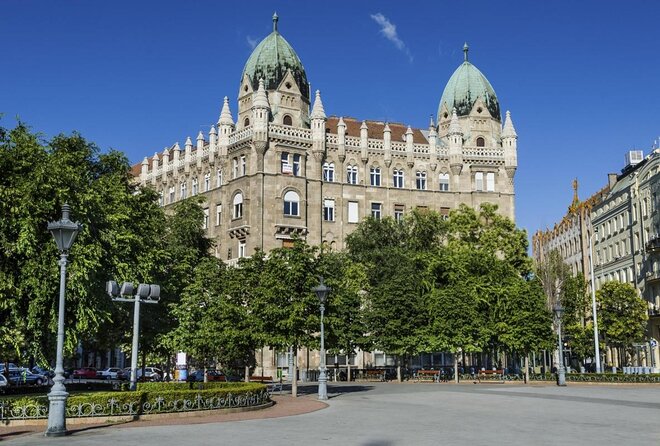
You meet at Hungarian State Opera, Andrássy út 22, 1061 at 9:00 am. Starting here is clever for two reasons. First, Andrássy Avenue is one of Budapest’s signature boulevards, so you are already in a visually rich area when you begin. Second, this location is central, and the tour notes that it is near public transportation, which makes it easier to arrive without stress.
You also get a mobile ticket, which is useful in a city where schedules and entry rules can change. And since the group size is capped at 20 travelers, you are less likely to feel like you are in a giant herd at every stop.
If you like structure, this tour gives you it. If you like freedom to linger, you still can between stops, but you should expect the guide to keep the day moving.
Other Budapest outings our reviewers kept coming back to
- From Budapest: Danube Bend & Szentendre Tour with Lunch
★ 4.1 · 824 reviews - From Budapest: Full-Day Danube Bend Tour with Lunch
★ 4.2 · 442 reviews - Budapest Danube Bend Full Day Tour with Lunch
★ 4.0 · 203 reviews - From Budapest: Full-Day Puszta Tour with Lunch and Show
★ 4.6 · 180 reviews
Heroes’ Square to City Park: power, symbolism, and a quick history primer
The day’s first major photo magnet is Heroes’ Square. The iconic statue complex centers on the Seven chieftains of the Magyars plus other Hungarian national leaders. There is also a memorial element that gets misread by many visitors as the Tomb of the Unknown Soldier, so having a guide’s context early is genuinely helpful. This is the kind of place where you can stare at stone all day, but you will understand more if someone points out what each part is meant to represent.
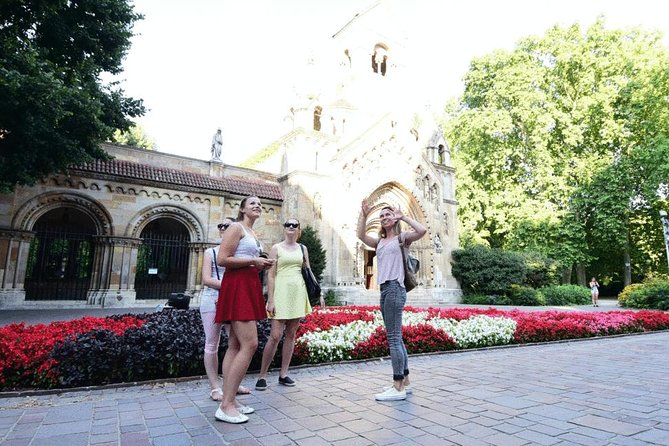
Next you roll into Vajdahunyad Castle in City Park. Even though it looks like it has always been there, it was built in 1896 for the Millennial Exhibition celebrating 1,000 years since the Hungarian Conquest of the Carpathian Basin in 895. I love this kind of stop because it instantly explains why Budapest has a layered “past meets makeover” look. It also gives you a dramatic change of pace after the solemn square.
What to watch for at this stage
- Keep an eye on how the architecture shifts from national monument to park-castle style.
- Take a moment to scan the area before moving on, because the day is busy and these first impressions stick.
Széchenyi Medicinal Bath: the best kind of break in a long day
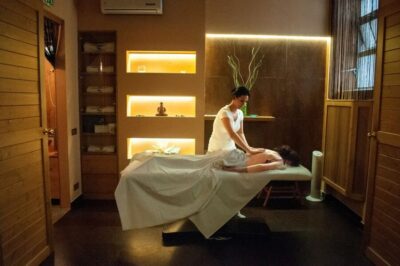
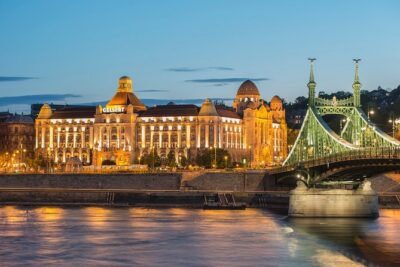
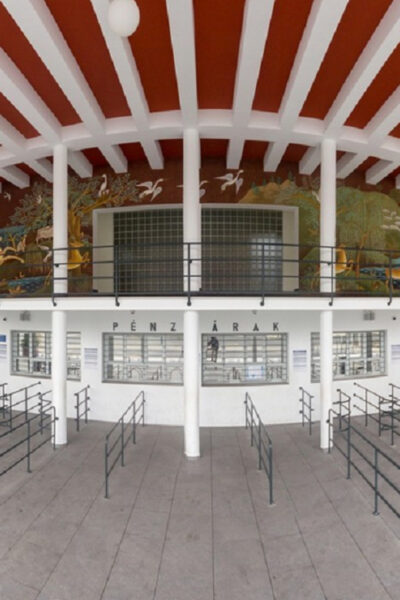
The itinerary includes a stop at Széchenyi Medicinal Bath and Pool. This is the tour’s sanity saver. You get a chance to slow down, warm up, and experience one of Budapest’s defining rituals.
Here is the key detail that makes it more than a random stop: the bath water is supplied by two thermal springs, with temperatures listed at 74 °C and 77 °C. That heat is part of Budapest’s reputation, and it is also part of why the baths feel like a full experience, not just a quick look.
The time at the bath is short, so you should treat it as an introductory taste. Still, it is a rare thing to see on a structured walking tour: you get culture, then you get soaked thermal relaxation. If you are traveling in shoulder season or in cool weather, this stop alone can feel like the best bargain of the whole day.
Practical advice for the bath stop
- If you have a swimsuit and a small towel, you will be happier.
- Plan for time in changing areas, because a fast stop can feel shorter if you need extra minutes.
Longer days out, reviewed
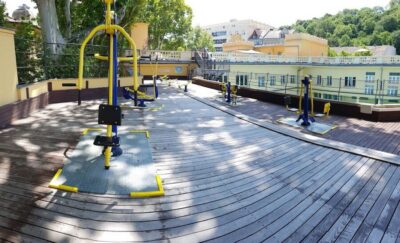
Andrássy Avenue and the Hungarian State Opera: grand street, real design
After City Park, the route brings you onto Andrássy Avenue, a boulevard dating back to 1872 and recognized as a World Heritage Site in 2002. This is one of those places where the city looks like a postcard, but it is also where you can learn what the city wants you to notice: the rhythm of façades, the uniformity of style, and the scale of the street.
Right along that avenue is the Hungarian State Opera House (Magyar Állami Operaház), a neo-Renaissance building originally known as the Hungarian Royal Opera House. It was designed by Miklós Ybl, a major name in 19th-century Hungarian architecture. Even if you do not enter for a performance, simply understanding who designed the space and why it is there makes the street stop feel more real.
This is also where the “short stops” style shines. You get enough time to see and understand the place, without getting stuck in one spot for too long.
St. Stephen’s Basilica and Liberty Square: faith and finance in the same breath
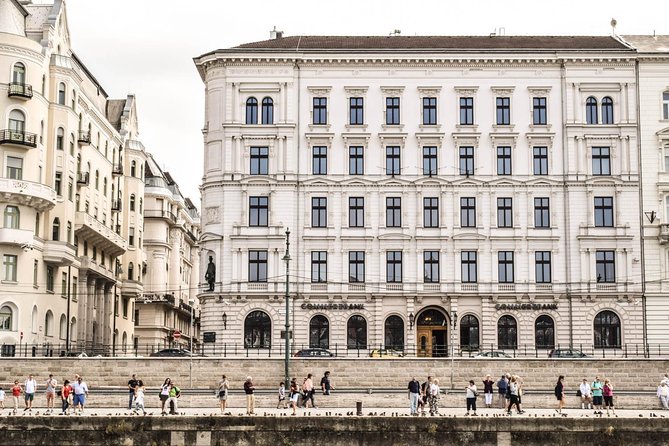
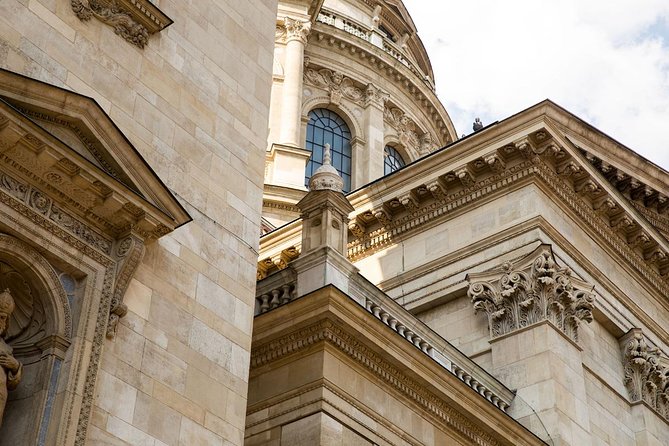
Next comes St. Stephen’s Basilica (Szent István-bazilika). The tour lists this as an admission ticket not included, but it still gives you a guided viewing stop. It is named for Stephen, the first King of Hungary, and the tour notes that his right hand is housed in the reliquary. That detail changes how you look at the building because it connects the architecture to a specific person and story.
Then you head to Liberty Square (Szabadság tér). Liberty Square is less about one single monument and more about a mix of roles: business and residential with major institutions nearby. Two that are explicitly mentioned are the United States Embassy in Hungary and the headquarters of the Hungarian National Bank. I like this stop because it shows you that Budapest is not only castles and churches. It is also a working European capital.
Parliament and the Chain Bridge: two big landmarks that anchor the river story

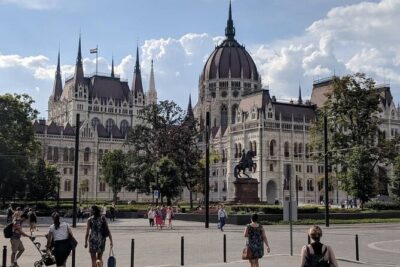
The Hungarian Parliament Building (Országház) is listed as an admission ticket not included. Even without entry, the building works as a visual anchor for the whole city. The tour description emphasizes that it is the seat of the National Assembly of Hungary, and it is a landmark that draws tourists constantly. A guide helps here because you can connect the building’s location to the “Buda versus Pest” story the city tells through geography.
Then you cross into the river-crossing icon world with the Széchenyi Chain Bridge. This chain bridge spans the Danube between Buda and Pest. That simple geographic line is powerful for orientation. Once you understand where it connects, the rest of the day makes more sense, because you start to see how Budapest’s neighborhoods line up on either side of the water.
If you are the type who likes to know why something is placed where it is, this is a highlight.
Great Synagogue and Matthias Church: history you can see, not just read
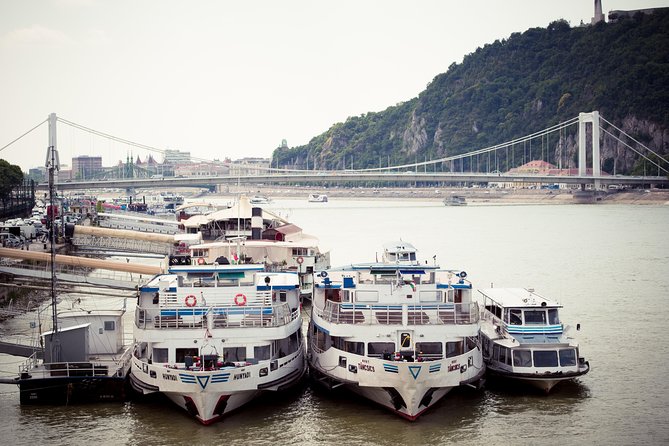
The route includes a stop at the Great Synagogue (Dohány utcai zsinagóga), also known as the Great Synagogue or Tabakgasse Synagogue. The tour lists the admission ticket for this stop as not included. Still, it is worth seeing because it adds another layer to the city’s identity. Budapest’s Jewish Quarter is a key part of the city’s story, and you get a formal landmark visit here.
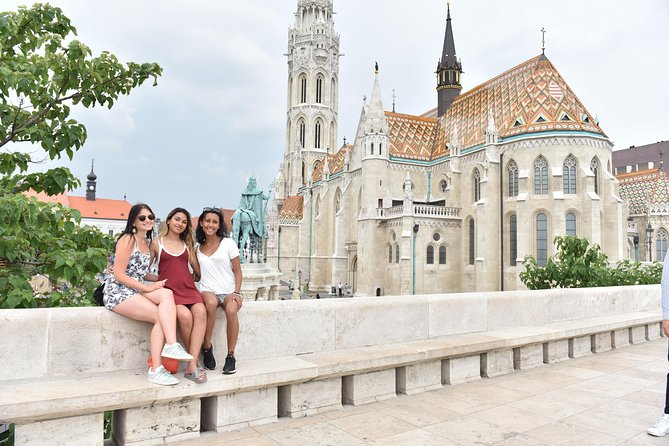
Next is Matthias Church (Mátyás-templom), also listed as admission ticket not included. This church sits in Holy Trinity Square in the Castle District area, in front of Fisherman’s Bastion. Again, the time is short, so think of it as a guided window into the style and setting. The location is what makes it powerful: you are right in the heart of Buda’s historic lookout zone.
Fisherman’s Bastion and Buda Castle: the viewpoint part you do not want to skip
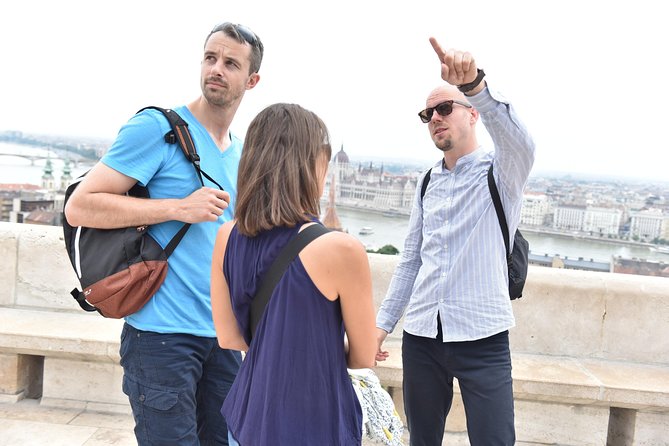
The highlight view stop is Fisherman’s Bastion. It is one of Budapest’s most famous monuments, mainly because the lookout terraces give you one of the best panoramas in the city. The tour lists it as free admission, and you get around 15 minutes there, which is enough for the essential photos and to stare out over the Danube without the day passing you by.
After the viewpoint, you enter the big historical complex: Buda Castle. The tour notes that the site has roots going back to 1265, but the Baroque palace you see today was built between 1749 and 1769. That time layering matters. Budapest did not replace its past with one clean rebuild. It kept revising it, and Buda Castle is where you can see that habit in stone.
This stop is free admission in the tour plan, which helps the overall value.
How to get more from the Castle District minutes
- Take five minutes to find your best angle before you rush to the next spot.
- Keep your eyes on the river and bridge views, because that is what connects the whole day’s geography.
Central Market Hall: a practical food finish that feels local
The final area stop is the Central Market Hall (Nagyvásárcsarnok). This is listed as free admission and lasts about 30 minutes. It is described as the largest and oldest indoor market in Budapest, and it is also one of the city’s most useful places for understanding local food culture.
What makes this stop extra interesting is the detail about its origin. The idea for a large market hall came from Károly Kamermayer, the first mayor of Budapest. The tour notes that his investment was his largest, and it also includes a timeline detail: he retired in 1896 and participated in the opening ceremony on February 15, 1897. That kind of specific info turns a market visit from random shopping into a small dose of context.
Even if you do not buy much, this is a good moment to connect the lunch experience back to everyday Hungarian food.
Food, dessert, and drinks: why lunch is more than a break
The tour includes lunch, plus traditional Hungarian dessert and alcoholic beverages. It is hard to overstate how much that improves the experience value. Budapest is full of places to eat, but finding the right option, fitting it into a busy day, and staying with a group can eat time fast.
Lunch here is part of the pacing. You stop, eat, recover, and then you continue while your legs are still happy. And since guides have been highlighted for making the food feel part of the story, you tend to come away with a better sense of what Hungarian cuisine tastes like beyond the basics.
One detail you should respect: the tour lists a minimum drinking age of 18. So if you are under 18, alcohol will not be the focus, and the day’s main included items are still food and dessert through the lunch portion.
Price and value: what $204.81 buys you in a one-day sweep
At $204.81 per person for about 7 hours 30 minutes, this is not a budget walking tour. But for a day that strings together major landmarks across both river sides, plus lunch, dessert, and drinks, it becomes more reasonable than it looks at first glance.
Here is where the value comes from:
- You get the core sights in a single structured day, instead of needing multiple transit plans and multiple separate bookings.
- You get a metro pass, which is practical for Budapest’s layout.
- You get included food, including traditional Hungarian dessert, and lunch is not something you must fit into the schedule yourself.
- The group size is capped at 20, so you are not stuck in a large mob at every stop.
The one cost-related caution is also simple: several major sights in the route list admissions as not included. So if you want to go inside everything, you should budget extra for those entry fees.
Who this tour fits best, and who should choose a different plan
This is a strong pick if you:
- Want a first-time Budapest orientation that covers both Buda and Pest.
- Prefer guided context over reading plaques and guessing.
- Like food stops that are timed into the day, not random detours.
- Can handle a long walk with short pauses.
I would think twice if you:
- Struggle with long, continuous walking days.
- Want long museum time or frequent sit-down breaks.
- Hate any day plan that includes sights with extra entry costs.
It is also worth noting that the tour notes service animals are allowed and that it runs in all weather, so come prepared for rain or cold.
Should you book 101 things in Budapest with lunch and metro?
If you are the type who wants to see the big stuff and understand it, I say yes, book it. The biggest reason is the combo: guided landmark coverage plus included Hungarian lunch and dessert, with enough organization to keep you moving without feeling chaotic.
Before you commit, check two things. First, be honest about your walking comfort. Short stops still add up over a full day. Second, decide if you plan to enter the sights where admissions are listed as not included, because those may add cost on top of the base tour price.
If you want an efficient, first-pass Budapest day that ends with a good food finish and a clearer mental map, this is a solid way to spend your time.
FAQ
How long is the Budapest tour?
The tour lasts about 7 hours 30 minutes.
What time does the tour start, and where does it end?
It starts at 9:00 am and ends back at the meeting point at the Hungarian State Opera.
Where is the meeting point?
The meeting point is Hungarian State Opera, Andrássy út 22, 1061, Budapest, Hungary.
Is the tour offered in English?
Yes, the tour is offered in English.
What is included in the price besides the sightseeing?
The tour includes lunch, traditional Hungarian dessert, and alcoholic beverages, and it includes a Metro Pass.
Are admission tickets included for all stops?
No. The tour lists some sites with admission ticket not included, including St. Stephen’s Basilica, the Hungarian Parliament Building, the Great Synagogue, and Matthias Church.
How much walking is involved?
The tour is described as suitable for travelers with moderate physical fitness, and it is a full day with many landmark stops.
What is the group size limit?
The tour has a maximum of 20 travelers.
What is the weather policy?
It operates in all weather conditions, so you should dress appropriately.
What is the cancellation and refund window?
You can cancel for a full refund up to 24 hours in advance of the experience start time. If you cancel less than 24 hours before, the amount you paid is not refunded.
More Lunch Experiences in Budapest




More Tours in Budapest




More Tour Reviews in Budapest





Reviewed recently around Budapest
- Audio visual multi-sensory chefs journey dinner experience★ 5.0 · 3 reviews
- Tapolca Cave Lake and Tihany/ Balaton private tour from Budapest★ 4.5 · 3 reviews
- SzentEndre-SaintAndrew City Privately Shopping and Picturesque★ 4.5 · 3 reviews
- Sightseeing flight over Budapest★ 5.0 · 3 reviews
- Self Guided Tour In Budapest With 100 Captivating Audio Stories★ 5.0 · 3 reviews
- Private Danube Bend Visegrad and Szentendre Tour With Transport★ 5.0 · 3 reviews
Lunch Experiences, compared.
 ★ 4.1From Budapest: Danube Bend & Szentendre Tour with LunchFrom $128824 reviews
 ★ 4.2From Budapest: Full-Day Danube Bend Tour with LunchFrom $122442 reviews
 ★ 4.0Budapest Danube Bend Full Day Tour with LunchFrom $124203 reviews
 ★ 4.6From Budapest: Full-Day Puszta Tour with Lunch and ShowFrom $133180 reviews
 ★ 4.5Full Day Private Budapest City Tour With Lunch and Cruise optionFrom $241133 reviews
 ★ 5.0Buda Hills Guided Hiking Tour with Optional LunchFrom $7469 reviews
 ★ 4.5Private or SmallGroup Budapest Danube Bend Tour Lunch and CruiseFrom $22858 reviews
 ★ 4.5Szentendre and Visegrad Private Danube bend Tour With Wine Tasting and LunchFrom $33152 reviews
Browse the lists this tour appears in