
Review · CITY TOURS
8-hour private Budapest city tour by car / minivan
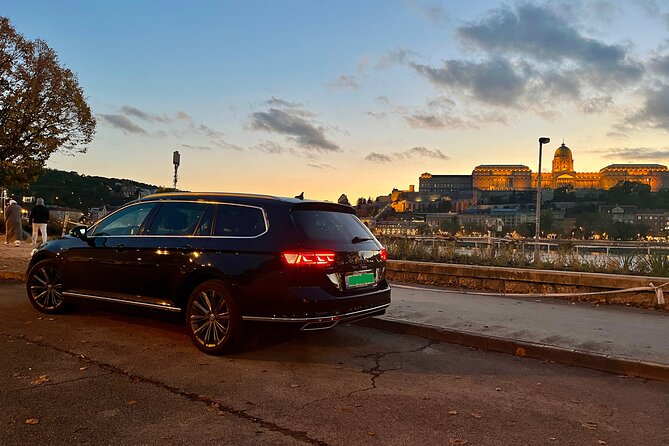
One day, two halves of Budapest. This private 8-hour tour uses a car or minivan to connect the big landmarks fast, then swaps in short walks where it actually helps. I like the fact that you can go at your pace, with a local guide who explains what you are seeing without drowning you in museum terms.
I love two practical things about this format: door-to-door pickup from anywhere in Budapest, and the way you get real sights without getting wrecked by long stretches of walking. Another plus is how your guide can tailor the day, with people like Greg and Gergő described as keeping things easy, on time, and focused.
One consideration: several headline spots have entrance fees not included, so plan for extra payments if you want interiors like St. Stephen’s Basilica, Matthias Church, the Parliament, or the upper levels at Fisherman’s Bastion. Széchenyi Baths is also an optional-pay stop, and the scheduled time there is short.
In This Review
- Key things to know before you go
- How the private 8-hour format actually helps in Budapest
- Andrássy Avenue and Heroes’ Square, Budapest’s grand opening act
- Széchenyi Baths stop: short window, big decision
- City Park classics: Vajdahunyad Castle and House of Music Hungary
- Opera House and Basilica country: Pest’s religious and cultural centerlines
- Liberty Square and Parliament: power in stone along the Danube
- Chain Bridge, Shoes on the Danube, and riverline history you can feel
- Buda Castle District hits: Matthias Church, Fisherman’s Bastion, Buda Castle
- Gellért Hill and the Citadel viewpoint for your final big perspective
- Price and value: what $505.73 per group up to 3 buys you
- Who this tour suits best, and who might prefer something else
- Should you book this Budapest private city tour?
- FAQ
- How long is the private Budapest city tour?
- How many people can be in the group?
- Is pickup available from my hotel in Budapest?
- What language is the tour guide?
- What is included in the price?
- Are attraction entrance fees included?
- Is Széchenyi Baths included?
- Do I get a mobile ticket?
- What if my plans change?
Key things to know before you go
- Private, full-day pacing with car transport between neighborhoods, plus light walking only where it matters
- Short, high-value stops at iconic viewpoints and monuments, from Andrássy Avenue to the Citadel
- Personal guide explanations to make Hungarian history click, from 19th century to WWII and after
- Lots of exterior time, extra interiors if you want them (common for churches and lookout areas)
- Szmereker-friendly timing for a tight schedule, especially if you are first-timers or time-crunched
- Thermal bath option at Széchenyi, with the real-world note that entry is not included
How the private 8-hour format actually helps in Budapest
Budapest looks compact on a map, but in real life it is split by the Danube and shaped by hills and viewpoints. This kind of private day tour is valuable because it treats the city like what it is: two cities that need different strategies. You get driven between Pest and Buda so you can spend your energy on photo stops, brief walks, and the places that deserve it.
The other huge win is that this is not a cattle-car group day. You are in a car with your own guide. That matters when you want to slow down at a façade, ask one more question at a monument, or skip an interior you are not in the mood for. Multiple groups in the guide feedback highlighted that the guides, such as Gregory, Gergő, Gergely, and Gabriel, handled pacing well and stayed flexible when interests shifted.
One small but important detail: the tour includes parking fees and taxes, and the driving is private. So you are not dealing with the mental load of route planning between neighborhoods. You still walk a bit, but it feels planned rather than accidental.
Andrássy Avenue and Heroes’ Square, Budapest’s grand opening act
If you want the Budapest “wow” factor early, start here. Andrássy Avenue is a boulevard dating back to 1872, connecting the city center toward Heroes’ Square. It is also a World Heritage Site (since 2002), with Neo-Renaissance mansions and townhouses that look like they belong in a film set. This is one of those places where a car ride helps because you can see the street rhythm without spending an hour hiking between stops.
Your guide can also put the avenue in context. In plain terms, this is where Budapest shows its ambition and respectability, long before you reach the Danube drama. It is also lined with cafés, restaurants, theaters, embassies, and luxury shops, so even your drive-by moments tell you something about the city’s social geography.
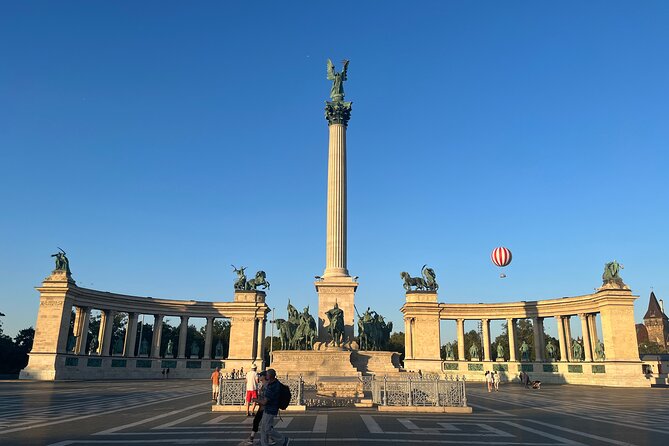
Heroes’ Square follows and it is unforgettable even if you think you have seen it before. The statue complex includes the Seven chieftains of the Hungarians and other key national leaders, and there is also the Memorial Stone of Heroes. The square is not just for photos, it has also hosted major modern events, including the reburial of Imre Nagy in 1989. You get a short stop, but you also get the story that makes the stonework and monuments feel less like random sculpture and more like a timeline.
Practical tip: wear shoes you can walk in for a few minutes. Even if most time is short, it is still a walking-friendly day, and these are places where you will want to move closer to see details.
Whole city overviews, compared
- Budapest: City Highlights Cruise with Welcome Drink
★ 4.6 · 35,610 reviews - Budapest: City Sightseeing Hop-On Hop-Off Bus Tour & Extras
★ 4.1 · 4,337 reviews - Budapest City Landmarks Walking Tour in 2 Hours
★ 5.0 · 2,048 reviews - Budapest: Danube River City Lights Express Cruise
★ 4.1 · 1,608 reviews
Széchenyi Baths stop: short window, big decision
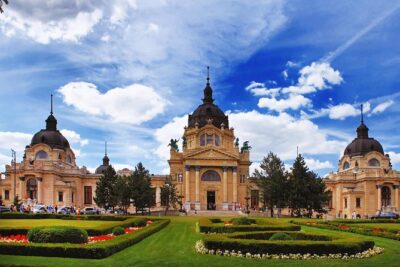
Széchenyi Medicinal Bath is the big thermal-bath name in Budapest, and the facts are impressive. It is described as the largest medicinal bath in Europe, fed by two thermal springs with water around 74 to 77 °C. That explains the appeal, but it also explains why this is not a casual, quick stop like a monument.
In this tour, the scheduled time at Széchenyi is brief, and bath admission is not included. Translation: you can treat it as a taste and a viewpoint moment, or you can use the stop to decide whether you want to pay for longer soaking time outside the tour window. If your priority is thermal bath time, go in with a plan: bring what you need, and be ready for the reality that a full bath experience usually takes more time than a sightseeing stop.
Also, if you are sensitive to heat or crowds, this is worth deciding ahead. Thermal baths can be relaxing, but they can also be busy and warm. Having your guide with you helps because you can ask what to do in the time you have, rather than guessing.
City Park classics: Vajdahunyad Castle and House of Music Hungary
From Heroes’ Square, the day naturally rolls into City Park territory. Vajdahunyad Castle is one of the most photogenic structures in Budapest, built in 1896 as part of the Millennial Exhibition celebrating 1000 years since the Hungarian Conquest in 895. What I like about this stop is the design concept. The castle was meant to show copies of landmark buildings from across the kingdom, so it is like a stone snapshot of regional identity.
This is also a good stop for a quick breath in a city day. You get time to look, take photos, and then move on without feeling like you are committing to a long indoor visit.
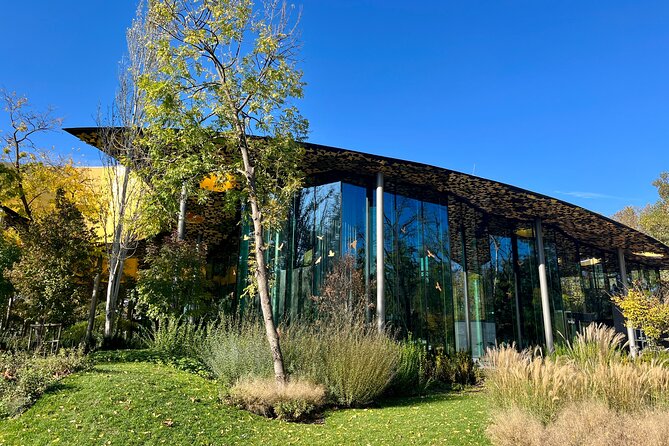
Then there is House of Music Hungary, a newer highlight that many visitors miss if they stick only to the postcard classics. The building opened in January 2022 as a musical initiation center and exhibition space. It is also architecturally notable: it was selected from 170 international projects, and it gained extra attention after winning the architectural competition.
In practical terms, this is ideal if you like culture that is current rather than only old-school. Even if you do not do an in-depth museum session, the building itself gives you a sense of Budapest looking forward, not just back.
Opera House and Basilica country: Pest’s religious and cultural centerlines
After the City Park area, you shift into a more straight-line cultural sweep on the Pest side. The Hungarian State Opera House sits on Andrássy Avenue and is described as neo-Renaissance. Even if you do not go inside, seeing it from the street is a good reminder that this avenue is not only pretty buildings, it is also where cultural institutions stake their claim.
St. Stephen’s Basilica is next and it is an obvious stop if you want one of the city’s major church landmarks. It is Roman Catholic and named for Stephen, the first King of Hungary. The right hand of Stephen is housed in a reliquary, which gives the basilica a religious importance beyond architecture. It is also described as the third largest church building in present-day Hungary.
Here is the real-world thing to plan for: admission is not included for this stop. If you want to go in, bring extra time and budget. If you just want the outside, you still get plenty of impact from the façade and the setting.
Liberty Square and Parliament: power in stone along the Danube
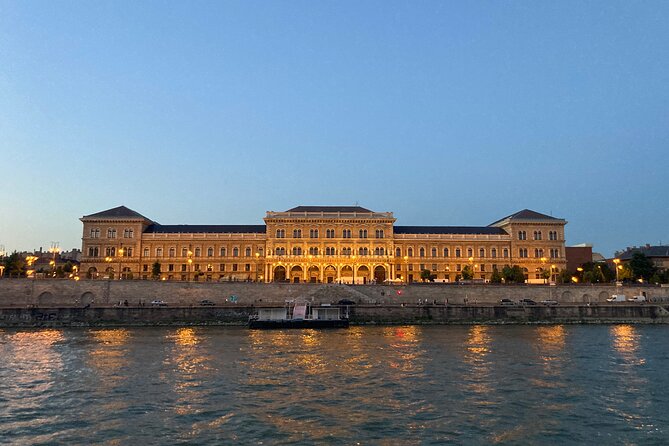
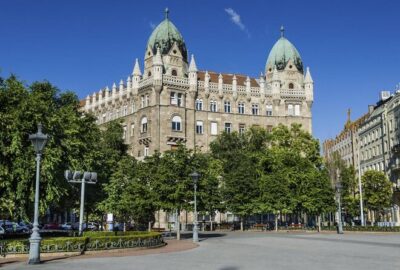
Liberty Square is a mix of business and residential buildings in Lipótváros. The United States Embassy and the historicist headquarters of the Hungarian National Bank are right by the square, and you can also spot Art Nouveau design elements on some buildings. This is a good stop to understand Budapest as a functioning capital, not only a museum city.
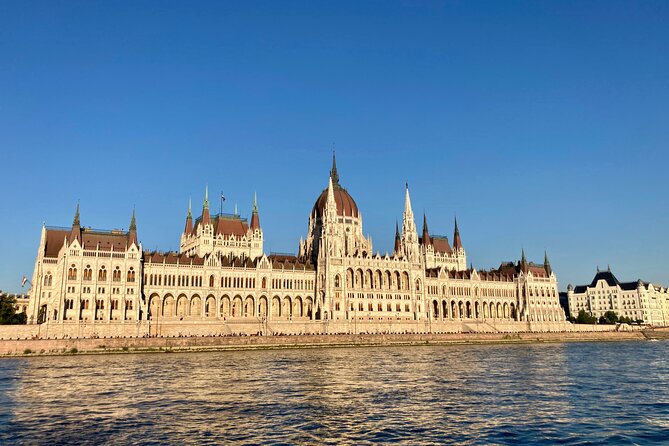
Then comes the Parliament Building, seated in Kossuth Square by the Danube on the Pest side. It is described as the seat of Hungary’s National Assembly and also called the largest building in Hungary. Even if you do not enter, getting close enough for the scale to hit matters. This is the kind of landmark where a car ride helps, because you can arrive at better angles without wasting time walking through traffic lanes.
Because Parliament entry is not included, it is worth deciding your interest level. If you are the type who loves interior grandeur and guided context, you may want to add an entry. If you prefer photos and exterior architecture, you can keep it simple and spend more time on viewpoints later.
Private guides we booked in Budapest
Chain Bridge, Shoes on the Danube, and riverline history you can feel
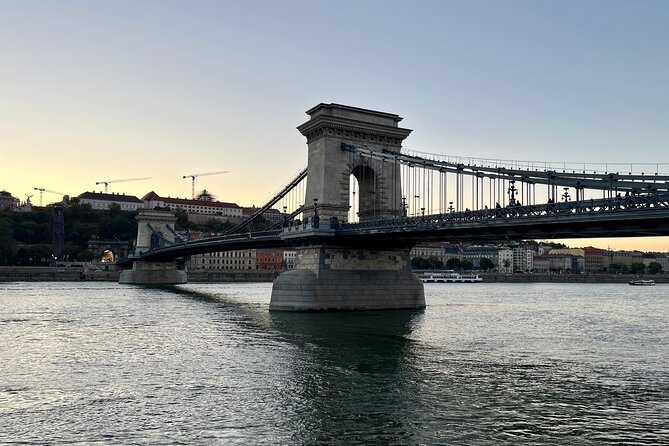
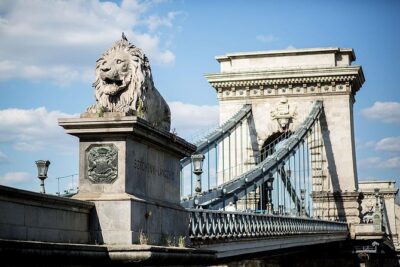
The tour makes sure you cross the story of Budapest’s river. Széchenyi Chain Bridge was built with English and Scottish engineers involved in the design and construction, and it opened in 1849. It is also described as the first permanent bridge across the Danube in Hungary.
A bridge stop is never just a photo. It is a reset. After you have been looking at buildings, it is good to see the waterline and the city’s layout. The Danube organizes the skyline, and crossing it once gives you a mental map you can keep for the rest of the day.
Then comes Shoes on the Danube Bank, a memorial designed to honor Jews who were killed by fascist Arrow Cross militiamen during World War II. The concept is powerful and specific. It is made as a row of iron shoes along the riverbank. Even without a long explanation, the message lands because it is grounded in a brutal, everyday detail.
This is the kind of stop where I suggest you take your time, even if your scheduled time is limited. Stand, look, and let your guide connect the dots with clear, not-too-academic explanations.
The route also includes passing points like Margit Bridge, the second oldest bridge in Budapest dating to 1876, connecting Pest and Buda and linking toward Margaret Island. There is also a stop around the Zero Kilometre Stone, a limestone marker that signals the reference point for distances measured from Budapest.
These are smaller stops, but they add up because they show you Budapest’s infrastructure thinking and its way of measuring itself, literally.
Buda Castle District hits: Matthias Church, Fisherman’s Bastion, Buda Castle
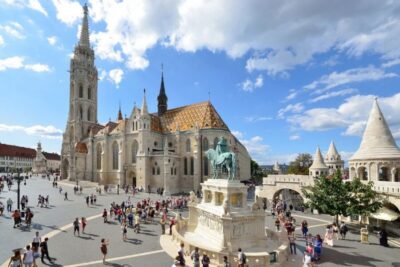
Now you climb into the Buda side, and this is where Budapest turns into a layered postcard. Matthias Church sits in the heart of the Castle District and is also commonly called the Church of the Assumption of the Blessed Virgin Mary. It is described as a late Gothic church building constructed in the second half of the 14th century and restored in the late 19th century. Like many of Budapest’s religious landmarks, it is more than a building. It is a marker of what the city valued across centuries.
Fisherman’s Bastion is next and it is one of the city’s most famous viewpoints. It includes neo-Romanesque lookout terraces and a long main façade parallel to the Danube. The important detail for context is the construction dates, 1895 to 1902, built on the base of Buda Castle walls. Even if you only take a quick turn, it helps you see Budapest’s relationship with the river from above.
As with other big interior sites, admission is not included for these stops. If you want to enter churches or go to specific upper areas, plan extra money and time.
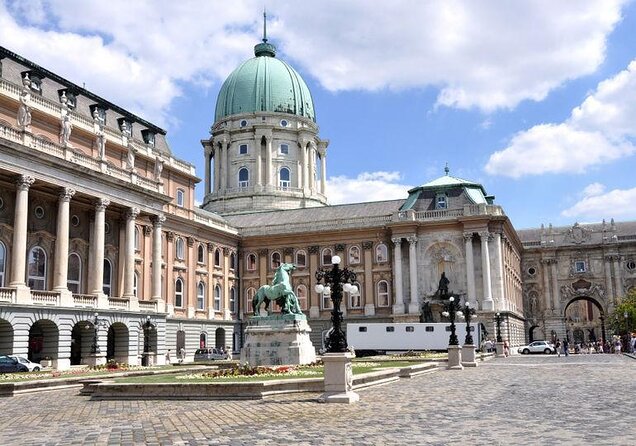
Then you reach Buda Castle, the historic royal palace complex. The site has medieval roots, with the first completion in 1265, but the Baroque palace seen today was built between 1749 and 1769. It is part of the Budapest World Heritage Site, designated in 1987. This is where the city’s different eras overlap: medieval, Baroque, and the later efforts to restore and interpret the place for modern visitors.
Practical tip: in a day like this, you are not trying to do everything indoors. You are trying to build a correct mental picture of where the city’s power sat, where it worshiped, and how it defended itself.
Gellért Hill and the Citadel viewpoint for your final big perspective
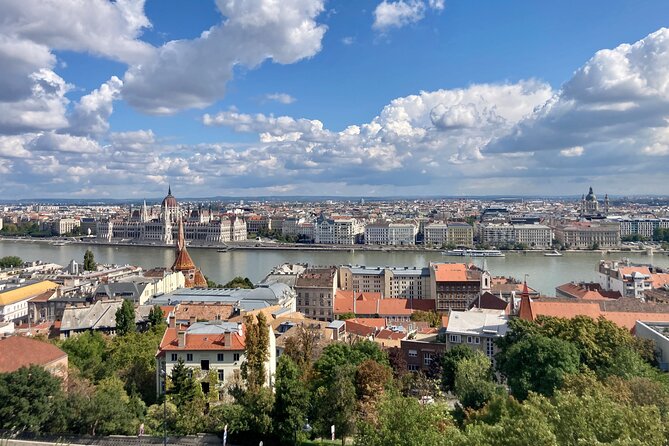
When the day winds down, you end up at Citadel Lookout on top of Gellért Hill. The fortress, described as the Citadella, was built in 1851 by Julius Jacob von Haynau, a commander of the Austrian Empire. From up here, the city feels like a whole. You can connect the Danube stops you saw earlier with the hills, the bridges, and the castle district layers.
This final viewpoint is also useful because it helps you choose where to return later. If you notice one façade you want to re-photograph, or one street you want to walk without rushing, the lookout helps you remember exactly where it was.
Price and value: what $505.73 per group up to 3 buys you
This tour is priced at $505.73 per group, up to 3 people. The value is not just “a car plus a guide.” It is the reduced friction of having a private driver-guide route stitched together for you, and the fact that parking and taxes are covered.
If you are traveling with 2 to 3 people, private transport is often the smartest way to spend a day in Budapest, because distances and elevation change make a do-it-yourself plan more tiring than it looks. Also, entrance fees are not included, so the day stays flexible. You pay for interiors only when you decide it is worth it.
What you should expect to pay extra for, based on the tour details: interiors like St. Stephen’s Basilica and Matthias Church, plus the upper areas at Fisherman’s Bastion, and any other optional paid entry. Széchenyi Baths admission is also not included. Lunch is also on you, though the schedule allows time to stop for it.
If your goal is to see the major highlights in one day while keeping the day enjoyable rather than exhausting, this price starts making sense quickly. If you prefer slow travel with no guided explanation, you might do just fine on your own. But if you want context and pacing, private guides add real value.
Who this tour suits best, and who might prefer something else
This works especially well for first-timers who want an organized introduction. It also suits people who have limited time, or anyone who wants to spend more energy on viewpoints and architecture and less time figuring out transit.
It is also a good choice if your group has mixed interests, because the guide can adjust what you emphasize. In the feedback, guides were praised for adapting to requests and finding good moments for breaks, including lunch placement.
Who might not love it: if you want a long, deep museum day or you are the type who loves lots of wandering with no plan. This is a highlights and connections tour. You will see a lot, but it is designed to keep moving.
If you bring your own comfort needs into the plan, it is easier than you think. The tour mentions service animals are allowed, it is near public transportation, and most travelers can participate.
Should you book this Budapest private city tour?
If your Budapest trip is short, or you want the best first-day grounding in one private, 8-hour sweep, I would book it. You get door-to-door pickup, a car-led route that saves you from unnecessary walking, and a guide who can explain the bigger story behind each famous stop.
If you are willing to pay extra for the interiors you care about, the day becomes even stronger. Just go in expecting that a few headline buildings are optional-pay, and thermal bath entry is also separate.
If you want, tell me your travel dates and whether you care most about churches, viewpoints, or the thermal-bath experience. I can help you decide which optional paid stops are worth prioritizing on a tight 8-hour schedule.
FAQ
How long is the private Budapest city tour?
It runs for about 8 hours.
How many people can be in the group?
The tour is priced per group for up to 3 people.
Is pickup available from my hotel in Budapest?
Yes. Pickup can start from any hotel or other accommodation type in Budapest.
What language is the tour guide?
The tour is offered in English.
What is included in the price?
Included are private guiding by a professional guide, door-to-door service, private transportation, parking fees and taxes, and car coverage with light walks.
Are attraction entrance fees included?
No. Entrance fees for optional interior visits are not included, and lunch is also not included.
Is Széchenyi Baths included?
The stop includes time at Széchenyi Baths, but admission to the baths is not included.
Do I get a mobile ticket?
Yes, the tour includes a mobile ticket.
What if my plans change?
You can cancel for a full refund up to 24 hours in advance of the experience start time.
The Whole of Budapest, Briefly





More Tours in Budapest


More Tour Reviews in Budapest




Reviewed recently around Budapest
- Audio visual multi-sensory chefs journey dinner experience★ 5.0 · 3 reviews
- Tapolca Cave Lake and Tihany/ Balaton private tour from Budapest★ 4.5 · 3 reviews
- SzentEndre-SaintAndrew City Privately Shopping and Picturesque★ 4.5 · 3 reviews
- Sightseeing flight over Budapest★ 5.0 · 3 reviews
- Self Guided Tour In Budapest With 100 Captivating Audio Stories★ 5.0 · 3 reviews
- Private Danube Bend Visegrad and Szentendre Tour With Transport★ 5.0 · 3 reviews
City Tours, compared.
 ★ 4.6City Highlights Cruise with Welcome DrinkFrom $1435,610 reviews
 ★ 4.1City Sightseeing Hop-On Hop-Off Bus Tour & ExtrasFrom $414,337 reviews
 ★ 5.0Budapest City Landmarks Walking Tour in 2 HoursFrom $32,048 reviews
 ★ 4.1Danube River City Lights Express CruiseFrom $141,608 reviews
 ★ 4.4Grand City Tour with Parliament VisitFrom $701,598 reviews
 ★ 4.33-Hour Grand City Tour and Castle WalkFrom $491,437 reviews
 ★ 4.8Hungarian Chimney Cake Workshop in the City CenterFrom $40885 reviews
 ★ 4.7Guided City Discovery Bike TourFrom $38702 reviews
Browse the lists this tour appears in