
Review · TOURS
Accessible Budapest Tour
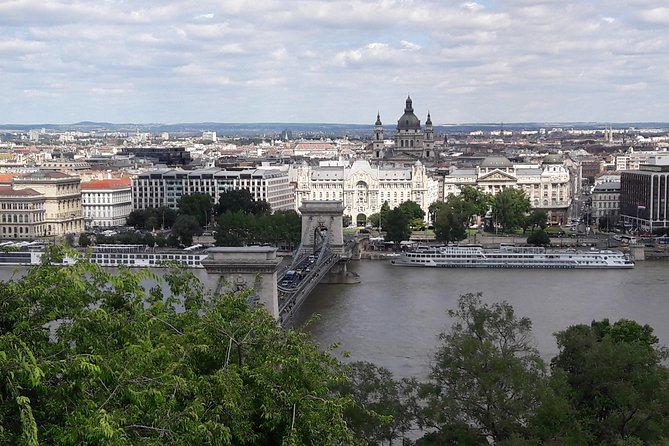
Budapest can be gorgeous, and also tricky. This tour is built for wheelchair users and people with mobility issues, so you spend less time fighting stairs and more time seeing the good stuff, with a guide who plans the route around what is actually accessible. I like the way the itinerary targets viewpoints like the Royal Palace terrace and keeps you moving on wheels or with minimal hassle. I also like that you get private guide attention plus step-avoiding choices that help you see places you might skip if traveling on your own. The main thing to consider is tradeoffs: some big sites are only partially accessible, and the tour can feel time tight if you stop longer than planned.
In This Review
- Key things that make this accessible Budapest tour worth your time
- Wheelchair-smart planning in Budapest, with fewer “can we do this?” moments
- Price and value: what $142.97 buys you for a half-day tour
- Pickup, mobile tickets, and how the day usually runs
- St. Stephen’s Basilica: elevator access, the mummified hand, and what’s off-limits
- The ride from Pest to Castle Hill on accessible buses
- Buda Castle panoramic terrace: the view stop that works even when stairs don’t
- From King Matthias Fountain to Sandor Palace: quick hits with photo value
- Fisherman’s Bastion and Matthias Church: classic views, plus one important accessibility reality
- Andrássy Avenue to Heroes’ Square: a long historic boulevard, traveled the easy way
- Millennium Monument: 1000 years of story, plus the unknown heroes
- City Park and Vajdahunyad Castle: a calm break with architectural mini-world vibes
- What I’d watch out for before booking (especially if timing is tight)
- Should you book this accessible Budapest tour?
- FAQ
- Is this tour private?
- How long is the Accessible Budapest Tour?
- Do you get hotel pickup?
- Is there an option for an accessible minibus?
- What entrance fees are included?
- Is St. Stephen’s Basilica accessible for wheelchair users?
- Is Matthias Church accessible inside for wheelchairs?
- Does the tour run in bad weather?
Key things that make this accessible Budapest tour worth your time
- Wheelchair-first routing: the guide skips steps and levels and favors accessible entrances and transport.
- St. Stephen’s Basilica access via elevator: wheelchair access is set up for getting inside, with limits on tower areas.
- Danube and Buda Castle panoramas: you get the Royal Palace terrace views without turning it into a stair-climb day.
- Accessible public bus used for the route: the plan includes buses that keep you out of the weeds.
- Some sites are not wheelchair-accessible inside: Matthias Church, for example, is not accessible for wheelchairs.
- Private group means pacing can change: your guide can tailor timing to your needs.
Wheelchair-smart planning in Budapest, with fewer “can we do this?” moments
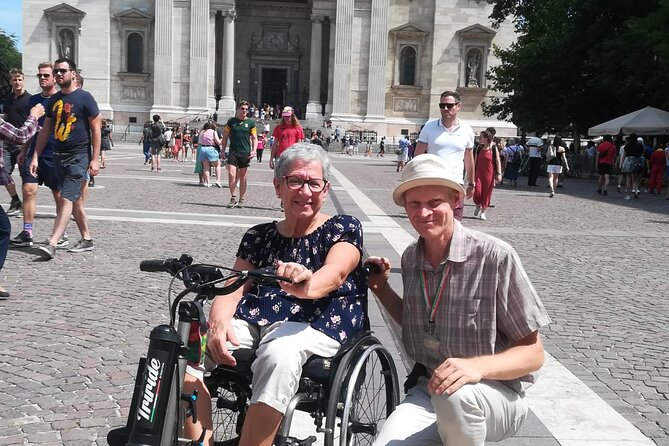
Budapest looks simple on a postcard. On the ground, it can be a maze of steep streets, curbs, and stairs that eat your energy fast. What I like about this tour is that it starts from your reality, not from what a normal walking tour assumes.
You’re not just getting sightseeing. You’re getting a guide who knows which parts are doable and which parts are not. The plan is built to avoid the most frustrating barriers, like stairs and awkward levels, and to route you through places with accessible amenities when possible.
That matters because it changes how the day feels. Instead of spending your limited energy wrestling with access, you can focus on the city itself. You’ll still do walking where you can, but the tour is designed so the base plan works for wheelchairs and limited mobility, not against it.
Price and value: what $142.97 buys you for a half-day tour
At about $142.97 per person, this isn’t a budget-only deal. But you are paying for the things that usually cost you time and headaches on your own: a licensed guide, private pacing, and guided access to at least one major indoor site.
Here’s the value math I see:
- You get professional, licensed guidance in English.
- You get hotel pickup and drop-off (public transport or car depending on option).
- You get entry to St. Stephen’s Basilica, with an important note about Sunday services.
- You get a private tour just for your group, which is huge when accessibility and timing matter.
What is not included is also part of the value picture. You’ll still need to budget for entrances that are marked not included, like Matthias Church, and you’ll need to handle public transport tickets if you are using public transit for segments where tickets apply. Lunch is optional too, and can be excluded from the tour duration.
Still weighing options? Here is what else pulls a crowd in Budapest.
- Budapest: City Highlights Cruise with Welcome Drink
★ 4.6 · 35,610 reviews - Budapest: Unlimited Prosecco, Beer and Aperol Spritz Cruise
★ 4.8 · 25,310 reviews - Budapest: Széchenyi Spa Day Ticket with Optional Upgrades
★ 4.3 · 23,911 reviews - Budapest: Nighttime or Daytime Sightseeing Cruise
★ 4.2 · 21,062 reviews
Pickup, mobile tickets, and how the day usually runs
The tour begins at Szent István tér 4, 1051, and it ends back there. If you need pickup, the guide meets you at the hotel reception or in front of your accommodation. After the tour, drop-off can be back at your hotel or another selected point in the city.
A helpful detail for planning is that you can request an accessible minibus. If you don’t request it, the tour still builds in accessible movement with public transport options where possible. The route includes using accessible public buses for key transfers, not just walking from stop to stop.
The day runs about 4 to 6 hours, and you can add an optional lunch break of up to one hour. That lunch hour may be excluded from the tour duration, so ask what that means for your exact time plan if you’re trying to fit other commitments.
Also note the tour operates in all weather conditions. Budapest weather can do that quick shift thing, so dress for the day, and pack a light layer.
Church areas require you to cover legs and shoulders, so even if you prefer shorts, save them for later.
St. Stephen’s Basilica: elevator access, the mummified hand, and what’s off-limits
St. Stephen’s Basilica is the kind of place you can’t help but look up. This church was built in memory of Hungary’s first king, and it’s packed with statues and frescoes. One detail that really sticks is the mummified right hand of King Stephen, displayed as part of the basilica’s story.
For wheelchair users, the key practical win here is the accessible elevator. You can use it to get inside the church. The limitation is that the elevator does not cover the tower area, including the treasury and the panoramic terrace. So if your goal is the views from the top, plan for that being outside your accessible options during this stop.
Timing also matters. The basilica is open every day except Sunday morning religious service. The entry included in the tour is tied to that, so on Sundays, the access plan can change depending on the service schedule.
You should plan for around 45 minutes for this stop. That’s enough time to see the main sights without turning it into a rushed indoor sprint.
The ride from Pest to Castle Hill on accessible buses
After meeting at the central hub in Budapest, you’ll head toward the Castle of Buda area. The tour uses an accessible public bus for this transfer. That is a big deal because getting up to Castle Hill the hard way can mean steep grades, curb obstacles, and too much time spent navigating instead of sightseeing.
This segment also helps you get your bearings. Once you’re headed toward the Buda side, the city starts to open up in layers: Danube views, the palace complex, and those classic angles across the water that you see on postcards.
For mobility travelers, the value is simple: you spend more of the day in the sights and less of it in transit friction.
Buda Castle panoramic terrace: the view stop that works even when stairs don’t
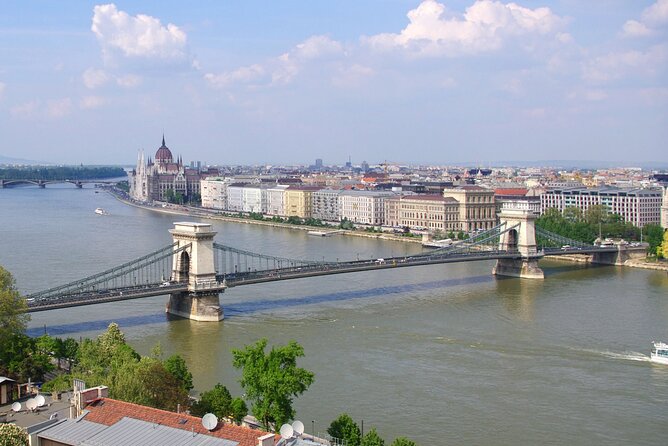
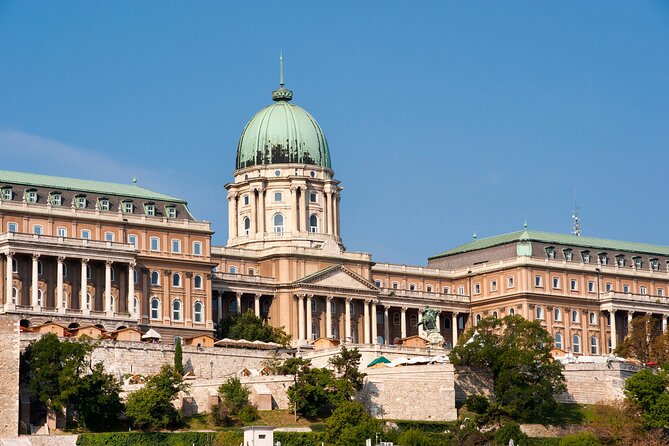
Buda Castle is one of Budapest’s big “wow” areas, and the tour makes it manageable. You cross the Danube and arrive at the castle grounds, then focus on the panoramic terrace of the Royal Palace, with free admission.
This is where the tour earns its keep. A terrace viewpoint gives you the iconic skyline energy without forcing you into the most stair-heavy parts of the palace complex. You’re set up to enjoy the broad city view, including what you can see across the river.
You get about 45 minutes here, which is the right amount of time for a photo run, a slow look around, and a break before the next stops.
One practical tip: terraces can be windy and cool. If you’re in a wheelchair, wind chill can hit harder than you expect, so keep a layer handy.

From King Matthias Fountain to Sandor Palace: quick hits with photo value
After the castle terrace, the tour moves through a cluster of must-sees at a pace that works for mobility travelers.
First is the Fountain of King Matthias, a beautiful 19th-century feature. It’s short and scenic, not a long museum stop. You’ll likely appreciate it most as a visual breather between major sights.
Next comes Sandor Palace, the president’s palace. You get a look around the area, including the guards in historical uniforms. This stop is brief, around 10 minutes, and the tour notes the admission here is not included.
This is one of those segments where you can benefit from the guide. If you’re using a wheelchair, a good guide can help you position where you can see the uniforms and watch the scene without getting shoved into an inaccessible corner.
Fisherman’s Bastion and Matthias Church: classic views, plus one important accessibility reality
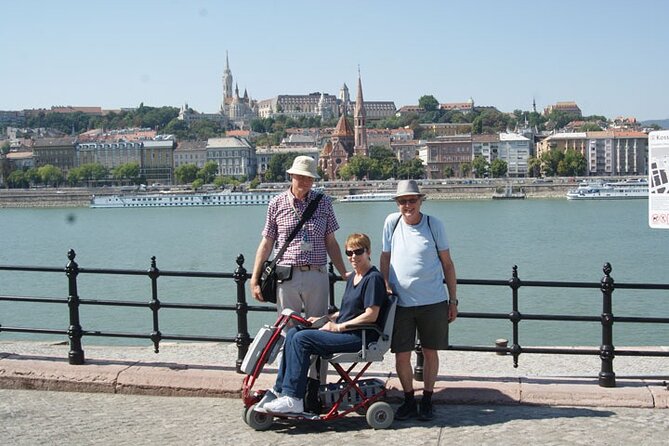
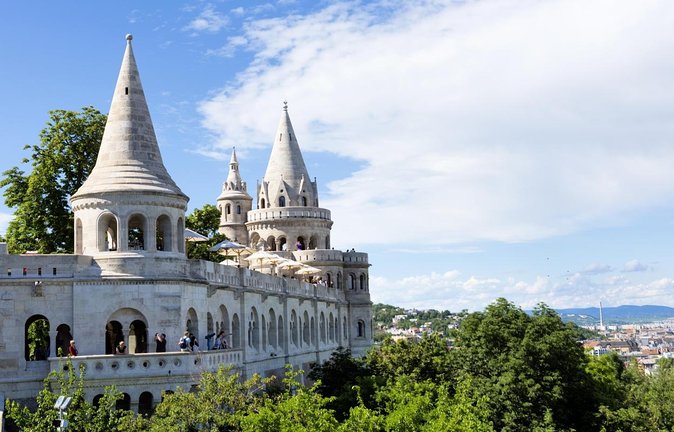
Fisherman’s Bastion is famous for a reason: it gives you dramatic panoramic views over the Danube and toward the Hungarian Parliament building. The tour gives you about 15 minutes, with admission not included.
This is an excellent stop for photos and orientation. If you want to understand where everything sits, you’ll get it here.
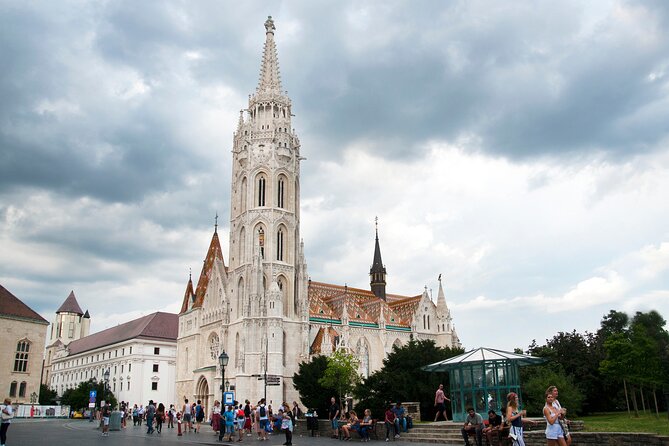
Then comes Matthias Church, a Gothic church built in the Middle Ages. Outside, it’s gorgeous, and you’ll get time to walk around the area. But there’s a major accessibility note: the church is not accessible inside for wheelchair users.
If you’re a walker, there is an option for an optional visit upon request, but the default is focused on what you can do comfortably. The stop time is around 10 minutes.
So here’s how I’d plan for this part of the day:
- If you’re a wheelchair user, treat the exterior and the surrounding area as the full experience.
- If you’re on foot, ask your guide what the route and timing looks like for any optional indoor time.
Also, the tour includes an extra note about the iconic bridge being under renovation from 2021 to 2022. That suggests that in some date ranges, you may see routing changes. If your trip overlaps with any works, stay flexible and let your guide steer.
Andrássy Avenue to Heroes’ Square: a long historic boulevard, traveled the easy way
After you work your way through the Buda side highlights, the tour shifts you toward Pest with a ride along Andrássy Avenue, a historical thoroughfare about 2 miles long.
Instead of forcing you to power through the boulevard on foot, the tour takes you along it by accessible public bus to Heroes’ Square. That choice is practical. Andrássy Avenue can be a long walk if you’re not steady on your feet, so the bus makes it possible to see it without draining your energy.
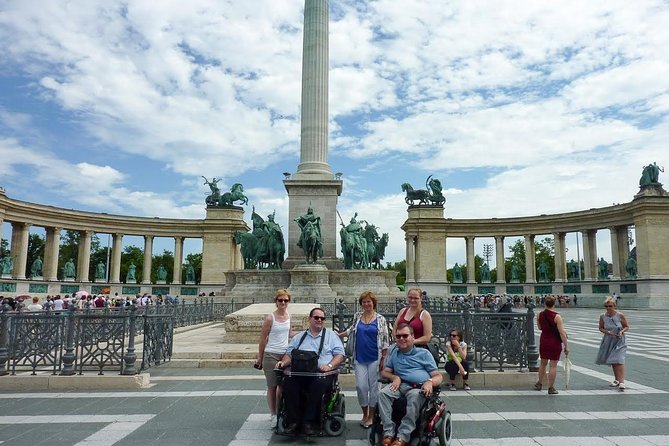
Then you get to the big open space of Heroes’ Square. This square is the largest in Budapest, and you’ll see the Millennium Monument in the center. You also get views of the Arts Hall and the Fine Arts Museum on either side.
Time for this section is short, about 10 minutes, so it’s more of a guided hit than a long linger. Still, it’s enough to understand the layout and take in the main details.
Millennium Monument: 1000 years of story, plus the unknown heroes
Heroes’ Square centers on the Millennium Monument, which commemorates 1000 years of Hungarian history. In front of the monument you’ll find the grave of the unknown heroes, which makes the symbolism feel real, not just decorative.
Around the monument’s colonnades are statues of Hungary’s greatest kings and leaders. Even in a quick visit, you can get the big picture of what the monument is trying to communicate.
The tour gives you about 10 minutes at this stop. That’s short, but when you’re dealing with mobility needs, short is often good. You get the main elements without turning it into a long, tiring standstill.
City Park and Vajdahunyad Castle: a calm break with architectural mini-world vibes
The tour ends with one of Budapest’s more relaxed-feeling areas: Budapest City Park and Vajdahunyad Castle.
City Park is described as the oldest public park in the world, and that sets the stage. From there, you’ll cross a bridge to reach an island on the lake, where the castle sits.
Vajdahunyad Castle is part romantic setting, part architectural display. Around the courtyard, you’ll see copies of buildings that represent different periods and styles of Hungarian architecture. If you like sightseeing that is visual but not exhausting, this is a smart way to spend your final stop.
You’ll have about 15 minutes here, with admission included as free.
Inside the courtyard, you’ll also spot the Anonymus Szobor, the statue of Anonymus, the first history writer of Hungary, who lived in the 12th century. Time here is about 10 minutes, and it’s a nice touch because it shifts the day from monuments and views into a small cultural detail.
What I’d watch out for before booking (especially if timing is tight)
This experience has strong strengths. The guide can tailor routing and timing to your accessibility needs, and that’s exactly what you want in a city like Budapest. One review highlights how the guide understood handicaps and adjusted the itinerary with compassion, which is a big difference between a standard tour and a genuinely accessible one.
That said, there is one possible drawback to plan around. A review criticized the tour for not matching the described scope, including missing some castle coverage and noting that certain churches were not free. Another concern was poor timekeeping, which can matter when you rely on specific access windows.
So, what should you do?
- Ask your guide what is realistically included in your day, especially around sites that require tickets.
- If you’re depending on entrance to certain areas, confirm which parts are actually covered for wheelchair access.
- Give yourself buffer time. A half-day tour is still a half-day tour.
Should you book this accessible Budapest tour?
Book this if you want a wheelchair-friendly, private way to see major Budapest sights without turning the day into an obstacle course. It’s especially good if you value a guide who will work around stairs, levels, and difficult transfers, and if you want a clear plan that includes accessible transport.
Consider a different option or ask extra questions if you are strongly focused on specific interior access, because Matthias Church is not accessible inside for wheelchairs, and St. Stephen’s Basilica tower areas are excluded even though the main church interior is elevator-accessible. Also, if you are very tight on time or have strict commitments after the tour, ask the guide how pacing is handled so you are not stuck planning your day around delays.
FAQ
Is this tour private?
Yes. It is a private tour/activity, and only your group will participate.
How long is the Accessible Budapest Tour?
The duration is about 4 to 6 hours.
Do you get hotel pickup?
Pickup is offered. If you require pickup, the guide meets you at your hotel reception desk or in front of your accommodation address.
Is there an option for an accessible minibus?
Yes. If you wish, the provider can organize an accessible minibus.
What entrance fees are included?
Entry to St. Stephen’s Basilica is included, except Sunday morning religious service. Other sites like Matthias Church and some viewpoints are listed as not included.
Is St. Stephen’s Basilica accessible for wheelchair users?
The basilica has an accessible elevator to get inside for wheelchair users. The tower area with the treasury and the panoramic terrace is not included in the accessible elevator access.
Is Matthias Church accessible inside for wheelchairs?
No. Matthias Church is not accessible inside for wheelchair users.
Does the tour run in bad weather?
Yes, it operates in all weather conditions. Dress appropriately for the day, and remember church dress rules (cover legs and shoulders).
More Tours in Budapest


More Tour Reviews in Budapest


Reviewed recently around Budapest
- Audio visual multi-sensory chefs journey dinner experience★ 5.0 · 3 reviews
- Tapolca Cave Lake and Tihany/ Balaton private tour from Budapest★ 4.5 · 3 reviews
- SzentEndre-SaintAndrew City Privately Shopping and Picturesque★ 4.5 · 3 reviews
- Sightseeing flight over Budapest★ 5.0 · 3 reviews
- Self Guided Tour In Budapest With 100 Captivating Audio Stories★ 5.0 · 3 reviews
- Private Danube Bend Visegrad and Szentendre Tour With Transport★ 5.0 · 3 reviews
Tours, compared.
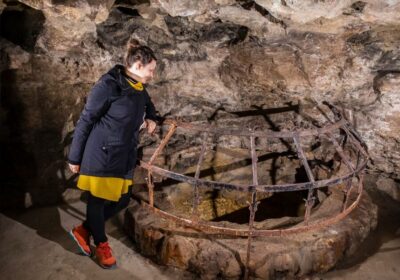 ★ 4.7Buda Castle Cave TourFrom $195,677 reviews
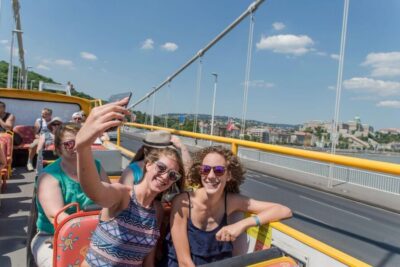 ★ 4.1City Sightseeing Hop-On Hop-Off Bus Tour & ExtrasFrom $414,337 reviews
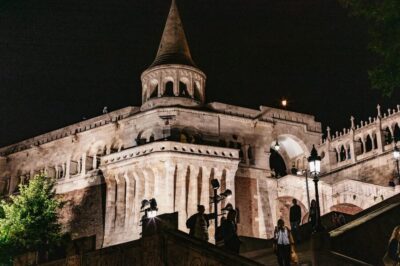 ★ 4.6Buda Castle District Vampires and Myths Night TourFrom $233,830 reviews
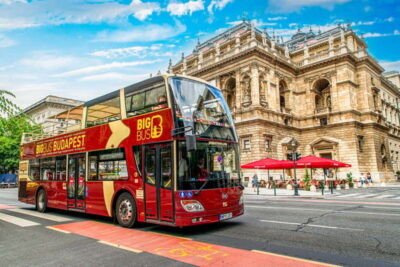 ★ 4.2Big Bus Hop-On Hop-Off Tour & Danube River CruiseFrom $403,794 reviews
 ★ 4.3Floating Bus Tour by Land and WaterFrom $283,342 reviews
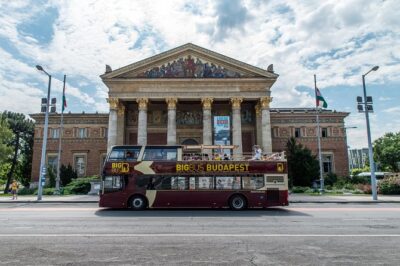 ★ 3.5Big Bus Budapest Hop-On Hop-Off Bus and Walking TourFrom $422,206 reviews
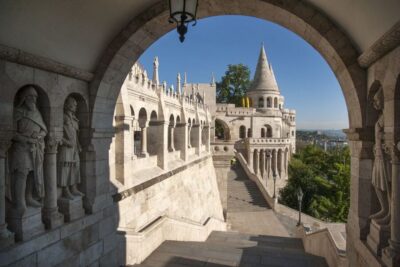 ★ 4.6Buda Castle District Walking TourFrom $142,108 reviews
 ★ 5.0Budapest City Landmarks Walking Tour in 2 HoursFrom $32,048 reviews