
Review · WALKING TOURS
Budapest Grand Walk
Budapest in four hours needs a map. This grand walk stitches together Pest landmarks and Danube views with stories you can actually picture. You start with a drink, cover major sites plus lesser-known corners, and keep moving at a pace that works for first-timers.
I like the start at Tasting Table Budapest. You begin with Hungarian sparkling wine, which makes the whole afternoon feel like you are already in the city’s rhythm, not just ticking boxes.
I also like the built-in variety. You get a few short rides on public transport, including Europe’s oldest metro line, then finish with coffee and the Danube promenade photo stops that help everything click together.
One drawback to plan for: this is a walking tour with a moderate amount of walking. If you hate walking or want a slow, museum-heavy day, you may feel rushed even though it is only about 4 hours.
In This Review
- Key highlights that make this tour click
- Starting at Tasting Table Budapest, then walking into real street life
- Pest’s big streets and the Opera House that defines Andrássy út
- The National Radio Building and 1956, history you can point at
- Jewish Quarter walk: Grand Synagogue area, Gozsdu udvar, and Király utca
- Heroes Square and getting the city rhythm with Metro line M1
- St. Stephen’s Basilica: the first king, and the right hand in view
- Danube promenade time: Parliament, Chain Bridge, and Buda Castle across the water
- The Shoes on the Danube Memorial: a hard stop handled with care
- Buda Castle area pass and finishing near Chain Bridge
- What you get for $125, and when it feels like good value
- Who should book the Budapest Grand Walk
- Practical tips so your day feels easy
- Should you book this tour?
- FAQ
- How long is the Budapest Grand Walk?
- What is the meeting point for the tour?
- Where does the tour end?
- What language is the tour offered in?
- How big are the groups?
- What is included in the price?
- Does the tour include public transportation?
- Do we visit the Jewish Quarter and the Grand Synagogue area?
- Is there a stop at St. Stephen’s Basilica?
- What is the cancellation policy?
Key highlights that make this tour click

- Sparkling wine at Tasting Table Budapest to kick off the afternoon
- Pest-to-Danube views of Parliament, Chain Bridge, and Buda Castle
- Andrássy út and the Opera House in the middle of the story, not at the end
- Jewish Quarter sights plus the Grand Synagogue area and Király utca
- Metro line ride on Europe’s oldest metro line, then a coffee pause
- Memorial time at the Shoes on the Danube and other sobering stops
Starting at Tasting Table Budapest, then walking into real street life
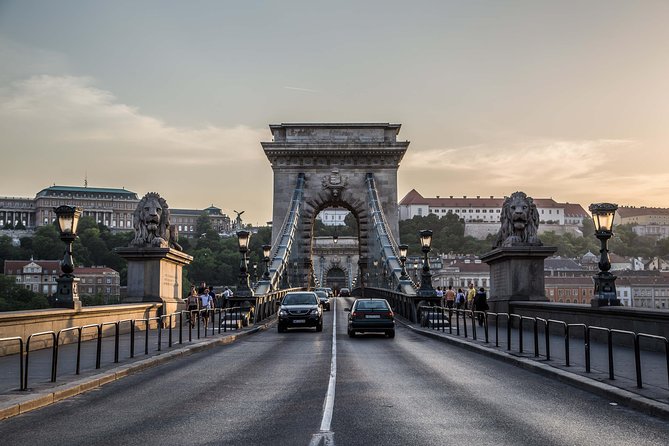
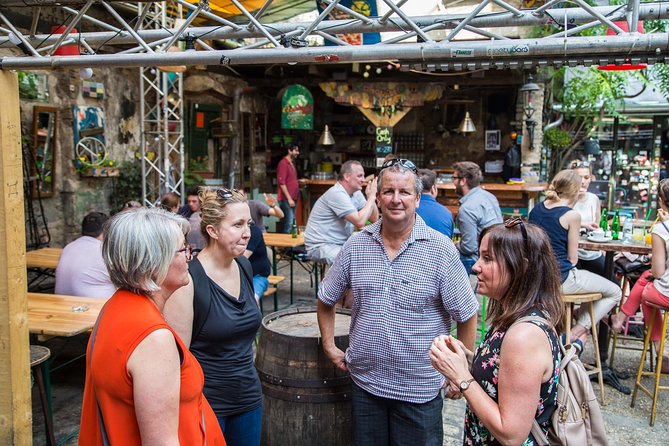
The tour begins in the Palace district at Tasting Table Budapest, Bródy Sándor u. 22. Plan for a mid-afternoon start, then meet your guide right there and begin with an aperitif, a glass of Hungarian sparkling wine.
What I like about this kind of start is that it loosens you up. Budapest is beautiful, but it can also be a bit much when you first arrive. A short drink and a guided first walk helps you orient quickly, especially in Pest where the streets and districts can feel like a puzzle.
From that point, you are on foot through Pest’s handsome streets. The guide ties buildings and streets to what happened in Hungarian history, from kings and major political figures to the people who lived through hard times. If your goal is to understand how the city got the way it is today, this format usually works better than a bus tour.
Pest’s big streets and the Opera House that defines Andrássy út
After the first drink, the walk focuses on some of Pest’s most recognizable architecture. You pass by Andrássy Avenue and get a view of the Hungarian State Opera House. The opera building is neo-Renaissance, designed by architect Miklós Ybl, and it is one of the reasons Andrássy út feels so grand and formal.
This part matters because it gives you the visual grammar of the city. Budapest did not become a major European capital by accident. Seeing a landmark like the Opera House up close, while your guide connects it to the people and politics of its era, makes it easier to read what you see later.
You also stop around major institutions in Pest, including the National Museum area. Some buildings here look worn, because Budapest is old and still lived in. That is not a problem. It is part of the authenticity. You are learning to notice what time did, and what survived.
Other Budapest walks at a similar pace
- Budapest: Buda Castle Walk with Saint Stephen’s Hall
★ 4.5 · 3,012 reviews - Big Bus Budapest Hop-On Hop-Off Bus and Walking Tour
★ 3.5 · 2,206 reviews - Budapest: Buda Castle District Walking Tour
★ 4.6 · 2,108 reviews - Budapest City Landmarks Walking Tour in 2 Hours
★ 5.0 · 2,048 reviews
The National Radio Building and 1956, history you can point at
One of the most specific, meaningful stops on this tour is the Hungarian National Radio Building, which your guide connects to the 1956 Revolution. That is a powerful anchor. Instead of talking about dates in the abstract, you see the kind of place where events had stakes for real people.
When a tour includes a site like this, you get better context for the rest of the city. Budapest has plenty of statues and memorials, but you understand them more when you know what they are responding to. It is history you can point at from the sidewalk.
Jewish Quarter walk: Grand Synagogue area, Gozsdu udvar, and Király utca

The tour then shifts toward the former Jewish Quarter. You get a chance to see the Grand Synagogue, described as the biggest in Europe, plus the surrounding area. You also pass by the Gozsdu udvar complex and head toward Király utca.
This part works best if you keep your expectations practical. You are not on a full deep-immersion museum day here. You are walking through key streets and recognizable spaces so the Jewish district makes sense geographically and historically, especially when you later explore on your own.
Also, do not worry if you think you will miss details. Your guide includes time for photos and questions throughout the tour. If you want context on what you are seeing, this tour structure is built for that.
Heroes Square and getting the city rhythm with Metro line M1
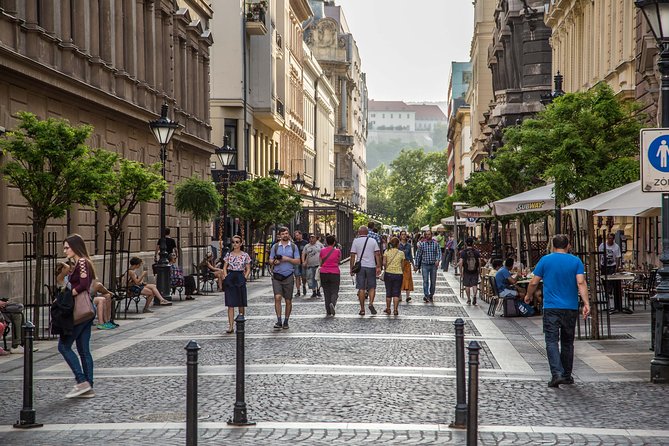
You will reach Heroes Square and take in the city-scale view. Then comes one of the most fun, everyday-feeling components: a ride on Europe’s oldest metro line.
Even if you have seen transit systems around the world, this stop adds value because it turns a famous city landmark into something you experience like a local. You are not just photographing. You are moving through the city’s layers.
Then you get a coffee break at a favored local café. That matters more than it sounds. Four hours can feel longer in a historic city, and coffee helps reset you before the Danube portion.
St. Stephen’s Basilica: the first king, and the right hand in view
A key cultural stop is St. Stephen’s Basilica (Szent István Bazilika). Your guide shares the connection to Stephen, the first King of Hungary, and the fact that his mummified right hand is housed in the church.
This is the kind of detail that changes how you look at the building. You stop seeing it as just a big church. You start understanding it as a physical marker of how Hungary tells its own origin story.
The tour time here is about 15 minutes, so treat it as a focused orientation stop rather than a long inside visit. If you want to spend extra time inside or climb for views, you will likely need to do that on your own after the tour.

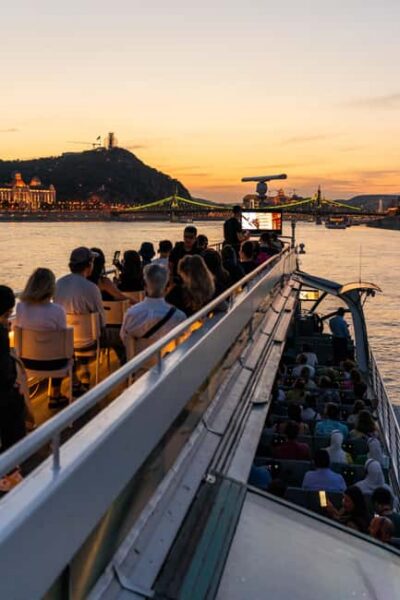
Danube promenade time: Parliament, Chain Bridge, and Buda Castle across the water
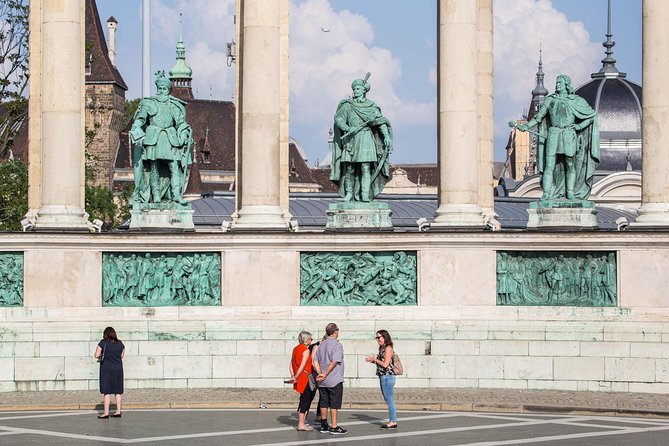
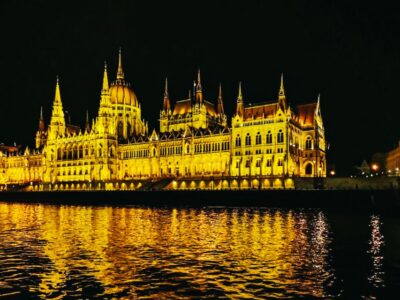
The best photo payoff comes as the route heads toward the Danube. You admire views of the neo-Gothic Parliament building dominating the riverbank, the Chain Bridge, and Buda Castle across the water.
Seeing the city this way is more than scenery. Budapest is built around the river and the bridge system, and the promenade stops help you understand why the city feels so theatrical from a distance. You start to see how Pest and Buda mirror each other.
Your tour also includes passing by or stopping near important public spaces such as Liberty Square, with buildings around it including the former stock exchange. You may also notice the Hungarian Academy of Sciences, housed in an elegant neoclassical palace built in 1865.
If you like architecture, this segment gives you enough context to spot styles quickly afterward. If you do not, the river views still do the heavy lifting.
The Shoes on the Danube Memorial: a hard stop handled with care
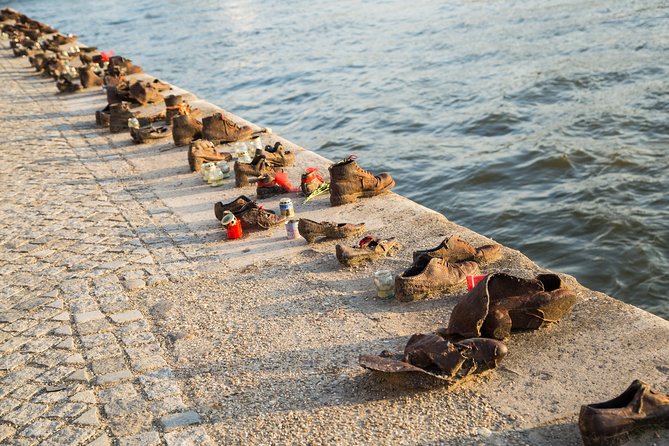
One of the emotional highlights is the Shoes on the Danube Holocaust Memorial. It is listed as part of the walk and photo area, so you get a structured chance to see it and process it with your guide’s explanation.
This is not a casual stop. It is meant to make you slow down for a minute and absorb what the memorial represents. If you tend to skip memorials because they feel too heavy, this tour includes exactly the kind of time you need to face it properly, without it swallowing your whole afternoon.
You also see other Soviet-era references, including the Soviet Monument, plus explanations tied to memorials for specific figures, including a US major and Ronald Reagan. Those details matter because they show how Budapest remembers the 20th century in layers, not in one simple storyline.
Buda Castle area pass and finishing near Chain Bridge
The tour ends near Chain Bridge on the Pest side. From there, you cross on your own if you want to keep going toward the Buda Castle area.
Along the way, you may pass by the complex of seven buildings and connected courtyards in the 7th district. Those courtyards are full of shops and restaurants, so even if you do not want a long castle day, the area still gives you a comfortable place to wander.
A practical note: the tour is about 4 hours, approx. Your guide notes that if you are not in a rush, it can stretch a bit. If you have dinner reservations on the other side of the river, keep the end time flexible.
What you get for $125, and when it feels like good value
At $125 per person for about 4 hours, the value depends on what you are trying to buy: time, context, and included extras.
Here is what is actually included:
- An English-speaking experienced local guide
- A glass of Hungarian sparkling wine
- A coffee break with coffee and/or tea, plus one coffee/drink included
- A few public transportation trips, including metro line M1
- Many stops for photos and questions
That combination is why this price can feel fair. You are not just paying for walking. You are paying for guided context plus drinks plus transit support, which saves you time figuring out what to see, how to connect stops, and where to pause.
If you are coming to Budapest for the first time and you want a strong overview day, this tour hits a sweet spot. It mixes monumental sites, lived-in streets, and the Danube memorial moment, all without turning into a full-day museum marathon.
If your plan is only to do photos from the street and you already know the city well, you might feel the included drinks and transit do not change much for you.
Who should book the Budapest Grand Walk
This tour is a strong fit if:
- You want a first-day overview so the city makes sense later.
- You like history that points to real places, including 1956 and the Jewish Quarter.
- You want Danube views plus an organized memorial stop at Shoes on the Danube.
- You enjoy a small-group pace, with time for questions.
It may not be the best fit if:
- You want minimal walking or a mostly indoor day.
- You are strict about time and cannot handle a tour that might run a bit longer.
Group size helps a lot here. The standard format is shared with 2 to 8 guests. If you want quieter attention or a customized theme, you can choose a private tour option.
Practical tips so your day feels easy
You are dealing with a lot of walking in a compact historic city. The tour recommends comfortable shoes, and that is not just polite advice. Bring footwear you can stand in for hours.
Also, plan your clothing for comfort. Budapest afternoons can shift, and you will be outside for much of the route.
One more practical point: since the tour ends near Chain Bridge, decide in advance what you want next. If you are going to Buda Castle after, keep your next stop flexible. If you are heading for dinner, pick a plan that works well from that area.
Should you book this tour?
I would book the Budapest Grand Walk if you want a guided way to connect Pest’s streets to the story of the city, then finish with the Danube’s best-known views plus a memorial stop that actually gets explained. The small group size, the included sparkling wine and coffee, and the metro ride make it more than a simple sightseeing walk.
Skip it if you already know Budapest well and you are aiming for a quiet, low-effort day. In that case, you can still do most of the same sights on your own, but you would lose the time-saving context that ties the city together.
FAQ
How long is the Budapest Grand Walk?
It is about 4 hours.
What is the meeting point for the tour?
You meet at Tasting Table Budapest, Bródy Sándor u. 22, 1088 Hungary.
Where does the tour end?
The tour ends near Chain Bridge on the Pest side at Széchenyi Lánchíd, Budapest.
What language is the tour offered in?
It is offered in English.
How big are the groups?
This is a shared small-group tour with a maximum of 8 travelers, and it operates as 2 to 8 guests for the shared option.
What is included in the price?
A glass of Hungarian sparkling wine to begin, a coffee break (one coffee or drink included), coffee and/or tea, alcoholic beverages, and guided storytelling plus some short public transportation rides.
Does the tour include public transportation?
Yes. The tour includes a few short trips on public transportation, including Europe’s oldest metro line.
Do we visit the Jewish Quarter and the Grand Synagogue area?
Yes. The route includes the former Jewish Quarter area, with sights such as the Grand Synagogue and nearby streets and complexes.
Is there a stop at St. Stephen’s Basilica?
Yes. You visit St. Stephen’s Basilica, and it is named for Stephen, the first King of Hungary, with his mummified right hand housed in the church.
What is the cancellation policy?
This experience is non-refundable and cannot be changed for any reason. If it is canceled because the minimum number of travelers is not met, you will be offered an alternative or a full refund.
Keep Walking Budapest




More Tour Reviews in Budapest





Reviewed recently around Budapest
- Audio visual multi-sensory chefs journey dinner experience★ 5.0 · 3 reviews
- Tapolca Cave Lake and Tihany/ Balaton private tour from Budapest★ 4.5 · 3 reviews
- SzentEndre-SaintAndrew City Privately Shopping and Picturesque★ 4.5 · 3 reviews
- Sightseeing flight over Budapest★ 5.0 · 3 reviews
- Self Guided Tour In Budapest With 100 Captivating Audio Stories★ 5.0 · 3 reviews
- Private Danube Bend Visegrad and Szentendre Tour With Transport★ 5.0 · 3 reviews
Walking Tours, compared.
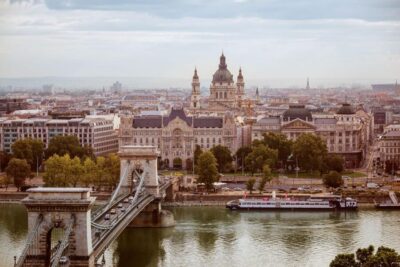 ★ 4.5Buda Castle Walk with Saint Stephen’s HallFrom $293,012 reviews
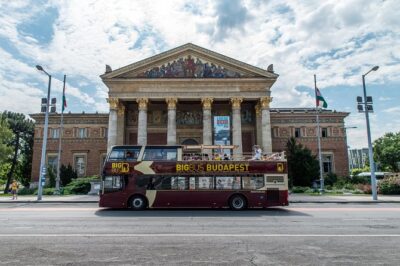 ★ 3.5Big Bus Budapest Hop-On Hop-Off Bus and Walking TourFrom $422,206 reviews
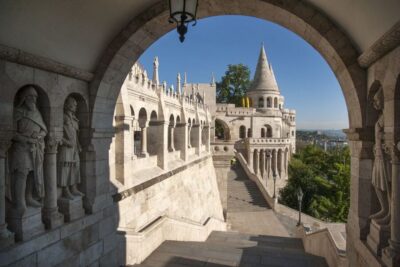 ★ 4.6Buda Castle District Walking TourFrom $142,108 reviews
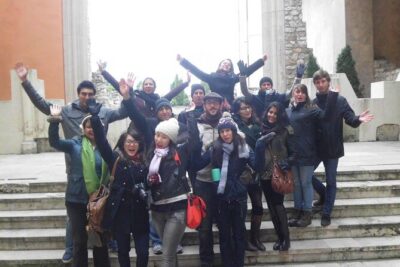 ★ 5.0Budapest City Landmarks Walking Tour in 2 HoursFrom $32,048 reviews
 ★ 4.83-Hour Orientation Walking Tour of Buda and PestFrom $411,834 reviews
 ★ 4.33-Hour Grand City Tour and Castle WalkFrom $491,437 reviews
 ★ 5.0Budapest Historical Sightseeing – Free Walking TourFrom $31,302 reviews
 ★ 5.0Budapest All in One Small Group Walking Tour with Strudel StopFrom $1001,277 reviews
Browse the lists this tour appears in