
Review · HISTORICAL TOURS
Budapest Historical Sightseeing – Free Walking Tour
Budapest history happens on foot. This Budapest Historical Sightseeing tour strings together the city’s communist past and modern culture, with major landmarks explained in plain language. I like that it’s budget-friendly (a tiny fee plus tips), and I love the way the route builds quick orientation for your first day. The main catch is you’ll do a lot of walking and standing, mostly outdoors, and it’s not ideal if cold or long distances wear you down.
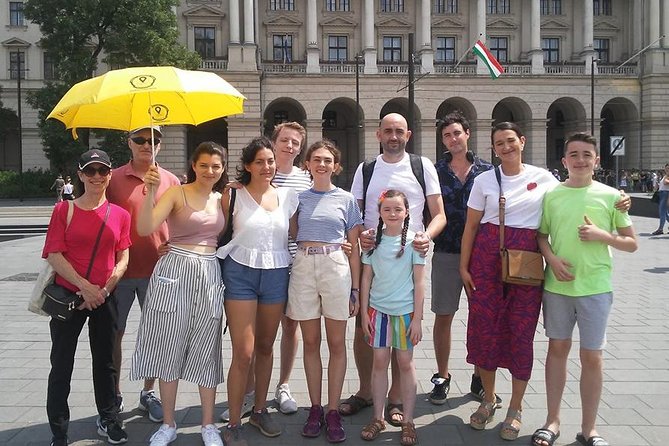
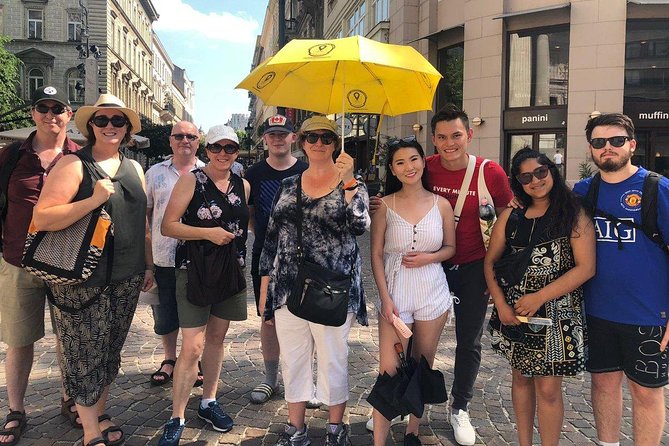
The vibe is straightforward: you meet at Kálvin tér, look for guides in yellow, and follow a pace designed for a 2.5-hour overview. I also like the variety of stop styles, from museum gardens to outdoor viewpoints over the Danube, with short rests built into the plan. If you’re hoping for lots of indoor time or lots of sitting, you might feel a bit impatient.
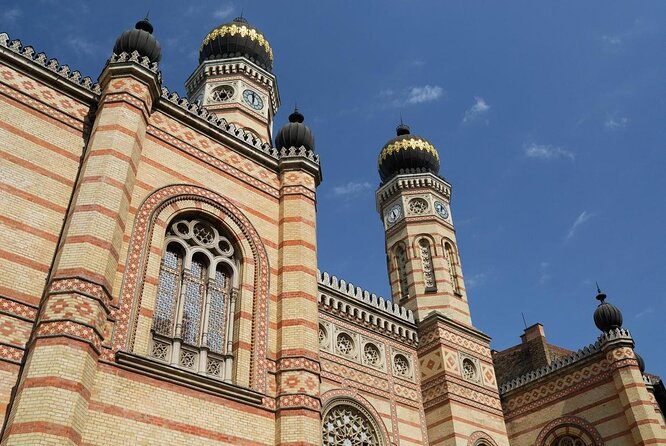
What makes this tour especially useful is how it connects the dots. You’ll cover the Jewish Quarter story, then shift to communist monuments, then end at the Danube with the haunting Shoes on the Bank memorial. It’s a lot in one go, so come ready to walk, listen, and ask questions when you can.
In This Review
- Key reasons to do this Budapest historical walk
- Meeting Kálvin tér: Finding the guide and understanding the route
- Stop 1 at the Hungarian National Museum gardens: the turul bird and 1948 uprising
- Stop 2 and Stop 3: Kálvin Square and Unger’s House in one architecture-and-power combo
- Elizabeth Square to Astoria Hotel: Budapest Eye, nightlife references, and a grand hotel with film ties
- The Jewish Quarter walk: from community life to WWII ghetto to today’s creative edge
- Szabadság tér and the communist memorial: how the tour frames ideology in public space
- Stock Exchange Palace and the Parliament exterior: power, symbolism, and big Danube views
- Fisherman’s Bastion side views and Széchenyi Chain Bridge: castle drama from the Pest bank
- Shoes on the Danube Bank: a short stop with big emotional weight
- Price, tips, and what you really get in 2.5 hours
- Pacing, cold weather, and footwear reality checks
- Tour fit: who will enjoy this most
- Should you book Budapest Historical Sightseeing, Free Walking Tour?
- FAQ
- How much does the Budapest Historical Sightening free walking tour cost?
- How long is the tour?
- Where do I meet the guide, and where does the tour end?
- Is the tour offered in English, and is there a mobile ticket?
- What sights are included, and are any admission tickets required?
- Is there a break for drinks and toilets during the tour?
- What should I bring to make the tour more comfortable?
- What happens if the weather is bad?
- Are service animals and dogs allowed?
Key reasons to do this Budapest historical walk
- A first-day orientation of the Pest side that helps you plan the rest of your trip
- Comic and serious history side by side, including communist-era stops and modern culture
- Outdoor, photo-friendly stops like Parliament views and the Danube promenade memorial
- Clear stops with context, from the turul bird to the Jewish Quarter through WWII
- Major architecture in small bites, like Unger’s House and the Stock Exchange Palace
- Minimal cost, tip-based format that works well for budget travelers
Meeting Kálvin tér: Finding the guide and understanding the route
You start at OTP Bank Budapest, Kálvin tér 12-13, 1085 Hungary. The guide team dresses in yellow, and meeting in a square area with places to sit makes the start easier if you arrive early. It’s also near public transportation, which matters in Budapest where you’ll often hop between tram and metro to save your legs.
The tour ends near Széchenyi Lánchíd (the Chain Bridge), at Id. Antall József rkp. 1, 1052 Hungary. From there, you can walk back toward central sights or continue into the city easily. That ending point is smart: it puts you close to the heart of sightseeing and transit, instead of dumping you in an out-of-the-way corner.
One practical note for comfort: this is a walk-first format. The tour runs about 2 hours 30 minutes and includes a short break for drinks and toilets. If you’re traveling with heavy bags, plan to keep things light. The guides are not able to carry guest luggage or equipment.
Stop 1 at the Hungarian National Museum gardens: the turul bird and 1948 uprising
Your first stop is in the gardens of the Hungarian National Museum. You’ll stand outside and take in the statue of the mythical turul bird, a detail that instantly signals Hungary’s mix of legend and national identity. You also get an explanation of the museum’s collections and its founder, which helps you understand why the museum matters before you ever step inside.
This is also where you’re given context about the 1948 uprising. Even if you don’t remember dates perfectly, the goal here is to understand why the museum and surrounding area feel tied to politics, not just art and artifacts.
Another interesting piece you’ll hear at the start is about District VIII, once known for grand palaces. The tour frames it as one of those places where Budapest’s layers overlap: old wealth, later changes, and the way history keeps reshaping what you see on the street today. The outdoor setting makes it easy to look around without feeling rushed.
Possible drawback: you may spend more time listening than you want at your first stop, especially if the group is large or the weather is harsh. Come prepared with water and dress for standing outdoors.
Other Budapest walks at a similar pace
- Budapest: Buda Castle Walk with Saint Stephen’s Hall
★ 4.5 · 3,012 reviews - Big Bus Budapest Hop-On Hop-Off Bus and Walking Tour
★ 3.5 · 2,206 reviews - Budapest: Buda Castle District Walking Tour
★ 4.6 · 2,108 reviews - Budapest City Landmarks Walking Tour in 2 Hours
★ 5.0 · 2,048 reviews
Stop 2 and Stop 3: Kálvin Square and Unger’s House in one architecture-and-power combo
At Kálvin Square, you meet your guide at 12 Kálvin ter. The square is linked to the French Protestant Reformer John Calvin, which gives you a useful breadcrumb into the city’s religious and cultural influences beyond just the modern tourist story. The area has places to sit and shelter from the elements, so this is one of the more comfortable stops if weather is dodgy.
Then the tour quickly turns into architecture with Unger’s House. You’ll stand in the courtyard of Miklós Ybl’s creation, a building that mixes styles including Byzantine, Gothic, Moorish, Renaissance, and Romantic elements. That’s a mouthful, but the takeaway is simple: Budapest’s streets are not uniform. They’re a collage, and this building is a great example of that collage approach.
This pairing, Kálvin Square followed by Unger’s House, works well because it shifts from ideas about identity to what identity looks like in stone and decoration. If you love cities where buildings carry political and cultural meaning, this segment delivers without needing long detours.
Elizabeth Square to Astoria Hotel: Budapest Eye, nightlife references, and a grand hotel with film ties
At Elizabeth Square, the tour points you toward the Budapest Eye and gives background on the square itself. It’s also an easy spot to connect planning to real life, because you’ll hear where some of Budapest’s coolest bars and nightlife are located. That matters because you’re not just learning history, you’re also learning how locals actually move through the city after dark.
Then you pass the Danubius Hotel Astoria, a standout French Empire style building. Even if you never go inside, the Astoria name carries weight. The tour shares that it attracted international stars and cinematic productions, including the Josephine Baker Story directed by Brian Gibson. It’s a reminder that Budapest has been a stage for major culture, not only a setting for hardship and monuments.
Why this stop works: it gives you a “now” component without losing the thread. You leave with a clearer idea of where the city gets its energy, not just its political scars.
The Jewish Quarter walk: from community life to WWII ghetto to today’s creative edge
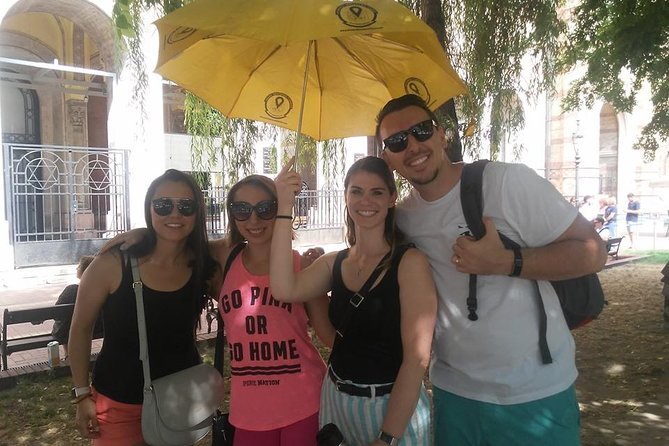
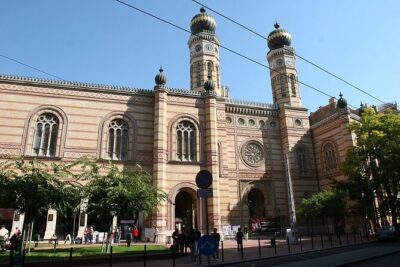
The tour then travels through the Jewish Quarter and focuses on its shifting identity across time. You’ll learn about the area as home to a vibrant Jewish community, then how it was transformed into a ghetto in the Second World War. After the WWII period, the tour brings you to the present, describing the area as a home for artists and students, plus independent shops and designers and bars.
This is one of the more emotionally complex segments on the walk. The value is that it’s not treated like a single tragic episode and then forgotten. Instead, it’s presented as an ongoing story, where layers of culture and community continue to shape the streets you walk on today.
Practical tip: if you want the most from this section, slow your pace a bit when the guide pauses. Stand where you can hear clearly, and don’t let your attention drift to phone screens. This is where the tour’s context does real work.
Szabadság tér and the communist memorial: how the tour frames ideology in public space
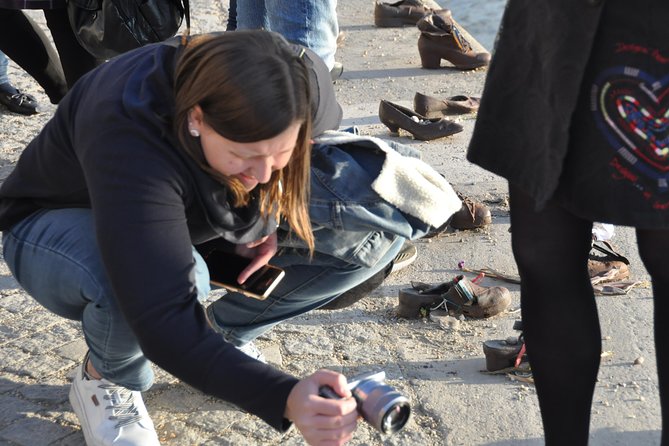
At Szabadság tér, also known as Liberty Square, you spend time at about 15 minutes and see the communist memorial. The tour uses this as an anchor point for understanding the communist era and how it shows up in everyday Budapest.
This kind of stop can feel dry if you only view monuments as photos for your camera roll. But here, the memorial is treated like a clue. You learn why it was created, and how it fits into the larger picture you’ve been building since the museum gardens.
If you’re the sort of traveler who likes your history linked to geography, this is a key payoff moment. You start to see the city not as a list of landmarks, but as a set of ideas made visible in stone, metal, and street design.
History told a different way, elsewhere in Budapest
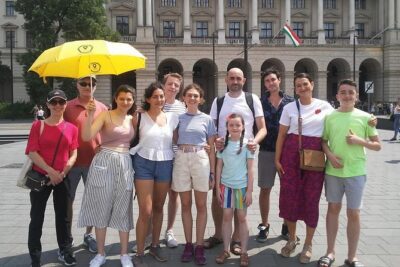
Stock Exchange Palace and the Parliament exterior: power, symbolism, and big Danube views

The tour makes stops that are about institutional power and national identity, without needing any long museum lines.
First, you pass the Stock Exchange Palace. The tour notes it as the largest privately owned historic landmark in Budapest, with 50,000 square meters. Even from the street, you can appreciate the scale, and it helps you understand why Budapest has a “grand institutions” feel in certain districts.
Then you’ll meet two statues on the way to the Parliament area: the Ronald Reagan statue and a Bush statue. The tour explains why Reagan is portrayed walking away from Parliament looking happy, while Bush stands waiting. It’s a strange detail at first, but it’s also the point. The city shows its international relationships in public art, and you get a quick translation of how locals read those gestures.
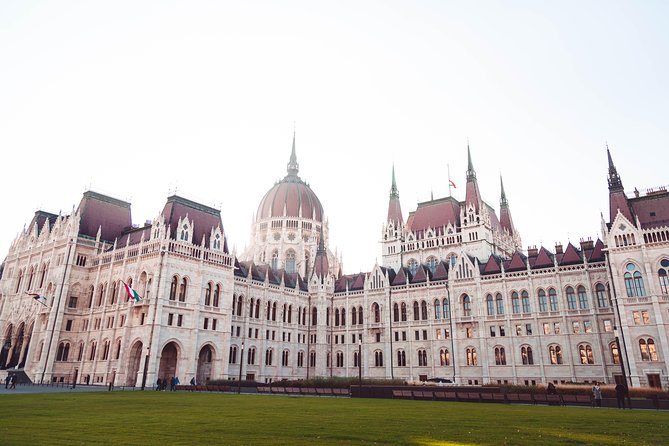
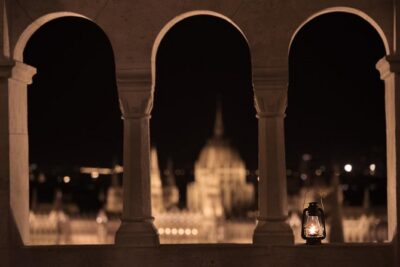
Finally, you reach the Hungarian Parliament Building. You stand outside the electric/neo-gothic-style historical building and get one of the best parts of the route: beautiful views over the Danube. You’ll also hear about nearby buildings of importance, including the chocolate museum, the former ministry of Justice, and the agricultural museum.
A good expectation to set: several of these stops are exterior viewing. That’s not a negative. It means you move through more quickly, and you get multiple “wow” moments without paying extra admission at every corner.
Fisherman’s Bastion side views and Széchenyi Chain Bridge: castle drama from the Pest bank
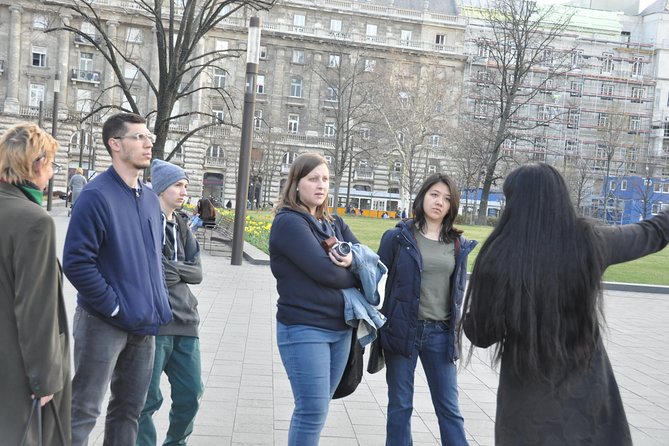
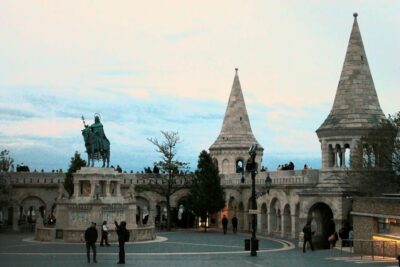
In the castle area, the tour takes the Pest side approach. You see Fisherman’s Bastion from across the river, learn about the area’s history, and spot St. Matthias Church with its colored tiled roof. The tour also mentions the Hungarian National Palace from afar on the Pest side.
You’ll also get sweeping context about landmarks you can spot from this viewpoint, including St. Margit’s Island and Gellért Hill. These are classic Budapest photo targets, but the tour’s angle is what helps: it tells you what you’re looking at and why it matters, then lets you keep moving.
Next comes Széchenyi Lánchíd, the Chain Bridge. You’ll see the bridge up close and learn about its history and reconstruction. The connection to the earlier city story is that bridges in Budapest are not just transportation. They symbolize linking parts of the city, and this one is the most famous thread between banks.
Weather note: this segment is outdoor and exposed. If you’re doing the tour on a windy day, keep your jacket zipped and your scarf secure.
Shoes on the Danube Bank: a short stop with big emotional weight
The tour ends this sightseeing arc with Shoes on the Danube Bank. You’ll see the simple, haunting monument of 60 pairs of shoes dedicated to Holocaust victims who were lined up and shot on the banks.
Because it’s so minimal, the stop doesn’t try to overwhelm you with spectacle. It forces you to slow down and focus on the idea of loss, not just the shape of the monument. If you’ve been following the tour’s theme of how history is written into places, this is the strongest final statement.
Practical tip: take a few steps along the memorial so you can see it from slightly different angles. Then give yourself a moment of silence if that feels right. This is one of those Budapest moments where your brain needs a second to catch up.
Price, tips, and what you really get in 2.5 hours
The price is listed as about $3.63 per person, and the tour format is clearly minimal fee plus tips. That can be a shock at first, but it also explains the appeal. You’re buying structure and interpretation, not a bundle of paid attractions.
The tour includes an in-person guide, and many stops are free to view. You’ll also hear lots of practical city guidance along the way, and you’ll cover enough ground that you can orient yourself for the rest of your trip. One of the most repeated takeaways in the feedback is that guides make 2.5 hours feel much shorter by keeping it moving and making it easy to follow.
Still, you should plan for small extras:
- Coffee and/or tea is not served, but there is a short 5-minute break to buy drinks and use the toilet.
- Toilet use costs extra, listed as 100huf to 500huf.
- Some major sights are not included for admission, like St. Stephen’s Basilica, the Stock Exchange Palace, and the Parliament Building (since you stand outside those).
If you want the best value, book early in your trip. The route gives you mental maps of where major neighborhoods sit and how the city flows from Pest to the Danube.
Pacing, cold weather, and footwear reality checks
This is a walking tour, and the operator notes it’s not recommended if you’re unable to walk 3 miles. You should expect cobblestones and city surfaces that don’t forgive bad shoes. Comfortable, supportive footwear is not optional here.
Weather matters more than you think. The tour suggests bringing water, sunscreen, and planning for umbrellas or warm jackets depending on conditions. One review called out how cold it can get, including extreme temps like -25°C. If you’re visiting in winter, dress like you mean it, and bring something warm for your hands and ears.
Group size can also affect your experience. The tour caps at a maximum of 50 travelers, and larger groups can make it harder to hear the guide. If your voice is getting drowned out, let the guide know early, because the tour depends on everyone staying together.
Tour fit: who will enjoy this most
This tour is best for adults and children over age 12, though younger children are welcome. It also makes sense for first-time visitors who want both history and practical orientation.
It’s a good match if you:
- want a budget-friendly way to see many Pest highlights in one morning or afternoon
- like learning political and cultural context tied directly to where you’re standing
- are comfortable walking for about 2.5 hours with only a short break
It might not be the best match if you:
- want lots of indoor time or ticketed entry experiences
- prefer very quiet, low-stimulation sightseeing
- have trouble walking 3 miles or standing outdoors for long stretches
Should you book Budapest Historical Sightseeing, Free Walking Tour?
Yes, if you want a smart first-day history-and-orientation walk and you’re okay with standing outside for many stops. The low entry price makes it an easy add-on, and the guides are consistently praised for keeping the information clear and the pace moving.
Book it early, bring warm layers if weather is cold, and plan to tip since tips are not included. If you’re sensitive to hearing issues in busy areas or you prefer a smaller group, you might consider a private option instead, because the tour runs up to 50 people.
If you want to understand Budapest as a city of layers, this is a solid way to start.
FAQ
How much does the Budapest Historical Sightening free walking tour cost?
The listed price is $3.63 per person. Tips for the guides are not included, so you should plan on tipping separately.
How long is the tour?
It runs about 2 hours 30 minutes.
Where do I meet the guide, and where does the tour end?
You meet at OTP Bank Budapest, Kálvin tér 12-13, 1085 Hungary. The tour ends at Budapest, Id. Antall József rkp. 1, 1052 Hungary, near Lanchid (the Chain Bridge).
Is the tour offered in English, and is there a mobile ticket?
Yes, it is offered in English. It also uses a mobile ticket.
What sights are included, and are any admission tickets required?
Many stops are free to view from outside or in public areas. However, admission tickets are not included for St. Stephen’s Basilica, the Stock Exchange Palace, and the Hungarian Parliament Building.
Is there a break for drinks and toilets during the tour?
Yes. There is a short 5-minute break so you can buy drinks and use the toilet. Coffee or tea is not served, and public toilet use costs extra.
What should I bring to make the tour more comfortable?
Bring water to drink and sunscreen. Also bring weather protection like an umbrella or warm jackets, since conditions can be very cold.
What happens if the weather is bad?
If the tour is canceled due to poor weather, you will be offered a different date or a full refund.
Are service animals and dogs allowed?
Service animals are allowed. Dogs are not permitted on the tour, though guide dogs are permitted if the owner carries the official papers.
Keep Walking Budapest



More Tours in Budapest




More Tour Reviews in Budapest





Reviewed recently around Budapest
- Audio visual multi-sensory chefs journey dinner experience★ 5.0 · 3 reviews
- Tapolca Cave Lake and Tihany/ Balaton private tour from Budapest★ 4.5 · 3 reviews
- SzentEndre-SaintAndrew City Privately Shopping and Picturesque★ 4.5 · 3 reviews
- Sightseeing flight over Budapest★ 5.0 · 3 reviews
- Self Guided Tour In Budapest With 100 Captivating Audio Stories★ 5.0 · 3 reviews
- Private Danube Bend Visegrad and Szentendre Tour With Transport★ 5.0 · 3 reviews
Historical Tours, compared.
 ★ 4.7Historic Cruise with Welcome DrinkFrom $126,512 reviews
 ★ 4.5Buda Castle District Dark History, Legends and Vampire Night TourFrom $211,240 reviews
 ★ 4.9BloodThirsty Hungary: Walking tour & Dark Historical StoriesFrom $21633 reviews
 ★ 5.0Budapest Jewish Heritage Memorial Walking Tour & Synagogue EntryFrom $83568 reviews
 ★ 4.8Jewish Heritage Guided Tour with Synagogue TicketFrom $81533 reviews
 ★ 5.0Budapest Historic Downtown Bicycle Tour in small groupsFrom $41288 reviews
 ★ 5.0Historic Downtown ride on E-Bicycles Buda & PestFrom $65227 reviews
 ★ 4.8Jewish History Guided Walking Tour with HistorianFrom $63205 reviews
Browse the lists this tour appears in