
Review · SEGWAY, SCOOTER AND BIKE TOURS
Budapest Highlights Bike Tour with a local guide
Budapest on two wheels is one of the fastest ways to get your bearings. This 3.5-hour highlights bike tour strings together major landmarks with real local stories, so you understand what you are seeing, not just where it is. I especially like the pace and the way the route hits the big photo spots across both sides of the Danube, plus the quality bike and helmet setup. A possible drawback: you need to be comfortable riding a bike, and the tour runs rain or shine.
What makes it more interesting is the rhythm of the day. You get short stops to look, photograph, and hear the why behind places like Andrássy Avenue, Heroes’ Square, and the Chain Bridge. If you want a simple, guided introduction that helps you plan the rest of your trip, this is a strong choice, especially early on.
In This Review
- Quick take: what you get (and why it works)
- Getting to Rumbach Sebestyén u. 10 without stress
- How the ride feels: steady pace, short stops, lots to see
- Elizabeth Square and the start of the story in Pest
- Andrássy Avenue and the Hungarian State Opera vibe
- Heroes’ Square, Városliget, and the Millennium theme
- Széchenyi Thermal Bath: the landmark you recognize, even if you do not go inside
- Vajdahunyad Castle and the park-to-city shift
- House of Music Hungary and the way culture shows up on your route
- Ethnographic Museum: learning through everyday culture
- House of Terror: history you cannot walk past politely
- St. Stephen’s Basilica and Szabadság Square: the skyline anchor
- Hungarian Parliament Building and the Danube-side grandeur
- Chain Bridge crossing: the biggest view moment
- Castle-Bazaar and the Buda-side ending vibe
- Elizabeth Bridge and returning to the start point
- Guides, stories, and the small details that make or break a tour
- E-bikes: when you want the route, not the leg burn
- Price and value: what $34 buys you in real terms
- Who this tour suits best
- Should you book this Budapest highlights bike tour?
Quick take: what you get (and why it works)
- A 3.5-hour “highlights” route that covers both Pest and Buda without feeling rushed
- English-speaking local guides who connect landmarks to Hungarian life and major historical periods
- UNESCO World Heritage stops, including the historic framework around Andrássy Avenue and the Danube-side sites
- Scenic photo stops at iconic buildings and squares, with time to ask questions between rides
- Easy orientation for your stay, with ideas for where to go next after the tour
- Optional e-bike booking if your legs want a lighter day
Getting to Rumbach Sebestyén u. 10 without stress
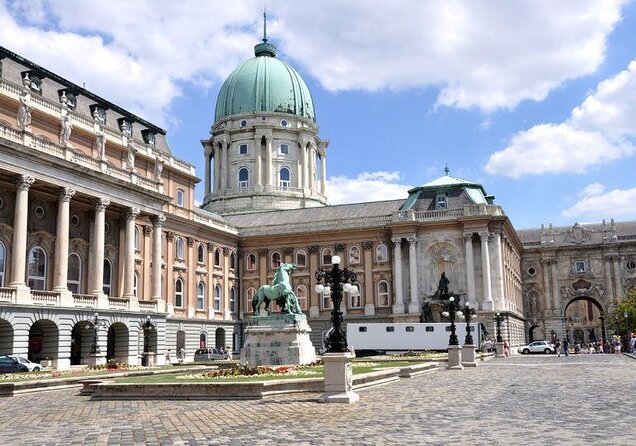
The tour starts at Rumbach Sebestyén u. 10 (Budapest 1075). The meeting point is in a courtyard, and you are asked to ring the bell number 105 at the main gate, then wait there.
This matters more than people think. When you arrive 10 minutes early, you avoid the most common early-day travel problem: rounding up bikes, helmets, and group assignments with cold fingers and zero patience. The setup is straightforward, and once you roll out, the rest of the half-day flows.
How the ride feels: steady pace, short stops, lots to see
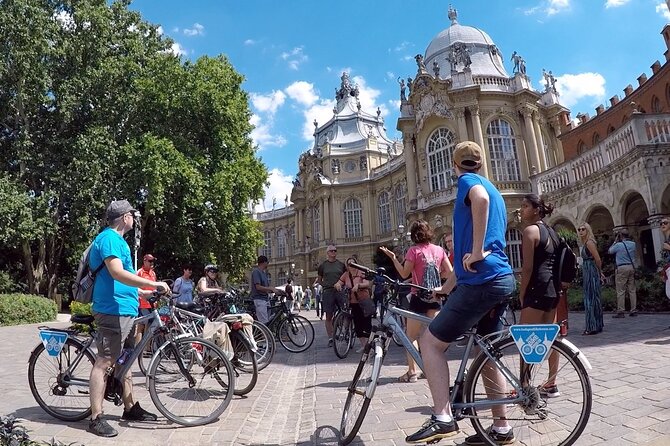
This tour is built for a comfortable cruising pace, not a fitness workout. The ride segments are broken up with repeated quick breaks for sighting and photos, so you can keep your energy and still absorb the stories.
One guide technique that really shows in the experience is how the explanations are timed with what you are looking at. You do not just bike past things, you stop long enough to make sense of them. For some people, that is the difference between collecting photos and actually understanding the city.
Rolling instead of walking, a few other options
- Budapest Small-Group Guided Tour on MonsteRoller e-Scooter
★ 5.0 · 1,517 reviews - Budapest: MonsteRoller E-Scooter Tour
★ 4.9 · 1,038 reviews - Budapest: Grand Sightseeing Bike Tour
★ 4.8 · 984 reviews - Budapest Highlights️ Live Guided Segway Tour
★ 5.0 · 898 reviews
Elizabeth Square and the start of the story in Pest
You begin with a first look at Elizabeth Square for photos and a quick orientation. This is a good mental warm-up because it places you in central Budapest right away, where the city’s layout becomes obvious.
From the start, your guide frames what you are about to see. Expect talk that connects street-level landmarks to major shifts in Hungarian life, especially the periods that shaped modern Budapest.
Andrássy Avenue and the Hungarian State Opera vibe
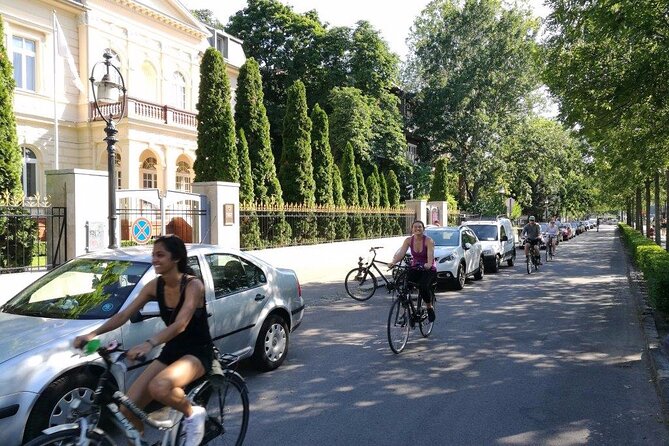
Next comes Andrássy Avenue, one of the grand ceremonial streets of Budapest, where the architecture does a lot of talking. You also stop for the Hungarian State Opera House, usually just long enough to get oriented and capture the façade.
Why this stop is valuable: Andrássy Avenue is tied to the city’s UNESCO World Heritage story, and it helps you understand Budapest as both a modern capital and a historic showpiece. If you like streets that tell you how a city wanted to look, this is a great corridor.
Practical note: since this is a popular area with traffic and cyclists, pay attention at intersections. The tour is guided and paced well, but your job is simply to stay alert and follow the group.
Heroes’ Square, Városliget, and the Millennium theme
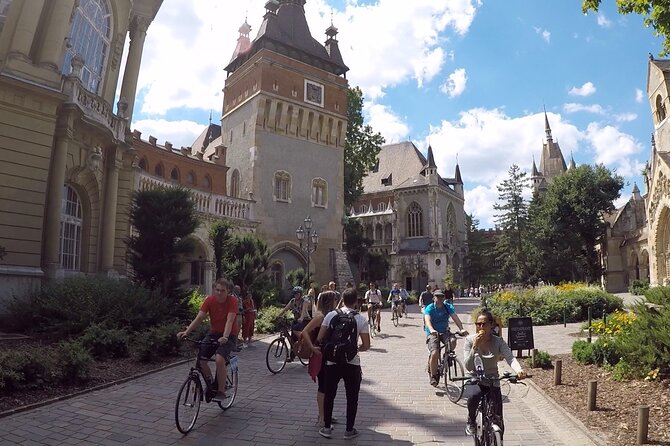
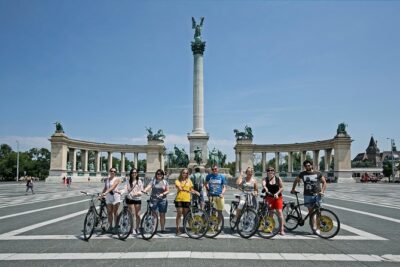
You roll into Heroes’ Square, a major landmark with serious symbolism. After that, you head into Városliget (City Park) for another scenic stop.
These parts of the route work well together. Heroes’ Square gives you a visual lesson in Hungarian identity and state symbolism, and then Városliget gives you a breather in green space, with big-open city views and a more relaxed atmosphere.
Széchenyi Thermal Bath: the landmark you recognize, even if you do not go inside
A key stop is Széchenyi Thermal Bath. On this tour, you will usually be doing a look-around and photo stop rather than a full spa visit, so think of it as a “see it, learn it” moment.
Why include it at all? Because this place is a Budapest icon, and understanding why it is famous helps you spot the city’s obsession with public life, leisure, and historic grandeur. Even if your schedule later includes a thermal soak on your own, this guided stop helps you know what you are walking toward.
Two wheels, other routes in Budapest
Vajdahunyad Castle and the park-to-city shift
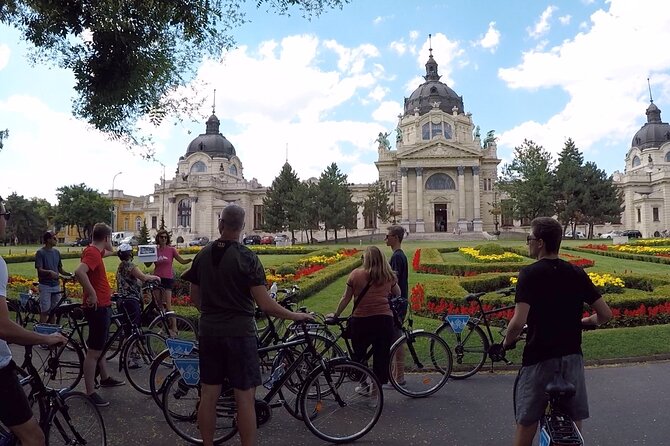
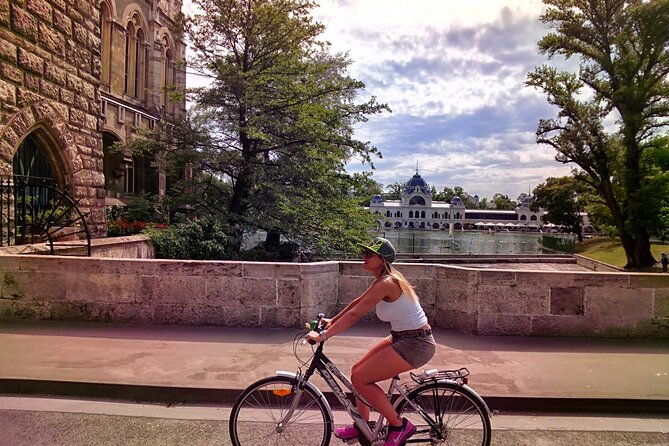
You then get to Vajdahunyad Castle, a photogenic stop that signals you are still in the City Park mood, but now closer to Budapest’s older, storybook-looking side. The contrast is part of what makes this route satisfying: you get a mix of formality, leisure, and architecture in one sweep.
It is also a great moment to slow down and ask questions. After you see enough exteriors and squares, your brain starts connecting names and eras, and that is when good guides do their best work.
House of Music Hungary and the way culture shows up on your route
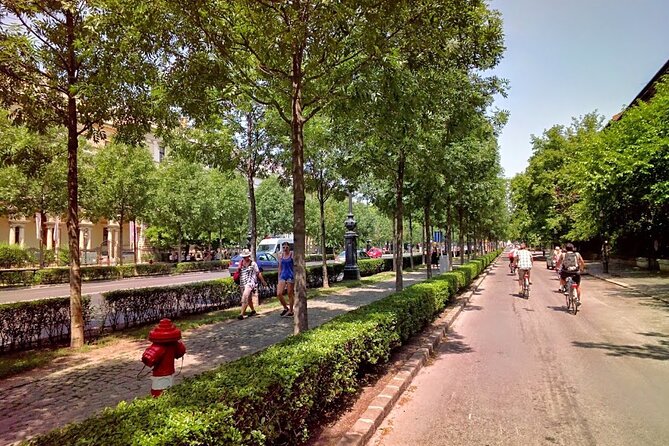
Another short photo stop is House of Music Hungary. It can feel like a palate cleanser after the heavier monuments and historic-looking sites.
This kind of stop is underrated. When your day is full of grand buildings, a cultural venue stops the story from becoming one-note. It also gives you ideas if you want to add a music or arts component later.
Ethnographic Museum: learning through everyday culture
Next is a quick stop at the Ethnographic Museum. Here, the guide’s job is to connect the building and its theme to the people of the country, not just the city blocks around it.
This is where the tour can feel especially useful if you care about how Hungarians lived, how traditions shaped identity, and how different parts of Hungary have their own flavors. Even if you never step inside today, the exterior stop plus explanations can point you toward what to explore later.
House of Terror: history you cannot walk past politely
One of the most impactful stops is House of Terror. This is not a cheerful monument, but it is a central part of understanding 20th-century Hungary and the trauma the country experienced under oppressive regimes.
On a bike tour, you do not have time for a full museum visit, but the guided stop gives context so your later visits make more sense. If you plan to see more about this period during your trip, this early orientation can sharpen what you notice.
Keep in mind: this stop can feel emotionally heavy for some people. The guide may also encourage you to ask questions and frame the information clearly, so you are not just staring at a building and guessing.
St. Stephen’s Basilica and Szabadság Square: the skyline anchor
You next reach St. Stephen’s Basilica, followed by a stop at Szabadság Square. Basílica area stops are often about scale and positioning, and your guide likely uses the moment to connect the city’s religious and civic history.
These stops matter for navigation too. Budapest has viewpoints where the skyline comes together, and after a few hours of guided stopping, you start recognizing where landmarks sit relative to each other.
Hungarian Parliament Building and the Danube-side grandeur
After Szabadság Square, you head to the Hungarian Parliament Building for another photo stop. This is one of those sights that makes people immediately understand why people come to Budapest for the river and the architecture in the same breath.
Why it works on a bike tour: you are already moving, so you feel the geography. You get the “this is why the views here are dramatic” effect while a guide explains the historical role of the area.
If you are the type who likes to understand how governments formed, how borders shifted, and how national identity is staged in stone, this will land well.
Chain Bridge crossing: the biggest view moment
Then comes the star crossing, Chain Bridge. Bike tours are excellent here because you experience the bridge in a way that feels different than standing on the sidewalk. You get a stable vantage, a smooth flow, and a guided narrative as you change sides of the river.
And yes, this is where Budapest’s postcard energy clicks. If you want to understand how the city is divided and connected, this bridge is the literal link and the symbolic one.
Castle-Bazaar and the Buda-side ending vibe
After crossing, you stop at Castle-bazaar for photos. This is the winding, storybook-feeling area where the Buda side leans into its historic identity.
This final stretch is a smart way to end the route. You finish in a part of the city where you can transition easily into self-guided wandering later. It also helps you picture where you might want to spend extra time, because you end with a sense of place, not just a list of names.
Elizabeth Bridge and returning to the start point
You wrap up with a stop at Elizabeth Bridge, then ride back to Rumbach Sebestyén u. 10. This final look across another major bridge keeps the tour from feeling like a one-way story. The route builds a loop around the city rather than a straight line.
When you finish, you will have a clearer mental map of where everything sits. That is the main win, especially if you are only in Budapest for a short stay.
Guides, stories, and the small details that make or break a tour
One of the most highly praised parts of this experience is the guide talent. Names that show up in guide feedback include Danny, Daniel, Balázs, and Ivana, and the common thread is how they link what you see to what it meant to Hungarians across different eras.
You also get practical support while biking. People note that bikes are in good condition and that helmets help with comfort. The overall impression is that the ride is not just “look and go,” it is guided, structured, and paced so you can focus on the sights.
E-bikes: when you want the route, not the leg burn
E-bikes are available as an add-on. The tour information says they can be booked extra, which is useful if you want the UNESCO and landmark sweep without worrying about energy levels.
If you are someone who can ride a bike but prefers not to work that hard, an e-bike can be a quiet upgrade. You still get the same stops and stories, but the day feels lighter.
Price and value: what $34 buys you in real terms
At $34 per person for about 3.5 hours, you are paying for three things at once: a guided explanation, bike and helmet use, and efficient sightseeing in one loop.
If you tried to recreate this yourself, you would spend time figuring out routes, parking, and transit logic, and you would likely miss some context that makes the buildings click. The value is strongest if you are visiting for a few days and want a structured start point.
If you already know Budapest well and prefer long museum time on your own, you may feel less wowed by the short stops. But for orientation and landmark coverage, the price-to-time ratio looks fair.
Who this tour suits best
This is a good fit if:
- you want a guided introduction to Budapest, not just a photo walk
- you can ride a bike confidently
- you are interested in how historical events shaped the city you see today
- you want a day that is light enough to still explore after
It is not a great fit if:
- you cannot ride a bike
- you have kids under 12 years
- you need a fully seated, step-by-step pace with no cycling
Also, since it runs rain or shine, pack for wet or changing weather. A bike tour in a sudden drizzle is doable, but you will be glad you planned for it.
Should you book this Budapest highlights bike tour?
I think you should book it if you want to understand Budapest quickly. This route is built for people who like landmarks plus context, and it covers major sites in a way that feels efficient without feeling like a blur.
Book it early in your trip if you can. The orientation element is the real advantage, because it helps you decide what to do next on your own, and where to return for longer time. If you prefer a slower, museum-heavy day, you might pair this with one or two longer stops later.
If you are comfortable riding and you want a guided, local English-speaking experience across the city, this one is easy to recommend at its price point.
More Tours in Budapest




More Tour Reviews in Budapest





On Two Wheels Around Budapest





Reviewed recently around Budapest
- Audio visual multi-sensory chefs journey dinner experience★ 5.0 · 3 reviews
- Tapolca Cave Lake and Tihany/ Balaton private tour from Budapest★ 4.5 · 3 reviews
- SzentEndre-SaintAndrew City Privately Shopping and Picturesque★ 4.5 · 3 reviews
- Sightseeing flight over Budapest★ 5.0 · 3 reviews
- Self Guided Tour In Budapest With 100 Captivating Audio Stories★ 5.0 · 3 reviews
- Private Danube Bend Visegrad and Szentendre Tour With Transport★ 5.0 · 3 reviews
Segway, Scooter and Bike Tours, compared.
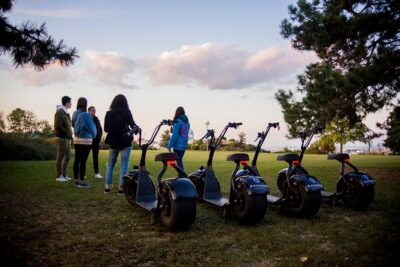 ★ 5.0Budapest Small-Group Guided Tour on MonsteRoller e-ScooterFrom $721,517 reviews
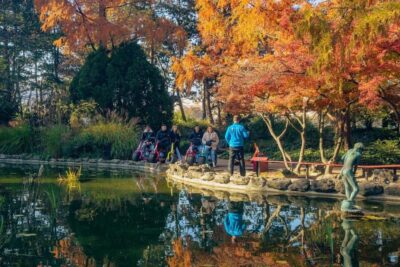 ★ 4.9MonsteRoller E-Scooter TourFrom $451,038 reviews
 ★ 4.8Grand Sightseeing Bike TourFrom $44984 reviews
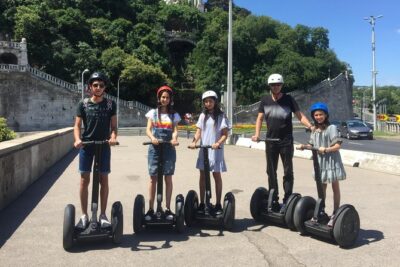 ★ 5.0Budapest Highlights️ Live Guided Segway TourFrom $3898 reviews
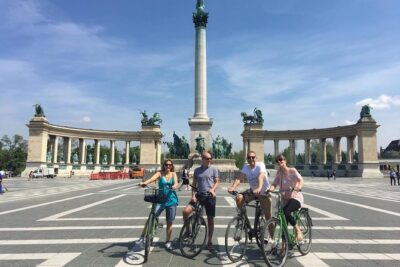 ★ 5.0Budapest Highlights Bike TourFrom $39770 reviews
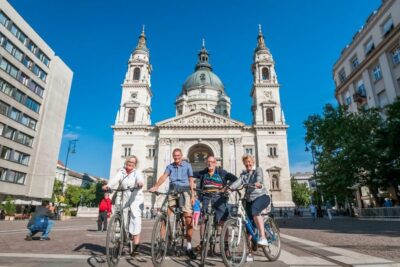 ★ 4.7Guided City Discovery Bike TourFrom $38702 reviews
 ★ 5.01.5 Hour Budapest Segway Tour – To The Castle AreaFrom $47614 reviews
 ★ 4.9Guided Downtown Electric Bike TourFrom $63595 reviews
Browse the lists this tour appears in