
Review · CITY TOURS
Cinematic Virtual Reality City Tour in a Russian Jeep
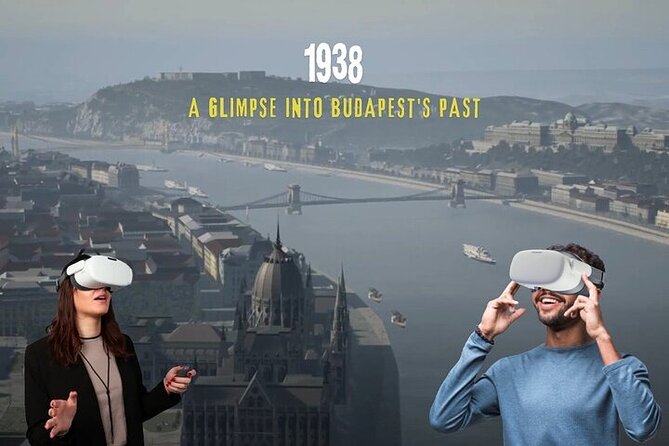
VR makes Budapest feel like a time machine. This private Jeep VR city tour uses headset cinematic 2D footage to show you how famous spots looked in the past, while you physically ride, stop, and look around in real time. It’s built for people who want more than quick photos, with pickup and a guide who keeps the story clear and personal.
I love the mix of VR headset moments and real-world sightseeing. You get to stand at places like Chain Bridge and Fisherman’s Bastion, then watch the past come back on screen right there, so the views actually mean something.
One thing to consider: VR is not recommended for travelers suffering from epilepsy, so if that applies to you, you’ll want an alternative plan.
In This Review
- Key things I’d highlight before you go
- How the Budapest VR Jeep experience actually works
- Value check: Why a $3 tour is worth your attention, and where costs pop up
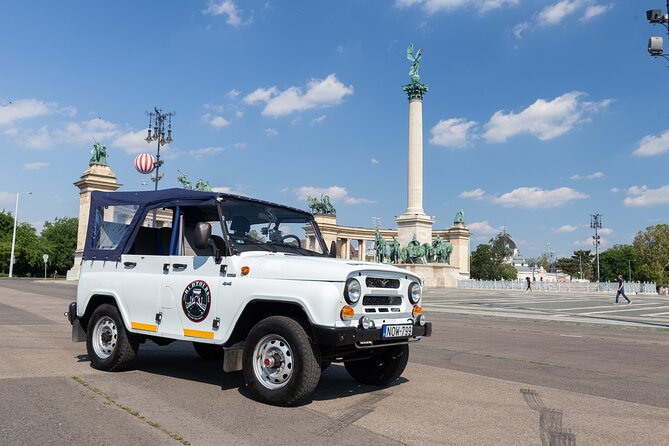
- Getting picked up in a Russian Jeep, and why the ride matters
- Castle Hill start: Castle Garden’s Neo-Renaissance vibe
- Chain Bridge stop: The Danube crossing becomes a story
- Fisherman’s Bastion: Great views, and the timing trick
- Matthias Church: When you want the indoor payoff, plan for entry
- Buda Castle grounds: UNESCO setting with a VR time jump
- Parliament and Kossuth Square: Big exterior drama, quick history hits
- St. Stephen’s Basilica: A skyline pause that can anchor your next steps
- Andrássy Avenue: A UNESCO boulevard built for slow looking
- Hungarian State Opera House: Gold, marble, and that symmetrical look
- House of Terror area and Heroes’ Square: Two different kinds of weight
- New York Palace, Blaha Lujza tér, and Erzsébet Bridge: Where old and modern collide
- Best moments to aim for during your stops
- Who this Budapest Jeep VR tour is for, and who should skip it
- Should you book this VR Jeep tour?
- FAQ
- How long is the Cinematic Virtual Reality City Tour in a Russian Jeep?
- How much does the tour cost?
- Is hotel pickup and drop-off included?
- Is this tour private or shared?
- What’s included in the price?
- Are any entrance tickets included?
- Is there an English guide?
- Do I receive a mobile ticket?
- Are service animals allowed?
- Is free cancellation available?
Key things I’d highlight before you go
- A Russian Jeep ride with hotel pickup and drop-off keeps the day simple and low-stress
- Headset 2D cinematic videos help you connect the landmark you see with the era you learn about
- Most stops are free from entry fees, but Matthias Church is not included, and Fisherman’s Bastion has an upper-level fee
- A private, family-friendly group format means you won’t be squeezed into a crowd
- In-person English guide plus expert audio guidance helps you keep up without missing details
- VR safety note matters, especially if epilepsy is a concern
How the Budapest VR Jeep experience actually works
This is a short, well-paced format, about 2 hours total, and it feels designed for people who want the big highlights without spending the whole day commuting or hunting tickets. You start with hotel pickup and drop-off and get private transportation, so you’re not fighting buses or waiting in long lines.
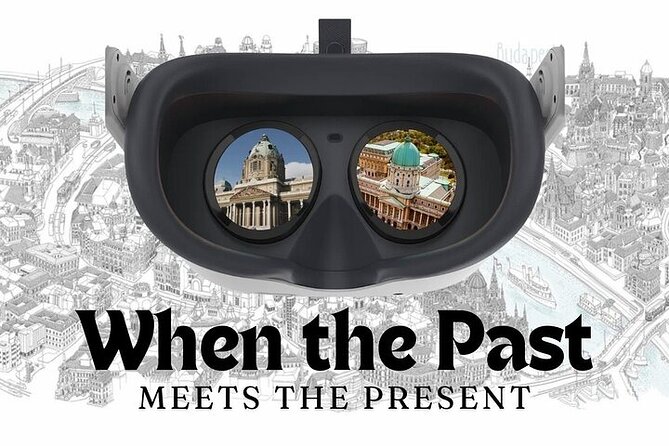
The main event is the VR headset. At each landmark stop, you put on the gear and watch cinematic 2D scenes that bring Budapest’s earlier moments to life. Then you come back out, look at the real location again, and the comparison clicks fast. It’s an easy way to learn because the story is tied to a place you can point at immediately.
The tour also includes in-person English guidance and a mixed expert audio guide for extra context. That matters because Budapest has a lot of layers, and it’s easy to get lost in “pretty building” mode. Here, the narration keeps you oriented around what you’re seeing and why it mattered.
Practical tip: wear comfortable shoes. Even when time at stops is relatively short, you’ll still walk a bit between viewpoints, especially around Castle Hill.
Value check: Why a $3 tour is worth your attention, and where costs pop up
At around $3, this tour is priced in a way that sounds almost too good to be true. The catch is simple: the value comes from the format, not from museum entry fees. A lot of the tour is exterior sightseeing plus the VR headset program.
Do expect some extra costs:
- Matthias Church entry is not included
- Fisherman’s Bastion says admission is only needed for the upper level
Everything else is marked as free entry in the plan. So your total out-of-pocket should stay reasonable if you’re okay paying for one or two specific indoor or upper-level experiences.
My advice: if you want to maximize value, plan to enjoy the viewpoints even if you skip the paid parts. The stops are chosen so you can still enjoy the best angles.
Whole city overviews, compared
- Budapest: City Highlights Cruise with Welcome Drink
★ 4.6 · 35,610 reviews - Budapest: City Sightseeing Hop-On Hop-Off Bus Tour & Extras
★ 4.1 · 4,337 reviews - Budapest City Landmarks Walking Tour in 2 Hours
★ 5.0 · 2,048 reviews - Budapest: Danube River City Lights Express Cruise
★ 4.1 · 1,608 reviews
Getting picked up in a Russian Jeep, and why the ride matters
The ride is part of the charm here. You’re in a Russian Jeep-style vehicle, and one of the best practical details is that you’re not starting your day with navigation headaches. With pickup and drop-off, you avoid the “How do I get there from my hotel?” stress that can drain a half-day.
The driving also affects the experience quality. One account highlighted a driver, Zsombor, as attentive and funny, and that kind of personality makes a tour like this feel lighter and more human. Even if your driver is different, you should still expect a personable approach since the tour includes a guide setup and a private format.
And yes, the vehicle itself can be a fun memory. If you love quirky old-school transport, this is the kind of day where you’ll feel like you’re sightseeing from inside the story, not just being dropped off at a list of coordinates.
Castle Hill start: Castle Garden’s Neo-Renaissance vibe
The day begins near Castle Garden inside the broader Castle Hill complex. This area has a Neo-Renaissance look and a “always something happening” feel, with cultural events that can include exhibitions and performances.
In plain terms, Castle Garden works as a gentle warm-up stop. You’re in the right setting to understand why Castle Hill is the heart of the old city. Even if the VR scenes are doing the time-travel heavy lifting, the surroundings help your brain anchor the story.
Time here is short, about 3 minutes, so don’t expect a deep wander. Treat it like a quick orientation and photo reset, then get ready for the next landmark where the bridge-and-city contrast really takes over your attention.
Chain Bridge stop: The Danube crossing becomes a story
Next up is the Széchenyi Chain Bridge, Budapest’s iconic link across the Danube. The tour calls out the bridge’s connection to Count István Széchenyi, which is a useful detail because it gives you a “name + meaning” anchor instead of a vague landmark.
This is one of the most effective stops for a VR format like this. The bridge is dramatic in real life, and the VR scenes are specifically meant to show the bridge’s history while you stand on or near a view point.
Plan for about 5 minutes. That’s enough time for the key moment: watch the headset clip, then glance at the bridge again with new context. If you’re the kind of traveler who likes to understand what you’re looking at, this stop gives you that payoff quickly.
Fisherman’s Bastion: Great views, and the timing trick
Fisherman’s Bastion is famous for the views over Budapest, and it also has a twist. It looks ancient, but the tour notes it was actually built in the early 20th century to celebrate Hungary’s 1000th birthday. That fact alone is worth a stop, because it flips the usual assumption people bring with them.
Time here is about 15 minutes, which is generous enough for photos and a decent viewpoint circuit. The plan also clarifies a cost detail: only the upper level requires an admission fee.
What that means for you:
- If you want maximum savings, focus on the parts you can enjoy without paying the upper-level entry.
- If you really want the full experience and best viewpoints, budget for that admission.
This stop is one of the best “architecture meets viewpoint” combos in the whole route, so it’s usually the kind of moment where the VR story and the skyline suddenly line up in your mind.

Matthias Church: When you want the indoor payoff, plan for entry
Matthias Church is a standout because the interior style is described as a mix of oriental flair and romantic historicism, topped with Neo-Gothic vibes. That design mix is the sort of thing that’s hard to capture in a quick exterior look.
But here’s the practical tradeoff: Matthias Church entry is not included. So you have to decide if you want to pay for the indoor visit, or keep it as a quick outside photo and move on.
The tour timing at this stop is about 15 minutes, so if you’re going to enter, arrive ready to commit your time efficiently. Otherwise, you can still enjoy the stop from the outside, but you’ll miss the interior contrast that makes Matthias Church so memorable in the tour description.
Buda Castle grounds: UNESCO setting with a VR time jump
The route then returns to the broader Buda Castle and the Castle Quarter around Castle Hill, described as a blend of Medieval, Baroque, and Neoclassical styles. This is a UNESCO World Heritage area, and the value here is less about buying tickets and more about context.
This part of the tour is especially good for VR because Castle Hill is already theatrical in real life. When you add cinematic scenes to the mix, it helps you understand how the palace area shaped the city’s power and identity.
You don’t need to be a “history superfan” to enjoy this segment. The VR narration is there to make the visuals make sense. Just keep your expectations realistic: this isn’t a full Castle Hill day with museum tickets. It’s a focused tour that uses VR to compress a big story into about two hours.
Parliament and Kossuth Square: Big exterior drama, quick history hits
In Pest, you get to Hungarian Parliament Building on Kossuth Square by the Danube. The plan highlights its neo-Gothic design and notes it’s Hungary’s largest building since construction. It’s the kind of landmark where even first-time visitors instantly understand why it’s central.
You also get a pass-by moment where you can appreciate the building’s scale and location along the river. This is where the tour’s pace helps: you see it now, you watch related VR scenes, and then you can quickly connect architecture to national symbolism.
Time here is about 5 minutes for the pass-by. That sounds short, but it’s enough for the key effect in a VR-based tour: the headset gives you context faster than reading a plaque.
St. Stephen’s Basilica: A skyline pause that can anchor your next steps
You also stop near St. Stephen’s Basilica, which the tour describes as honoring Hungary’s first king. It’s positioned as a major Roman Catholic church, noted for being the third largest in Hungary and the tallest in Budapest, with World Heritage Site status.
This stop is more about orientation than deep exploration. If you’re walking around the center later, this is a helpful “I know where I am now” moment. If you like church architecture and city skyline views, you’ll likely enjoy this pause even without extra entry details.
Andrássy Avenue: A UNESCO boulevard built for slow looking
Andrássy Avenue is a long, elegant boulevard lined with Neo-Renaissance buildings, and it’s also a UNESCO World Heritage Site in the plan. This is where Budapest feels more “grand city” than “castle hill.”
The route gives you about 15 minutes here, which helps because you can actually look around instead of only snapping photos. You’ll pass or pause near cultural institutions the tour calls out, including:
- the State Opera House
- the Zoltán Kodály Memorial Museum
- the Hungarian University of Fine Arts
- the Ferenc Hopp Museum of East Asian Arts
Andrássy is also a smart transition street. After Castle Hill views and Danube drama, the avenue gives you a different rhythm, with cafes and shops along the way.
Hungarian State Opera House: Gold, marble, and that symmetrical look
Next is the Hungarian State Opera House on Andrássy út. The tour describes it as a historic former royal opera house, known for neo-Renaissance architecture with a symmetrical facade and statues of composers. Inside, it notes marble sphinxes, frescoes, and gold accents.
Timing is short here at about 5 minutes, and entry is not included, so think of it as a strong exterior-and-context stop. The VR program is built to show the opera house’s past, which can make a brief pause feel more substantial.
If you love ornate interiors but don’t want to spend extra time inside on a packed day, this is a good compromise. You get the story without waiting for a full self-guided museum visit.
House of Terror area and Heroes’ Square: Two different kinds of weight
The tour also mentions the House of Terror at 60 Andrássy Avenue, described as a powerful museum and memorial focused on Hungary’s 20th-century struggles under fascist and communist regimes.
Even though the plan doesn’t list clear timing or admission details for this stop, it’s important context. This isn’t just “pretty streets.” The guide’s role here is likely to frame what you see so you understand why it matters.
Then you reach Heroes’ Square (Hősök tere) with the Millennium Monument and statues of important Hungarian leaders and the Seven Chieftains of the Magyars. This one is more upbeat visually, even when the symbolism is serious.
Expect about 15 minutes at Heroes’ Square. It’s a strong photo and orientation point, and it naturally caps the Andrássy Avenue segment before you head toward busier central squares.
New York Palace, Blaha Lujza tér, and Erzsébet Bridge: Where old and modern collide
Between the grand squares, the route includes a stop near New York Palace, described as a top choice for coffee, tea, and mentioned as having been selected as cafe of the year several times. This is less about VR and more about a quick taste of Budapest’s “still today” lifestyle feel, and it’s an easy mental break from landmark intensity.
Then comes Blaha Lujza tér, one of Budapest’s busiest spots. The plan notes the square was once home to the National Theatre, and now it connects past and present through major commercial presence around Corvin Plaza.
The VR angle is part of why this stop works. The headset is described as transporting you back to the days when the National Theatre stood there, so you can understand how the square’s identity changed.
Time is about 5 minutes. Again, short, but VR is doing the heavy lifting by providing the “then vs now” effect.
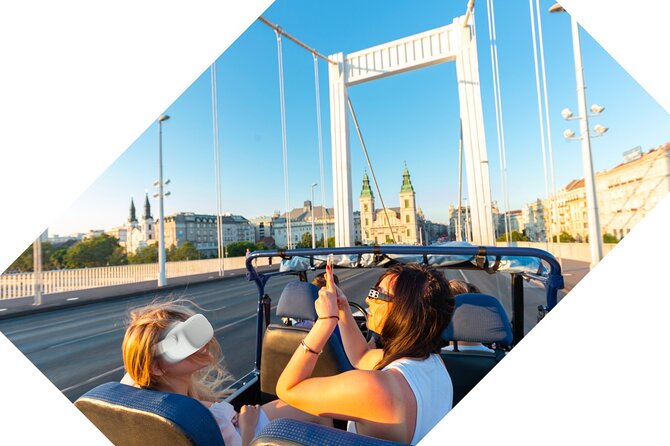
Finally, you get the Erzsébet Bridge story. The plan specifically invites you to see the old bridge, Budapest’s pride from 1903 to 1945, built between 1898 and 1903, holding category records for years. This is a smart closing move because bridges are Budapest’s moving connection points. When the VR clip shows the earlier era, you understand the city as a changing system, not a frozen set of monuments.
Best moments to aim for during your stops
Because time at each place is limited, I’d approach this tour with a simple plan: decide what you want most, then let the VR moments guide your photos.
If you want the strongest “wow,” aim to make these your headset priorities:
- Chain Bridge, because the structure is instantly recognizable
- Fisherman’s Bastion, because the skyline view makes the past feel real
- Parliament Building, because the building’s scale makes the context land
- Erzsébet Bridge, because bridges are easy to understand even when the past looks different
If you care about architecture more than storytelling, then Matthias Church is the natural add-on since the interior is highlighted, but remember the entry is not included.
Who this Budapest Jeep VR tour is for, and who should skip it
This tour is a great match if you want:
- a fast overview of major Budapest landmarks in about two hours
- an approach that mixes sightseeing with VR cinematic storytelling
- a private day with pickup and drop-off, which helps if you are traveling with kids or you just hate logistics
It’s also a smart choice for couples who want something different from standard walking tours, and for first-timers who want orientation before committing to longer visits later.
You should skip or choose an alternative if:
- epilepsy is a concern for you or anyone in your group
- you expect a slow, museum-style day with lots of indoor time at every stop
Should you book this VR Jeep tour?
I’d book it if your main goal is to understand Budapest quickly, and you like learning through visuals. The private Jeep transport, the headset VR stops, and the fact that most sights are free to access make the day feel efficient and good value, especially at the listed price.
I would not book it if you want deep indoor exploration as the center of your day, because several key stops have limited time and Matthias Church entry is extra.
If you do book, plan your mindset: think of this as a cinematic orientation tour. You’ll leave with landmarks you can recognize instantly, plus a clearer sense of how the city looked and changed across time. That’s exactly the kind of “starter pack” day that makes the rest of Budapest click.
FAQ
How long is the Cinematic Virtual Reality City Tour in a Russian Jeep?
The tour lasts about 2 hours.
How much does the tour cost?
The tour price is listed at $3.
Is hotel pickup and drop-off included?
Yes. Hotel pickup and drop-off are included, along with private transportation.
Is this tour private or shared?
It’s private. Only your group participates.
What’s included in the price?
Included are hotel pickup and drop-off, bottled water (and hot tea in winter), private transportation, VR gear/headset, and an in-person English guide, plus expert audio guidance.
Are any entrance tickets included?
Matthias Church entry is not included. Fisherman’s Bastion is free except that the upper level requires an admission fee.
Is there an English guide?
Yes, there is an in-person English guide.
Do I receive a mobile ticket?
Yes, the tour includes a mobile ticket.
Are service animals allowed?
Yes, service animals are allowed.
Is free cancellation available?
Yes, free cancellation is available up to 24 hours in advance for a full refund.
The Whole of Budapest, Briefly





More Tours in Budapest



More Tour Reviews in Budapest




Reviewed recently around Budapest
- Audio visual multi-sensory chefs journey dinner experience★ 5.0 · 3 reviews
- Tapolca Cave Lake and Tihany/ Balaton private tour from Budapest★ 4.5 · 3 reviews
- SzentEndre-SaintAndrew City Privately Shopping and Picturesque★ 4.5 · 3 reviews
- Sightseeing flight over Budapest★ 5.0 · 3 reviews
- Self Guided Tour In Budapest With 100 Captivating Audio Stories★ 5.0 · 3 reviews
- Private Danube Bend Visegrad and Szentendre Tour With Transport★ 5.0 · 3 reviews
City Tours, compared.
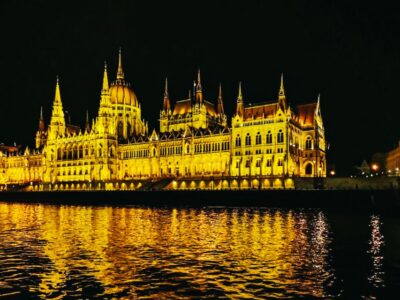 ★ 4.6City Highlights Cruise with Welcome DrinkFrom $1435,610 reviews
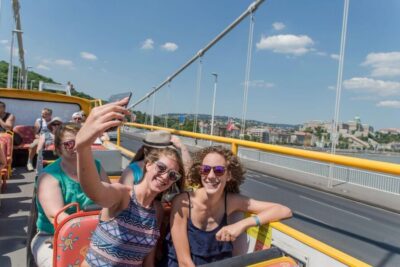 ★ 4.1City Sightseeing Hop-On Hop-Off Bus Tour & ExtrasFrom $414,337 reviews
 ★ 5.0Budapest City Landmarks Walking Tour in 2 HoursFrom $32,048 reviews
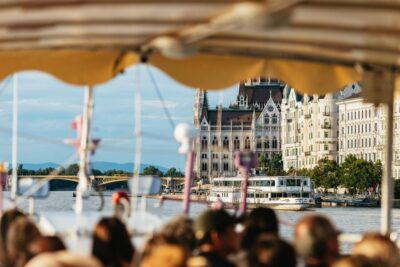 ★ 4.1Danube River City Lights Express CruiseFrom $141,608 reviews
 ★ 4.4Grand City Tour with Parliament VisitFrom $701,598 reviews
 ★ 4.33-Hour Grand City Tour and Castle WalkFrom $491,437 reviews
 ★ 4.8Hungarian Chimney Cake Workshop in the City CenterFrom $40885 reviews
 ★ 4.7Guided City Discovery Bike TourFrom $38702 reviews
Browse the lists this tour appears in