
Review · HUNGARIAN WINE AND PALINKA
From Budapest: Mátra Hills Wine Tour
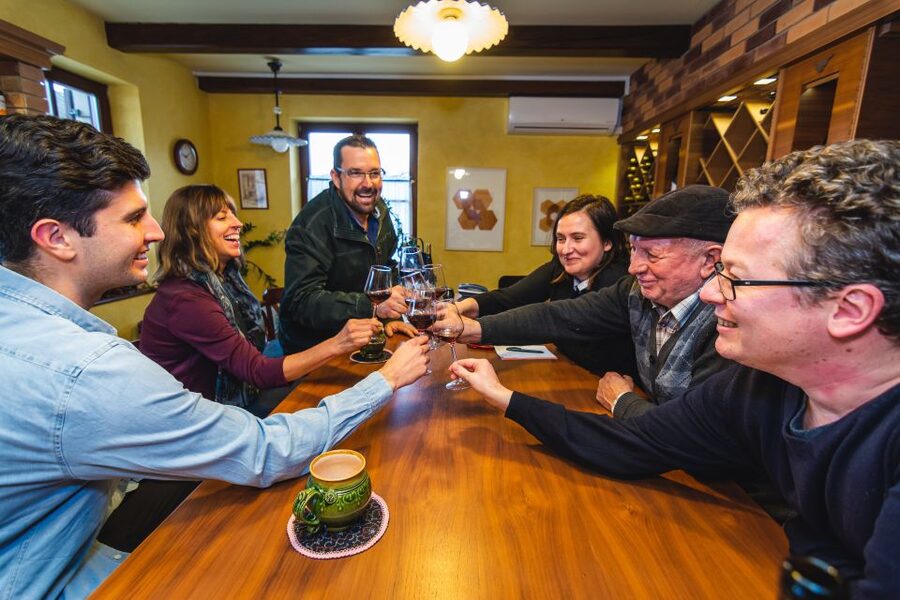
A short hop from Budapest, big wine energy. The Mátra Hills tour is built around Hungarian Winemaker of the Year access and a tasting format that stays focused, so you get more than a quick sip. You sample up to 8 wine varieties across two wineries, with Mikki guiding the day in English.
I also like the pacing, about five hours round trip, because it fits a tight Budapest schedule without forcing a full day away. The group stays small, limited to eight people, and one review specifically praises Mikki’s hands-on experience with wine growers in the region.
The main drawback to consider is that it is not a kids tour. It is listed as unsuitable for children under 18, and the whole experience is centered on wine tastings.
In This Review
- Key takeaways before you go
- Why Mátra Hills is the right wine day trip from Budapest
- The 5-hour plan, and how it actually works
- On the road with Mikki: wine history in plain English
- Winery stop one: four tastings and real local pairings
- Winery stop two: the comparison that makes it feel like a tour
- Meeting the Hungarian Winemaker of the Year: why it changes the vibe
- What you will taste: reds, whites, and up to eight varieties
- Price and value: is $341 per person fair for a 5-hour wine day?
- Who this tour is best for (and who should skip)
- Quick planning tips before you go
- Should you book the Mátra Hills Wine Tour from Budapest?
- FAQ
- How long is the Mátra Hills Wine Tour from Budapest?
- How many wineries and wine tastings are included?
- What snacks are included during the tastings?
- What language is the tour guide?
- Is the tour suitable for children?
- Does the tour include transportation, and where do you end up?
Key takeaways before you go
- Two wineries, four wines each means up to eight wine varieties to taste in a short time
- Meeting an award-winning winemaker adds context you usually do not get in standard tastings
- Mikki leads in English and is noted for real experience with local wine growers
- Classic local pairings come with the tastings, including meat, cheese, and olives
- Small-group format (up to 8) helps the questions actually get answered
- A break from Budapest traffic and noise gives you a countryside reset for the day
Why Mátra Hills is the right wine day trip from Budapest
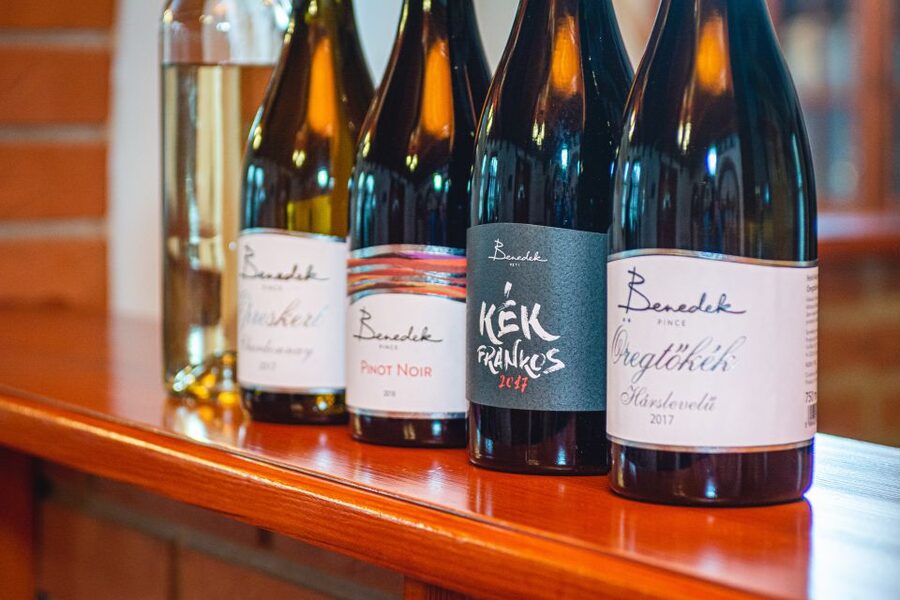
If you want a Hungary wine experience that feels more like a visit than a bus tour, the Mátra Hills make a strong case. This is the largest wine-exporting region in Hungary, and it is known especially for white wines. Still, you are not stuck in one style. The day is set up so you can taste both whites and outstanding reds, which is great if your group has mixed preferences.
What makes this kind of region especially fun for a short trip is the variety of what you taste versus how fast you move. In about five hours, you can sample multiple wines and talk directly with people who work the land, not just pour a flight and move on.
I also like that the tour is designed for real conversations. You visit two wineries and you have time to meet local winemakers, including one who recently earned the title Hungarian Winemaker of the Year. That matters because you are getting the human side of wine making, not just the marketing side.
The 5-hour plan, and how it actually works
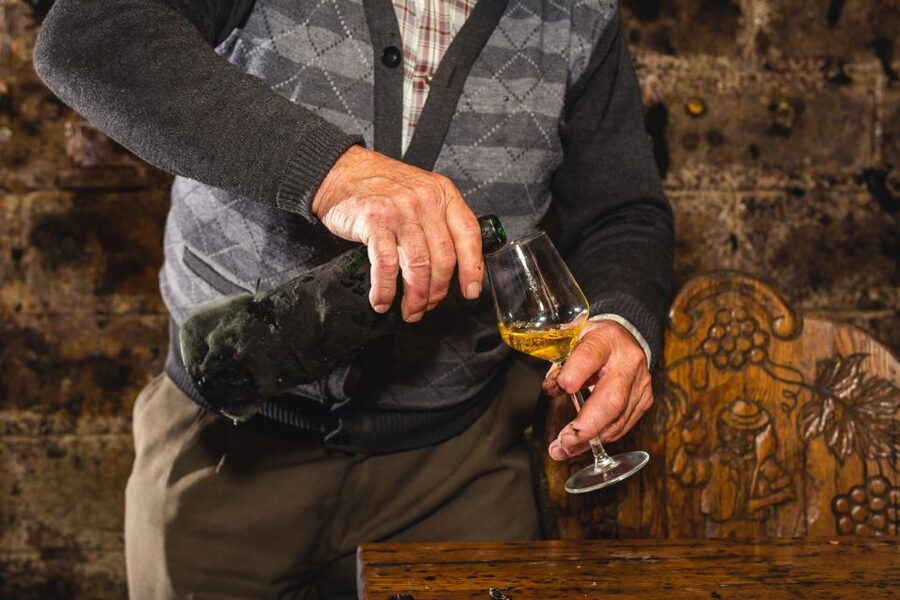
This is a half-day experience, listed as 5 hours from Budapest. You should plan on a classic day-trip rhythm: you leave the city, move through the wine region with a guide, taste at two wineries, then return to the meeting point in Budapest.
Because you are tasting at two different places, the day avoids the common mistake of doing eight sips at one stop and calling it a tour. You get a comparison. Same region, different winery personalities, and that helps you learn what to look for in the wines you enjoy.
You will also have a live English guide throughout. That is a big deal when the tour includes meeting winemakers. You want to understand what they say about their approach to growing and making wine, and you want to connect it to the flavors in your glass.
One practical thought: five hours sounds quick, but it is enough time to taste, snack, and ask questions if your group stays on schedule. If you are the type who wants to linger endlessly at every stop, you may feel slightly time-pressed. But if you like a tight, well-paced day, this format fits.
Another glass? Hungarian wine and palinka, reviewed
- Countryside Half-day Gastro-Wine Tour from Budapest Meal & pickup
★ 5.0 · 1,450 reviews - Budapest: Wine, Cheese, and Charcuterie Tasting
★ 4.9 · 647 reviews - From Budapest: Etyek Wine Tasting Tour with 3-Course Meal
★ 4.8 · 557 reviews - Budapest Cooking Class & Market Tour with Local Guide & Wines
★ 5.0 · 553 reviews
On the road with Mikki: wine history in plain English
Before you even reach the wineries, the drive is part of the experience. Your guide shares history about Hungary’s wine-growing traditions while you travel from Budapest into the Mátra Hills.
This matters because wine regions can feel abstract when you only focus on labels. When someone explains how wine traditions developed in the country, it gives your tasting a framework. You taste with a sense of what the region is known for and why that reputation exists.
The big standout here is the guide, Mikki. One verified review calls Mikki very knowledgeable and highlights experience with the wine growers in the region. That combo is the sweet spot: someone who can explain the basics clearly and also speak from real working relationships, not just textbook facts.
If you want to get more out of tastings, pay attention to the explanations that connect the wine to the vineyard choices. Even without technical jargon, you can often learn how acidity, fruit style, aging choices, or blending decisions show up on your palate.
Winery stop one: four tastings and real local pairings
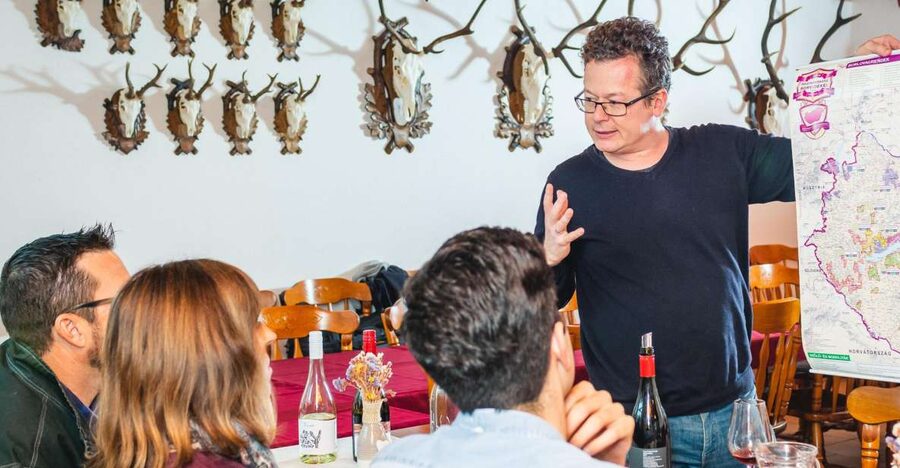
At the first winery, you will sample four different wines. These tastings are the core of the visit, and they are paired with local snacks like meat, cheese, and olives.
That food pairing is not just there for comfort. It helps you taste better. Salt, fat, and savory flavors can change how a wine feels in your mouth. So when you go back and forth between wines, your palate is not stuck in one bland baseline.
Also, because you are tasting multiple wines at one place, you can start noticing patterns. For example, you may find the winery leans into crisp whites, or you may notice the reds come across smoother and more fruit-forward. You do not need to be a wine expert to pick up on it, because the experience is set up to guide you through it.
A smart tip for the first tasting: take a breath and slow down between pours. In a structured tasting, it is easy to chase the next glass. Give yourself a moment to notice aroma, then taste for sweetness, acidity, and how long the flavor lasts. You do not need perfect vocabulary. Just remember what you liked and why it worked for your palate.
Winery stop two: the comparison that makes it feel like a tour
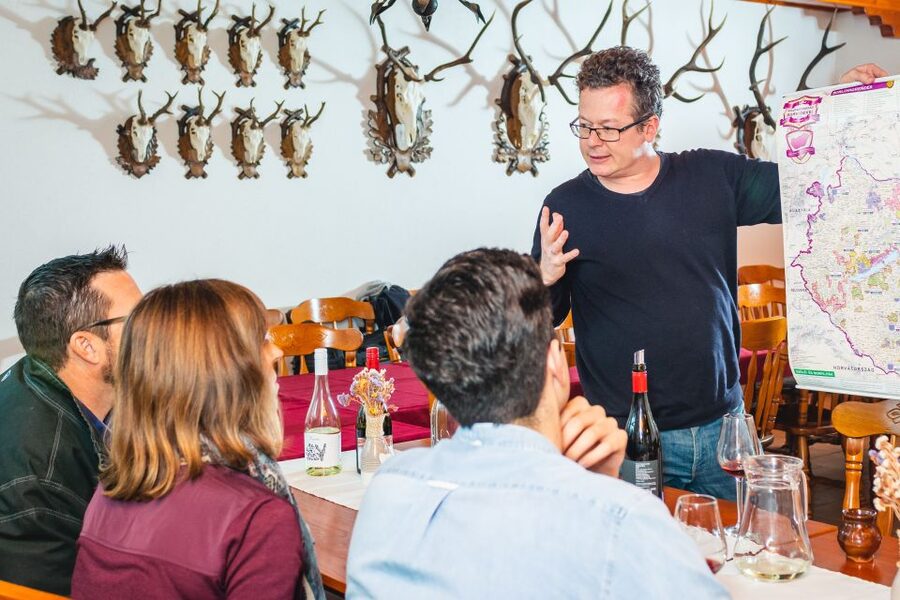
The day’s second winery is where the experience becomes more than a single tasting session. You will sample another set of four different wines here as well.
The payoff is comparison. Two wineries in the same region means you can test your assumptions. If you thought you only like whites, you get to taste reds in a different setting. If you think you like richer reds, you might find a crisp style you did not expect.
You also get another chance to meet local winemakers. The meeting component is important because wineries often have a working culture that does not translate from a brochure. When you hear how they approach their vines and the wine style they aim for, it makes the tasting feel like a real conversation.
If you like asking questions, this is your moment. Focus on what they want you to notice in their wines. Even simple questions, like what food pairs best with their style, can lead to practical advice you can use later at dinner.
Meeting the Hungarian Winemaker of the Year: why it changes the vibe
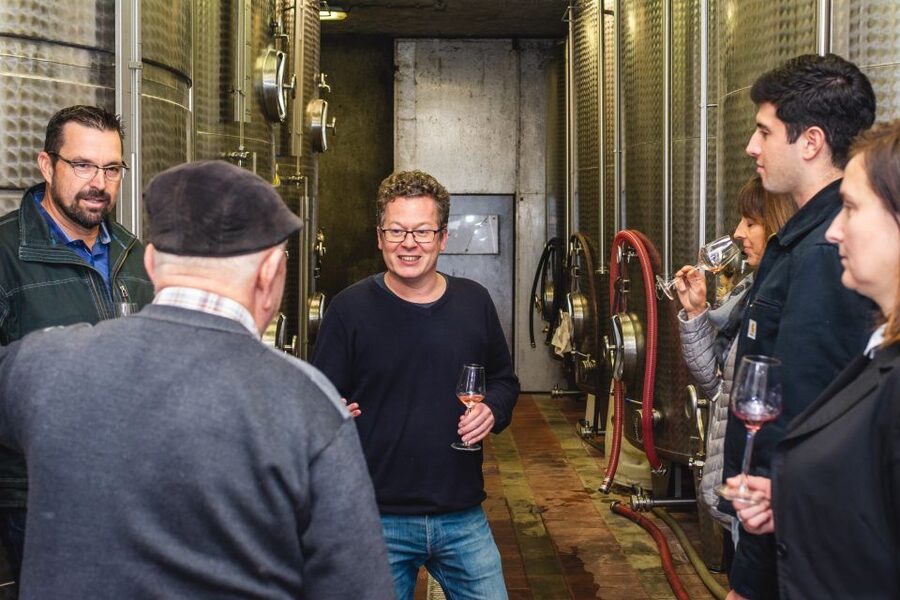
One of the most highly praised highlights is the chance to meet a winemaker who was recently awarded Hungarian Winemaker of the Year. That is a major credential in a country where wine is taken seriously.
So what does that actually do for you as a visitor? It gives the day a sense of purpose. Instead of just tasting wines, you are also learning from someone who has earned recognition for quality and craft. When that person explains their approach, you can connect the effort behind the bottle to the flavors in your glass.
This is also where the guide’s role matters. Mikki’s experience with wine growers, mentioned in a verified review, likely helps translate what the winemaker says into ideas you can actually use. You get a clearer picture of what makes a winning wine style work in the Mátra Hills.
If you are the type who collects stories, not just souvenirs, this is the piece that tends to stick. You leave with something memorable beyond the taste, a name and a reason to remember why that region gets attention.
Cellars and vineyards, more of them

What you will taste: reds, whites, and up to eight varieties
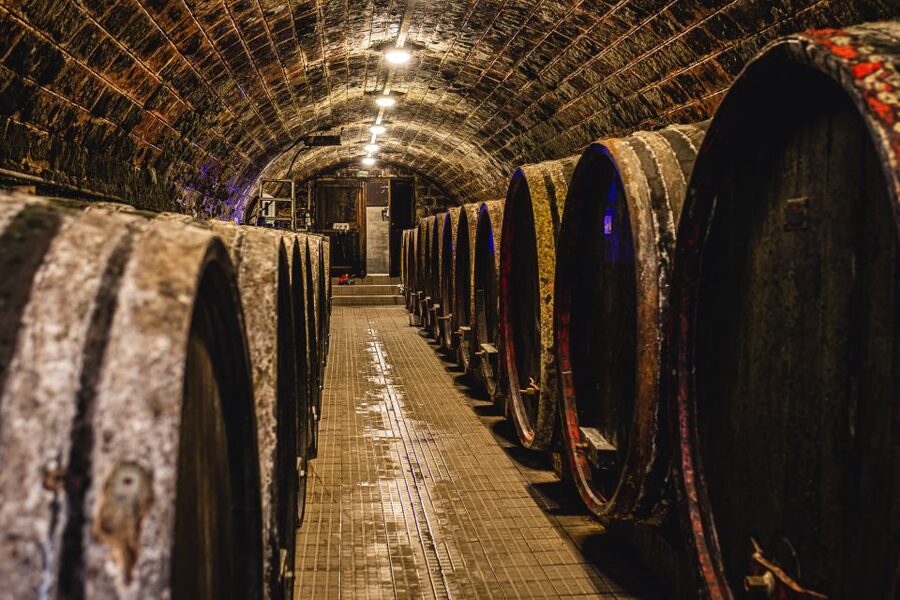
The tour is centered on Mátra Hills wine, which is known for white wines. At the same time, you are not limited to whites. The experience specifically gives you the chance to sample outstanding reds as well.
Across the two wineries, you sample up to 8 different wine varieties. Each winery includes tastings of four wines, so the format is clear: two tasting sets, four wines per stop. That structure helps you keep track and makes it easier to decide what you want to buy later, if you do.
You can also use the structure as a self-guided learning tool. At each winery, pick one white and one red that you like best. Then, at the next stop, see whether your preferences match the winery style or if your taste surprises you. That is how a short tasting tour turns into a real learning experience.
If you are unsure what to expect flavor-wise, think in terms of contrast. You will likely encounter crisp and aromatic whites alongside reds that aim for balance. The exact styles can vary by winery, but the overall theme of the region is built in.
Price and value: is $341 per person fair for a 5-hour wine day?
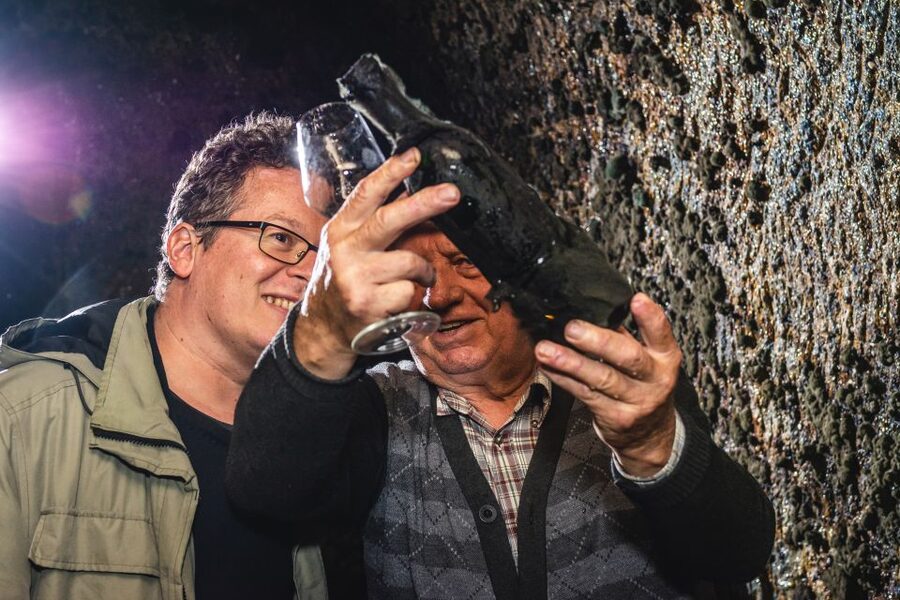
At $341 per person, this is not a budget add-on. But you are paying for a lot that keeps the day organized and hands-on.
Here is what the price covers, based on what’s included:
- Return transportation from Budapest
- An English live guide
- Visits to 2 local wineries
- Four tastings per winery (listed as 4 different wines at each stop)
- Local snacks (meat, cheese, and olives)
So you are paying for convenience, translation, and access. Wine tours that stay in one winery can feel lighter. This one spreads the tastings across two wineries, includes food pairings, and adds that special meeting with an award-winning winemaker.
Also, the group size is limited to eight. In practice, that usually means fewer people competing for the guide’s attention when you ask questions. That improves the quality of the experience, even if the schedule stays tight.
My practical take: this is best value if you care about the tasting itself and want at least two winery viewpoints in one day. If you just want a casual glass of wine and do not care about meeting winemakers, you might find a cheaper option. But for a structured, guided wine outing with tastings and snacks, it stacks up better than it looks at first glance.
Who this tour is best for (and who should skip)
This works especially well for:
- Wine lovers who want a short, structured day trip from Budapest
- People who enjoy asking questions and want to meet winemakers
- Groups that want both whites and reds covered in one outing
- Travelers who prefer small-group tours (up to 8 people)
It is not suitable for children under 18, so it is mainly an adult experience. And if you dislike wine tastings or feel uncomfortable with tasting in a guided format, this may feel like more work than fun.
One more fit note: because the tour is only five hours, it is ideal if you want a tasting-focused day rather than a long, slow vineyard immersion. You get plenty to enjoy, but you do not get an all-day, deep-study format.
Quick planning tips before you go
A few practical things will help you enjoy the tastings more.
- Pace yourself with water between pours. Tastings add up fast when you do four wines twice.
- Eat the snacks. The meat, cheese, and olives are there to support the wines, not just keep you busy.
- Go in with two or three preferences in mind. For example, you might want a white that feels crisp and a red that feels smooth. It makes the tastings feel clearer.
- Bring a phone for notes. You do not need fancy notes, just which wines you loved and why.
If you are booking in advance, check available start times since the tour runs on a schedule. This kind of half-day plan works best when you keep the rest of your day flexible.
Should you book the Mátra Hills Wine Tour from Budapest?
I think this is a strong choice if you want a guided, adult-focused wine day that gives you real access. The biggest reasons to book are the two-winery structure, the chance to meet an award-winning winemaker, and the fact that Mikki is experienced with wine growers and leads in English. That combination tends to make the day feel grounded and personal, not just procedural.
I would skip it if $341 per person feels too steep for your travel style, or if you want a more relaxed experience with lots of free time. Five hours is tight by design, and the tastings are the point.
If you are staying in Budapest and want one memorable wine-focused day without sacrificing your whole schedule, this tour is built for exactly that.
FAQ
How long is the Mátra Hills Wine Tour from Budapest?
The tour duration is listed as 5 hours.
How many wineries and wine tastings are included?
You visit 2 local wineries. At each winery, you sample 4 different wines, for up to 8 wine varieties total.
What snacks are included during the tastings?
Local snacks are included, including meat, cheese, and olives.
What language is the tour guide?
The live tour guide is listed as English.
Is the tour suitable for children?
No. The tour is listed as not suitable for children under 18.
Does the tour include transportation, and where do you end up?
The tour includes return transportation from Budapest, and you are dropped off back at the meeting point in Budapest at the end of the tour.
More Tours in Budapest




More Tour Reviews in Budapest





Budapest by the Glass

Reviewed recently around Budapest
- Audio visual multi-sensory chefs journey dinner experience★ 5.0 · 3 reviews
- Tapolca Cave Lake and Tihany/ Balaton private tour from Budapest★ 4.5 · 3 reviews
- SzentEndre-SaintAndrew City Privately Shopping and Picturesque★ 4.5 · 3 reviews
- Sightseeing flight over Budapest★ 5.0 · 3 reviews
- Self Guided Tour In Budapest With 100 Captivating Audio Stories★ 5.0 · 3 reviews
- Private Danube Bend Visegrad and Szentendre Tour With Transport★ 5.0 · 3 reviews
Hungarian Wine and Palinka, compared.
 ★ 5.0Countryside Half-day Gastro-Wine Tour from Budapest Meal & pickupFrom $991,450 reviews
 ★ 4.9Wine, Cheese, and Charcuterie TastingFrom $50647 reviews
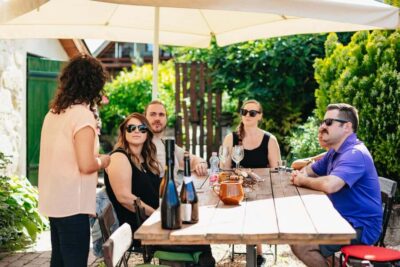 ★ 4.8From Budapest: Etyek Wine Tasting Tour with 3-Course MealFrom $102557 reviews
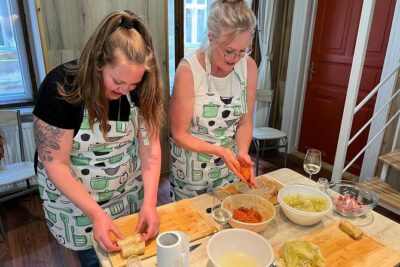 ★ 5.0Budapest Cooking Class & Market Tour with Local Guide & WinesFrom $99553 reviews
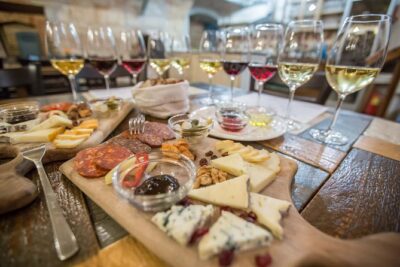 ★ 5.0Hungarian Wine Tasting (with Cheese and Charcuterie) in BudapestFrom $50531 reviews
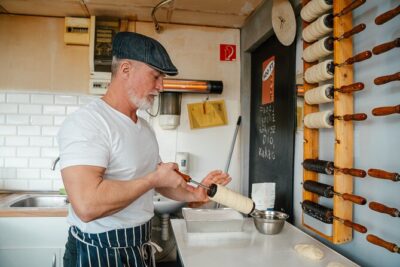 ★ 5.0Budapest Food Tour: Market to Tavern with 14+ Tasters & WinesFrom $76434 reviews
 ★ 5.0Budapest Culinary & Wine WalkFrom $120397 reviews
 ★ 4.9Hungarian Wine Tasting with 7 Wines and TapasFrom $62389 reviews
Browse the lists this tour appears in