
Review · BUDA CASTLE DISTRICT
Gems of the Budapest Castle District Walking Tour
Stories hide in plain sight here. This Budapest Castle District walk runs about 2 hours 10 minutes and, with a live English guide, stitches together 20 landmarks with lots of free viewing and photo time. I like the pacing and I like how the guide turns monuments into clear stories you can actually remember. The main drawback is simple, it is still a hill-and-stairs walk, so bring comfy shoes and expect a workout.
What makes this one feel worth it is the focus on meaning, not just names. You’ll hear why the double cross matters at Fisherman’s Bastion, how WWII echoes show up around Setany, and how 1848 connects to the symbols you see on statues. If your guide is Antel, you can also expect spot-on English, humor, and a knack for pointing out details most people miss.
At a price of $3.61 per person, booked about a month ahead, this is unusually good value for a guided, story-heavy introduction to Buda Castle area sights. Confirmation comes when you book, and the tour uses a mobile ticket, with a maximum group size of 45. One more practical note, the experience requires good weather, so have Plan B in mind if the forecast looks rough.
In This Review
- Key highlights worth your time
- Why this Castle District walk fits when you are short on time
- Meeting at Holy Trinity Statue, then straight to Matthias Church
- Fisherman’s Bastion and the double cross, plus the views that hit
- Pope Innocent XI, the National Archives, and the quiet power of facades
- Saint Mary Magdalene and Setany: WWII context without a textbook
- Andras Hadik, the Labyrinth, and Dracula-adjacent folklore
- Independence War statue, 1848 symbols, and the House of Houdini
- Szent Gyorgy Street, medieval ruins, and the Buda Hill Funicular
- Turul Bird, King Matthias Fountain, and the feel of myth in stone
- Lions Court and the Royal Riding Hall, then Prince Eugene’s big statue
- S. Maria Mater Dei, Castle Garden, and the Varkert Bazar finale
- Guide quality and how to make the most of the short photo breaks
- Price, value, and the right expectations for what you get
- Who should book, and who might skip this one
- Should you book the Gems of the Budapest Castle District Walking Tour?
- FAQ
- What language is the tour offered in?
- How long is the Gems of the Budapest Castle District Walking Tour?
- How much does the tour cost?
- What is included in the price?
- Are there admission tickets required for the stops?
- Where does the tour start and end?
- What weather conditions are required?
Key highlights worth your time
- Fisherman’s Bastion photo moments with the double cross story and sweeping Pest views
- Matthias Church and the Holy Trinity column, explained through foundations and figure symbolism
- WWII and siege of Budapest context around Setany, plus the row of cannons
- Labyrinth dungeon stories tied to Vlad the Impaler, with time for a quick look
- Castle District symbols across eras, from 1848 independence themes to royal statuary
- A guide who works the details, with clear English and short breaks to actually look
Why this Castle District walk fits when you are short on time
The Castle District can eat your day fast, because every turn has a new view and a new building trying to impress you. This tour is designed to keep you moving, roughly 2 hours 10 minutes, and still make the stops feel meaningful.
You get a live guide, and the route is built around places that are listed as free admission stops. That matters because it keeps the tour from getting bogged down by ticket lines. Also, the group limit of 45 means you usually have room to listen without feeling like you are shouting over a crowd.
The other big payoff is orientation. Budapest can feel like a lot of hills and layers, especially around Buda Castle. This route gives you landmarks in a logical flow, so when you walk the area again on your own, you know where you are and why it matters.
Meeting at Holy Trinity Statue, then straight to Matthias Church
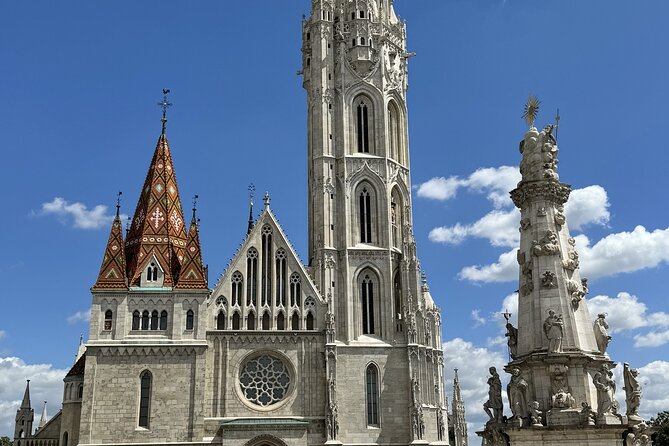
You start at the Holy Trinity Statue on Szentháromság u., right in the 1014 area near the castle hill. This is a good opening point because the column is visually strong, and it sets up the theme of symbolism early.
At the Holy Trinity column, you’ll hear about how the Holy Trinity column was constructed and what the figures represent. Instead of treating it as just a pretty monument, you get a quick key to interpreting what you are seeing.
Then you move to Matthias Church, where the focus turns to foundations and architectural details. Even if you do not go inside, the exterior is full of cues, and a good guide helps you connect shapes to time periods. The value here is that you will start noticing patterns, not just admiring walls.
At this stage, the route stays brisk, with about 5 minutes per early stop. That is enough to learn the story without feeling trapped at one spot.
Up on Castle Hill, a few other ways to do it
- Budapest: Buda Castle District Vampires and Myths Night Tour
★ 4.6 · 3,830 reviews - Budapest: Buda Castle Walk with Saint Stephen’s Hall
★ 4.5 · 3,012 reviews - Budapest: Buda Castle District Walking Tour
★ 4.6 · 2,108 reviews - Budapest: 3-Hour Grand City Tour and Castle Walk
★ 4.3 · 1,437 reviews
Fisherman’s Bastion and the double cross, plus the views that hit
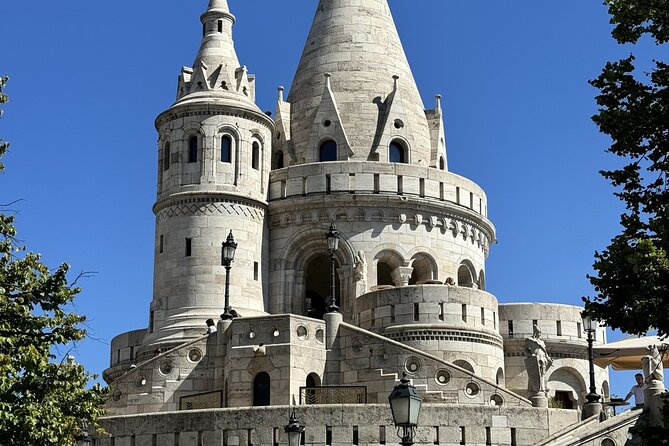
Next comes Fisherman’s Bastion, and this is where the walk becomes photographic. You’ll get time to look at the statues up close and hear the relation of the double cross with Hungarian identity.
One reason this stop lands well is that the guide ties myths and legends to details you can see in front of you. Instead of a vague story, you learn what to look for while you are standing there.
You also get panoramic views over Pest. Even if you have seen Budapest postcards before, the angle from here makes the city feel deeper. And yes, there is a short break for photos, so you are not stuck being rushed through the best part.
A small reality check: this area can be crowded. On a busy day, keep your expectations flexible and use the guide’s timing to get a good shot quickly.
Pope Innocent XI, the National Archives, and the quiet power of facades
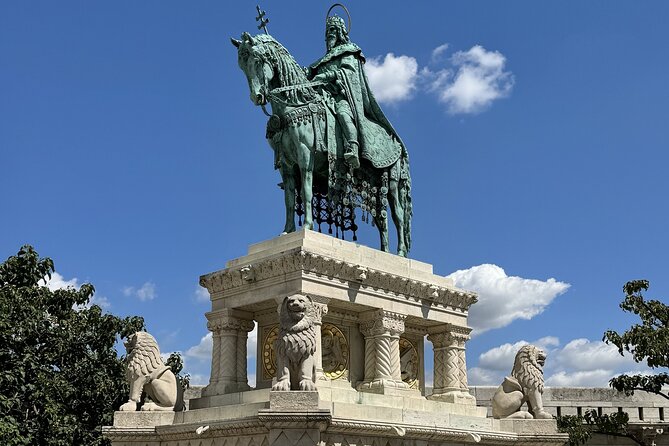
After the bastion, you encounter the Statue of Pope Innocent XI. The point is not only the pope himself, you’ll hear the statue references Pope Sylvester II, as well as the coronation statue of king Matthias. This stop also includes the idea of the oldest building of Hungary, so you get a quick historical thread woven into what looks like sculpture.
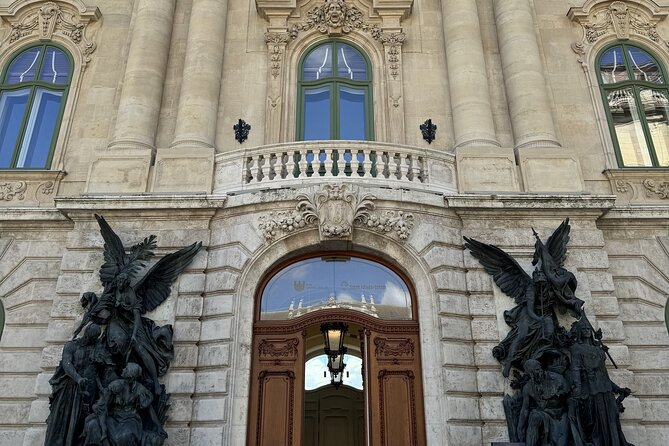
Then the tour shifts to the National Archives of Hungary, where architecture is the headline. You’ll be guided to specific features like the Vienna gate and the Golden signatures on Uri street. Those details can be hard to catch on your own, since facades reward slow attention.
In this stretch, you also learn about statues in the vicinity and the tales connected to them. This is where the tour becomes more than a checklist. It helps you understand why the castle district looks the way it does, not just when things were built.
You are still moving, though. Plan for about 5 minutes here, so if there is a building you want to linger in, keep an eye out for it. You can always revisit later.
Saint Mary Magdalene and Setany: WWII context without a textbook
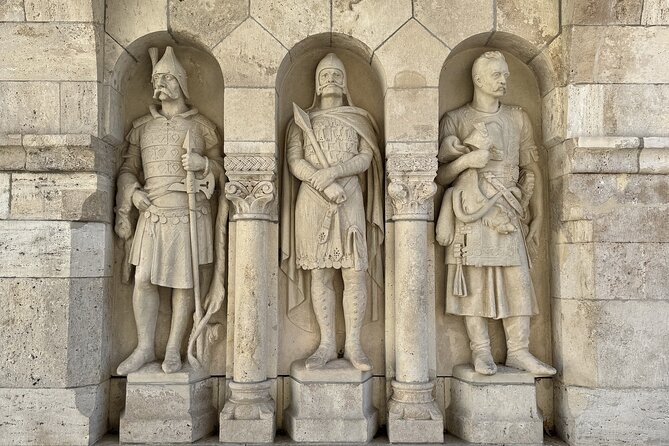
The Church of Saint Mary Magdalene is next, and the tour highlights the coronation mantle of the Hungarian kings. That single detail gives the church a job beyond decoration: it connects to how Hungarian kings were symbolically crowned and remembered.
You also hear about ruins from WWII. That part matters because it reframes the stone around you. Budapest is often sold as a romantic city, but the castle district carries damage and repair, and the stories make the scars feel less random.
Then you move to the Arpad Toth Promenade, also called Setany. This is one of the most “story with objects” stops on the route. You’ll see the first flag after WWII, a row of cannons, and you’ll get a view of the Buda hills.
You’ll also learn about the statue of the Szekely Knight and get a brief history of WWII and the siege of Budapest. The guide’s job here is crucial, because war history can feel heavy if it is delivered like a lecture. The tour keeps it short, focused, and tied directly to what you can point at.
The practical takeaway: if you want a Budapest walk that includes real 20th century history, this is one of the key moments.
Andras Hadik, the Labyrinth, and Dracula-adjacent folklore
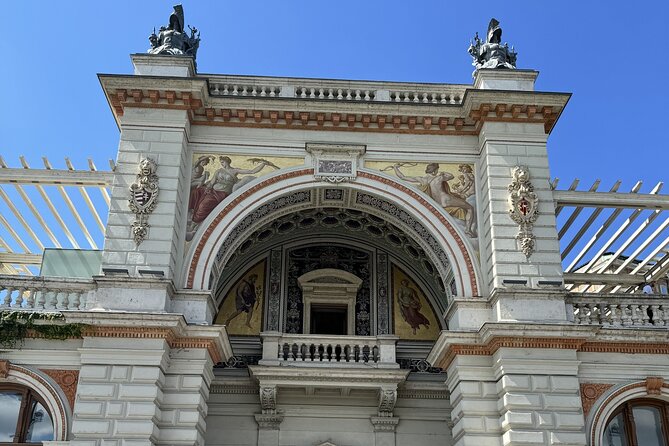
The Statue of Mounted Andras Hadik is built for quick understanding. You hear about him as the most famous Hungarian knight, plus local trends connected to the area.
There is also an interesting culinary note: the stop includes the oldest Hungarian confectionery. That kind of detail is handy because it gives you something to chase after the tour, not just something to read on a sign.
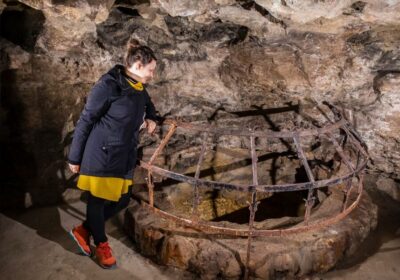
Then you reach the Labyrinth, described as a natural cave that was used as a dungeon. Here the tour turns toward legend again, tying the story to Dracula and Vlad the Impaler. Even if you have zero interest in Gothic stories, the value is in how the legend helps explain why people remember a place like this.
You get about 10 minutes here, which is perfect for a first look. If you love caves, myths, and spooky backstories, you’ll want a bit more time, but the tour keeps the whole route on track.
Keep an eye on your footing in cave-like areas. Even when a tour stop is brief, the ground can feel uneven.
Other Budapest walks at a similar pace

Independence War statue, 1848 symbols, and the House of Houdini
Next up is the Statue of the Independence War, built around Hungarian revolution of 1848. The guide connects symbolisms from the statues back to the original war, which helps you understand what the monument is trying to communicate.
One fun bonus is the House of Houdini. The tour includes it as part of this stretch, so you get a mix of serious national symbolism and something lighter, all while you are still in the castle district core.
This stop is only about 5 minutes, so do not expect a slow, museum-style experience. Instead, treat it as a symbolic anchor. After hearing the connection, you’ll recognize similar themes when you see other monuments around Budapest.
Szent Gyorgy Street, medieval ruins, and the Buda Hill Funicular
Then you move to Szent György Street, where the tour focuses on offices of the president and the prime ministers. You also hear about ruins of medieval castles, plus secret stories.
This is a clever pivot, because it shows how the district layers power. It is not only royal and religious. It is political, with an everyday government presence. That helps Budapest feel less like a theme park and more like a working city with a long memory.
From there, you reach the Buda Hill Funicular. The tour notes it as the second oldest funicular, and you’ll hear about the zero kilometer stone and the oldest bridge of Hungary. This is one of the places where the “transport trivia” actually helps your mental map.
The practical benefit: you start to understand the hill geography. The funicular is not just a ride, it is a clue about how people moved around before modern transit made everything easier.
After about 5 minutes, you continue, so keep your questions short and write down anything you want to explore later.
Turul Bird, King Matthias Fountain, and the feel of myth in stone
Next, you visit the Turul Bird Statue, the national bird of Hungary. You’ll hear the background of the bird and the storyline of how the Hungarians got their name. This kind of explanation turns a statue into a cultural shorthand.
After that, you stop at the Fountain of King Matthias, described as the prettiest fountain of Budapest. The tour also connects it to a romantic-tragedy story, which gives you something to remember beyond the look of the water and stone.
These two stops work well back-to-back. One gives you identity myths. The other gives you emotional storytelling. Together, they make the district feel more human.
Lions Court and the Royal Riding Hall, then Prince Eugene’s big statue
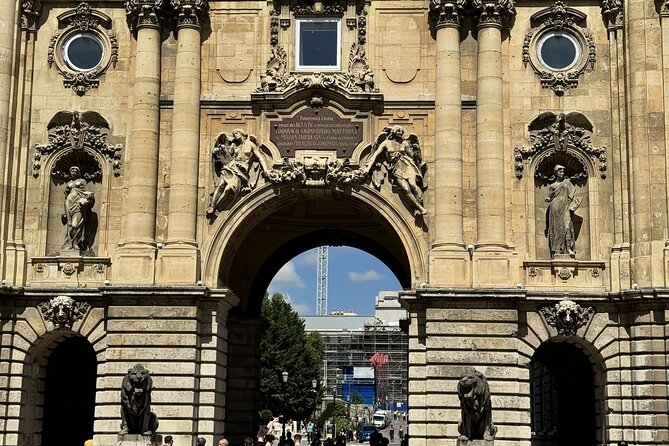
You then enter the Buda Castle area through the Lions Court. This courtyard is where you see mythical statues and get explanations about facade details. Courtyards can feel like in-between spaces, but in this district they often carry the most visual storytelling per square meter.
Right after, you move to the Royal Riding Hall, known as the royal Hungarian stable. The tour keeps it moving, with about 2 minutes here, but it is enough time to appreciate that the castle district is not only grand halls and churches. It also ran on animals, work, logistics, and royal training.
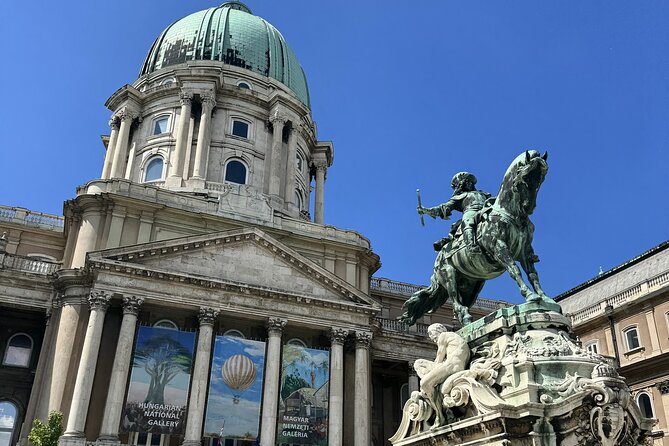
Then you hit the Prince Eugene of Savoy’s Equestrian Statue. It is described as the biggest statue of the castle district, and you’ll hear about Eugene as a liberator of the Hungarians from the Ottomans, with some fun facts mixed in.
That is a key moment for perspective. If you have only seen Budapest through the lens of one empire, this helps broaden it fast. It also helps explain why so many statues feel political, not just decorative.
S. Maria Mater Dei, Castle Garden, and the Varkert Bazar finale
The last stretch gives you calm and beauty before you finish. You stop at S. Maria Mater Dei, featuring the statue of Virgin Mother Mary and baby Jesus. You’ll also hear about bridges of Budapest and their relation to Hungarian monarchs, which keeps the symbolism theme alive even as you move toward garden space.
Then comes Castle Garden, with highlights like the spiral staircase tower and the Triton fountain. You’ll get about 5 minutes, just enough to notice form and texture, and to feel that shift from monuments to open air.
The tour ends at Castle Garden Bazaar, near the Varkert Bazar. You’ll hear about the architecture of the varkert Bazar and you’ll look for statues on the facade. It is a satisfying landing point, because you finish close to a place where you can keep walking, snack, or just linger.
Guide quality and how to make the most of the short photo breaks
This tour succeeds or fails based on the guide, and the best ones make it feel effortless. The experience is built around free access stops and short explanations, so you need someone who can speak clearly while keeping the group moving.
From the information provided, guides like Antel are described as exceptionally articulate, gracious, and funny. That matters, because humor and clarity help you remember stories when you are standing among statues and church facades that all look similar at first glance.
Here’s how you get the most out of the photo moments. Before the bastion and the garden areas, slow down mentally. Pick one or two angles you want, then let the guide tell you what to look at, and use the short breaks to frame your shots.
Also, plan clothing for hills. Even in good weather, you will be walking up and down. Comfortable shoes beat stylish shoes almost every time on the castle hill.
Price, value, and the right expectations for what you get
At $3.61 per person, this tour is priced like a bargain to get you started, not like a premium museum guide. That is what makes it so tempting.
The value comes from three things you can actually use: a live guide, a long list of landmarks concentrated into one route, and short time buffers for photos and quick exploration. Many cheap tours fail because they rush or skip context. This route is built to do context in small doses as you walk.
One expectation to set: it is not a slow, museum day. You are moving from stop to stop, and each one gets a brief moment. If you want long interior time, you’ll need to pair this with extra self-guided hours later.
Finally, tips and gratuities are not included. If you feel your guide earns extra, it is your call.
Who should book, and who might skip this one
This is a strong choice if you:
- Want a guided, story-focused introduction to Buda Castle District
- Like learning why monuments look the way they do
- Prefer exterior sightseeing plus smart context over ticket-heavy days
- Enjoy photo stops with a plan, not random wandering
You might want a different plan if you:
- Have trouble with extended walking and uneven ground
- Need long, sit-down time at each stop
- Are visiting on a day where weather looks unstable, since the tour requires good weather
For most people, though, it is an efficient way to get oriented fast and understand Budapest’s symbols in plain language.
Should you book the Gems of the Budapest Castle District Walking Tour?
I would book it if you want the castle district to make sense quickly. This route gives you a guided thread through churches, archives, WWII reminders, national myth, and royal statuary, with time to take photos when it counts.
If you are on a first trip and you want to feel confident walking around Buda Castle later, this is a practical starting point. And at $3.61 with an English live guide and free admission stops listed across the route, the value is hard to beat.
Just go in with the right pace expectations. Think two hours of walking with many small story hits, not one slow “do everything” afternoon. If you match your energy to the format, you will leave with far more than photos, you’ll have context.
FAQ
What language is the tour offered in?
The tour is offered in English.
How long is the Gems of the Budapest Castle District Walking Tour?
It runs about 2 hours 10 minutes.
How much does the tour cost?
The price is listed as $3.61 per person.
What is included in the price?
A live guide is included.
Are there admission tickets required for the stops?
The stops listed are described as admission ticket free.
Where does the tour start and end?
It starts at Holy Trinity Statue on Szentháromság u., 1014 Hungary, and ends at Castle Garden Bazaar on Ybl Miklós tér 2-6, 1013 Hungary.
What weather conditions are required?
The experience requires good weather, and if it is canceled due to poor weather, you will be offered a different date or a full refund.
More Tours in Budapest




More Tour Reviews in Budapest





Still on Castle Hill



Reviewed recently around Budapest
- Audio visual multi-sensory chefs journey dinner experience★ 5.0 · 3 reviews
- Tapolca Cave Lake and Tihany/ Balaton private tour from Budapest★ 4.5 · 3 reviews
- SzentEndre-SaintAndrew City Privately Shopping and Picturesque★ 4.5 · 3 reviews
- Sightseeing flight over Budapest★ 5.0 · 3 reviews
- Self Guided Tour In Budapest With 100 Captivating Audio Stories★ 5.0 · 3 reviews
- Private Danube Bend Visegrad and Szentendre Tour With Transport★ 5.0 · 3 reviews
Buda Castle District, compared.
 ★ 4.7Buda Castle Cave TourFrom $195,677 reviews
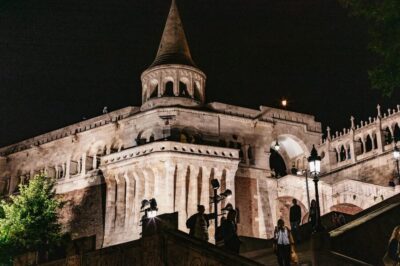 ★ 4.6Buda Castle District Vampires and Myths Night TourFrom $233,830 reviews
 ★ 4.5Buda Castle Walk with Saint Stephen’s HallFrom $293,012 reviews
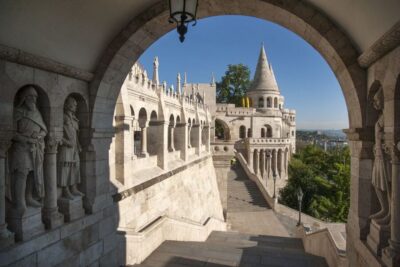 ★ 4.6Buda Castle District Walking TourFrom $142,108 reviews
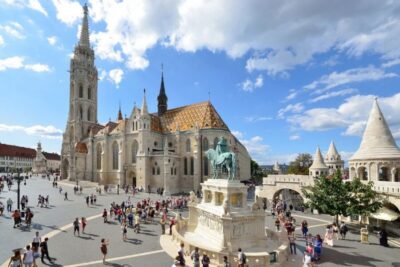 ★ 4.33-Hour Grand City Tour and Castle WalkFrom $491,437 reviews
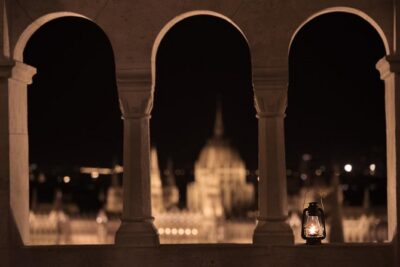 ★ 4.5Buda Castle District Dark History, Legends and Vampire Night TourFrom $211,240 reviews
 ★ 4.9Buda Castle District Walking Tour with a HistorianFrom $63867 reviews
 ★ 5.0Budapest Castle District Walking TourFrom $3630 reviews
Browse the lists this tour appears in