
Review · WALKING TOURS
Budapest Art Nouveau Walking Tour
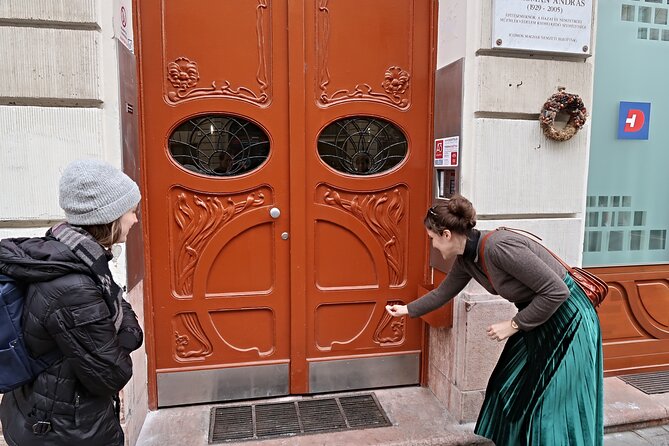
Art Nouveau in Budapest is a lot more fun than you think. In just 3 hours, you get the story behind Hungarian Secession style, and you also get to stand close enough to notice the craft. I love how the tour pairs big exteriors with real interior glimpses, especially at Gresham Palace. I also love the moment when Zsolnay ceramics and Asian-inspired motifs start to make sense. The only drawback to plan around is that a couple of key spaces are day-dependent, so your final stretch may change.
You’ll walk through a Belle Époque design world, where porcelain tiles, flowing facades, and symbolic details were a kind of cultural branding. You’ll hear how Budapest’s version of Art Nouveau was both European trendy and distinctly Hungarian, largely through the work of Ödön Lechner and the Zsolnay ceramics connection. If you hate walking, or you want a long museum session instead of guided street-level design spotting, this one may feel a bit too concentrated.
In This Review
- Key highlights you will care about
- Budapest Art Nouveau in 3 hours, what you will actually see
- Meeting point and walking logistics that keep the tour smooth
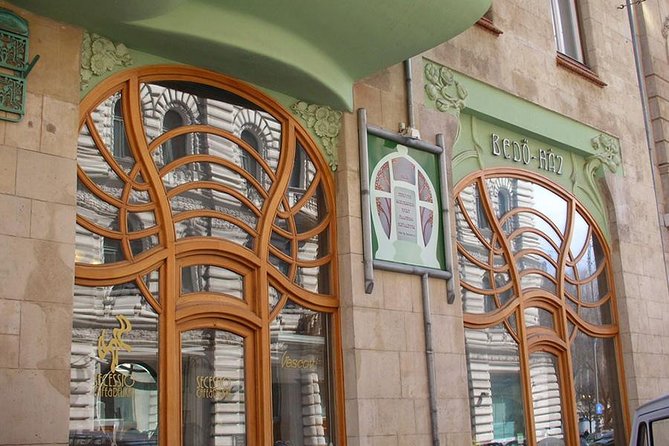
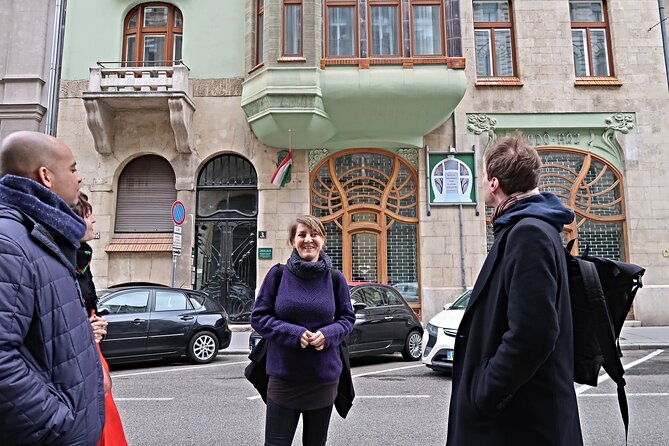
- Bedö House, where the style starts to feel personal
- Hungarian State Treasury and the “bank buildings were proud of themselves” lesson
- Gresham Palace, exterior drama and a rare interior peek
- Rózsavölgyi utca and Paris Passage, the quieter design stops in between
- The Hungarian Zsolnay porcelain connection, why the tiles matter
- Asian motifs explained, so they do not feel like random decoration
- Kazinczy Street Orthodox Synagogue, ending on a strong Art Nouveau note
- Price and value, is 123 per person fair for 3 hours?
- What kind of traveler should book this
- So, should you book this Art Nouveau tour?
- FAQ
- How long is the Budapest Art Nouveau Walking Tour?
- What does the tour include in the price?
- Is public transport included?
- Where can I meet the group if I choose the central meeting point option?
- Is the tour offered in English?
- Can I enter the Hungarian National Bank and the Kazinczy Street Synagogue on every day?
- Are there any extra costs for sites during the tour?
Key highlights you will care about
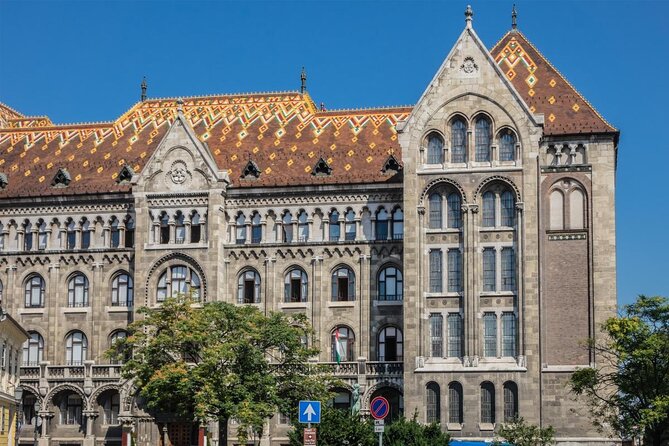
- Lechner’s Postal Bank facade, a famously flamboyant landmark often described as Hungary’s Gaudi style
- Gresham Palace entry halls, where exterior drama turns into interior design details
- Zsolnay porcelain tiles, including the way they show up on facades and inside selected stops
- Asian motifs with an explanation, tied to both Hungary’s identity myths and broader European Orientalism
- Kazinczy Street Orthodox Synagogue interior, a fitting Art Nouveau finale when it is open
- A historian guide who connects the dots, with strong art and history teaching (including guides like Anna, praised for friendly expertise)
Budapest Art Nouveau in 3 hours, what you will actually see
Budapest is one of Europe’s best cities for Art Nouveau, but only if you know where to look. This tour is built for that exact problem. Instead of making you wander and guess, your historian guide points out how the style works in real life, not just in textbook photos.
You’ll focus on what makes Hungarian Art Nouveau distinctive. Think porcelain tiles, symbolic designs, and the Hungarian Secession twist on the wider European Art Nouveau movement that swept across architecture and decorative arts at the turn of the century. The goal is simple: you should leave with a new, sharper eye for why these buildings look the way they do.
It also helps that the most important moments include interior access. The Royal Post and Gresham Palace both allow you into the entrance areas, so you can compare what you see from the street with the design choices inside.
And yes, you will be walking. It’s a walking tour at the end of the day, not a bus ride with a lecture. Wear comfortable shoes and expect to look up, a lot.
Meeting point and walking logistics that keep the tour smooth
The tour pickup depends on which option you select. If you want a central meeting spot, the group meets at Madal Café, Budapest, Alkotmány u. 4. That is convenient if you are staying somewhere central and don’t want to coordinate a hotel pick up.
Transit is not included. Tram and metro tickets are on you. The upside is that you stay flexible and don’t get stuck paying for rides you might not need. The pace is paced for a 3-hour experience, and the stops are frequent enough that you rarely feel like you are doing long, empty stretches.
A practical tip: keep your camera ready, but also make space for notes or quick mental bookmarks. The design details you’ll learn about are easy to miss if you treat the tour as only photo time.
Other Budapest walks at a similar pace
- Budapest: Buda Castle Walk with Saint Stephen’s Hall
★ 4.5 · 3,012 reviews - Big Bus Budapest Hop-On Hop-Off Bus and Walking Tour
★ 3.5 · 2,206 reviews - Budapest: Buda Castle District Walking Tour
★ 4.6 · 2,108 reviews - Budapest City Landmarks Walking Tour in 2 Hours
★ 5.0 · 2,048 reviews
Bedö House, where the style starts to feel personal
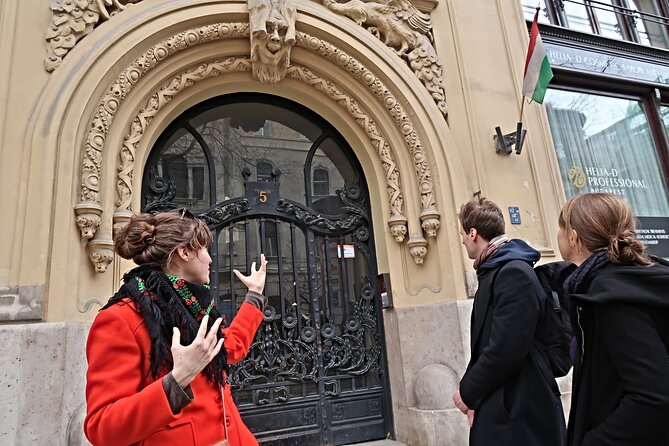
One of the first guided stops is Bedö House. This is the kind of building where Art Nouveau stops being abstract. The guide helps you read the facade like a design language, not just like decoration.
What you should watch for here is the blend of architectural form and applied detail. Hungarian Secession often uses materials and surface effects to create movement, and your guide will point out how that visual energy is built into the building, rather than added on later.
Even if you are not a design nerd, you’ll likely have a similar reaction: it looks too intentional to be random. The tour teaches you to slow down just enough to notice that intention.
Hungarian State Treasury and the “bank buildings were proud of themselves” lesson
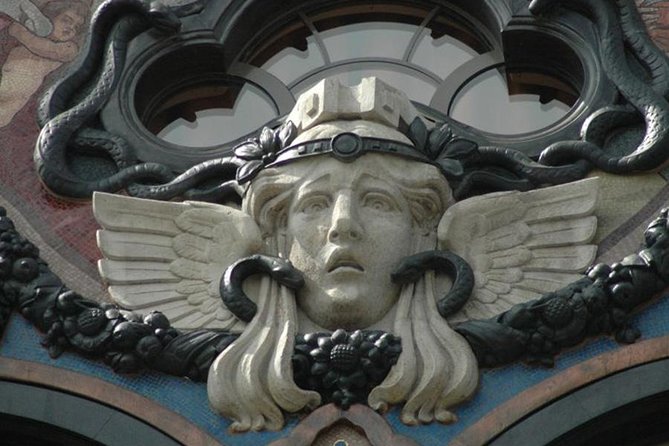
Another key stop is the Hungarian State Treasury, also handled with guided time. Bank and treasury buildings from this era were not shy. They were statements about stability, wealth, and the idea that Budapest belonged on a modern European stage.
This is where the tour starts setting up a theme you’ll keep hearing: the city’s affluence and cosmopolitan identity showed up directly in architecture. You’re not just walking past pretty walls. You are seeing how institutions used Art Nouveau to communicate power and optimism.
If you like visual storytelling, this part pays off. You start to understand the symbols and material choices as part of a public message, not an accident of style.
Gresham Palace, exterior drama and a rare interior peek
Gresham Palace is one of the headline stops, and for good reason. You get time at the building with access to the entrance hall, which is where many Art Nouveau tours get stuck at the sidewalk level. Here, you can compare facade and interior logic.
What I like about this kind of stop is that it makes the design feel coherent. The same thinking that shapes the street-facing look also shows up in the interior spaces, so the experience becomes more than a collection of screenshots.
Your guide will explain design elements you can spot in person. That matters, because Art Nouveau is partly about rhythm and surface. Up close, you notice things you simply cannot capture in a quick glance.
If you are short on time in Budapest, this is the kind of building that justifies the entire tour length on its own.
Rózsavölgyi utca and Paris Passage, the quieter design stops in between
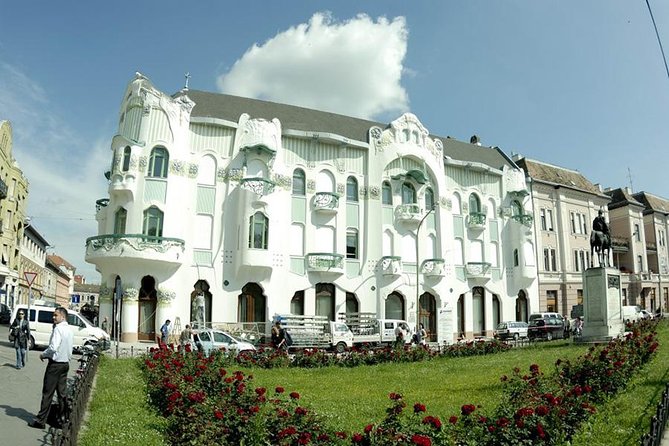
The tour continues with guided time along Rózsavölgyi utca and through Paris Passage. This section is a good reminder that Art Nouveau wasn’t only for grand monuments. It also shaped everyday shopping and public passage spaces.
In the broader walk, you can also expect guided looks inside places like a flower shop with its original interior, a department store area, several bank offices, and a small but exquisite Art Nouveau museum and coffee house. The point is to show the style where you’d actually have seen people living, buying, and meeting.
These stops tend to be brief but focused. The guide helps you notice what makes them Art Nouveau rather than just old-fashioned.
Practical advice: if you can, take a slow minute in each interior stop. Even when you’re not given much time, you can still spot the materials, the ceramic work, and the way designers used surfaces to guide your eye.

The Hungarian Zsolnay porcelain connection, why the tiles matter
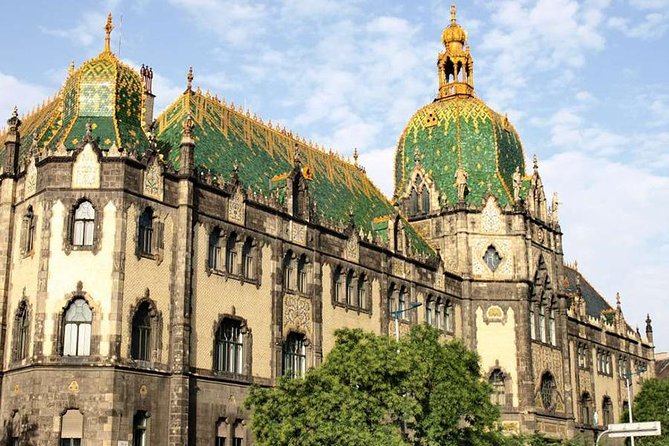
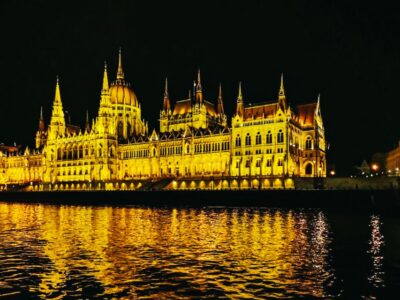
Here’s where the tour gets especially satisfying: Zsolnay porcelain. You’ll see how ceramics from Pécs connect to the Hungarian Art Nouveau look, including a characteristic use of porcelain along facades.
This is not just decorative trivia. Porcelain tiles affect how light bounces on a building, which changes the vibe from day to day. That helps explain why some facades can look almost alive in different weather and seasons.
Your guide also ties this to the work of Ödön Lechner and the broader Hungarian Secession identity. The tour shows you that Zsolnay was not a random aesthetic choice. It was part of a design system that matched the movement’s desire to be modern, bold, and locally rooted.
Asian motifs explained, so they do not feel like random decoration
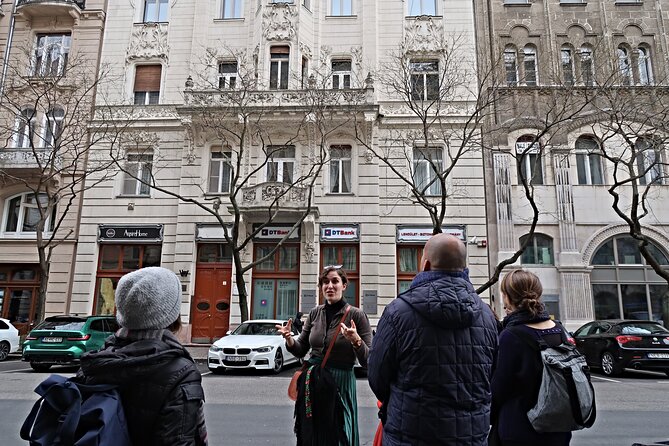
One of the more interesting parts of Hungarian Secession is the use of Asian motifs and elements. The tour doesn’t treat these as exotic extras. It gives you context for why they appear.
You’ll hear about supposed eastern origins tied to Hungarian national identity, and you’ll also learn about European-wide Orientalism that influenced Art Nouveau across the continent. Once you hear both frames, the motifs stop feeling mysterious and start feeling purposeful.
This is the kind of explanation that makes your future self a better observer. After this, when you see a flourish that looks eastern, you’ll know to ask: is this about identity, or about European fashion for the idea of the East, or both?
If you like design theory but hate lectures, this is delivered in a way that stays grounded in what you are looking at right then.
Kazinczy Street Orthodox Synagogue, ending on a strong Art Nouveau note
The tour finishes at the Kazinczy Street Orthodox Synagogue, a fascinating place to close the loop. The interior is known for its Art Nouveau design, and ending here helps the overall story land in your head.
There is one day-of-week thing to plan around. On Saturdays, the Orthodox Synagogue on Kazinczy Street is closed, so the route can be adapted. If it’s closed on your day, your guide can swap in other Art Nouveau jewels in Budapest, such as the Gellért Bath Hotel, the Museum of Applied Arts, and the Geology Museum.
That flexibility is actually a strength. It means you’re not just stuck waiting for one door to open. You still get the design story, even if the best final chapter is unavailable.
Also note there may be additional entry costs depending on what is open. House of Hungarian Art Nouveau can cost 1000 HUF per person (about $3.50), and the Orthodox Synagogue can cost 2000 HUF per person (about $7.00). Your guide will factor this into what you do on the day.
Price and value, is 123 per person fair for 3 hours?
At $123 per person for 3 hours, the value depends on what you want from Budapest. If you want a simple stroll and photos only, you might feel it is pricey. If you want an expert guide to help you decode Hungarian Secession, it is easier to justify.
You’re paying for a historian guide and a focused set of stops that include interior access at two major buildings, plus guided looks at multiple Art Nouveau interiors and design-heavy spots. That combination is what turns the tour from scenic walking into actual learning.
You should also factor in the basics that are not included. Tram and metro tickets are not part of the price. And on days when certain sites are open, there can be small additional entry costs.
My rule of thumb: pay for this if you enjoy context. This tour is at its best when you treat it like a guided reading of the city, not a route that you could copy alone.
What kind of traveler should book this
Book this if you like:
- architectural details, especially ceramics and facade design
- a clear explanation of style influences, including Hungarian Secession and Asian motif symbolism
- interior glimpses, not just curbside gawking
It may be less ideal if:
- you want a long, museum-style day
- you dislike walking or want lots of free time without guidance
- you’re visiting mainly for nightlife, food, or river views and have no patience for design talk
The sweet spot is first-time visitors who want one organized way to understand why Budapest looks the way it does during the Art Nouveau years.
So, should you book this Art Nouveau tour?
If you are the kind of traveler who finds beauty in details, this is a very smart choice. The tour is short, guided, and built around the buildings that make Hungarian Art Nouveau click, especially Lechner’s Royal Post vibe and Gresham Palace with its entrance hall access. Add in Zsolnay porcelain and the synagogue finale when it is open, and you get a full design arc.
Also, the guide quality seems to be a standout. Anna is specifically praised for being friendly and very educated in Budapest art and history, and strong language skills show up in feedback too. That matters because Art Nouveau can feel random if nobody explains what you are seeing.
If your visit includes a Saturday, just be ready for the synagogue closure and trust that the route can be adapted with other Art Nouveau stops.
FAQ
How long is the Budapest Art Nouveau Walking Tour?
It lasts 3 hours.
What does the tour include in the price?
The tour includes a 3-hour walking tour and a historian guide.
Is public transport included?
No. Tram and metro tickets are not included.
Where can I meet the group if I choose the central meeting point option?
The optional central meeting point is Madal Café, Budapest, Alkotmány u. 4.
Is the tour offered in English?
Yes, the live guide speaks English.
Can I enter the Hungarian National Bank and the Kazinczy Street Synagogue on every day?
No. On weekends, the Hungarian National Bank cannot be entered. The Orthodox Synagogue on Kazinczy Street is closed on Saturdays.
Are there any extra costs for sites during the tour?
There may be additional costs depending on which sites are open, such as 1000 HUF per person for the House of Hungarian Art Nouveau (about $3.50) and 2000 HUF per person for the Orthodox Synagogue (about $7.00).
Keep Walking Budapest




More Tours in Budapest




More Tour Reviews in Budapest





Reviewed recently around Budapest
- Audio visual multi-sensory chefs journey dinner experience★ 5.0 · 3 reviews
- Tapolca Cave Lake and Tihany/ Balaton private tour from Budapest★ 4.5 · 3 reviews
- SzentEndre-SaintAndrew City Privately Shopping and Picturesque★ 4.5 · 3 reviews
- Sightseeing flight over Budapest★ 5.0 · 3 reviews
- Self Guided Tour In Budapest With 100 Captivating Audio Stories★ 5.0 · 3 reviews
- Private Danube Bend Visegrad and Szentendre Tour With Transport★ 5.0 · 3 reviews
Walking Tours, compared.
 ★ 4.5Buda Castle Walk with Saint Stephen’s HallFrom $293,012 reviews
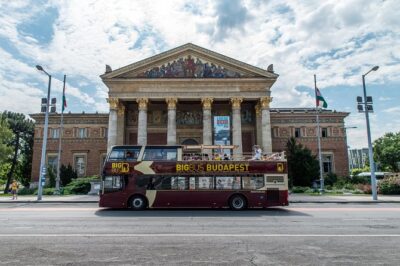 ★ 3.5Big Bus Budapest Hop-On Hop-Off Bus and Walking TourFrom $422,206 reviews
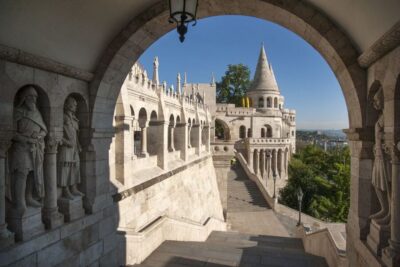 ★ 4.6Buda Castle District Walking TourFrom $142,108 reviews
 ★ 5.0Budapest City Landmarks Walking Tour in 2 HoursFrom $32,048 reviews
 ★ 4.83-Hour Orientation Walking Tour of Buda and PestFrom $411,834 reviews
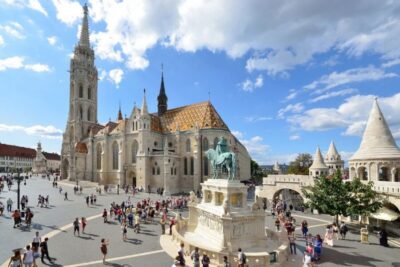 ★ 4.33-Hour Grand City Tour and Castle WalkFrom $491,437 reviews
 ★ 5.0Budapest Historical Sightseeing – Free Walking TourFrom $31,302 reviews
 ★ 5.0Budapest All in One Small Group Walking Tour with Strudel StopFrom $1001,277 reviews
Browse the lists this tour appears in