
Review · WALKING TOURS
Budapest Art Nouveau Walking Tour
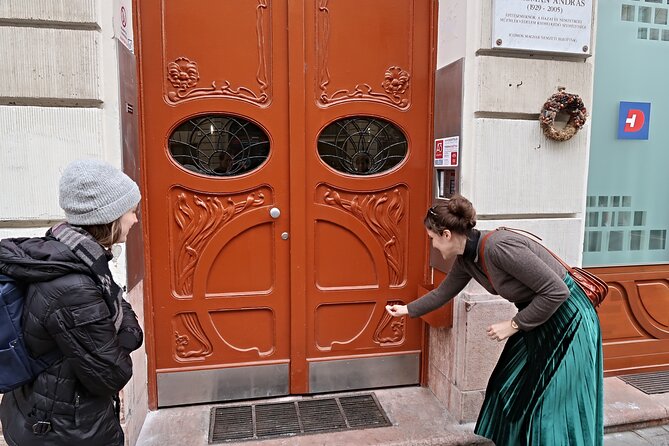
Art Nouveau in Budapest has street-level drama. In about three hours, you’ll follow a historian guide through standout Art Nouveau buildings and learn how the style took over whole neighborhoods.
I especially like how the route mixes grand public architecture with smaller, more curious details. You’ll spend real time at places like Gresham Palace and the Royal Postal Savings Bank, not just quick photo stops.
One thing to consider: the Kazinczy Street Synagogue interior depends on the day, and it can involve an extra cost, plus any public transport you use is paid at your expense.
In This Review
- Key things you’ll notice on this Budapest Art Nouveau walk
- Why Budapest Art Nouveau makes sense on foot
- Price and what you actually get for your money
- Start at Madal Café, then ease into Gresham Palace
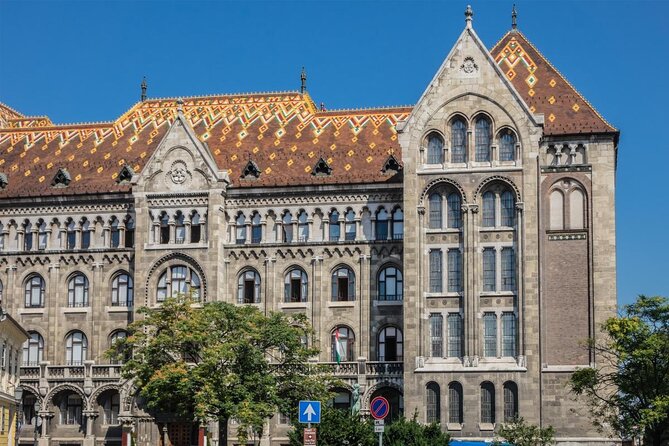
- Postatakarek Bank (Royal Postal Savings Bank) and Ödön Lechner’s signature
- Thonet House and the clue from Zsolnay ceramics in Pécs
- Kazinczy Street Synagogue: exterior, then interior if you catch the timing
- How the guide’s style changes the whole walk
- Walking pace, public transport, and comfortable shoes
- Morning vs afternoon departures, and how to choose
- Tips to get the most from the tiles, facades, and stories
- Who this tour is best for
- Should you book this Budapest Art Nouveau walking tour?
- FAQ
- Is the Budapest Art Nouveau Walking Tour in English?
- How long is the tour?
- How many people are in the group?
- Are the entrances included?
- Do I need to pay for public transport?
- Where do I meet and where does the tour end?
Key things you’ll notice on this Budapest Art Nouveau walk
- Ödön Lechner is front and center, with explanations that connect the buildings to Hungarian Art Nouveau’s signature look
- Free entry at three major stops, so your money goes to the guiding and the experience
- Tiles and ceramic design details, including the influence of Zsolnay porcelain and ceramics from Pécs
- A small group (capped very low), which makes it easier to ask questions and hear the guide
- Two departure options, morning or afternoon, so you can fit it into your plans
- Synagogue exterior and possible interior, with interior access typically except Saturdays
Why Budapest Art Nouveau makes sense on foot
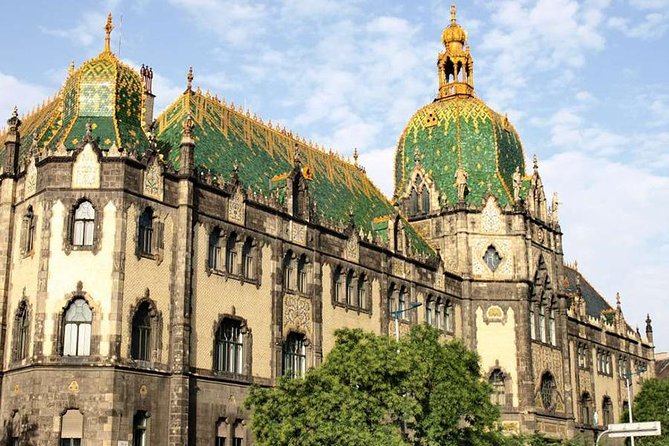
Budapest’s Art Nouveau is not “something you admire from afar.” It’s the kind of architecture you notice when you slow down, look up, and read the building like a story written in stone, tile, and ironwork.
This tour works well because it teaches you how to see. You get the history of the movement, the key design elements, and why certain motifs became such a big deal in Hungary. Instead of just getting dates, you’ll learn what to look for on the next street over when you wander afterward.
The small-group setup also helps. With a max of eight travelers, and a format that’s described as limited to six, you’re not fighting a crowd just to hear your guide.
Price and what you actually get for your money
The price is $126.16 per person for an about 3-hour walk with a historian guide. That can sound like a lot until you factor in what’s included.
Here’s the value angle that matters:
- Your guide is included, and the tour is structured around specific landmark interiors and design features.
- Tickets are free for the first three stops (Gresham Palace, the Royal Postal Savings Bank, and Thonet House).
- You also get a mobile ticket, which saves time when you arrive.
Two small costs to plan for:
- You may use some public transport, and passes are at your expense.
- The Kazinczy Street Synagogue interior visit is not included, and extra cost may apply if it’s open on your tour day.
If you’re the kind of traveler who likes to understand what you’re looking at, this price feels more like a guided “education hour” than a standard sightseeing loop.
Other Budapest walks at a similar pace
- Budapest: Buda Castle Walk with Saint Stephen’s Hall
★ 4.5 · 3,012 reviews - Big Bus Budapest Hop-On Hop-Off Bus and Walking Tour
★ 3.5 · 2,206 reviews - Budapest: Buda Castle District Walking Tour
★ 4.6 · 2,108 reviews - Budapest City Landmarks Walking Tour in 2 Hours
★ 5.0 · 2,048 reviews
Start at Madal Café, then ease into Gresham Palace
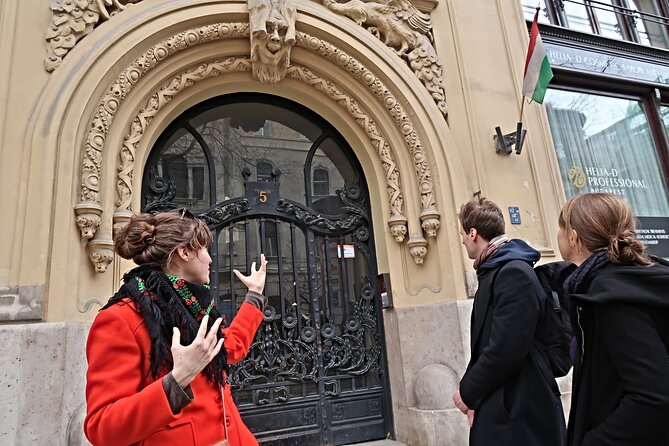
Your tour starts at Madal Café Budapest (Alkotmány u. 4, 1054). It’s near public transportation, but the meetup area can be busy, so give yourself a little buffer to find the group.
From there, you head to Gresham Palace, one of Budapest’s most striking Art Nouveau-era landmarks. You’ll admire the facades and spend time getting oriented inside the building.
Why this stop matters:
- Gresham Palace is described as once an office space and a set of luxury apartments, and today it functions as Budapest’s most luxurious hotel.
- That mix of uses helps explain why Art Nouveau landed in both everyday streets and high-status settings.
A practical note: you’ll be in an interior environment where details matter. So take a moment to look slowly at entrances, transitions between facade and interior, and any decorative elements your guide points out.
Postatakarek Bank (Royal Postal Savings Bank) and Ödön Lechner’s signature
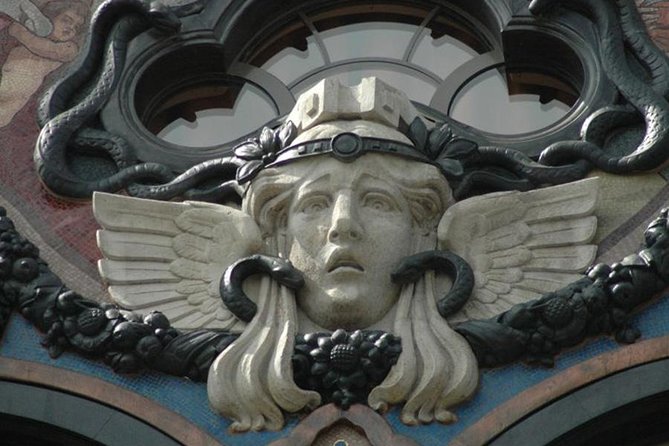
Next comes Postatakarek Bank, also known as the Royal Postal Savings Bank. This is the kind of stop where the exterior alone can’t tell the full story, which is why the tour includes a guided look.
The big draw here is Ödön Lechner, Hungary’s best-known Art Nouveau architect. You’ll see how the architecture uses dramatic forms and ornamentation, and you’ll talk through the design choices that made Lechner famous.
You’re also given a chance to focus on the entrance hall interior. The entrance hall is described as flamboyant, and that fits perfectly with what Art Nouveau tries to do: treat a building like it has personality, not just function.
If you want a fast “how to spot the style” trick, this is where your eyes should sharpen. Look for:
- Decorative building surfaces
- Entry areas designed to impress
- Any motifs that feel repeated or patterned, like the design is meant to be read
Thonet House and the clue from Zsolnay ceramics in Pécs
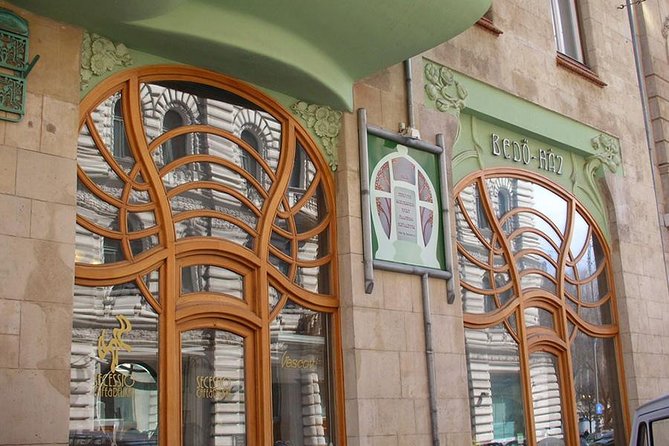
At Thonet House, the tour shifts from landmark-scale architecture to more “spot-it-now” design. You’ll pause to consider how tiles became part of what Hungarian Art Nouveau became famous for.
This is where the story gets extra interesting. You’ll connect the look you’re seeing in Budapest to innovations from the Zsolnay porcelain and ceramics factory in Pécs, a town in southern Hungary.
Why that connection matters for you as a traveler:
- It turns the buildings into a clue about Hungary’s broader creative industries, not just architecture.
- It explains why certain surfaces look the way they do, and why tilework shows up so often in this style.
The tour’s stop time here is about 20 minutes, which is just enough to learn what to look for without getting stuck in one spot. Use that time to focus on facade areas your guide points out, especially tile sections and any decorative paneling.
Even if you’re not an architecture nerd, tilework rewards attention. Up close, it’s one of the easiest ways to spot Art Nouveau’s character because it’s tactile and visual.
Kazinczy Street Synagogue: exterior, then interior if you catch the timing
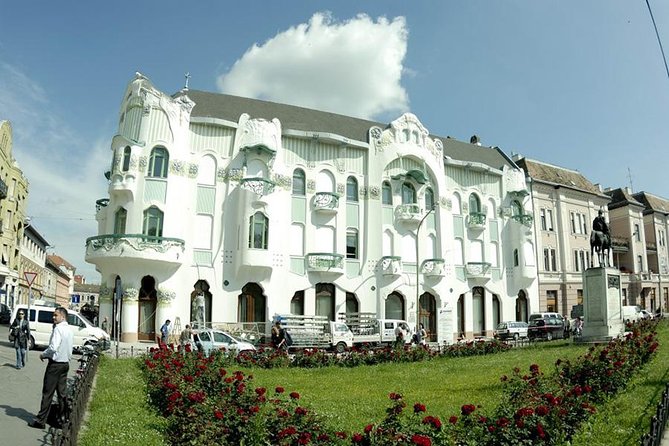
The tour ends at the Kazinczy Street Synagogue (Kazinczy u. 29-31, 1075). Even if you don’t get inside, it’s worth it for the Art Nouveau styling applied to this sacred space.
The interior visit is generally included in spirit, but it comes with two real-world conditions:
- The interior visit is except on Saturdays.
- The interior visit is not included, and there may be an additional cost if the site is open on your tour day.
That means you should treat the synagogue stop as a two-part experience:
1) Enjoy the Art Nouveau exterior details and design cues your guide highlights.
2) If interior access is possible for your day, you’ll see how the style reads inside too.
Plan around that uncertainty if you have strong priorities about synagogue interiors. If you’re traveling on a Saturday, you should expect to mainly see the exterior and any viewable areas that don’t require interior entry.




How the guide’s style changes the whole walk
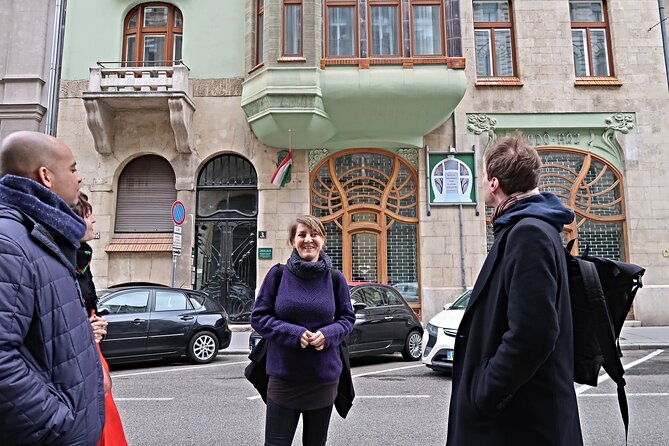
A walking tour can go two ways. You either get a script and a stamp, or you get a guide who actually helps you see the city.
This one leans toward the second. The historian guide is praised for being very good at connecting architecture to real explanations, not just reciting facts. You’ll also be in a group small enough that questions land and answers matter.
One detail that comes up in feedback is that guides are willing to help you find what you want, especially if you decide halfway through that your interests have shifted. In practice, that can mean the guide leans into the style, the architect, or the specific design element you care about most.
Walking pace, public transport, and comfortable shoes
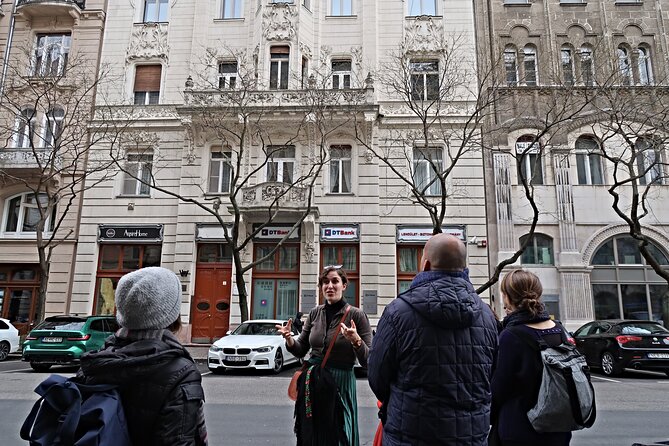
This is a moderate walking experience. Comfortable shoes are not optional if you want to enjoy the buildings instead of counting minutes.
The tour is designed for a smooth flow:
- Several stops are timed around 20 minutes each.
- The synagogue stop runs about 25 minutes.
Also, some use of public transport is possible, but passes are at your expense. That means you can expect a short transit segment rather than a completely continuous walk across town.
If you want to make it effortless:
- Wear shoes you can stand in for a while
- Keep your phone ready for the mobile ticket
- Bring a layer for outdoor waiting time, since meetup areas can get crowded
Morning vs afternoon departures, and how to choose
You can pick a morning or afternoon departure. That choice mostly affects lighting and how the rest of your day falls into place.
Choose morning if:
- You want to get the architecture lesson done early
- You prefer softer light for facade photos and calmer streets for walking
Choose afternoon if:
- Your mornings are busy
- You’d rather pair this with a later neighborhood wander after the guided portion ends
Either way, the stop sequence is the same, and the synagogue timing rule still applies based on the day.
Tips to get the most from the tiles, facades, and stories
Art Nouveau rewards attention. Here are a few ways to make the tour feel like a “masterclass in seeing,” not just sightseeing:
- Slow down at entrances. You’ll be guided toward the places that show the most intention, especially at the Royal Postal Savings Bank entrance hall.
- Watch for tilework. When Hungarian Art Nouveau tiles show up, they often feel like the building’s artwork. Thonet House is the best place on this route to learn what to focus on.
- Learn the architect name while you’re there. Your guide connects the design directly to Ödön Lechner, so don’t let that detail slide. It’s one of the easiest ways to remember what you saw after the tour.
- Don’t over-schedule right before. The meetup can be busy, and you’ll want a calm start.
And if you’re the kind of traveler who likes photos, use your time well: listen first, look second, shoot third. That way you’ll get more than pretty pictures.
Who this tour is best for
This Budapest Art Nouveau walking tour is a strong fit if you:
- Love architecture and want it explained in plain language
- Want a guided walk that mixes famous landmarks with more specific design details
- Prefer a smaller group where your questions do not get lost
- Appreciate links between architecture and material craft, like the Zsolnay ceramics connection
It’s less ideal if you:
- Hate moderate walking
- Need guaranteed interior access to the synagogue regardless of day
- Want a fully free, no-extra-cost itinerary, since public transport passes and possible synagogue interior fees can apply
Should you book this Budapest Art Nouveau walking tour?
If you want to understand Budapest’s Art Nouveau instead of just collecting photos, I’d say book it. The historian guide plus the structured stops at Gresham Palace, Postatakarek Bank, and Thonet House give you a compact, high-impact overview. And the fact that multiple site entries are free for your tour time makes the price feel more grounded.
Book with confidence if your travel style includes:
- Looking closely at details
- Learning how a style works
- Ending with a meaningful architectural stop like the Kazinczy Street Synagogue
If synagogue interior access is a must for you, check your day of travel carefully, because Saturday is a known exception. Otherwise, this is a great way to see Budapest’s Art Nouveau as a coherent story, not a random set of pretty buildings.
FAQ
Is the Budapest Art Nouveau Walking Tour in English?
Yes. The tour is offered in English.
How long is the tour?
The duration is about 3 hours.
How many people are in the group?
It’s a small-group tour. The maximum group size is listed as eight travelers, and the tour is also described as limited to a maximum of six.
Are the entrances included?
Admission is free for Gresham Palace, Postatakarek Bank, and Thonet House. The Kazinczy Street Synagogue interior is not included.
Do I need to pay for public transport?
The tour may use public transport, but transportation passes are at your own expense.
Where do I meet and where does the tour end?
You start at Madal Café Budapest, Alkotmány u. 4, 1054. The tour ends at the Budapest Orthodox Synagogue, Kazinczy u. 29-31, 1075.
Keep Walking Budapest




More Tours in Budapest




More Tour Reviews in Budapest





Reviewed recently around Budapest
- Audio visual multi-sensory chefs journey dinner experience★ 5.0 · 3 reviews
- Tapolca Cave Lake and Tihany/ Balaton private tour from Budapest★ 4.5 · 3 reviews
- SzentEndre-SaintAndrew City Privately Shopping and Picturesque★ 4.5 · 3 reviews
- Sightseeing flight over Budapest★ 5.0 · 3 reviews
- Self Guided Tour In Budapest With 100 Captivating Audio Stories★ 5.0 · 3 reviews
- Private Danube Bend Visegrad and Szentendre Tour With Transport★ 5.0 · 3 reviews
Walking Tours, compared.
 ★ 4.5Buda Castle Walk with Saint Stephen’s HallFrom $293,012 reviews
 ★ 3.5Big Bus Budapest Hop-On Hop-Off Bus and Walking TourFrom $422,206 reviews
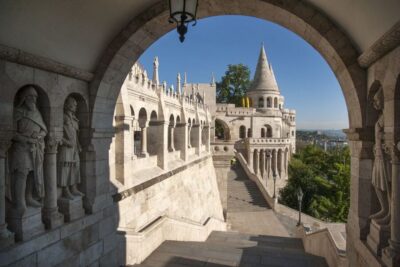 ★ 4.6Buda Castle District Walking TourFrom $142,108 reviews
 ★ 5.0Budapest City Landmarks Walking Tour in 2 HoursFrom $32,048 reviews
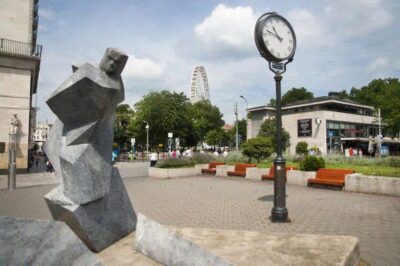 ★ 4.83-Hour Orientation Walking Tour of Buda and PestFrom $411,834 reviews
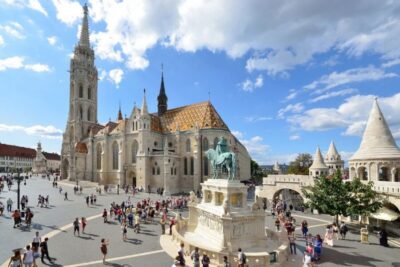 ★ 4.33-Hour Grand City Tour and Castle WalkFrom $491,437 reviews
 ★ 5.0Budapest Historical Sightseeing – Free Walking TourFrom $31,302 reviews
 ★ 5.0Budapest All in One Small Group Walking Tour with Strudel StopFrom $1001,277 reviews
Browse the lists this tour appears in