
Review · WALKING TOURS
Budapest: Private 4-Hour Walking Tour with a Local
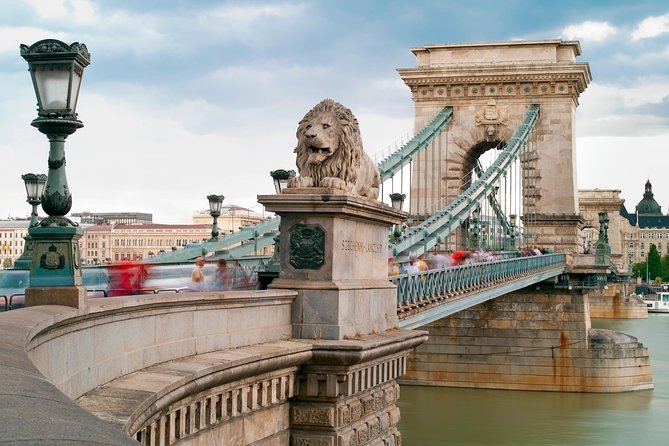
Budapest moves fast, and this tour helps you keep up without feeling rushed. In just 4 hours, you get a private, hotel-meet walking plan that can tilt toward architecture, antiques, or food, while your guide threads in the city’s history.
I especially like the way this format stays flexible. You choose what to emphasize, and the guide adjusts the stops to match you, instead of forcing a one-size route. I also love the mix of landmark power with practical city skills, like riding Budapest’s early subway line and weaving in public bus viewpoints.
One consideration: you’ll see a lot, but entrance fees and food are not included, so your total cost can rise if you stop for ticketed sights or want to eat inside markets and halls.
In This Review
- Key moments worth planning around
- A private 4-hour plan that starts at your hotel
- Heroes’ Square and park strolls for Budapest’s big-picture story
- Széchenyi Bath area and Vajdahunyad Castle: the look you came for
- Riding Budapest’s early subway line and meeting the Opera’s facade
- St Stephen’s Basilica: the big church moment done with context
- Castle Hill, Matthias Church, and Fisherman’s Bastion over Pest
- Gellért Hill, Citadel, and the Statue of Liberty legend
- Art Nouveau Gellért Baths and the Great Market Hall for real city flavor
- How your guide shapes the walk, from antiques to architecture
- Price and value: what $330 per group gets you
- What to wear and how to pace your half day
- Should you book this Budapest private walking tour?
- FAQ
- How long is the Budapest private walking tour?
- Is the tour private, and what group size is it priced for?
- Where does the guide meet us?
- What languages are available for the live guide?
- Are entrance fees included for optional sites?
- Is food and drinks included?
- What should we wear?
Key moments worth planning around
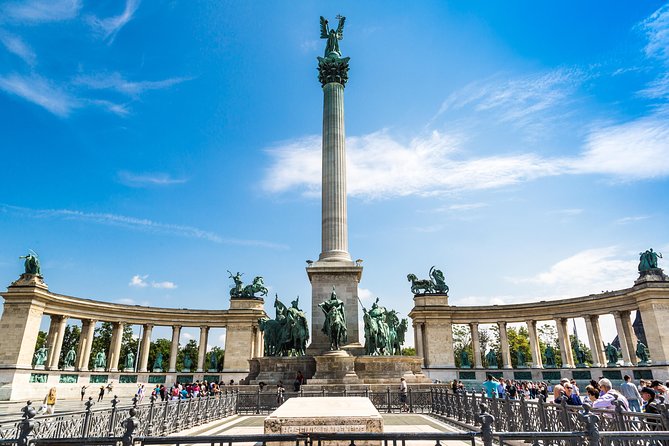
- Heroes’ Square and the city parks for a fast hit of grandeur and local atmosphere
- Széchenyi Bath area and Vajdahunyad Castle for Budapest’s classic postcard look (with optional entry)
- The first subway line in continental Europe plus a stop at State Opera House for serious architecture context
- Castle Hill viewpoints from Matthias Church and Fisherman’s Bastion over Pest
- Gellért Hill by public bus for a panorama, plus the Bishop Gellért and Citadel stories
- Great Market Hall for a real-feeling food and shopping stop, with taste options since drinks and food are not included
A private 4-hour plan that starts at your hotel
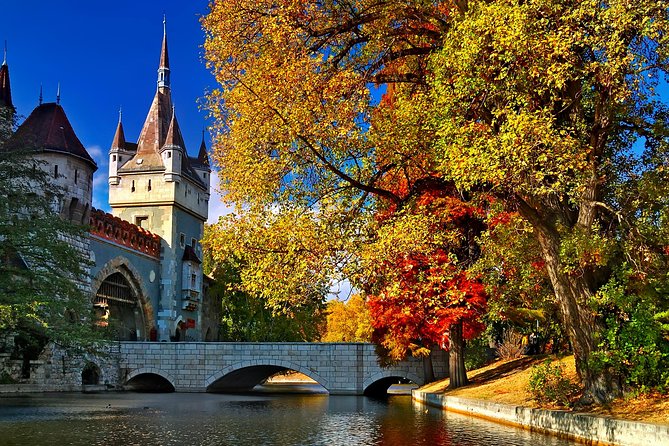
This is built for an easy first day in Budapest. Your guide meets you at your hotel reception area at an agreed time, so you avoid the chaos of figuring out a meeting point while you’re still getting your bearings. The tour is private, and it’s priced per group, with a group size listed as up to 20, which makes it a solid option for small groups of friends who want one shared guide.
You’ll cover more than you could comfortably do alone on a half-day because the guide handles the “how do we get there” part. You’re mostly on foot, but you also use public transit (including the first subway line and a public bus up Gellért Hill), which helps you keep energy for the views rather than logistics.
Also, the guide speaks English, Spanish, French, German, and Italian, which is handy if you’re traveling with mixed-language companions. Guides in the reviews were clearly attentive to group needs, like one guide named Xénia who guided a 12-person women’s group smoothly and answered questions without rushing.
If you hate feeling herded, this format is a good fit: the route can flex around what you care about most.
Heroes’ Square and park strolls for Budapest’s big-picture story
A quick tour should still explain the city’s “why.” That’s what you get with the Heroes’ Square stop. It’s one of those places where Budapest shows off its national ambition and identity, and your guide’s job is to make sense of what you’re looking at rather than just naming it.
If your group likes a little calm after the busy center, the tour also includes time around pleasant parks. Even when you’re moving at a walking-tour pace, park areas slow things down just enough to notice architecture, city rhythms, and how locals use the space.
What I like about placing Heroes’ Square early or mid-tour is how it frames everything that follows. Budapest’s story is all about layers, and your guide helps you connect the dots between monuments, political change, and how people built the city around those ideals.
Possible drawback: if your main goal is only interiors (like churches or opera), remember that a walking tour might focus more on exterior architecture and exterior stories, with optional ticketed stops handled separately.
Other Budapest walks at a similar pace
- Budapest: Buda Castle Walk with Saint Stephen’s Hall
★ 4.5 · 3,012 reviews - Big Bus Budapest Hop-On Hop-Off Bus and Walking Tour
★ 3.5 · 2,206 reviews - Budapest: Buda Castle District Walking Tour
★ 4.6 · 2,108 reviews - Budapest City Landmarks Walking Tour in 2 Hours
★ 5.0 · 2,048 reviews
Széchenyi Bath area and Vajdahunyad Castle: the look you came for
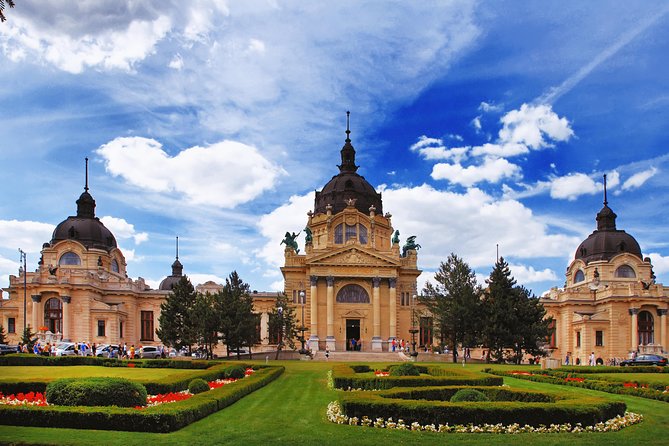
This tour doesn’t treat Budapest’s famous visual style like a drive-by. You can include Széchenyi Bath and Vajdahunyad Castle, two anchors of the City Park area. Even if you don’t go inside, seeing these locations makes it easy to understand why Budapest is famous for mixing grand public spaces with day-to-day life.
Széchenyi Bath is a standout because it’s not just a building, it’s an idea of Budapest leisure. Your guide can point out what makes the setting feel like a social stage, not a sealed-off tourist site. For the practical-minded: entrance fees are not included, so if you want to actually soak, budget separately.
Vajdahunyad Castle adds the fairytale contrast. It’s picturesque, and it gives you an easy photo moment without needing a long detour. It’s also a good spot for your guide to explain how Budapest’s “heritage look” is constructed, because the city often uses architecture to signal identity.
Tip for you: if you want the most value, decide in advance whether you’re there for views only or if you want at least one ticketed moment. With a 4-hour window, one paid entry can crowd out another.
Riding Budapest’s early subway line and meeting the Opera’s facade
One of the smartest moves in this tour is using transit that turns into part of the experience. You’ll travel by the first subway line in continental Europe and stop at the State Opera House to hear facts and stories about the building.
That combination is great for two reasons. First, you learn Budapest’s layout and movement patterns in real time, not on a map. Second, the Opera stop helps you read the city visually, because Opera House architecture in Budapest is the kind of thing you can either notice or understand. With a guide, you’re more likely to do the second.
What I like here is the timing and pacing. A short transit segment can refresh you, then you reconnect with architecture details once you’re back on the street. It’s also the kind of moment that makes a guided tour feel worth it, because you’d probably skip the transit trivia if you were traveling solo.
Consideration: if you’re expecting a deep interior visit to the Opera House, that’s not stated as included. You’ll get interesting stories about the building, but entrance fees to optional sites are not included, so confirm what’s actually ticketed on your chosen route.
St Stephen’s Basilica: the big church moment done with context
You’ll also see St. Stephen’s Basilica, described as the 2nd-largest church in Hungary. Even if you’re not the type who loves religious architecture, your guide can help you understand why this is a centerpiece of Budapest’s skyline and city pride.
The value of this stop is not just the scale, it’s the framing. A guided walk can explain how a landmark like this fits into Hungary’s story and Budapest’s evolution over time. That narrative piece matters because Basilica exteriors can look impressive but generic if you don’t have a reference point.
If you want to add interior time, the tour’s structure suggests optional entry. Since entrance fees aren’t included, you should plan for the cost if you choose to go in.
What I’d watch for: basilica stops can be crowd magnets. The guide can help you move through at a sensible pace, but if your group is very photo-focused, you may need to set expectations early so you don’t lose the rest of the viewpoints.
Castle Hill, Matthias Church, and Fisherman’s Bastion over Pest
Castle Hill is the part of Budapest that often steals the show, and this tour places you near the key sights: the area of Matthias Church and the Fisherman’s Bastion terrace.
Matthias Church is described as 700 years old, which is a big anchor for your guide to explain the long timeline of power, faith, and rebuilding in the city. You get the sense of age immediately, and with a guide’s narration you’re more likely to notice the details that match that age.
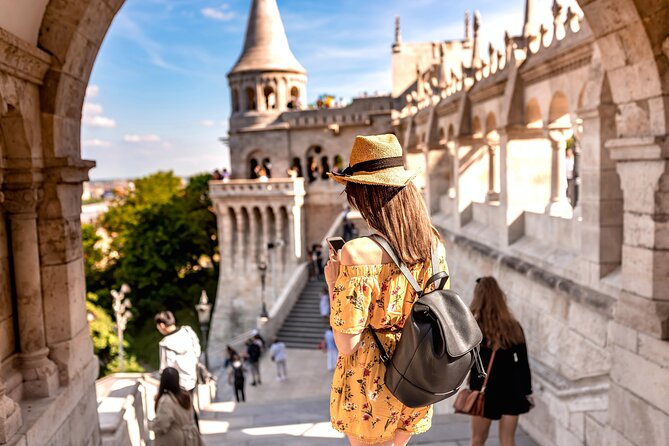
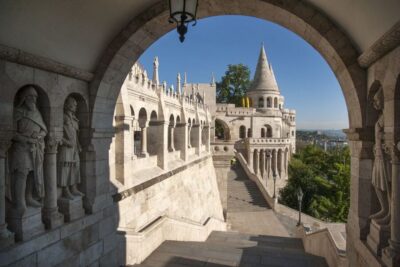
Then comes Fisherman’s Bastion, known for its 7 towers and its terrace view over Pest. This is one of those look-at-the-landscape moments, and a guide makes it easier because they can point out what you’re actually seeing across the river rather than leaving you to guess. The panoramic perspective is the payoff for walking and moving up the hill.
Possible drawback: viewpoints like this can feel packed in peak hours. If your group is sensitive to crowds, try to keep your photo plan simple so you spend more time absorbing and less time waiting.
Private guides we booked in Budapest




Gellért Hill, Citadel, and the Statue of Liberty legend
A great half-day walking tour knows when to switch modes. You’ll take a public bus up Gellért Hill and then walk down afterward, while your guide shares the legend of Bishop Gellért plus the history tied to the Citadel and the Statue of Liberty there.
This is a genuinely useful stop because it turns a viewpoint into a story you’ll remember. Budapest is dramatic from above, but it’s also historically layered, and your guide connects the geography to the people who shaped it.
From the top of Gellért Hill, you get a spectacular panorama of the city. This is where the half-day timing really pays off. If you do the uphill part with a guide, you spend less energy figuring out routes and more time looking.
Then you travel back down, setting you up for the next architectural contrast. After Gellért Hill, the tour heads toward the Gellert baths area, where you can see the Art Nouveau style of the baths.
If you’re traveling with older family members, the bus up helps a lot because you are not doing the entire climb by foot. Just wear shoes that handle uneven streets, since the descent still involves walking.
Art Nouveau Gellért Baths and the Great Market Hall for real city flavor
After Gellért Hill, you’ll see the Gellert baths with its Art Nouveau architecture. This works well because Budapest’s design language changes by district, and this stop shows you that the city isn’t one style. It’s many eras talking to each other across neighborhoods.
Then comes Great Market Hall, described as the largest indoor market in the city. This is one of the best places in a guided walk for optional taste-based exploration, since food and drinks are not included. That means you’re free to treat it like a sampler, not like an included meal.
I like market stops for two reasons. First, they give you souvenirs that feel local rather than mass-produced. Second, they help you understand what people actually buy and eat day to day. Even if you only grab a small bite, your guide’s history and context can make the building itself more meaningful.
Practical note: indoor markets can be warm in colder months, and they can be crowded at busy hours. If you want calm, go at a slower pace and let your guide steer you toward what matches your interests, whether that’s food culture or just architecture and atmosphere.
How your guide shapes the walk, from antiques to architecture

The real advantage of a private tour is control. On this one, you can focus on antique hunting, architecture, or a gastronomic expedition, and your guide tailors the route accordingly.
That tailoring is what makes the tour feel personal instead of scripted. One guide named Anna was described as very kind and made the experience special in a way that feels tied to personality, not just facts. Another guide, Krisltina Teplay, was praised for being passionate about Budapest and for moving efficiently between transit options, even catching the next connection on time across train and bus. Those details matter because they translate into less waiting and more time where you actually want to be.
Xénia was singled out for excellent German and for sharing secret tips that helped people enjoy Budapest later, not just during the tour. That’s the kind of value I recommend you look for in any guided experience: advice that keeps paying off after the 4 hours end.
My advice: tell your guide your priorities in plain terms before you start. If you care most about architecture, say so early. If you’re more interested in food and market browsing, say that too. Flexible tours work best when the guide has a clear target.
Price and value: what $330 per group gets you
The price is listed as $330 per group up to 20 for a 4-hour private walking tour. That pricing structure matters. You are not paying per person for a private guide, at least not based on the data provided. For small groups, that can be a better deal than you’d expect for a guide-driven route that combines walking, subway, and bus travel plus multiple major sights.
Where the value can change is in optional extras. Entrance fees to optional sites are not included, and food and drinks are not included. If you pick multiple ticketed stops, your final spending can climb. If your group is happy with exteriors, views, and market browsing without full meals, you can keep costs more predictable.
Think of this tour as a planning shortcut. You’re paying for a local to connect major landmarks, transit, and history into a coherent half-day. That coherence is hard to replicate solo without spending time researching routes and reading up enough to connect the dots on the spot.
If you’re traveling solo, confirm how the group pricing works in practice when you reserve. The provided info says per group up to 20, but how that plays out when you have fewer people can affect whether it feels like a bargain or a splurge.
What to wear and how to pace your half day
This tour runs 4 hours, and the only specific physical advice given is to wear comfortable shoes. That’s not optional. You’ll be walking across big stretches in Budapest and also using public transit, then walking again after Gellért Hill.
Here’s how to make it feel smooth:
- Wear shoes you can walk in for more than a typical sightseeing loop.
- Plan on a moderate pace and save your biggest photo time for Fisherman’s Bastion and the Gellért panorama.
- If you’re prone to cold, bring a light layer. Market halls and transit spaces can shift temperatures fast.
Because the tour is flexible, you can choose shorter stops when needed and longer attention when the view is worth it. That’s part of why private guides work better than strict group tours.
Should you book this Budapest private walking tour?
Book it if you want a smart, high-density half-day with a guide who can steer you toward what matters, whether that’s architecture, food culture, antiques, or simply getting Budapest’s history to make sense as you walk. The strongest reason to choose it is the combination of major sights plus practical city transit, like the first subway line and the bus up Gellért Hill.
Skip or swap it if you only want deep museum-style ticket visits, since entrance fees are not included and a walking tour may focus more on exterior sights and stories than long interior time. Also, if your group has very different interests, a private format helps, but you’ll still need to communicate priorities early so the route stays satisfying for everyone.
If you like your sightseeing with context and you value efficiency, this is a good bet for first-time visitors who want to feel like they’re learning the city, not just checking boxes.
FAQ
How long is the Budapest private walking tour?
It’s a 4-hour experience.
Is the tour private, and what group size is it priced for?
It’s a private group tour and the price is listed as per group up to 20.
Where does the guide meet us?
Pickup is included, and your personal guide meets you in your hotel’s reception area at an agreed time.
What languages are available for the live guide?
The live tour guide is available in English, Spanish, French, German, and Italian.
Are entrance fees included for optional sites?
No. Entrance fees to optional sites are not included.
Is food and drinks included?
No. Food and drinks are not included.
What should we wear?
Comfortable shoes are recommended.
Keep Walking Budapest





More Tours in Budapest




More Tour Reviews in Budapest





Reviewed recently around Budapest
- Audio visual multi-sensory chefs journey dinner experience★ 5.0 · 3 reviews
- Tapolca Cave Lake and Tihany/ Balaton private tour from Budapest★ 4.5 · 3 reviews
- SzentEndre-SaintAndrew City Privately Shopping and Picturesque★ 4.5 · 3 reviews
- Sightseeing flight over Budapest★ 5.0 · 3 reviews
- Self Guided Tour In Budapest With 100 Captivating Audio Stories★ 5.0 · 3 reviews
- Private Danube Bend Visegrad and Szentendre Tour With Transport★ 5.0 · 3 reviews
Walking Tours, compared.
 ★ 4.5Buda Castle Walk with Saint Stephen’s HallFrom $293,012 reviews
 ★ 3.5Big Bus Budapest Hop-On Hop-Off Bus and Walking TourFrom $422,206 reviews
 ★ 4.6Buda Castle District Walking TourFrom $142,108 reviews
 ★ 5.0Budapest City Landmarks Walking Tour in 2 HoursFrom $32,048 reviews
 ★ 4.83-Hour Orientation Walking Tour of Buda and PestFrom $411,834 reviews
 ★ 4.33-Hour Grand City Tour and Castle WalkFrom $491,437 reviews
 ★ 5.0Budapest Historical Sightseeing – Free Walking TourFrom $31,302 reviews
 ★ 5.0Budapest All in One Small Group Walking Tour with Strudel StopFrom $1001,277 reviews
Browse the lists this tour appears in