
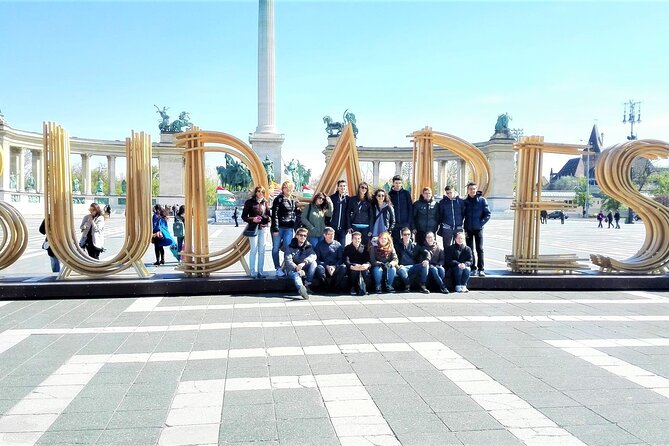
Review · WALKING TOURS
Original Budapest Walking Tour
Budapest clicks into focus fast. This walking tour strings together the big icons of the city with a guide who adds real stories you would not pick up on your own. I especially liked how the price is wildly low while still covering the city’s top sights in about 3 hours 30 minutes.
One thing to consider: the route can feel heavier on one side of the river than the schedule suggests, so if you have a tight plan to visit Buda Castle the same afternoon, give yourself a time buffer.
In This Review
- Key highlights you should care about
- Starting at St. Stephen’s Basilica and what your morning looks like
- Price and value: why $2.88 feels almost suspicious
- How the 3.5-hour route gives you a map you can use
- Hungarian Parliament Building: start with power and symbolism
- Széchenyi Chain Bridge: the Danube connection you will remember
- Buda Castle area: from medieval roots to Baroque drama
- Matthias Church: the church stop that explains the castle vibe
- St. Stephen’s Basilica again, but with fresh context
- Fisherman’s Bastion: postcard views with a real sense of place
- Liberty Square: banks, embassies, and a little Art Nouveau contrast
- Ferris Wheel of Budapest: a panoramic stop for first-day clarity
- Andrássy Avenue: world heritage streets and architectural storytelling
- Shoes on the Danube Bank: one of the heaviest stops on the route
- Margaret Island: city calm, quick nature breaks, and summer possibilities
- Gellért Hill and Széchenyi Square: the views and the names
- Guide style, pacing, and why the group size matters
- What to do before and after the tour for maximum payoff
- Should you book this Budapest walking tour?
Key highlights you should care about

- Ultra-low price for a long sightseeing walk
- Free entry listed for every main stop, so you are not paying for admissions during the tour
- Guide storytelling that brings history to life, with room for questions
- Danube variety, from grand views to the Shoes memorial’s quiet weight
- Icon mix across both sides, Parliament, bridges, Buda Castle area, and major Pest streets
Starting at St. Stephen’s Basilica and what your morning looks like
You meet at St. Stephen’s Basilica at Szent István tér 1, starting at 11:00 am. It is a strong place to begin because you immediately get your bearings in central Budapest, and the basilica area is a natural launch pad for heading toward the Danube and the viewpoints people remember.
The tour is listed in English, and you get a mobile ticket, which keeps everything simple once you are on your phone. Expect a steady walking pace for roughly 3 hours 30 minutes. The time matters here because this is not a quick photo loop. It is meant to help you connect landmarks with the city’s story so you can actually navigate after.
Price and value: why $2.88 feels almost suspicious
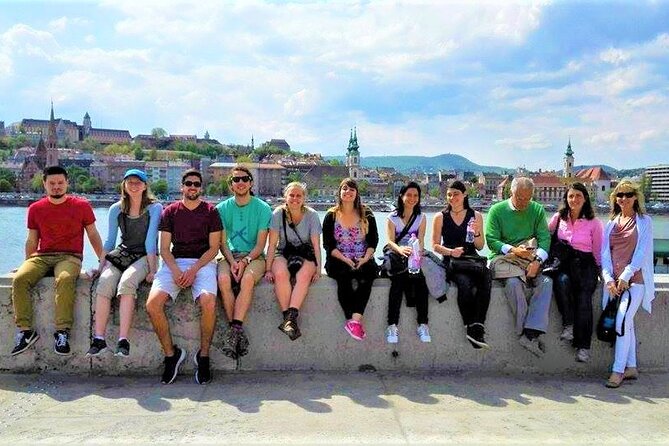
At $2.88 per person, this tour is priced like a coffee rather than a guided experience. Even better, the stops are shown with admission ticket free. That means you are not generally being asked for entry fees as you move between major exterior sights, viewpoints, and public monuments.
Now, a fair warning: “free admission” does not mean you will never spend money in the area. It just means you are not buying a ticket specifically to stand there, look around, and learn what matters. If you later choose to enter places on your own, that is on you. The tour’s value is the way it helps you decide what is worth your time.
Also, you should know the group cap is up to 100 travelers. In some departures, the group can be smaller, which makes it easier to hear the guide. Either way, the format is built for walking and listening.
Other Budapest walks at a similar pace
- Budapest: Buda Castle Walk with Saint Stephen’s Hall
★ 4.5 · 3,012 reviews - Big Bus Budapest Hop-On Hop-Off Bus and Walking Tour
★ 3.5 · 2,206 reviews - Budapest: Buda Castle District Walking Tour
★ 4.6 · 2,108 reviews - Budapest City Landmarks Walking Tour in 2 Hours
★ 5.0 · 2,048 reviews
How the 3.5-hour route gives you a map you can use
This tour is designed to give you a “now I get it” first day in Budapest. The route links landmark-to-landmark, from the National Assembly area by the Danube to the heights of Buda. You also hit major Pest highlights like Andrássy Avenue and central memorials.
On paper, the schedule covers both sides of the river, including Buda Castle and the Fisherman’s Bastion area, plus Pest’s grand architecture and the Shoes memorial. In practice, you might find your time allocation can shift, depending on pace and conditions. My advice if you are short on time: treat this tour as your setup, not as your final stop. Build in extra time for the one or two places you most want to revisit after the walk.
Hungarian Parliament Building: start with power and symbolism
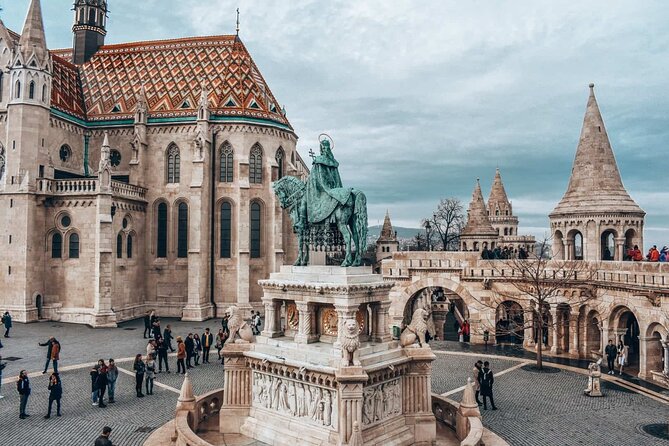
The Hungarian Parliament Building is the kind of landmark that looks different depending on where you stand. Your stop here gives you context for what the building represents, beyond the famous photos. It is the seat of the National Assembly of Hungary and a major tourist destination, so it also functions as a reference point for understanding Budapest’s political center and Danube-front prominence.
What I like about starting with Parliament is how it frames the river. Budapest is often described as two cities, and the Parliament area makes that duality feel obvious right away. If you pay attention to the surrounding sightlines, you will later understand why bridges and viewpoints matter so much in the city layout.
Széchenyi Chain Bridge: the Danube connection you will remember
Next comes the Széchenyi Chain Bridge, the iconic link between Buda and Pest. This is the bridge people come for, and walking across is more than a “must do.” It physically shows you how the city sits along the Danube, with Buda’s hilltop feel on one side and Pest’s wide streets on the other.
Your guide’s job here is to turn the bridge into a story you can repeat later. When you know why the bridge is such a symbol, it stops being just a landmark and becomes a mental anchor. And because this is a walking tour, you are not stuck staring at a single angle. You get movement, which helps you later spot where you are on your own.
Buda Castle area: from medieval roots to Baroque drama
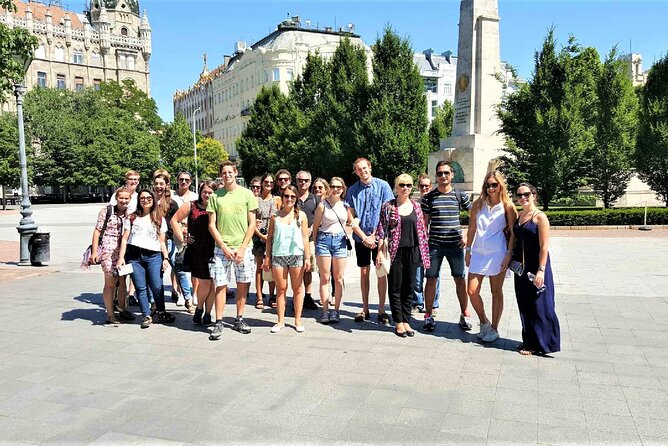
The Buda Castle stop is a big one. The site traces back to 1265, but the massive Baroque palace you see dominating today was built between 1749 and 1769. That time span is the point. Budapest does not grow in one clean era. It stacks layers.
You will also learn that the complex was historically referred to as either the Royal Palace or the Royal Castle. Those labels matter because they explain how the space functioned, not just how it looks now. If you like architecture and you enjoy seeing history as a sequence of changes, this is one of the stops that makes the city feel real.
A practical note: this area can be visually overwhelming fast. If you try to absorb everything at once, you miss the best connections. Let the guide point out what to notice, then pick one detail to remember, like a façade element or a viewpoint direction.



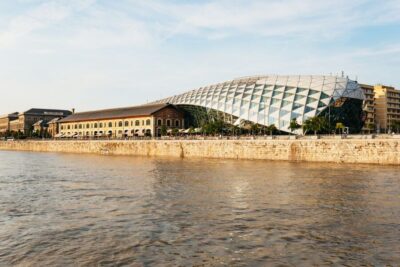

Matthias Church: the church stop that explains the castle vibe
Matthias Church, also known as the Church of the Assumption of the Buda Castle, is located in Holy Trinity Square in front of the Fisherman’s Bastion area. It is a Roman Catholic church, and it is also known as the Coronation Church of Buda.
This stop works because it fits the mood of the castle district. Even if you do not go inside, the church’s placement and the way it connects to the surrounding complex helps you understand why this part of Budapest is treated like a ceremonial heart. If you are the type who likes a “why this place matters” explanation, you will appreciate this one.
St. Stephen’s Basilica again, but with fresh context
St. Stephen’s Basilica is listed both as a major stop and the meeting point area. Named for Stephen, the first King of Hungary, it holds his right hand in a reliquary. The basilica’s scale is also notable historically, since it was once the sixth largest church building in Hungary.
What I like here, as a lesson for your own city exploring, is how it connects national identity to a single building. You can see the basilica as a landmark, but the guide’s context helps you see it as a symbol.
Also, if you are thinking about what to do after the tour, starting here gives you an obvious return point. Even if the route ends elsewhere, the basilica area helps you feel less lost in the first hours.
Fisherman’s Bastion: postcard views with a real sense of place
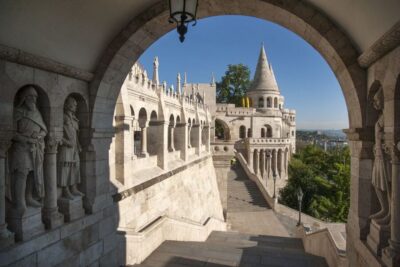
Fisherman’s Bastion, or Halászbástya, is one of Budapest’s best-known monuments, mainly because of the panorama. It is near Buda Castle, and it features Neo-Romanesque lookout terraces that give you those sweeping city views.
The key benefit of including this stop in a guided walk is timing and attention. From here, Budapest starts to look like a map: the river, the bridge connections, and the mix of historic and newer urban areas. You do not just look out, you understand what you are seeing.
One consideration: viewpoints make some people slow down, take extra photos, and then eat into time. If you want to keep the tour rhythm, enjoy the view, then step aside to let the group keep moving.
Liberty Square: banks, embassies, and a little Art Nouveau contrast
Liberty Square (Szabadság tér) gives you a different kind of Budapest. The square is a mix of business and residential buildings, and key institutions frame it. The United States Embassy in Hungary and the Hungarian National Bank headquarters sit on the west side, with historicist style architecture. Some buildings also show Art Nouveau influences.
This stop is useful because it breaks the pattern of “big tourist landmark after big tourist landmark.” You get a feel for how central Budapest operates day to day. Even a brief pause here helps you understand why the city feels both monumental and functional.
Ferris Wheel of Budapest: a panoramic stop for first-day clarity
The Ferris Wheel of Budapest is presented as the “Eye of Budapest,” with views that can stretch across the city. The description highlights that you can see sights such as Buda Castle and temple towers of Pest, plus views toward Danubian ships.
This is a great addition if you want a quick bird’s-eye reference early in your trip. Walking gives you one kind of orientation. A panoramic view gives you another, and it often makes your later self-guided exploring easier.
If you are the kind of traveler who hates spending extra time on rides, treat this as a payoff for doing the walking day. It is a way to connect the dots from ground level to skyline.
Andrássy Avenue: world heritage streets and architectural storytelling
Andrássy Avenue links Erzsébet Square with Városliget and dates back to 1872. The boulevard is lined with Neo-Renaissance mansions and townhouses featuring fine facades and interiors, and it was recognized as a World Heritage Site in 2002.
This stop is about more than pretty buildings. It helps you understand the “style eras” Budapest wears on its face. It also gives you a sense of scale, because the avenue has an urban grandness that feels different from the tighter feel of older castle streets.
If you like to walk cities, this is one of the parts that feels rewarding even if you only have a short time. The architecture gives you enough detail to keep your eyes busy between viewpoints.
Shoes on the Danube Bank: one of the heaviest stops on the route
Then you reach Shoes on the Danube Bank, a memorial to people who lost their lives during Arrow Cross rule. It is made of 60 pairs of shoes cast in iron and anchored to the ground. The creator is film director Can Togay and sculptor Gyula Pauer.
This is the kind of stop that changes the mood. It is not about sightseeing beauty. It is about remembering, and your guide’s role is crucial here, because the memorial makes the impact quickly but the story behind it gives it meaning.
I recommend slowing down here, even if you feel awkward. Look carefully, then take the information in. It is exactly the sort of place where a guide’s context turns a static monument into something you carry with you.
Margaret Island: city calm, quick nature breaks, and summer possibilities
Margaret Island sits in the Danube River between Buda and Pest, and it is described as a tranquil getaway inside the city. The area includes pedestrian promenades through parkland, an art nouveau water tower, ruins of a 13th-century Dominican convent, a musical fountain, and even a small zoo.
It also has jogging tracks, thermal spas, and swimming pools. In summertime, pop-up bars and restaurants and live music can appear.
In a walking tour format, you might not see every attraction in full detail, but what matters is that you get a sense that Budapest is not only monuments. It has green space inside the river. That balance is a big reason the city feels livable, not just photogenic.
Gellért Hill and Széchenyi Square: the views and the names
Gellért Hill overlooks the Danube and rises to 235 m. It is located in the 1st and 11th districts, and it is named after Saint Gerard, who was thrown to death from the hill.
This stop works because it connects the Danube views to a human story. Once you know the naming origin, the hill feels less like a random viewpoint and more like a landmark tied to memory.
Next is Széchenyi Square, where you can find a statue of Széchenyi that has been in place since 1880, long before Roosevelt’s presence. Even if you do not recognize every detail right away, the long timeline helps you see how much of Budapest’s identity is rooted in places that have been there for generations.
Guide style, pacing, and why the group size matters
The guide is the real engine of this experience. The reviews you shared highlight guides like Robert, Istvan, and Janet, and they get praised for being friendly, punctual, and strong on facts and storytelling. They also handle questions well, and that matters because Budapest is a city where the right context turns confusion into understanding.
Pacing is another theme. When the group is smaller, it tends to be easier to follow along and not feel like you are hearing the guide from a distance. The tour has a maximum of 100 travelers, but in practice some departures can be much smaller, which makes the whole thing feel more personal without turning it into a private tour.
As you listen, pay attention to trivia questions mentioned in the feedback. They are not just for fun. They are a quick way to test what you remembered, and then you absorb the next story more confidently.
What to do before and after the tour for maximum payoff
Because this is a walking-heavy, sightseeing-focused tour, your best strategy is to treat it as your first-day orientation. After the tour, you will know which views you actually want to revisit, and which streets feel worth your time to explore slowly.
A few practical points grounded in the tour info:
- Bring your phone, since you have a mobile ticket.
- Plan around the tour start time at 11:00 am.
- Since bottled water is not included, decide how you will handle hydration.
- The tour requires good weather, so if it looks unreliable, keep your plans flexible.
Also, because the route may feel skewed to one side of the river on some days, I like to recommend not scheduling your most time-consuming attraction right after the walk. Leave room to return to the one place you liked most once you fully see where it sits on your internal map.
Should you book this Budapest walking tour?
Book it if you want a value-heavy first look at Budapest that connects major sights across the Danube, while your guide adds stories that make the city click. The $2.88 price is hard to beat, and the fact that admission is listed as free for the stops keeps the experience approachable.
Skip it or adjust expectations if you are planning a very tight schedule to do Buda Castle area visiting immediately after, because the time distribution can vary day to day. If you are flexible and you like learning while walking, this is a smart way to get your bearings fast, and then choose your own next steps with confidence.
If you tell me your travel dates and whether you prefer more Buda views or more Pest streets, I can suggest a simple after-tour plan so you do not lose momentum.
Keep Walking Budapest





More Tours in Budapest





More Tour Reviews in Budapest





Reviewed recently around Budapest
- Audio visual multi-sensory chefs journey dinner experience★ 5.0 · 3 reviews
- Tapolca Cave Lake and Tihany/ Balaton private tour from Budapest★ 4.5 · 3 reviews
- SzentEndre-SaintAndrew City Privately Shopping and Picturesque★ 4.5 · 3 reviews
- Sightseeing flight over Budapest★ 5.0 · 3 reviews
- Self Guided Tour In Budapest With 100 Captivating Audio Stories★ 5.0 · 3 reviews
- Private Danube Bend Visegrad and Szentendre Tour With Transport★ 5.0 · 3 reviews
Walking Tours, compared.
 ★ 4.5Buda Castle Walk with Saint Stephen’s HallFrom $293,012 reviews
 ★ 3.5Big Bus Budapest Hop-On Hop-Off Bus and Walking TourFrom $422,206 reviews
 ★ 4.6Buda Castle District Walking TourFrom $142,108 reviews
 ★ 5.0Budapest City Landmarks Walking Tour in 2 HoursFrom $32,048 reviews
 ★ 4.83-Hour Orientation Walking Tour of Buda and PestFrom $411,834 reviews
 ★ 4.33-Hour Grand City Tour and Castle WalkFrom $491,437 reviews
 ★ 5.0Budapest Historical Sightseeing – Free Walking TourFrom $31,302 reviews
 ★ 5.0Budapest All in One Small Group Walking Tour with Strudel StopFrom $1001,277 reviews
Browse the lists this tour appears in