
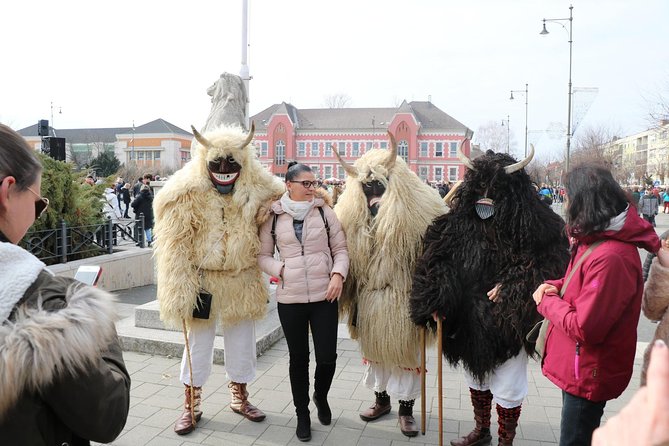
Review · CONCERTS, OPERA AND FOLK SHOWS
BUSÓJÁRÁS Unesco Heritage Folklore Carnival in Mohács
Busójárás in Mohács is one of Hungary’s most unforgettable seasonal rituals. The festival, tied to the UNESCO Intangible Cultural Heritage list, mixes old legend, scary masks, and folk protection rites as winter fades and spring arrives. You get the real point of the day, without burning time on packed trams, thanks to private transportation from Budapest.
What I like most is that you see the celebration in full, not as a quick photo stop. The focus stays on what the Busó people wear and do, like woolly sheepskin cloaks, carved masks, and the loud rattlers and clapper bells that power the chaos. I also like that the day is built around flexibility, so you are not stuck racing a fixed schedule.
The main drawback to plan for is that a day trip can mean a long stretch of time, and food can be pricey once you are in festival mode.
In This Review
- Key highlights worth knowing
- Why Busójárás in Mohács feels different than a typical carnival
- Getting there from Budapest: private ride beats the public transport grind
- Mohácsi Busójárás legend: the story behind the masks
- What you will see: woolly cloaks, carved faces, and loud ritual tools
- Your day timeline: how the transfer and the carnival stop fit together
- Practical tips for walking, parking reality, and food prices
- Price and value: what $250 really covers
- Who this tour suits best (and who might want another plan)
- Should you book this Busójárás tour from Budapest?
- FAQ
- How long is the Busójárás tour?
- Where does the tour take place?
- What is the price per person?
- Is pickup from my hotel included?
- Is this tour private?
- What language is the tour offered in?
- Is transportation included?
- Is there a fixed schedule during the day?
- Is admission included or free?
- Can I cancel for a full refund?
- Are mobile tickets provided?
- Are service animals allowed?
Key highlights worth knowing
- UNESCO Intangible Cultural Heritage tradition with roots in old end-of-winter rites
- Private vehicle from Budapest to skip the stress of public transport
- Flexible timing, since the plan is built around a transfer, not a rigid timetable
- Busó costumes you can actually recognize, from carved masks to hay-filled trousers and rattlers
- Legend of the Turks gives the masks a clear story, not just spooky looks
Why Busójárás in Mohács feels different than a typical carnival
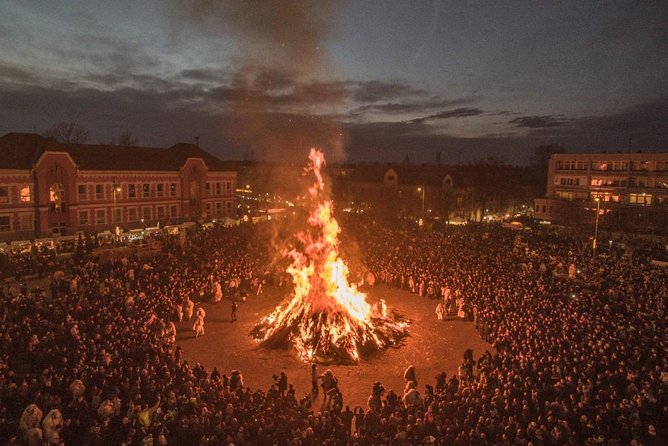
Busójárás is not just about costumes for a night out. It is a whole communal idea: the old season is done, and the next one should come with protection, good luck, and fertility. That matters, because the day does not feel like a staged parade you can breeze past. You feel the role of the masked figures in the rhythm of the crowd, and you understand why people treat this as a major folklore event.
Mohács is also a rare kind of setting for a carnival. You get an end-of-winter festival that has been described as over 300 years old, where the traditions are explained through local legend. One version centers on scaring away the Turks, which gives the masked behavior a story you can follow as the day unfolds. Even if you do not love history lectures, the legend makes the whole thing click.
And yes, it has carnival parallels around the world. The Busó festivities have similarities to well-known carnivals like Rio and Venice, and they also echo the idea of disguise and ritual performance found in other indigenous traditions. The difference is that here the outfits and objects are not random. They are recognizable, and they are tied to specific roles during the celebration.
Getting there from Budapest: private ride beats the public transport grind
This is one of the most practical parts of the experience: you avoid the usual “how do we get there” headache. Instead of riding packed public transport, you go in a private, air-conditioned vehicle. That is a big deal for a day trip, because Busójárás is popular and festival energy can mess with timing.
The tour is door-to-door. You are picked up at your hotel and dropped off back there after the carnival stop. For me, that is real value because Budapest has its own busy travel rhythm, and you do not want to waste it on transfers. When your transportation is handled, you can focus on the event itself.
The schedule also stays flexible. Since it is run as a private transfer rather than a strict sequence of timed activities, the day can be shaped around what is happening at the festival. That flexibility is important for a cultural event, because crowd flow and parade timing are not always something you can predict like a museum entry slot.
Evenings with music, a few more we sat through
- Budapest: Dinner Cruise with Live Music and Folk Dance Show
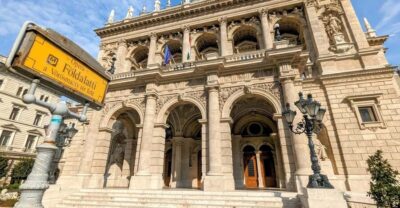
★ 4.4 · 2,090 reviews - Budapest: Opera House Guided Tour
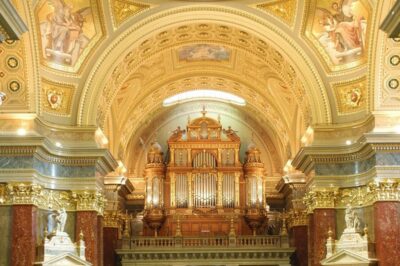
★ 4.6 · 1,533 reviews - Budapest: Classical Music Concerts in St Stephen’s Basilica
★ 4.7 · 1,479 reviews - Budapest: Organ Concert in St. Stephen’s Basilica
1,299 reviews
Mohácsi Busójárás legend: the story behind the masks
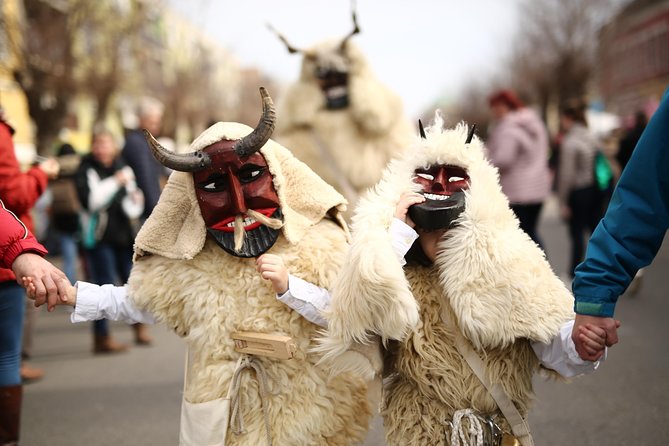
To understand Busójárás, start with the legend. The tradition is explained as beginning at the time of the second battle of Mohács, when local people sought refuge from Turkish occupation. The story says they fled to the so-called Mohács Island, which is across the Danube, and then returned in disguise.
Then comes the key image. They dressed in scary masks and disguise, crossed back, and frightened the Turks. The legend says the masked figures raided the town and caused panic, so the story emphasizes fear, protection, and driving danger away. It also frames the masked Busó as both trickster and defender, which is why you will often see them performing in ways that feel playful, loud, and intimidating all at once.
This matters for you because it changes how you read what you see. If you know the legend, the costumes feel intentional, not just theatrical. The festival becomes a living story: the community reenacts its protective power as winter ends and spring begins.
What you will see: woolly cloaks, carved faces, and loud ritual tools
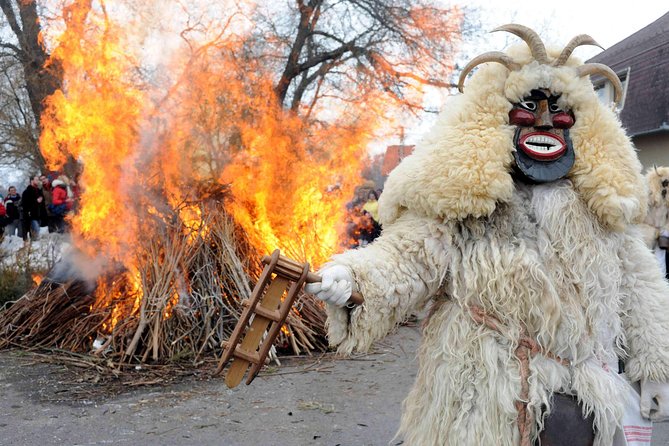
When Busó people appear, you can spot the classic pieces right away. Adults wear woolly sheepskin cloaks and carved masks, and the outfits are practical in the way folk costumes usually are: warm, durable, and visually striking in motion. Some versions include trousers filled with hay and decorated stockings, so the costume has weight and shape, not just a flat look.
Then there are the objects that make the festival audible as much as visible. The most recognizable are the big loud rattlers and clapper bells. These are the tools that push the event forward. They help create the feeling that the Busó are not spectators. They are active participants in the ritual, using sound to mark presence and disrupt the usual world.
The festival is also described as one of the biggest carnivals in Hungary and a major folklore event. That is your cue not to treat it like a small street show. Even if your time there is limited, you will want to plan for getting caught in the crowd flow, hearing the bells and rattlers, and seeing repeated costume moments.
What I think you will enjoy most is how the festival elements have remained largely unchanged. The core costume pieces and the ritual paraphernalia are part of the continuity. That continuity is why UNESCO named it and why people care enough to keep it going year after year.
Your day timeline: how the transfer and the carnival stop fit together
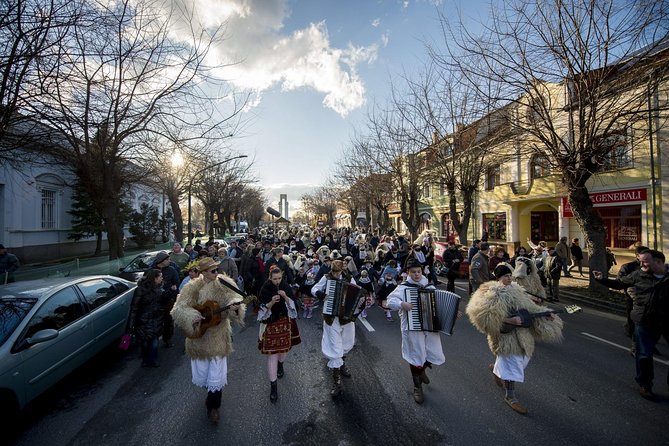
The tour runs for about 10 hours, which makes it a true day event rather than a quick stop. You are being transported to Mohács, spending time at the carnival, then returning to Budapest. The exact timing can flex because this is a private transfer, so you are not trapped in a tight timetable.
At the festival stop, expect a solid chunk of time to watch and move with the action. In at least one experience of this event, the carnival experience was about two hours for the main festival portion. I would treat that as a useful planning target, but also remember you may spend extra time just getting oriented, watching costume groups, and finding spots where you can see without constantly turning your head.
Here is a practical way to think about the day. If you want photos, you need movement time. If you want to feel the atmosphere, you need patience time. Either way, give yourself margin for getting to and from the central festival area.
Practical tips for walking, parking reality, and food prices
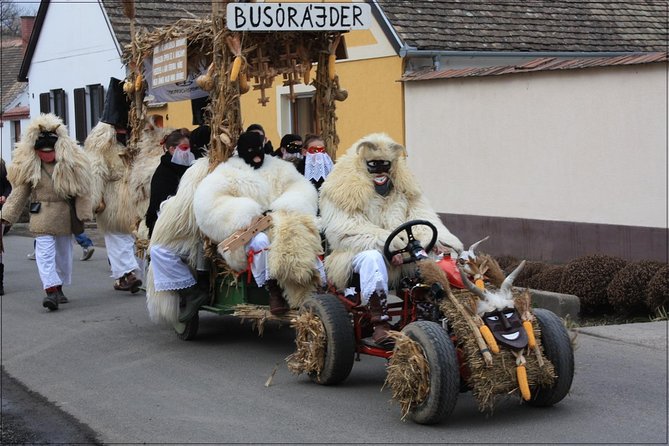
Even with private transport, you should expect some walking once you are close to the festival area. In one experience, parking was about 2 kilometers from the center, which meant a hike into the downtown festival zone. You might not park yourself, but the same city geography and crowd patterns can influence how far you walk from where the vehicle stops. I would plan on comfortable shoes and layers, because festival days tend to turn into standing and walking.
Food is another consideration. One thing that comes up clearly is that eating in festival mode can be expensive. That does not mean you will go hungry, but it does mean you should decide early how you want to handle meals. If you are the type who likes to snack while you wander, it helps to budget more than you would on a normal day.
On the positive side, the carnival vibe can include a lot of pálinka. In the experiences connected with this event, that spirit shows up as part of the welcome and party mood. I would treat alcohol as optional and pace yourself. The whole point is to enjoy the ritual atmosphere, not to rush your day with a sugar and alcohol crash.
History told a different way, elsewhere in Budapest
Price and value: what $250 really covers
At $250 per person, this is not a budget throwaway. But value here is less about the sticker price and more about what you buy with it.
You are paying for:
- Door-to-door pickup and drop-off at your hotel
- A private, air-conditioned vehicle for the journey
- A format where the timing stays flexible instead of lockstep with a fixed schedule
- Admission is noted as ticket free
That last point matters. Admission being free means you are not stacking extra fees on top once you arrive. The price still includes transportation and the time cost of making the trip smoother.
Is it worth it? If you hate public transport and you want the least-stress path to a single big cultural event, yes, it usually makes sense. If you are traveling as a large group and can split costs on your own transport, the value equation may shift. But for most people doing this from Budapest, the private ride plus a clear one-stop festival focus is a straightforward way to buy convenience.
Who this tour suits best (and who might want another plan)
This tour fits you best if you want:
- A heritage-focused festival that has a UNESCO connection and real ritual elements
- A comfortable trip from Budapest without public transport juggling
- A day built around a single main event, not a rushed multi-stop checklist
It can also be a great pick if you enjoy traditional costumes, folk storytelling, and event atmospheres where people actually participate, not just pose.
You might want another plan if you are someone who hates crowds or if you only want a quick look. Busójárás is meant to be experienced, and the main fun is in the movement through the crowd and watching the Busó people and their tools up close. Also, because the day is about 10 hours, it is not ideal if you are trying to keep your sightseeing window short.
Should you book this Busójárás tour from Budapest?
If your goal is to see Busójárás the way it is meant to be seen, I think booking makes sense. The biggest reasons are practical and real: the private, air-conditioned pickup, the hotel-to-hotel convenience, and the flexible timing that lets the festival set the rhythm.
You also get a strong cultural payoff. You are not just viewing masks, you are learning why they exist, through the legend of the Turks and the end-of-winter theme. And when you get to the carnival, the details are not vague. You can recognize the sheepskin cloaks, carved masks, hay-filled costume elements, and the big rattlers and clapper bells that shape the energy.
My only pushback is about planning your expectations for time and on-site costs. Bring comfortable shoes, budget for pricier festival food if you need it, and give yourself enough time to enjoy without rushing.
FAQ
How long is the Busójárás tour?
It is approximately 10 hours.
Where does the tour take place?
The main stop is Mohácsi Busójárás in Mohács, Hungary, starting from Budapest with hotel pickup.
What is the price per person?
The price is $250.00 per person.
Is pickup from my hotel included?
Yes. It is a door-to-door tour, with pickup and drop-off at your hotel.
Is this tour private?
Yes. It is a private tour/activity, and only your group participates.
What language is the tour offered in?
The tour is offered in English.
Is transportation included?
Yes. Private transportation is included, and the vehicle is air-conditioned.
Is there a fixed schedule during the day?
There is no fixed schedule. The private transfer means the timing is flexible.
Is admission included or free?
The admission ticket is free.
Can I cancel for a full refund?
Yes, there is free cancellation. You can cancel up to 24 hours in advance for a full refund.
Are mobile tickets provided?
Yes. A mobile ticket is included.
Are service animals allowed?
Yes, service animals are allowed.
The Long Version of Budapest


More Tour Reviews in Budapest




Music Nights in Budapest



Reviewed recently around Budapest
- Audio visual multi-sensory chefs journey dinner experience★ 5.0 · 3 reviews
- Tapolca Cave Lake and Tihany/ Balaton private tour from Budapest★ 4.5 · 3 reviews
- SzentEndre-SaintAndrew City Privately Shopping and Picturesque★ 4.5 · 3 reviews
- Sightseeing flight over Budapest★ 5.0 · 3 reviews
- Self Guided Tour In Budapest With 100 Captivating Audio Stories★ 5.0 · 3 reviews
- Private Danube Bend Visegrad and Szentendre Tour With Transport★ 5.0 · 3 reviews
Concerts, Opera and Folk Shows, compared.
 ★ 4.4Dinner Cruise with Live Music and Folk Dance ShowFrom $932,090 reviews
 ★ 4.6Opera House Guided TourFrom $331,533 reviews
 ★ 4.7Classical Music Concerts in St Stephen’s BasilicaFrom $701,479 reviews
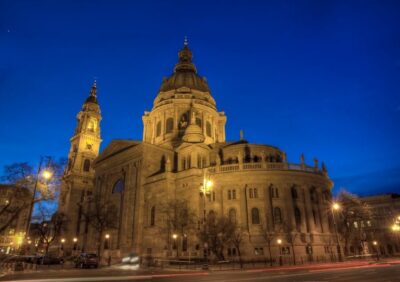 Organ Concert in St. Stephen’s Basilica1,299 reviews
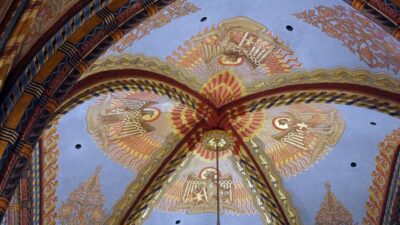 ★ 4.6Classical Music Concerts in Matthias ChurchFrom $70792 reviews
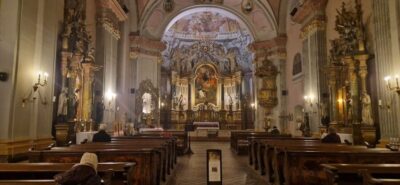 ★ 4.6Classical Music Concert in St. Michael’s ChurchFrom $53682 reviews
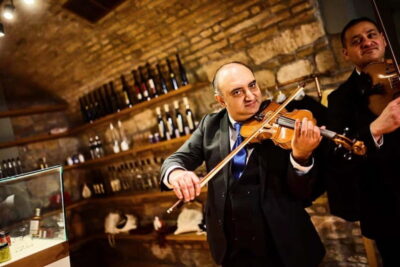 ★ 4.5Hungarian Folk Dance & Concert with Dinner OptionFrom $22543 reviews
 ★ 4.04 Course Dinner Cruise with Operetta, Folk Show and Welcome DrinkFrom $109272 reviews
Browse the lists this tour appears in