
Review · COMMUNIST ERA AND COLD WAR TOURS
Lives of Hungarians Under Communist and Capitalist system
Communism in Budapest is not something you read, it is something you walk through. I love the guide-led personal perspective, and I also like how the tour links everyday life under Communism to what you still see in the city today. You’ll get a clear, human-scale view of the era, not just big political dates.
One thing to plan for is the tour is priced like a small booking fee, and the experience is meant to be supported by tips at the end. If you prefer fixed-price tours with no tipping expectation, this may feel slightly different than what you’re used to.
In This Review
- Key highlights you should care about
- What you’re really getting in 90 minutes near the Danube
- Start at the Budapest Eye, then connect the dots fast
- Fröccsterasz: travel rules, documents, and Communist-era transport
- St. Stephen’s Basilica: religion under Communism, family by family
- District V inner-city walk: housing, healthcare, education, and media
- Szabadsag ter: monuments, the F4 bunker emergency exit, and secrets in plain view
- Hungarian Parliament area and the 1956 uprising, with bullet-scarred evidence
- Price, tips, and whether it’s good value
- Timing, meeting points, and how to make it easy on yourself
- Who this Communism walk suits best
- Should you book this tour?
- FAQ
- How long is the tour?
- Where do I meet the guide?
- What time does the tour start?
- Where does the tour end?
- What places are included during the walk?
- What does the price include, and do I need to tip?
- Can I get a full refund if I cancel?
Key highlights you should care about
- A 15-minute interactive Communism lesson at the start, focused on Hungarian and Central European context
- Fröccsterasz stop with travel documents and transportation stories, including Communist-era car types
- St. Stephen’s Basilica discussion on religion under Communism, including how experiences could vary by family
- District V inner-city walk covering housing, healthcare, education, media culture, propaganda, and sport
- Szabadsag ter includes the F4 military nuclear bunker emergency exit plus guarded-building history and guerrilla street art
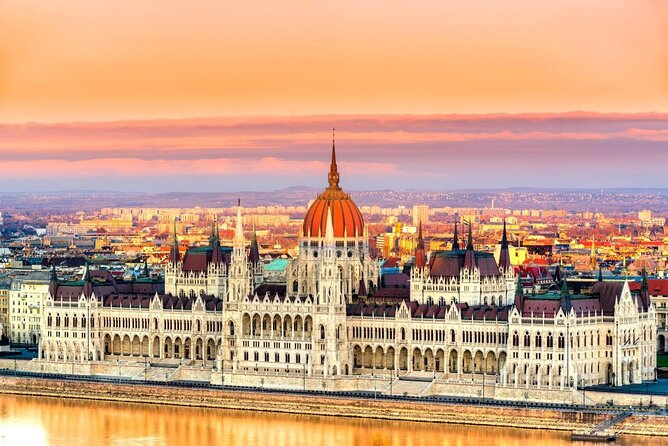
- Hungarian Parliament area brings the 1956 uprising into focus, including bullet-scarred facades you can see
What you’re really getting in 90 minutes near the Danube
This is a short, focused walk built for comprehension, not a long lecture. In about 1 hour 30 minutes, you move through key inner-city areas and tie each stop to how ordinary Hungarians lived, traveled, believed, studied, and tried to get by.
The biggest value is the human viewpoint. Instead of treating Communism as a distant political theory, the guide’s approach makes it feel like a set of daily constraints and choices, with different effects depending on where people lived and who they were.
You also get post-Communism perspective woven in, so you can see why certain memories stick. The tour even touches on why some people have nostalgia for Communism, which is useful because it keeps the conversation from turning into one-note judging.
Start at the Budapest Eye, then connect the dots fast
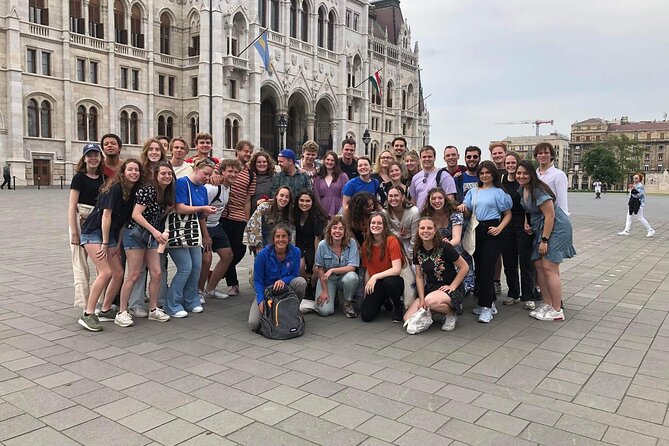
Your tour meets at the Ferris Wheel area, near Budapest Eye, and the guide meets you about 20 meters from there. This is a smart place to start because you’re already oriented, and you can shift from scenic Budapest to historical Budapest without feeling lost.
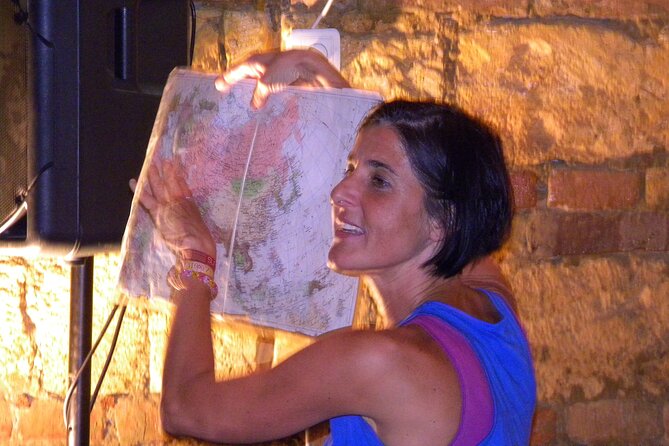
Before you even walk far, there’s a 15-minute interactive history lesson about Hungarian and Central European Communism. That matters because Communism in Hungary did not develop in a vacuum, and knowing the regional logic makes the later stories easier to follow.
This part is also a good warm-up if you’re bringing teens or students. One of the best ways to learn history is to hear it explained in plain language and anchored to places you can point at, and that’s exactly what this opening sets up.
More of the socialist decades, told on foot
- Budapest: Communist History Tour with House of Terror Option
★ 4.8 · 182 reviews - Communism in Hungary with a Historian
★ 5.0 · 70 reviews - Budapest: 3-Hour Walking Tour About Communism (Small Group)
★ 4.7 · 70 reviews - Lives of Hungarians Under Communist and Capitalist system
★ 5.0 · 59 reviews
Fröccsterasz: travel rules, documents, and Communist-era transport
Next you head to Fröccsterasz, and this is where the tour starts feeling practical. You hear stories about incoming and outgoing travel from Hungary, and you get to see basic travel documents that help explain why movement could be restricted and complicated.
You also learn about Communist car types and other means of transportation. Even if you already know a little about the era, transportation tells a clear story: what people could access, what was scarce, and how state systems shaped daily routines.
One small consideration: because this stop includes document-based details, it can reward your attention. If you’re the type who likes to snap photos nonstop and listen only in the background, this stop will pass by faster than you might want.
St. Stephen’s Basilica: religion under Communism, family by family
At St. Stephen’s Basilica, the conversation shifts from everyday logistics to beliefs and institutions. You’ll hear about the difficulties different denominations faced during Communism, and you’ll also learn that religious life was not one-size-fits-all.
That family-by-family angle is important. History can be tempted to simplify people into groups, but the tour framework makes room for personal reality, like how a household’s choices could shape what someone experienced.
If your travel style includes architecture and real-life context, this stop is a good match. A major church in a central location can feel purely “touristy” if you only look at the building, but here it becomes a starting point for understanding how faith interacted with political power.
District V inner-city walk: housing, healthcare, education, and media
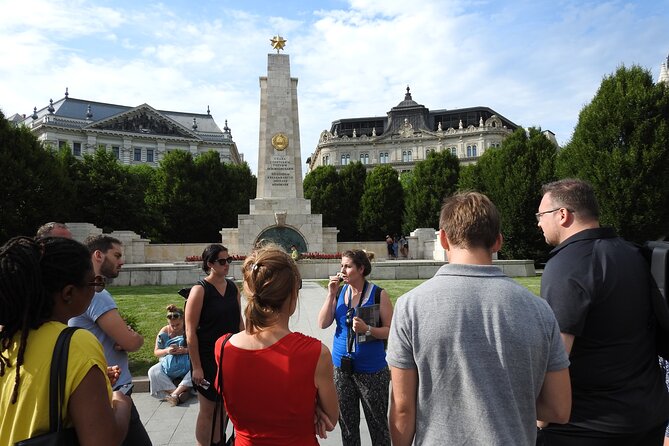
In District V, you move into the everyday machinery of society. This stop covers housing, healthcare, education, media culture and propaganda, and even sport and the Olympic Games during Communism and after.
What I like about this approach is that it treats propaganda as part of daily life, not just something you see on posters. You learn how state messaging could shape what people believed was normal, acceptable, or even possible.
The housing and education parts are especially useful for visitors because they make Communism tangible. Instead of debating ideology at a distance, you’re shown how systems affected where people lived, what they studied, who had access to information, and what public life looked like.
You also hear why some people still feel nostalgia. That section is worth your attention because it adds nuance. Nostalgia can be emotional, and the tour frames it in a way that helps you understand the roots, not just dismiss the feeling.
Szabadsag ter: monuments, the F4 bunker emergency exit, and secrets in plain view
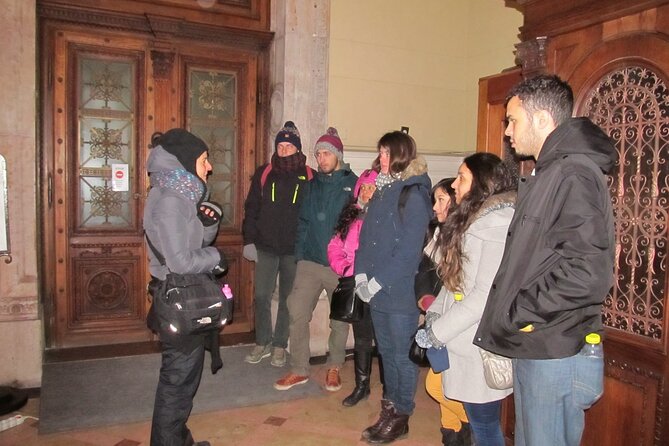
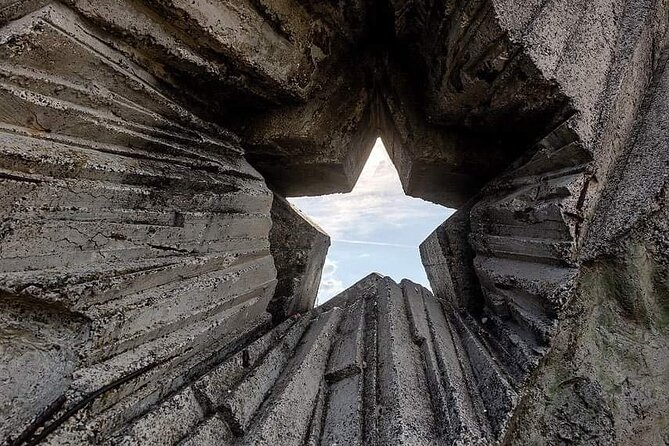
Szabadsag ter is where the city starts showing its contradictions. You’ll see controversial monuments, pieces of urban art, and an emergency exit connected to an F4 military nuclear bunker.
Even if you know the general idea of Cold War fear, this is the kind of stop that makes the threat feel physical. You’re not just hearing about planning for catastrophe, you’re seeing how it was embedded into Budapest’s urban fabric.
The tour also points out a heavily guarded building linked to shelter for a prominent Hungarian person over 15 years. You don’t get to treat it as a generic “important place.” You learn why it was guarded and how that protection shaped the stories tied to it.
A plus here is variety. You’re moving through memorial and street-level layers in the same area, which helps explain how Budapest remembers, argues, and repurposes memory.

Hungarian Parliament area and the 1956 uprising, with bullet-scarred evidence
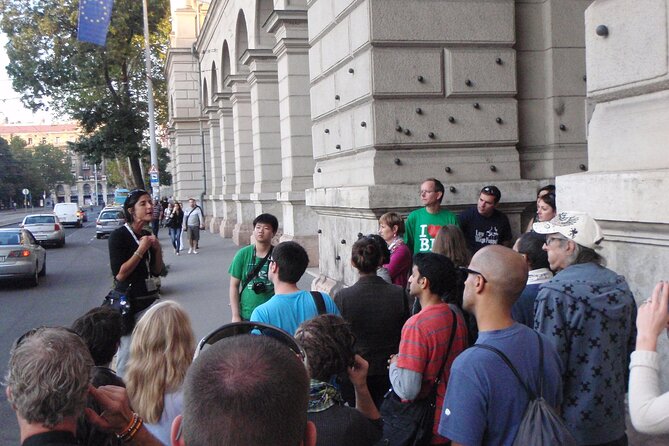
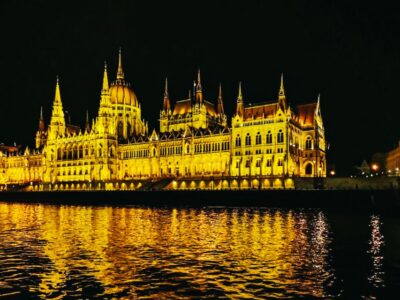
The final stop brings you to the Hungarian Parliament Building area. The focus is the 1956 uprising in depth, including what happened, why it matters, and how it was experienced by people who were children at the time.
One of the most striking moments is learning to spot bullet holes on the facade of some nearby residential buildings. Seeing physical evidence like that changes the tone of the story instantly. It’s no longer a timeline, it becomes a warning etched into stone and plaster.
This is also a good ending point because the guide can tie the uprising to the larger theme of control, resistance, and the long effects that outlast regime changes. When you finish near major landmarks and transit, you’re ready to keep exploring Budapest right away.
Price, tips, and whether it’s good value
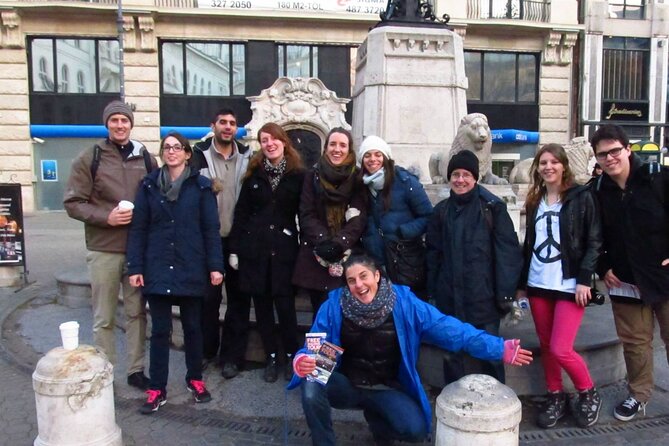
The cost you pay up front is listed at $4.65 per person, and that payment is described as a booking fee. Importantly, the fee is directed toward administration and does not contribute to the guide’s earnings.
So the real “pricing” experience is tip-supported. The tour encourages tipping at the end, and most people tip around €10 per person, with some tipping more. Guides rely on these donations, so if you go, treat the tip as part of the honest cost of getting a lived-experience explanation.
Is it good value? For me, yes, because you’re paying for:
- a small-group walk capped at 20 people
- a licensed guide with a structured set of stops
- a story-driven format that turns history into street-level context
If you’re comparing costs, consider what you’d spend on a traditional guided tour that includes similar thematic coverage, plus museum tickets you might otherwise need. Here, the stops list admission ticket free across the itinerary, and you’re spending your time in the city itself.
Timing, meeting points, and how to make it easy on yourself
This tour starts at 3:30 pm in Budapest. Meeting point is the Ferris Wheel of Budapest, at Erzsébet tér, 1051 Hungary, and the guide meets you about 20 meters from Budapest Eye. That proximity is helpful, especially if you’re still adjusting to Budapest streets.
The tour ends near the Hungarian Parliament Building at Kossuth Lajos tér 1-3, 1055 Hungary, and the conclusion is about 50 meters from the M2 red metro line. Translation for your planning: you can wrap up and hop on transit quickly instead of spending extra time figuring out your next move.
It’s also designed for convenience. You get a mobile ticket, and it runs near public transportation. Service animals are allowed, and most people can participate.
Who this Communism walk suits best
This works especially well if you like learning history through real places and practical context. If you enjoy hearing how systems touched daily life, you’ll probably appreciate the way the tour connects travel, housing, education, and media to what happened politically.
It also fits a family pattern that many adults struggle to find in history tours. One of the strongest takeaways from a top review is that it helped a teen audience see Communism beyond schoolbook summaries. If you’re traveling with students, you may find this style of conversation lands better than reading alone.
If you dislike topics tied to conflict and political memory, you might find the 1956 focus heavy. The tour is not sensational, but it does include bullet holes and nuclear-bunker context.
Should you book this tour?
Book it if you want a short Budapest walk that explains Communism through everyday life, then connects it to what you still see around you. The format is tight, the stops are purposeful, and the ending near the Parliament makes the 1956 story feel grounded.
Consider skipping if you want a strictly fixed-price experience, or if you really do not want to participate in a tip-based model. Also skip if you prefer history that avoids uncomfortable evidence.
If you do book, bring a curious mindset and plan your tip at the same time you plan your meeting spot. With that simple prep, this is one of the most meaningful ways to understand Hungary’s past in the middle of the city you came to see.
FAQ
How long is the tour?
The tour is listed as approximately 1 hour 30 minutes.
Where do I meet the guide?
You start at the Ferris Wheel of Budapest (Budapest Eye) at Erzsébet tér, 1051 Hungary. The guide will meet you about 20 meters from Budapest Eye.
What time does the tour start?
The start time is 3:30 pm.
Where does the tour end?
The tour ends at the Hungarian Parliament Building area at Kossuth Lajos tér 1-3, 1055 Hungary, and the conclusion is about 50 meters from the M2 red metro line.
What places are included during the walk?
The tour covers stops at the Ferris Wheel of Budapest (Budapest Eye), Fröccsterasz, St. Stephen’s Basilica, District V (inner city), Szabadsag ter, and the Hungarian Parliament Building area.
What does the price include, and do I need to tip?
The price you pay is a booking fee. Admission tickets for the stops are listed as free. Tips are not included, and tipping is encouraged at the end (most people tip around €10 per person).
Can I get a full refund if I cancel?
Yes. You can cancel up to 24 hours in advance for a full refund.
More Tour Reviews in Budapest



More From the Socialist Years



Reviewed recently around Budapest
- Audio visual multi-sensory chefs journey dinner experience★ 5.0 · 3 reviews
- Tapolca Cave Lake and Tihany/ Balaton private tour from Budapest★ 4.5 · 3 reviews
- SzentEndre-SaintAndrew City Privately Shopping and Picturesque★ 4.5 · 3 reviews
- Sightseeing flight over Budapest★ 5.0 · 3 reviews
- Self Guided Tour In Budapest With 100 Captivating Audio Stories★ 5.0 · 3 reviews
- Private Danube Bend Visegrad and Szentendre Tour With Transport★ 5.0 · 3 reviews
Communist Era and Cold War Tours, compared.
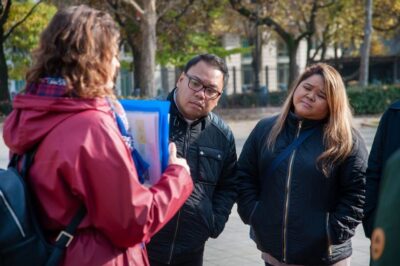 ★ 4.8Communist History Tour with House of Terror OptionFrom $58182 reviews
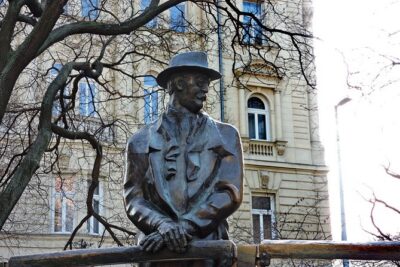 ★ 5.0Communism in Hungary with a HistorianFrom $5970 reviews
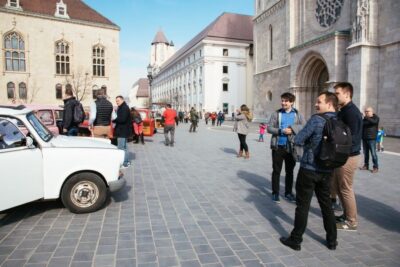 ★ 4.73-Hour Walking Tour About Communism (Small Group)From $5770 reviews
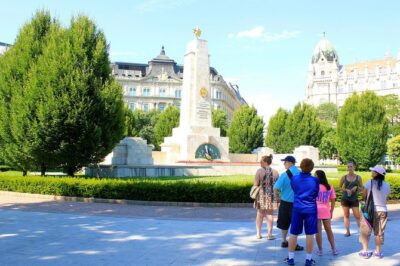 ★ 4.5Budapest Hammer & Sickle Communist Times TourFrom $7968 reviews
 ★ 5.0Guided Tour with Admission in Memento ParkFrom $3048 reviews
 ★ 4.5Memento Park TicketFrom $1046 reviews
 ★ 5.0Memento Park Visit with Private Trabant TransferFrom $30544 reviews
 ★ 4.5Memento Park Entrance TicketFrom $1138 reviews
Browse the lists this tour appears in