
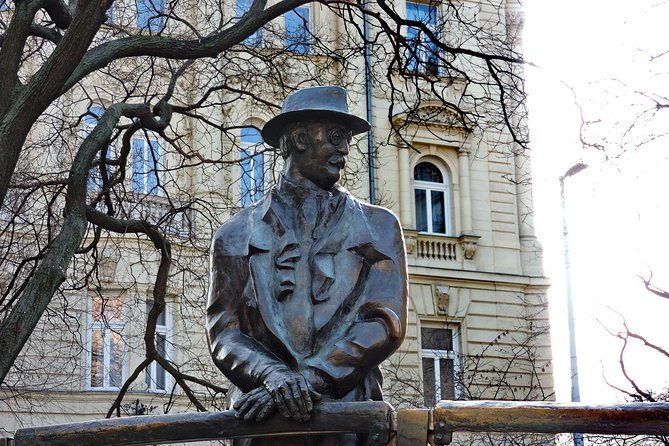
Review · COMMUNIST ERA AND COLD WAR TOURS
Communism in Hungary with a Historian
Budapest hides a communist story in plain sight. This 3-hour walking tour is interesting because it ties politics to real streets, monuments, and buildings, and I love the small group and the coffee included finale. One drawback to plan for, it is mostly an outdoor stroll, so dress for weather.
I also like how the guide does not treat Communism like an abstract topic. You get family stories and pointed moments like the events behind Bloody Thursday, connected to what you are seeing around you. The tone stays balanced, with room for your questions as you go.
Logistics are straightforward: you meet at Elizabeth Square, you ride the metro with tickets included, and you usually end at Bambi Café on the Buda side near Margaret Bridge. If it is cold or wet, the ending can shift to the Pest side closer to the tour start area.
In This Review
- Key highlights you will feel on the street
- Why Budapest’s Communist-era locations hit harder than museum photos
- Meeting at Erzsébet tér, then using the metro like locals
- Elizabeth Square, the former Stalin square, and what renaming tells you
- St. Stephen’s Basilica exterior view, and religion under Communism
- Szabadság tér’s memorials, statues, embassies, and a bunker edge
- Hungarian Parliament and the 1956 revolution, Bloody Thursday from Kossuth square
- The communist-style cafe finale: coffee, conversation, and a different kind of history
- What I think is the best value here, and what to watch for
- Weather, walking pace, and how to plan your afternoon
- Who should book this Communism with a Historian tour
- Should you book this tour?
- FAQ
- What is the tour duration?
- When does the tour start?
- Where do I meet for the tour?
- Where does the tour usually end?
- Is the tour in English?
- How big is the group?
- Does the tour include metro tickets and coffee?
- Are entrances included for the Basilica and the Parliament?
- What is the cancellation policy?
Key highlights you will feel on the street
- Intimate cap of 10 travelers, so you are not lost in a crowd
- Metro ride with tickets included, saving you time and hassle
- Elizabeth Square and Szabadság tér, where Communist-era remnants sit in your path
- St. Stephen’s Basilica and Parliament outside only, so you can focus on context over rushing inside
- Communist-style cafe with coffee included, a proper end point instead of a random drop-off
- Historian-style storytelling, with guides like Judit, Raymond, Gábor, Gabriel, and Greg sharing personal angles
Why Budapest’s Communist-era locations hit harder than museum photos
Communism in Hungary is not only something you read about. It is something you can see, because the city carries it in the layout, the monuments, and the way public space was used.
On this tour, you spend time at key squares and landmark edges rather than bouncing through a checklist. That matters because you start noticing the patterns: who wanted to be seen, what got renamed, what got preserved, and what people learned to live around.
I also like that the guides bring it down to real life. In the stories you might hear, you get nationalization, forced work conditions, and the constant sense that your life could be watched or questioned. For example, Raymond shared how his family’s business was nationalized and how his grandfather ended up doing forced labor inside a factory he technically owned.
Meeting at Erzsébet tér, then using the metro like locals
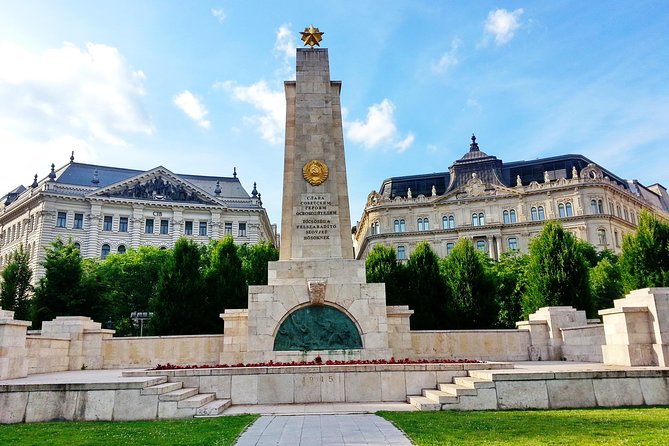
You start in a central, easy-to-find place by the Kempinski Hotel Corvinus Budapest, at Erzsébet tér 7-8. The tour starts at 2:00 pm, which is a smart middle-of-the-day slot for many schedules.
From there, the plan uses the metro. Metro tickets are included, which is a big practical win. You spend less time hunting transit and more time on the actual sites that make the story work.
You will also have a mobile ticket, so you can keep it simple on your phone. And since the tour is near public transportation, you can usually slot it in without a complicated pre-plan.
One small consideration: because this is a walking tour, your best comfort trick is basic, good shoes. You are not doing marathon distances, but you are moving between Buda and Pest-adjacent points.
More of the socialist decades, told on foot
- Budapest: Communist History Tour with House of Terror Option
★ 4.8 · 182 reviews - Communism in Hungary with a Historian
★ 5.0 · 70 reviews - Budapest: 3-Hour Walking Tour About Communism (Small Group)
★ 4.7 · 70 reviews - Lives of Hungarians Under Communist and Capitalist system
★ 5.0 · 59 reviews
Elizabeth Square, the former Stalin square, and what renaming tells you
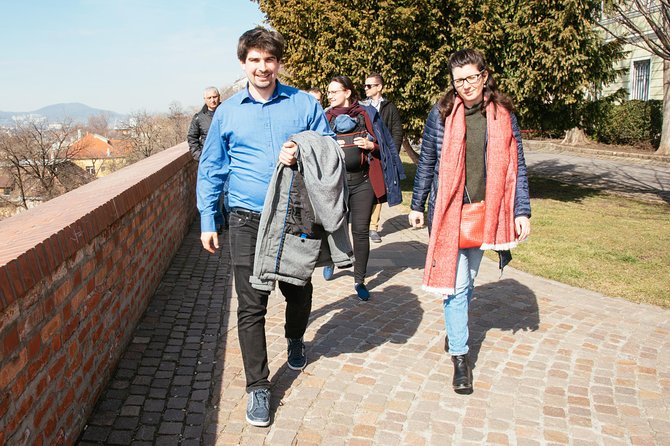
Stop 1 is Elizabeth Square. It is known for its former identity as Stalin square, and your guide uses it as a starting lens for everything that follows.
You get 15 minutes here, and the value is how the guide connects monuments to motives. It is not only about the statue or the stone. It is about the message the state wanted people to read every day, and how those messages were meant to shape behavior.
You might also get into how power uses symbolism, then changes symbolism later, while the physical space stays. That is one reason this stop works. You are standing in the city, watching history play out on a street-level scale.
St. Stephen’s Basilica exterior view, and religion under Communism
Next is St. Stephen’s Basilica (Szent István Bazilika). You do not go inside on this route. Admission is not included, and you mainly see the church from the outside while your guide talks about churches and religious life during Communism.
This is a useful choice. If you want the story to connect to daily life, you need context about what religious institutions faced and how families experienced it. The tour uses family stories here, which keeps it from becoming a lecture.
If you were hoping for a full inside visit, plan for that separately. Since admission is not included, you would need your own tickets if you want the interior. The upside is you get to keep moving at a steady pace, without getting stuck waiting for timed entry.
Szabadság tér’s memorials, statues, embassies, and a bunker edge
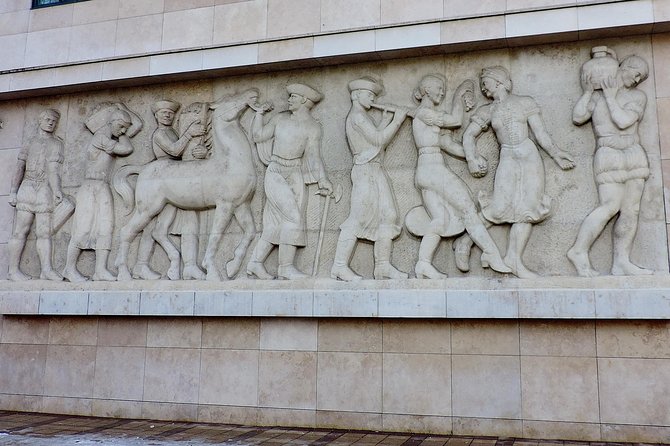
Stop 3 is Szabadság tér, and it is one of the longer moments on the tour at 45 minutes. Here the guide points out remnants of Communism through monuments, statues, and even nearby embassies. You will also see part of a bunker from the outside.
This is where the tour stops feeling like classic sightseeing and starts feeling like reading a city textbook written in concrete.
The bunker detail is especially effective because it makes abstract fear tangible. During Communism, protection and secrecy were not just ideas. They were built into infrastructure and everyday planning, and the guide uses the sights to explain why.
A practical tip: this stop can be a little slow in the best way because you are likely to pause for stories and questions. Bring your curiosity and let the guide answer as you go. The group size helps a lot here.
Hungarian Parliament and the 1956 revolution, Bloody Thursday from Kossuth square
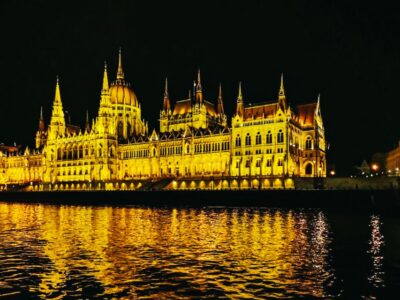
Stop 4 takes you by the Hungarian Parliament Building. You spend about 15 minutes here, and admission is not included.
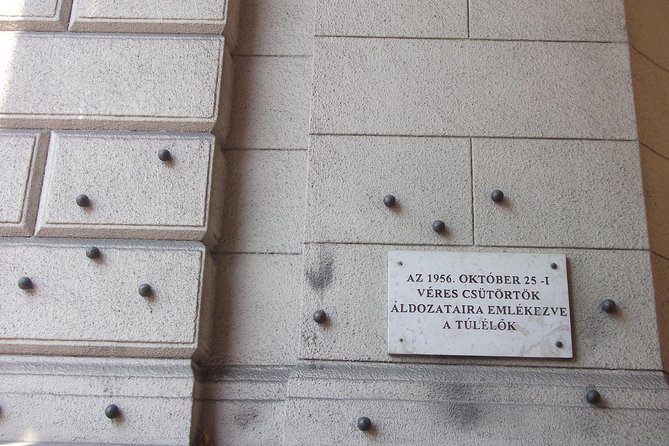
The focus is one of the defining moments of the 1956 revolution, specifically Bloody Thursday. Your guide places the event on Kossuth square in front of the Parliament and then ties it to the broader push-and-pull of resistance and state power.
Even if you have read about 1956, this kind of street-level framing helps. You start to understand the stakes, not as distant dates but as decisions made in a public space that still shapes how the city feels.
If you love history events tied to exact locations, this stop delivers. If you want an inside Parliament visit, you will need to plan that on a different day since it is not included here.

The communist-style cafe finale: coffee, conversation, and a different kind of history
The tour ends at Bambi Café on the Buda side, usually close to the center and Margaret Bridge. On colder or wet days, the ending can shift to the Pest side in the center near where you began. Either way, it is designed to be a comfortable wrap-up rather than a random corner.
Your guide brings you to a Communist-style cafe setting, and coffee is included. This is not just a perk. It changes the tone. After walking through heavy topics, you get a calmer moment to ask questions and talk through what you just saw.
One fun, practical detail you can keep in mind: Bambi Café opened in 1961, and it has not changed much since. That makes the end point feel less like a staged finale and more like an old-world pause.
Also, small-group energy matters here. Because you are not with a huge crowd, guides can usually respond to the questions you have been saving up.
What I think is the best value here, and what to watch for
At $59.13 per person for about 3 hours, the value is strongest if you care about context, not just photos. You are paying for the guide’s ability to connect squares, buildings, and monuments to how people lived under Communist rule.
Two value drivers stand out:
- Metro tickets are included, so you do not need to buy transport separately for the core movement.
- Coffee is included, and the tour ends in a place that fits the theme.
What to watch for is expectation-setting. This is not a “go inside everything” tour. St. Stephen’s Basilica and the Parliament Building are outside-only in this experience, and admission is not included for them.
Also, this route is about Communism in Hungary. It does not cover synagogues. If you are looking specifically for Jewish history stops inside synagogues, you would want a different tour.
Weather, walking pace, and how to plan your afternoon
Since the schedule is built around multiple squares and landmark edges, you will spend time outdoors. Your best plan is to dress for the day you have, not the weather forecast you wish for.
Start time is 2:00 pm, which means you can pair it with a relaxed morning or an earlier lunch. Many people like to do something light before this tour, then let the walk carry them into the evening.
If you are visiting in shoulder seasons or winter, bring layers. The tour can adjust the ending location when it is cold or wet, which is a helpful flexibility, but it does not remove the fact that you are walking.
Who should book this Communism with a Historian tour
This is a great fit if you want:
- A guided, street-level understanding of how Communist-era power shaped everyday life
- A small group experience where you can ask questions without shouting
- Stories with a human scale, not only dates and policies
It also works well for people who have visited Budapest before and think they have seen the main highlights already. The tour is built to show you the side of the city you might miss if you only chase the postcard views.
If you are a history fan, you will probably appreciate how the guide can connect pre-Communist context and the Cold War world to what followed. Some guides, like Gabriel and András, are praised for being patient and enthusiastic even when the weather is rough.
Should you book this tour?
I would book it if you want Communism in Hungary explained through real places, with a guide who can link politics to how people lived. The combo of small group, included metro ride, and a proper cafe stop with coffee included makes it feel like a curated afternoon instead of a rushed stamp-collecting walk.
I would not book it if your top goal is to enter major buildings for the interior views. This tour keeps key stops outside, and admission is not included for St. Stephen’s Basilica or the Parliament Building.
FAQ
What is the tour duration?
It is about 3 hours.
When does the tour start?
The start time is 2:00 pm.
Where do I meet for the tour?
You meet at Kempinski Hotel Corvinus Budapest, at Erzsébet tér 7-8, 1051 Hungary.
Where does the tour usually end?
The tour usually ends at Bambi Café on the Buda side close to the center and Margaret Bridge. On colder or wet days, it often ends on the Pest side in the center close to where you begin.
Is the tour in English?
Yes, it is offered in English.
How big is the group?
The maximum group size is 10 travelers.
Does the tour include metro tickets and coffee?
Yes. The tour includes metro tickets, and it includes coffee at the Communist-style cafe.
Are entrances included for the Basilica and the Parliament?
No. St. Stephen’s Basilica and the Hungarian Parliament Building have admission not included for this tour. (Elizabeth Square and Szabadság tér are free stops.)
What is the cancellation policy?
You can cancel for free. To get a full refund, you must cancel at least 24 hours before the experience start time. If you cancel less than 24 hours before, the amount paid is not refunded.
More Tour Reviews in Budapest

More From the Socialist Years


Reviewed recently around Budapest
- Audio visual multi-sensory chefs journey dinner experience★ 5.0 · 3 reviews
- Tapolca Cave Lake and Tihany/ Balaton private tour from Budapest★ 4.5 · 3 reviews
- SzentEndre-SaintAndrew City Privately Shopping and Picturesque★ 4.5 · 3 reviews
- Sightseeing flight over Budapest★ 5.0 · 3 reviews
- Self Guided Tour In Budapest With 100 Captivating Audio Stories★ 5.0 · 3 reviews
- Private Danube Bend Visegrad and Szentendre Tour With Transport★ 5.0 · 3 reviews
Communist Era and Cold War Tours, compared.
 ★ 4.8Communist History Tour with House of Terror OptionFrom $58182 reviews
 ★ 4.73-Hour Walking Tour About Communism (Small Group)From $5770 reviews
 ★ 4.5Budapest Hammer & Sickle Communist Times TourFrom $7968 reviews
 ★ 5.0Lives of Hungarians Under Communist and Capitalist systemFrom $459 reviews
 ★ 5.0Guided Tour with Admission in Memento ParkFrom $3048 reviews
 ★ 4.5Memento Park TicketFrom $1046 reviews
 ★ 5.0Memento Park Visit with Private Trabant TransferFrom $30544 reviews
 ★ 4.5Memento Park Entrance TicketFrom $1138 reviews
Browse the lists this tour appears in