
Review · COMMUNIST ERA AND COLD WAR TOURS
Born Under The Red Star – Communist tour with Coffee in a Retro Bar
Cold War history in Budapest hits different. You get straight guide commentary and a route most first-timers skip. I especially love the insightful narration and the stop for a Communist-themed retro soda, which gives the tour a memorable, human break.
This is a tight, 3-hour walk that packs in WWII and postwar memory, then moves into Hungary’s own story of resistance. I also like that you leave with maps and further recommendations, so you can keep exploring on your own after the walk ends.
One thing to think about first: a couple of major buildings on the route have admission not included, so you should plan for a small extra cost if you want to go inside.
In This Review
- Key points to know before you go
- Budapest in 3 Hours, with the Politics Put in Plain Words
- Meeting at Andrássy út 22, and Walking with Real Local Focus
- The Soviet Heroic Memorial, Where WWII Memory Gets Sculpted
- House of Terror at Andrássy út 60, a Museum Stop That Changes the Mood
- St. Stephen’s Basilica, a Moment of Faith and Identity
- Gellért Hill to Liberty Square, Symbols You Can Actually Feel
- The 1956 Memorial and the Parliament Building, Hungary’s Choice to Resist
- The Retro Bar Soda, Coffee or Tea, and Why That Matters for Value
- Practical Tips for Getting the Most From This 3-Hour Walk
- Should You Book Born Under The Red Star in Budapest?
- FAQ
- How long is the Born Under The Red Star tour?
- Where does the tour start and end?
- What language is the tour offered in?
- How much does the tour cost?
- What is included during the tour?
- Are any museum or monument entrances included in the tour price?
- Is there a group size limit?
- Is the tour suitable for most travelers?
- Does the tour require good weather?
- What is the cancellation policy?
Key points to know before you go
- 3 hours, up to 15 people, so you actually hear the guide and keep moving without feeling rushed
- Included classic soda in a Communist-themed retro bar, plus coffee and/or tea
- Free entry on the Soviet Heroic Memorial and House of Terror stops
- You’ll cover big symbols fast, including the Liberty Statue on Gellért Hill and Liberty Square
- Some interiors cost extra, including St. Stephen’s Basilica and the Parliament Building
Budapest in 3 Hours, with the Politics Put in Plain Words
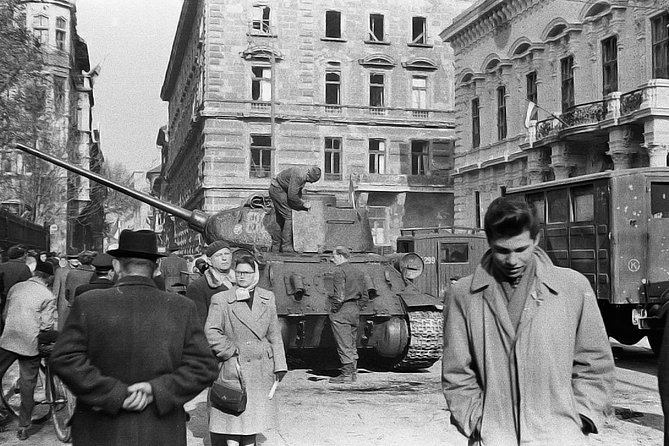
Budapest can feel like two cities at once. It’s beautiful, sure, but it’s also layered with occupation, propaganda, and survival. This tour is interesting because it doesn’t treat that layer like a trivia game. The walk is structured around symbols you can see, then your guide gives context so they make sense in a real timeline.
I like that you start with memory tied to WWII, then shift to the darker 20th-century story of repression. You also get a breather in a Communist-themed bar, which matters because the subject matter can get heavy. The tour doesn’t pretend everything is light sightseeing, and that honesty helps you connect the dots.
The pace is built for people who want understanding without spending all day. It runs about 3 hours, and that time includes several short stops, so you’ll be up and moving most of the way. That makes it a strong option for a weekend trip when your calendar is already crowded.
Meeting at Andrássy út 22, and Walking with Real Local Focus
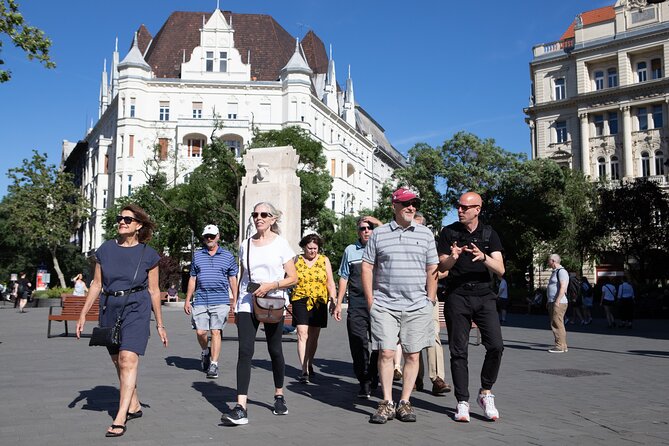
The tour meets at the Hungarian State Opera on Andrássy út 22, 1061 Budapest, and it ends at Liberty Square. If you know Budapest’s layout, this is a helpful route shape. You’re starting in one of the city’s most famous boulevards and finishing in one of its most politically charged public spaces.
You’ll be with a small group, maximum 15 travelers. That small size can matter more than you think. With a larger crowd, the guide gets stuck talking to the back. Here, you’re close enough to actually hear the commentary and ask quick questions if something clicks or doesn’t.
The tour is offered in English, and it uses a mobile ticket. That means less fuss right before you start, and you can spend your energy watching where you’re walking instead of sorting logistics.
A detail I took from a past booking story: sometimes the group can end up very small. In one case, a couple booked together and it worked out to just two people with the guide Ferenc. When that happens, you often get a more personal conversation feel, with room to follow up on what you’re most curious about.
More of the socialist decades, told on foot
- Budapest: Communist History Tour with House of Terror Option
★ 4.8 · 182 reviews - Communism in Hungary with a Historian
★ 5.0 · 70 reviews - Budapest: 3-Hour Walking Tour About Communism (Small Group)
★ 4.7 · 70 reviews - Lives of Hungarians Under Communist and Capitalist system
★ 5.0 · 59 reviews
The Soviet Heroic Memorial, Where WWII Memory Gets Sculpted
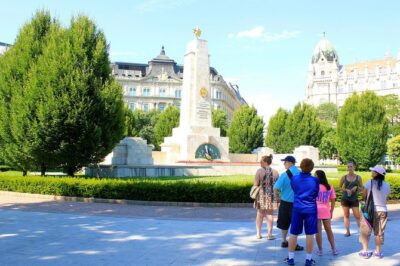
The walk begins with a Soviet Heroic Memorial in a landscaped park. The centerpiece is a white obelisk that commemorates Russian military who served in WWII. This is a good first stop because it sets a tone. Before you even reach the museums, you’re already seeing how different regimes want to be remembered.
Even though the visit time is brief, the point is to train your eye. You’re not just looking at a monument, you’re learning to read what kind of message it tries to send. In a city like Budapest, that matters, because memorials here aren’t neutral decoration. They’re part of the struggle over identity.
Admission for this stop is free. That’s a nice early win because it keeps your day from turning into a chain of paid entries. It also means you’re not stuck making decisions at the worst moment. You can just focus on the guide’s framing.
Practical note: monuments in parks are usually easy to reach but can be weather-dependent. If it’s rainy, go slow on the paths so you don’t lose your footing right when the guide starts tying the story together.
House of Terror at Andrássy út 60, a Museum Stop That Changes the Mood
Next comes the House of Terror Museum at Andrássy út 60. This is one of Budapest’s most serious stops. The museum contains exhibits related to fascist and communist regimes in 20th-century Hungary, and it also serves as a memorial to victims of those regimes who were detained, interrogated, tortured, or killed in the building.
This is a free admission stop on the tour, and the time is around 15 minutes. That short window is both a challenge and a benefit. A challenge because you cannot read everything in that span. A benefit because you’re not meant to get lost in details. The tour is trying to give you enough orientation so your later independent exploration feels more guided by meaning.
If you choose to do this tour, be ready for emotional content. Even when you’re only inside briefly, the subject matter is hard. I’d treat this stop like a museum visit, not like a quick photo break. If you need to step out and reset, that’s normal here.
One more reason this stop works well in a walking tour format: it doesn’t stay trapped in the museum. After this, you move into churches, public squares, and official buildings. That contrast helps you understand how control and ideology shape everyday space.
St. Stephen’s Basilica, a Moment of Faith and Identity
After the heavy museum stop, you reach St. Stephen’s Basilica, also known as Szent Istvan Bazilika. This is a Roman Catholic basilica named for Stephen, the first King of Hungary. The tour notes a key detail: his right hand is housed in a reliquary.
You’re not going to see everything in 15 minutes, and the tour does not include admission here. Still, this stop is valuable because it shifts the focus away from state power and back toward Hungarian identity through religion and tradition.
The tour info also points out that it was the sixth largest church building in Hungary before 1920. That kind of fact helps you look beyond the surface. Even if you only spend a short time inside or at key viewpoints, you’re better able to place the basilica in the bigger story of Hungary’s cultural footprint.
If you care about interiors, plan for extra time and the ticket cost. If you don’t, you can still use the exterior and the guide’s commentary to connect the basilica’s role to the political turbulence you just learned about.
Gellért Hill to Liberty Square, Symbols You Can Actually Feel
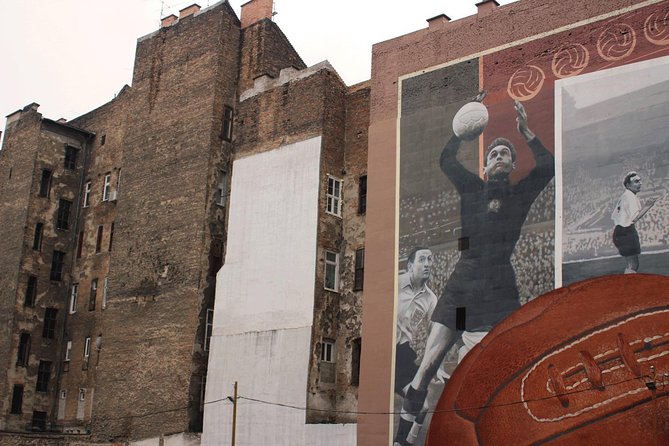
The tour then heads toward the Liberty Statue, also called the Freedom Statue (Szabadság-szobor) on Gellért Hill. This monument commemorates those who sacrificed their lives for Hungary’s independence, freedom, and prosperity. That wording matters. You’re not just seeing a statue. You’re seeing a national claim about what freedom should mean.
From there, you reach Liberty Square, Szabadság tér. This square is famous for two controversial memorials: one commemorating Hungarian Jewish victims of the Holocaust, and one honoring Soviet soldiers who liberated Budapest from the Nazis in 1945. That duality is part of why this stop is so powerful.
Liberty Square also has major landmarks on its sides, including the United States Embassy in Hungary and the historicist style headquarters of the Hungarian National Bank on the west side. So the square isn’t only memory. It’s also diplomacy and finance, all occupying the same public stage.
You’ll spend about 15 minutes here, and admission is free. I like this because it lets you absorb the meanings without turning the stop into a paid timed entry. It’s also a convenient endpoint for anyone wanting to continue exploring afterward since Liberty Square is easy to navigate.
When you’re standing in a place like this, ask yourself what each memorial is trying to define. Liberty Square pushes you to notice that public memory can be both personal and political at the same time.
Cafe crawls and cake stops we sat through


The 1956 Memorial and the Parliament Building, Hungary’s Choice to Resist
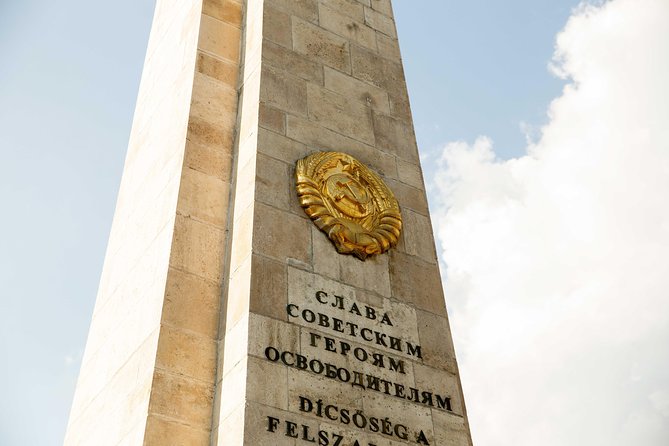
The next stop is the Memorial to the 1956 Hungarian Revolution and War of Independence. The tour frames it as a memorial to the heroes of the 1956 uprising against the communist regime. In other words, this isn’t just a historical event. It’s a symbol of rebellion that Hungary continues to reference.
Again, the stop is brief, about 15 minutes, and admission is free. That works well here because you’re likely to understand the main message quickly once the guide places it in context. If you want more, you can always return later on your own with more time.
Finally, you reach the Hungarian Parliament Building, Országház, also known as the Parliament of Budapest after its location. This building is the seat of the National Assembly of Hungary and is described as a notable landmark and popular tourist destination. The tour does not include admission for this stop.
Even without going inside, this is a key finish. You’ve spent the earlier part of the walk learning how regimes try to control people. Now you see the seat of national governance in modern Hungary. That contrast helps you understand the arc of independence and how institutions can replace ideology, at least in the ideal.
If you’re the kind of traveler who likes to see interiors, treat this as a possible add-on. But if your priority is understanding the symbolism, the exterior and the guide’s comments can be enough for the time you have.
The Retro Bar Soda, Coffee or Tea, and Why That Matters for Value
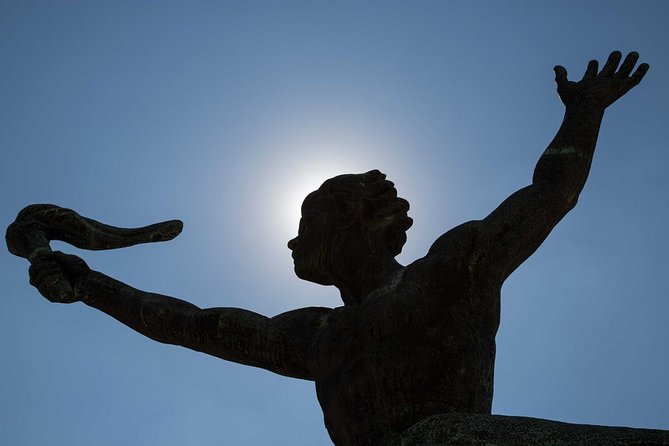
The tour includes a classic soda at a Communist-themed bar. It also includes coffee and/or tea, plus maps and further recommendations. This is one of the parts I’d actively look forward to, because it makes the tour feel more like a day with a local than a nonstop history lecture.
The value here is not only the beverage. It’s what the break does for your brain. After you process museums and memorials, you need a pause. A retro bar stop is a structured, low-pressure way to reset, while still staying on-theme.
Maps and further recommendations are also useful. Not everyone wants a second guided tour. Having ideas for what to do independently keeps your day from ending the moment you leave the group.
Now the money question. At about $90.31 per person for roughly 3 hours, you are paying for more than just walking. You’re paying for the guide’s commentary that ties together WWII memory, 20th-century repression, and Hungary’s ongoing fight over how history gets told. Some major stops are free on the tour, like the Soviet Heroic Memorial and House of Terror. That helps offset the price.
Your main potential extra expense is admission not included at St. Stephen’s Basilica and the Parliament Building. If you plan to go inside at both, budget accordingly. If you mainly want the explanation and the exterior views, your day stays closer to what you paid.
Practical Tips for Getting the Most From This 3-Hour Walk
Here’s how to make this tour feel smooth instead of frantic.
First, dress for weather. The experience requires good weather, so if conditions are poor, your day might be changed. Layering helps if Budapest swings between cool and mild.
Second, wear comfortable shoes. The stop list is short per location, but you’re still moving between key points around the inner city and up to areas near Gellért Hill. You want your feet to cooperate.
Third, plan your expectations around the 15-minute rhythm. These are not long, slow museum sessions. You’ll get a focused introduction. If you want to go deeper, the maps and recommendations help you pick where to spend extra time later.
Fourth, be ready for the intensity at House of Terror. If you’re sensitive to stories of detention, interrogation, torture, or killing, give yourself permission to take a breath. You don’t need to force your attention through everything.
Finally, use the guide time well. If something sparks your curiosity, ask a quick question. The whole point is to leave with context so you can keep exploring independently after the tour ends at Liberty Square.
Should You Book Born Under The Red Star in Budapest?
Book it if you want a first-rate way to understand Budapest’s 20th-century political story without doing a homework assignment. This tour is especially good for you if you like walks with clear guide commentary, and if you want to see major Soviet-era and Hungarian resistance sites in a short, practical window.
Skip or think carefully if you prefer light, purely scenic sightseeing, or if the idea of a museum centered on victims of fascist and communist regimes feels too heavy for your travel style. Also, if you strongly want to enter St. Stephen’s Basilica and the Parliament Building, factor in those extra admission costs since they are not included.
If you are on a tight schedule, this is one of the smarter ways to get bearings fast while still seeing places most visitors often overlook.
FAQ
How long is the Born Under The Red Star tour?
It lasts about 3 hours.
Where does the tour start and end?
It starts at the Hungarian State Opera, Andrássy út 22, 1061 Budapest, and ends at Liberty Square, Szabadság tér, Budapest.
What language is the tour offered in?
The tour is offered in English.
How much does the tour cost?
The price is $90.31 per person.
What is included during the tour?
It includes a classic soda in a Communist-themed bar, coffee and/or tea, maps and further recommendations, and the guided experience.
Are any museum or monument entrances included in the tour price?
Yes. The Soviet Heroic Memorial and the House of Terror Museum are listed as free for admission. St. Stephen’s Basilica and the Hungarian Parliament Building are not included, meaning you may need to pay separately if you want to go in.
Is there a group size limit?
Yes, the maximum group size is 15 travelers.
Is the tour suitable for most travelers?
Most travelers can participate, and children must be accompanied by an adult. Service animals are allowed.
Does the tour require good weather?
Yes, it requires good weather. If it is canceled due to poor weather, you will be offered a different date or a full refund.
What is the cancellation policy?
Free cancellation is available. You can cancel up to 24 hours in advance for a full refund.
More Tour Reviews in Budapest




Coffee, Cake and Another Cafe





More From the Socialist Years




Reviewed recently around Budapest
- Audio visual multi-sensory chefs journey dinner experience★ 5.0 · 3 reviews
- Tapolca Cave Lake and Tihany/ Balaton private tour from Budapest★ 4.5 · 3 reviews
- SzentEndre-SaintAndrew City Privately Shopping and Picturesque★ 4.5 · 3 reviews
- Sightseeing flight over Budapest★ 5.0 · 3 reviews
- Self Guided Tour In Budapest With 100 Captivating Audio Stories★ 5.0 · 3 reviews
- Private Danube Bend Visegrad and Szentendre Tour With Transport★ 5.0 · 3 reviews
Communist Era and Cold War Tours, compared.
 ★ 4.8Communist History Tour with House of Terror OptionFrom $58182 reviews
 ★ 5.0Communism in Hungary with a HistorianFrom $5970 reviews
 ★ 4.73-Hour Walking Tour About Communism (Small Group)From $5770 reviews
 ★ 4.5Budapest Hammer & Sickle Communist Times TourFrom $7968 reviews
 ★ 5.0Lives of Hungarians Under Communist and Capitalist systemFrom $459 reviews
 ★ 5.0Guided Tour with Admission in Memento ParkFrom $3048 reviews
 ★ 4.5Memento Park TicketFrom $1046 reviews
 ★ 5.0Memento Park Visit with Private Trabant TransferFrom $30544 reviews
Browse the lists this tour appears in