

Review · JEWISH QUARTER AND HERITAGE
Budapest City Walk in Jewish Quarter
Four hours in one compact neighborhood.
This Budapest Jewish Quarter walk is a smart mix of major landmarks and quieter street corners, built for people who want context for WWII and also a feel for modern Jewish life. You’ll move through the seventh district on foot, where the sights cluster tightly, so your guide can connect what you see to what it meant. You’ll also get time for memorials, museums, and local hangouts, including places many visitors skip.
What I like most is the small-group private attention and the way the guide turns history into stories you can picture on the sidewalk. I also appreciate the hotel pickup and drop-off, which makes this tour feel easy from start to finish. The main consideration is that there’s a moderate amount of walking, so if you need frequent pauses, plan for them.
In This Review
- Key highlights to look forward to
- Why the Jewish Quarter walk makes sense in Pest’s 7th district
- Hotel pickup, mobile ticket, and how this tour stays low-stress
- Entering the synagogue triangle: Kazinczy, Rumbach, and Dohány Street
- Beyond the big buildings: courtyards and everyday Jewish neighborhood life
- WWII memory: the ghetto wall section and the Danube Shoes
- Memorial names you should remember: Raoul Wallenberg, Emmanuel tree, and Carl Lutz
- Jewish Museum and Jewish Archives exhibitions for real context
- What the guide experience feels like, and why it matters
- Value check: $356.90 per group, and when it is a good deal
- What to wear, bring, and how to handle synagogue dress codes
- Who this Budapest Jewish Quarter tour fits best
- Should you book this tour?
- FAQ
- How much does the Budapest City Walk in the Jewish Quarter cost?
- How long is the tour?
- Is the tour mostly walking?
- Are synagogue entrance fees included?
- Will I be picked up from my hotel?
- Is free cancellation available?
Key highlights to look forward to
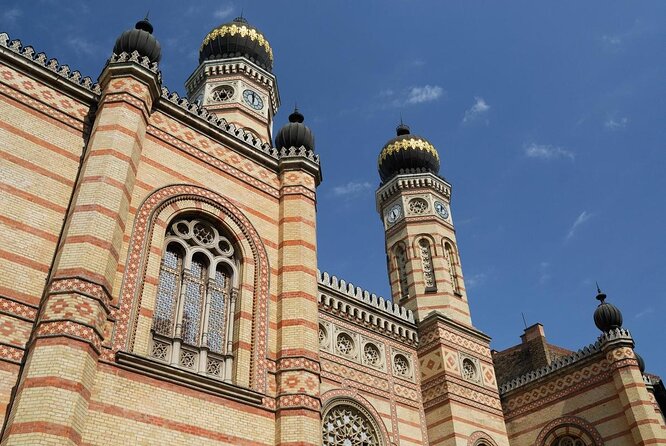
- Synagogue triangle route: Kazinczy, Rumbach, and Dohány Street Synagogue in one walking flow
- WWII remembrance stops: the remaining ghetto wall section and the Shoes Monument by the Danube
- Memorial gardens and names to learn: the Raoul Wallenberg Memorial Garden and Emmanuel tree, plus Carl Lutz
- Local-life detours: courtyards like Gozsdu Courtyard, cafés, shops, and ruin bars such as Szimpla
- Flexible pacing with a licensed guide: you can spend more time where you care most
Why the Jewish Quarter walk makes sense in Pest’s 7th district
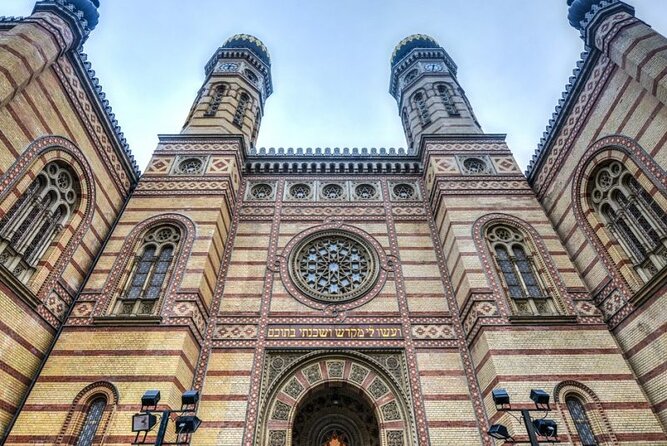
The Jewish Quarter in Budapest is compact. That sounds small on paper, but it matters for you on the ground, because you spend more time looking at real places and less time commuting between them.
This is also why walking is the right format here. You get a sense of scale. You can see how synagogues, memorials, residential buildings, and courtyard life sit close together, which helps history land in your head instead of staying trapped in a textbook.
You’re also not just doing landmarks in order. The route is designed around stories, including WWII-era experiences and what changed after. The result is a tour that helps you get your bearings fast, then go deeper where it counts.
Hotel pickup, mobile ticket, and how this tour stays low-stress
Hotel pickup and drop-off is one of those details that quietly improves everything. You do not have to wrestle with directions or try to guess where a group might gather, especially in a neighborhood where side streets can be confusing.
You get a mobile ticket, and the tour runs daily. The meeting point is straightforward, either in your hotel lobby or right outside your accommodation if you are staying in a rented flat. That is practical for solo travelers, couples, and families.
One more helpful angle: this is offered in English, and the maximum group size is capped at 10. That keeps the walk from feeling like a stampede and gives you more time for questions along the way.
Deeper into the old Jewish Quarter
- Budapest Jewish Heritage Memorial Walking Tour & Synagogue Entry
★ 5.0 · 568 reviews - Budapest: Jewish Heritage Guided Tour with Synagogue Ticket
★ 4.8 · 533 reviews - Walking Tour Budapest incl. the Shoes on the Danube Bank
★ 5.0 · 387 reviews - Jewish Quarter of Budapest Walking Tour
★ 4.7 · 369 reviews
Entering the synagogue triangle: Kazinczy, Rumbach, and Dohány Street
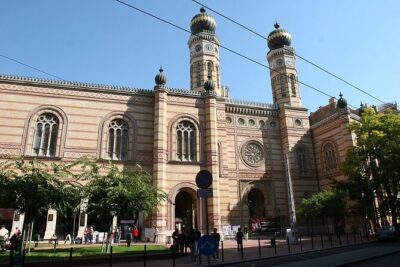
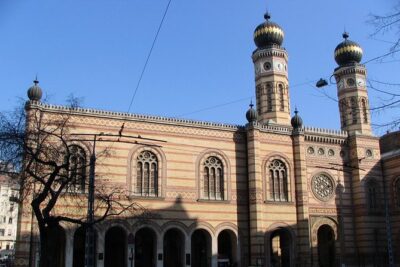
If you want a clear picture of Budapest’s Jewish community across time, the synagogue triangle is the core move. You’ll visit the Kazinczy, Rumbach, and Dohány Street Synagogues, all within the same compact walking area.
What makes this more valuable than a quick synagogue checklist is how each stop tells a different part of the story. The Dohány Street Synagogue is described as the second largest non-Orthodox synagogue in the world, so it’s naturally a big visual moment. But you’ll also hear how the surrounding neighborhood shaped daily life, not just worship.
The Kazinczy and Rumbach synagogues add variety. You’re not watching the same style of building again and again. Instead, your guide connects architectural differences to the community’s history and the pressures that shaped it.
You may also see the mikveh on Kazinczy Street. That matters because a mikveh is not just a religious object. It’s tied to routines and identity, so when you understand why it exists, the neighborhood feels more lived-in.
Practical note: synagogue entrance fees are not included. You can choose to visit one synagogue only, and you may find discounted prices such as family or senior rates. The tour estimates up to €46 per person in additional entrance costs, so you can budget without surprises.
Beyond the big buildings: courtyards and everyday Jewish neighborhood life
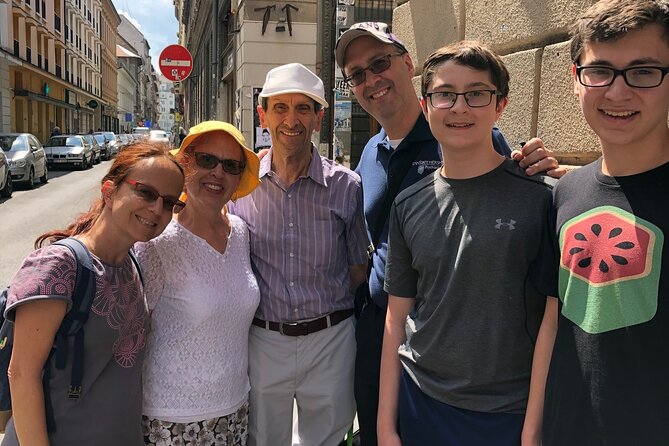
A walk that only hits major monuments can feel cold. This one tries to keep you grounded in ordinary life, because that’s where the neighborhood gets real.
You’ll pass courtyards like Gozsdu Courtyard, plus local shops, eateries, confectioneries, and art galleries. The point is not to turn the Jewish Quarter into a shopping trip, but to show you how people actually moved through the area, both historically and now.
Your route may also include festival scenes and old and newly opened cafés. Those details help you understand how the community’s rhythms continue today, not just what was lost in the past.
Then you get a social-cultural layer, including ruin bars like Szimpla. These spaces are often missed when tours stay purely in the memorial zone. Here, they add a sense of modern Budapest energy while still keeping the focus on the district’s identity.
If you like tours that let you ask questions and adjust the pacing, you’re in the right place. The itinerary is described as flexible, so you can spend extra time on a stop that grabs you or skip something that doesn’t.
WWII memory: the ghetto wall section and the Danube Shoes
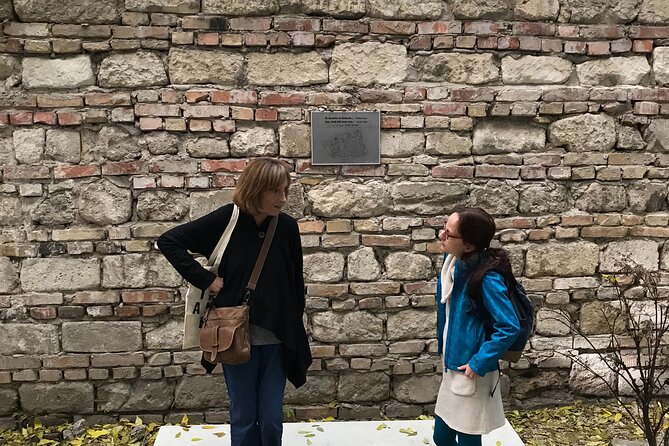
This is the emotional center of the walk. You’ll see remnants tied to WWII, including the last remaining part of the ghetto wall. That piece of stone and brick is small, but it carries weight because it is one of the few physical traces left in the street-level landscape.
Your guide also connects this to what happened during Nazi occupation and how the ghetto was experienced. You do not just read facts. You walk through the area and hear the story attached to the location.
One of the most famous moments on the riverbank is the Shoes Monument on the Danube. It’s iconic for a reason. Standing near the water helps you feel how the city’s geography became part of the tragedy.
A small practical tip: these memorial spots can be visually intense and emotionally heavy. If you need a breather, take it. The tour description notes you can ask for breaks during the moderate walking, and that is exactly when a pause helps you absorb what you are seeing.
Memorial names you should remember: Raoul Wallenberg, Emmanuel tree, and Carl Lutz
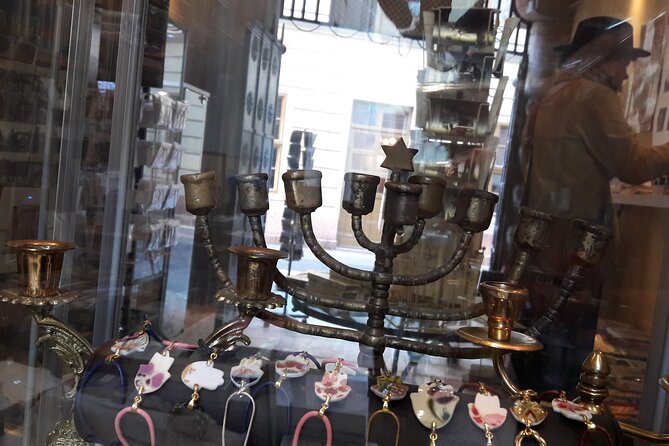
Two names keep showing up when you talk about rescue efforts in WWII Europe: Raoul Wallenberg and Carl Lutz. This walk gives you physical places connected to them, so the names become more than just reading material.
You’ll visit the Raoul Wallenberg Memorial Garden, including the touching Emmanuel tree. It’s the kind of spot where you can stop, look, and let the story settle. Gardens like this also help you understand how remembrance can be gentle without becoming vague.
You’ll also see the Carl Lutz Memorial. Learning both names matters because history is not one single heroic scene. It’s individuals, networks, and choices, and the neighborhood holds them in different forms.
If you like tours where the guide explains why certain memorials are positioned where they are, you’ll appreciate how this walk uses space as a storytelling tool. You’re not just walking past plaques. You’re learning how remembrance was built into the city.
Other Budapest walks at a similar pace

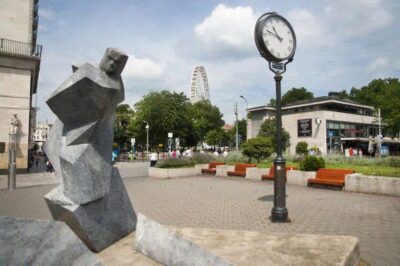
Jewish Museum and Jewish Archives exhibitions for real context
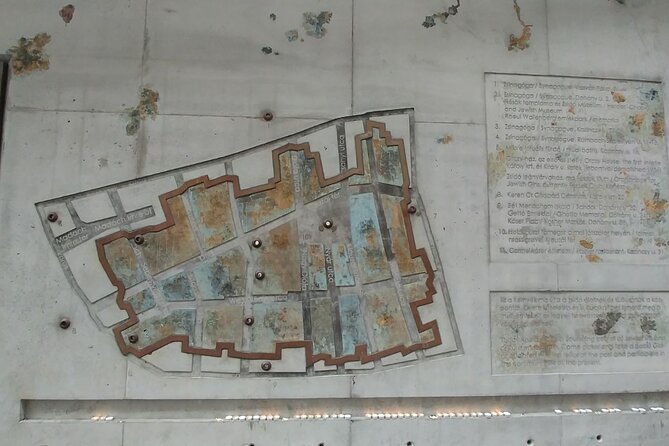
Some tours leave you with only buildings and outdoor monuments. This one makes space for museums and exhibitions, including the Budapest Jewish Museum and presentations from the Jewish Archives.
That museum time is valuable because it helps you connect the street-level story to bigger timelines and documents. Even if you only catch a slice during a four-hour walk, the effect is practical: you understand what you saw outside, and you also know what you still need to look up.
This also helps if you are the type of traveler who likes to ask, So what changed and when? A museum stop gives you a stronger framework for those questions, and your guide can tailor explanations to what you care about most.
Keep in mind that entrance fees are handled separately for synagogue visits, and the tour listing notes a maximum additional entrance cost for travelers. Museum exhibits and archive presentations are not described with separate fees here, so your best move is to ask your guide or double-check what is included on the day.
What the guide experience feels like, and why it matters
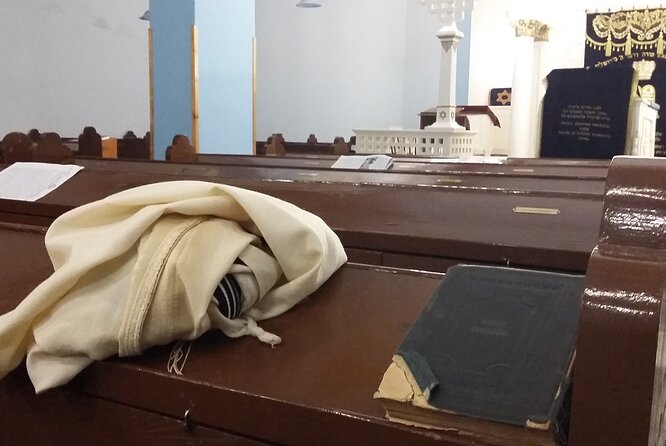
The standout theme from the experience is the guide’s tone. You’ll likely get that warm, conversation-like feel described by people who did the walk with guides such as Timea Tarjani, who is repeatedly mentioned as sharing both Jewish and Hungarian history with personal connection.
That personal layer is not just emotional. It’s practical. When a guide can explain why a story mattered to real families, you remember it, even when it’s hard. People in Budapest are used to layers of history, and the guide’s framing helps you read the neighborhood as something lived in, not just preserved.
Expect room for questions. One of the recurring comments in the feedback is patience and an ability to keep the walk engaging, even for teens. That means if you have kids, or you just do not want a lecture vibe, you should feel comfortable.
You should also expect careful pacing. The tour description and feedback both point to flexibility, so the walk can adjust if you want more time at a memorial or less time at a synagogue area.
In some cases, the walk may include access to places that are normally locked, when the guide has the keys. That is a meaningful advantage because it can let you see parts of the WWII ghetto wall area and other corners that most visitors never get close to.
Value check: $356.90 per group, and when it is a good deal
The price is $356.90 per group, up to 6 people, for about four hours. That can be very good value depending on how you travel.
If you book with the full group size of 6, you are looking at roughly $59.50 per person before any separate entrance fees. If you travel as a smaller group, your per-person cost rises, but you still get the main value driver: a licensed guide, hotel pickup and drop-off, and a focused route that does real work in a limited time.
This is one of those tours where you should compare against the cost of doing things alone. If you are paying for taxis, buying separate audio guides, and trying to coordinate synagogue visits without a narrative thread, costs add up fast. Here, your guide stitches it together.
Also, the group size cap at 10 adds value. It supports real conversation and makes flexibility more likely. If you want a standard big-group tour, you might find cheaper options. But if you want meaning and a tight route, this tends to hold its price.
What to wear, bring, and how to handle synagogue dress codes
Synagogues often require head coverings. This tour suggests you bring your own hat or cap and scarf if you do not want to wear what the synagogues provide. I think that is a smart plan because it protects your comfort and keeps you from dealing with last-minute rental or sharing items.
Wear comfortable walking shoes. The walking level is moderate, but you are in a neighborhood with corners, steps, and time spent standing at memorials. Plan for a steady pace and add breaks if you need them.
Bring sunglasses and water, especially if your day is sunny. The tour is not described as a food tour, and drinks are not included, so your comfort matters. Also, service animals are allowed, and the route is noted as near public transportation.
Who this Budapest Jewish Quarter tour fits best
This tour fits you if you want more than a quick overview. You’ll enjoy it if you like history tied to place, and if you appreciate a guide who can explain both the WWII period and what remains today.
It also fits couples who want a shared, meaningful experience without feeling rushed. Families can do well here too, especially if your kids are the type who can handle a story-based walk and a few stops that are emotionally serious.
If you want a party-style night out, ruin bars like Szimpla might tempt you later, but this walk is more reflective than social. Think of it as a daytime narrative, not a nightlife plan.
Finally, if you are working around limited time in Budapest, four hours is a manageable block that covers a lot of identity-defining stops in one compact area.
Should you book this tour?
Book it if you want a guided, story-driven walk through the Jewish Quarter that connects synagogues, memorials, and everyday neighborhood life. The combination of hotel pickup, a small group size, and the mix of major landmarks like Dohány Street Synagogue and the Shoes Monument makes this a strong value choice for serious first-timers.
Skip it or consider alternatives if you hate emotional WWII content or you cannot handle moderate walking. This is not a sit-and-stare museum day. You’ll be on your feet, and some stops are heavy.
If you do book, plan to bring questions. This is the kind of tour that rewards curiosity, and the guide experience is built around conversation, not just reciting dates.
FAQ
How much does the Budapest City Walk in the Jewish Quarter cost?
The price is $356.90 per group (up to 6 people). There may be additional synagogue entrance fees, with a maximum additional cost of €46.00 per person mentioned for synagogue visits.
How long is the tour?
It runs for about 4 hours.
Is the tour mostly walking?
Yes, it involves a moderate amount of walking. You can ask for breaks during the tour.
Are synagogue entrance fees included?
No. Entrance fees are not included. The tour notes an additional entrance cost up to €46.00 per person, and travelers can choose visiting one synagogue only, with the possibility of discounted prices.
Will I be picked up from my hotel?
Pickup is offered. You meet in the lobby of your hotel or in front of your accommodation, and the tour includes hotel pickup and drop-off (or restaurant drop-off for lunch or dinner).
Is free cancellation available?
Yes, free cancellation is available. You can cancel up to 24 hours in advance for a full refund, and cancellations made less than 24 hours before the start time are not refunded.
Keep Walking Budapest




More Tour Reviews in Budapest





The Jewish Quarter, Continued




Reviewed recently around Budapest
- Audio visual multi-sensory chefs journey dinner experience★ 5.0 · 3 reviews
- Tapolca Cave Lake and Tihany/ Balaton private tour from Budapest★ 4.5 · 3 reviews
- SzentEndre-SaintAndrew City Privately Shopping and Picturesque★ 4.5 · 3 reviews
- Sightseeing flight over Budapest★ 5.0 · 3 reviews
- Self Guided Tour In Budapest With 100 Captivating Audio Stories★ 5.0 · 3 reviews
- Private Danube Bend Visegrad and Szentendre Tour With Transport★ 5.0 · 3 reviews
Jewish Quarter and Heritage, compared.
 ★ 5.0Budapest Jewish Heritage Memorial Walking Tour & Synagogue EntryFrom $83568 reviews
 ★ 4.8Jewish Heritage Guided Tour with Synagogue TicketFrom $81533 reviews
 ★ 5.0Walking Tour Budapest incl. the Shoes on the Danube BankFrom $3387 reviews
 ★ 4.7Jewish Quarter of Budapest Walking TourFrom $2369 reviews
 ★ 5.0Best of Downtown and Jewish Quarter TourFrom $23312 reviews
 ★ 5.0Past and Present of Budapest Jewish District TourFrom $3264 reviews
 ★ 4.5Budapest Dohany Synagogue & Hungarian Jewish Museum & free extrasFrom $44218 reviews
 ★ 4.8Jewish History Guided Walking Tour with HistorianFrom $63205 reviews
Browse the lists this tour appears in