
Review · JEWISH QUARTER AND HERITAGE
Past and Present of Budapest Jewish District Tour
Budapest’s Jewish Quarter tells a full story in 90 minutes. This walk strings together synagogue exteriors, street art, and the major turning points of Jewish life in Hungary, from the Belle Epoque era to the devastation of the 20th century, with stops paced for an easy but meaningful read of District VII. I loved how clear the timeline feels, and I also think one thing to consider is that this is a heavier historical topic than a typical sightseeing stroll.
You’ll also like the practical, “show me where” approach. Guides point out what you can actually see from the street, including the largest synagogue in Europe from outside, plus memorial spots, murals, and the last fragment of the ghetto wall near Gozsdu Udvar. This is not the tour for people who want lots of indoor synagogue time.
In This Review
- Key highlights before you go
- A Jewish Quarter walk that reads like a timeline
- Meeting at Erzsébet tér, then walking with a licensed local guide
- Erzsébet tér: where the walk starts and the “Golden Age to destruction” arc begins
- What to watch for at Stop 1
- Deák Ferenc Square: Gaudiopolis and Schutzpass, plus the city wall story
- Timing note
- The Great/Central Synagogue (Nagy Zsinagóga): what you’ll learn without going inside
- Why this stop is still worth it
- Rumbach Street Synagogue and Kazinczy area: restored facades and everyday ritual life
- A practical expectation
- Gozsdu Udvar: street life today, plus a last fragment of the ghetto wall
- Szimpla Kert finish: murals, pop-ups, and a good place to plan your next step
- Price, donation culture, and what $3.63 really means
- Who should book, and who might want a different option
- Should you book the Past and Present of Budapest Jewish District tour?
- FAQ
- Does the tour enter any synagogues?
- How long is the tour?
- What language is the tour offered in?
- Where does the tour start and where does it end?
- Are there any entrance fees included?
- How big is the group?
- Are service animals allowed?
- Is the meeting point near public transportation?
- What should I know about synagogue visits on Saturdays?
Key highlights before you go
- A real District VII orientation: you finish near Szimpla Kert with an easy sense of where things are.
- Nagy Zsinagóga, seen correctly: you learn the movements and symbolism without going inside.
- Street art meets history: murals and urban details show how the neighborhood has changed.
- Gaudiopolis plus Schutzpass: you get two standout ideas that help explain hope and survival.
- Small-group feel: up to 25 people, led by a fully licensed local guide.
A Jewish Quarter walk that reads like a timeline
If you want a fast way to understand Budapest’s Jewish District, this is the kind of tour that helps you connect dots. Instead of hopping between random landmarks, the route flows through a sequence of eras, so you can start making sense of how the neighborhood looked in different periods and why it changed. The focus is on the “past and present” contrast, and that contrast is what makes the walk stick with you.
I also liked that the tour doesn’t pretend history is simple or tidy. The guide frames the story from the Jewish community’s earlier growth through later destruction, so you leave with context, not just captions. Expect a steady walk and a steady pace of narration. It’s not a museum experience, but it also isn’t light entertainment.
One more reason this tour works for many first-timers: you get a layout of District VII without needing to plan a route yourself. When you’re done, you’re standing in the right neighborhood to keep exploring, whether you want more synagogues, cafés, or just streets with good photo angles.
Meeting at Erzsébet tér, then walking with a licensed local guide
The tour starts at Erzsébet tér, at the Ferris Wheel of Budapest. From the beginning, the vibe is organized: you meet and greet your guide, and you’ll get a quick sketch of how the walk will unfold and which major sights you’ll cover along the way.
This is an English tour, with a maximum group size of 25. That matters, because a big crowd makes it harder to hear explanations at each stop and harder to ask questions. Also, it runs long enough to be worthwhile at about 1 hour 45 minutes, but short enough that you can still do other Budapest plans the same day.
Logistically, it’s friendly for visitors who like public transit. The meeting point is central, and the route keeps you in walking range of the key District VII highlights. You can also use the mobile ticket, and confirmation is received at booking.
The one caution I’d keep in mind is communication. One review mentioned it was hard to follow a guide due to a strong Hungarian accent. If you’re sensitive to accents, you might want to arrive with the mindset that you’ll be concentrating, not multitasking. Still, many guides in the group have been praised for clarity and a strong ability to answer questions.
Deeper into the old Jewish Quarter
- Budapest Jewish Heritage Memorial Walking Tour & Synagogue Entry
★ 5.0 · 568 reviews - Budapest: Jewish Heritage Guided Tour with Synagogue Ticket
★ 4.8 · 533 reviews - Walking Tour Budapest incl. the Shoes on the Danube Bank
★ 5.0 · 387 reviews - Jewish Quarter of Budapest Walking Tour
★ 4.7 · 369 reviews
Erzsébet tér: where the walk starts and the “Golden Age to destruction” arc begins
Your first real anchor is Elizabeth square, Erzsébet tér. This start isn’t random. The guide uses this point to sketch the itinerary and “major sights along the way,” then sets the historical frame: the Jewish community in Hungary from the Belle Epoque or Golden Age to the destruction that followed.
Even if you know little about Budapest’s Jewish history, this opening helps you understand what you’re about to see. It’s like being handed the timeline before you’re asked to read it on the street. You’ll also get a feel for how the neighborhood’s identity formed and how quickly that identity was threatened.
This is also where the tour’s tone becomes clear. The walk isn’t only about beautiful buildings. It’s about survival, loss, and what people rebuilt afterward. That emotional weight is part of why so many people rate the experience highly.
What to watch for at Stop 1
You’ll be hearing about broad historical shifts while standing in a public space. So pay attention to what the guide points out as “why this matters,” not only to what buildings look like. The narration is designed to make later stops feel less disconnected.
Deák Ferenc Square: Gaudiopolis and Schutzpass, plus the city wall story
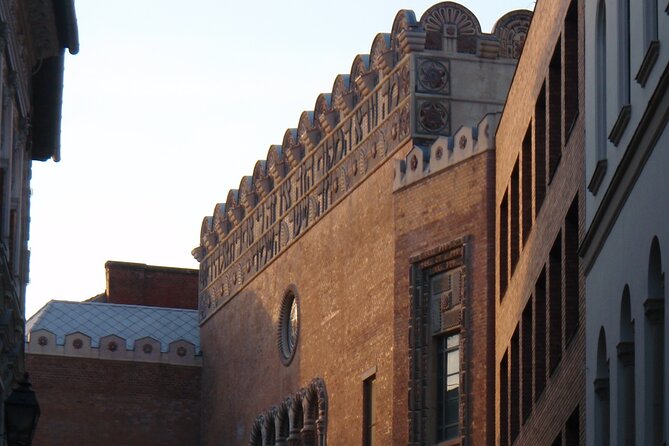
At Deák Ferenc Square, the guide introduces two ideas that help you understand how the Jewish community lived inside the rules of the city, and how those rules could shift.
One standout is the story of Gaudiopolis, the City of Joy in Latin. Another is Schutzpass, described as something that saved thousands of Jewish life. Even if you’ve never heard these terms before, the way they’re explained gives them a purpose: you’re not just collecting facts, you’re learning the mechanism behind hope and survival.
Then comes another practical piece of history: the former medieval city wall ruins. These weren’t just stone leftovers. They mattered because they helped shape where Jewish people could trade and live within the city limits. In other words, you learn that geography was policy.
This stop is also a good example of why the tour works as a walking route. You’re learning from the street layout, not only from buildings. If you like your history with a sense of cause and effect, you’ll enjoy the way this segment connects constraints to outcomes.
Timing note
The stop here is around 15 minutes, so you’ll have enough time to ask one or two questions without the guide needing to rush.





The Great/Central Synagogue (Nagy Zsinagóga): what you’ll learn without going inside
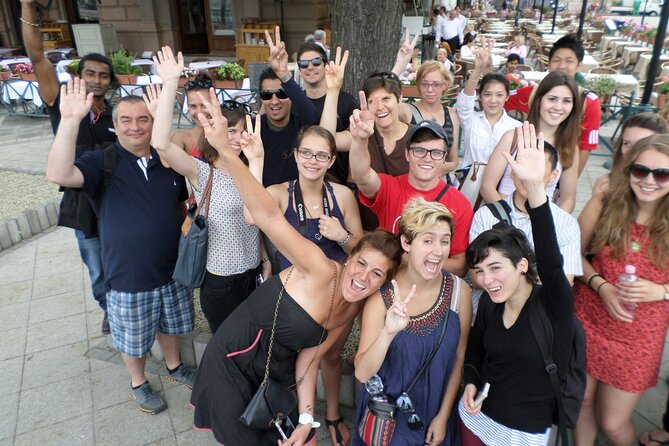
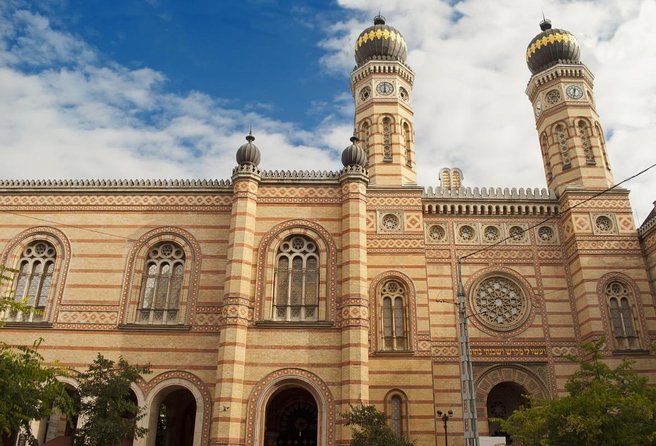
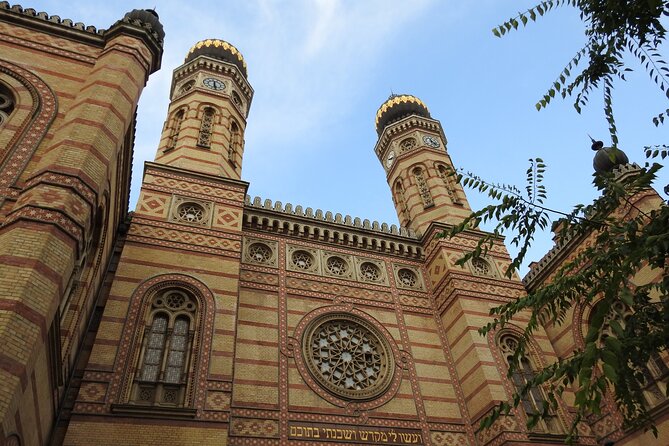
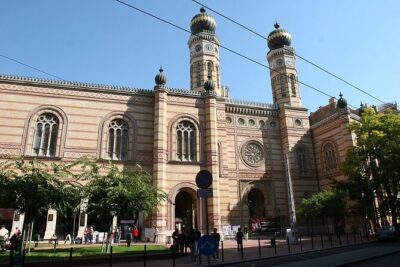
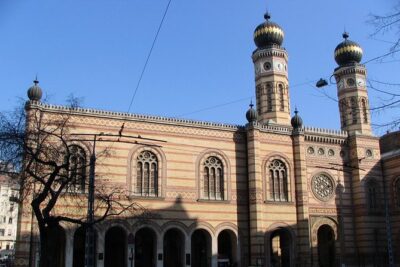
The tour’s biggest architectural moment is Nagy Zsinagóga, the Great or Central Synagogue. This is the landmark people usually come for, and the guide does a great job framing it beyond its size.
You won’t enter the synagogue. Instead, you’ll learn about the Neologue and Orthodox movements, plus the role of Zionism, while focusing on what you can see. From outside, you’ll also see the Memorial Courtyard and the cemetery.
That outside-only format can feel limiting at first. But it also keeps your time focused. Going inside would likely require extra scheduling and entrance time, and that would change the tour balance. Here, you get the key context you need to understand what the building represents, then you move on.
Why this stop is still worth it
- You learn the “why” behind major terms and community differences.
- You get the memorial view, which adds emotional weight to the architecture.
- You keep momentum for the full District VII arc.
If your plan includes visiting a synagogue interior on a separate day, this tour can be a perfect warm-up. You’ll know what to look for when you do go inside.
Rumbach Street Synagogue and Kazinczy area: restored facades and everyday ritual life
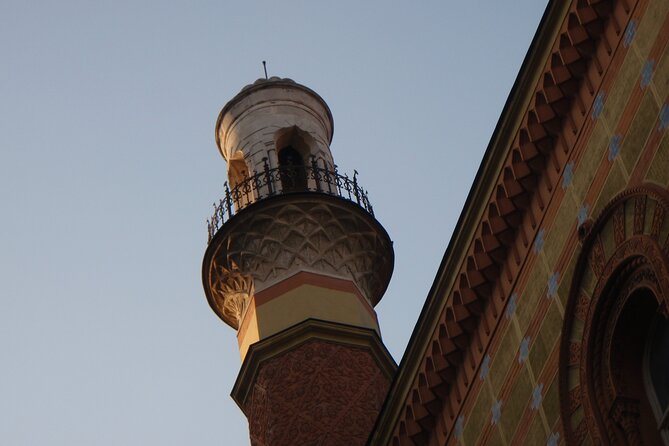
Next up are two places that show a different side of synagogue history.
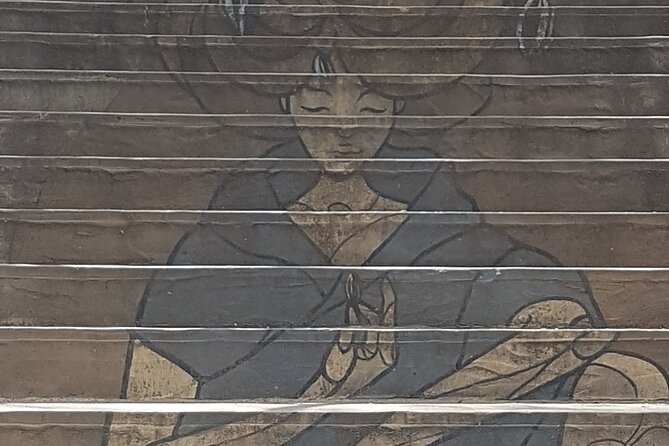
At Rumbach Street Synagogue, the guide explains the restored building and points out beautifully treated details, including murals and urban street art around the area. The tour doesn’t enter, but it still helps you read the neighborhood like a living museum. You’ll see how art and architecture sit together in today’s streetscape.
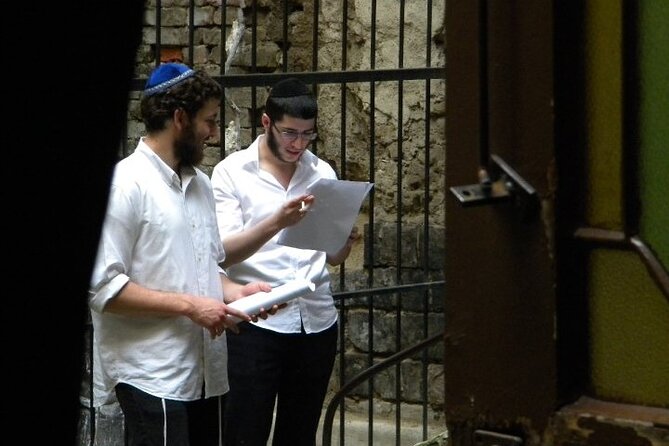
Then the walk shifts toward Kazinczy Street Synagogue, associated with an Orthodox community of around 50 to 60 families. Again, you don’t enter. Instead, the guide talks about everyday ritual life, including kosher food and a Jewish ritual bath.
This is a useful pairing, because it moves you from the “grand landmark” feeling of Nagy Zsinagóga to a more close-to-home picture of community structure and practice. If you like your history with social detail, these two segments deliver.
A practical expectation
You’ll stand outside, hear explanations, and see visual cues. Bring good listening ears, because the tour’s value is in what your guide connects for you between what you see and what you’re learning.
Gozsdu Udvar: street life today, plus a last fragment of the ghetto wall

At Gozsdu Udvar you get a strong “then and now” moment. The guide walks you past Gozsdu Passage and explains its past and present, including its combination of entertainment, gastronomy, culture, and market life.
Then, the tour adds a sharp historical reminder: you’ll also see the last piece of the ghetto wall here. That contrast is the whole point of the Past and Present theme. It’s one thing to read about the past. It’s another to stand in a lively public area and realize the wall fragment still marks the old boundaries.
If you want a quick way to understand how District VII developed into a modern hangout area without erasing what happened there, this stop is one of the best examples on the route.
Szimpla Kert finish: murals, pop-ups, and a good place to plan your next step
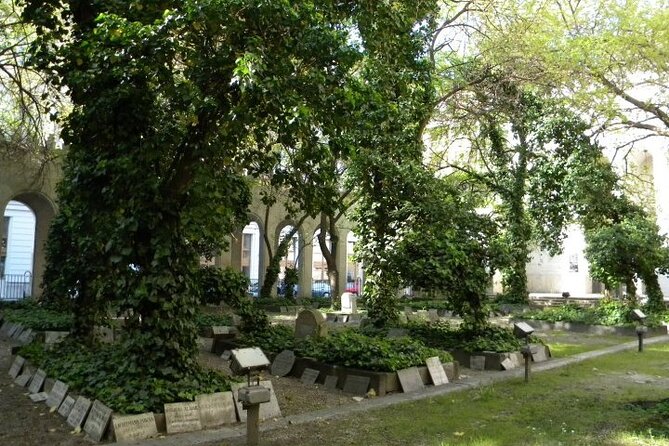
You end at Szimpla Kert, near Kazinczy u. 14. It’s a ruin bar, and the guide uses the final stretch to give you orientation and more street-art details.
Szimpla also works as a smart finishing point because it’s easy to transition from “tour mode” to “wander mode.” The tour mentions pop up exhibitions at Szimpla Ruin Bar, which can turn your last minutes into a casual bonus moment.
If you still have energy after the guided walk, this ending helps you keep momentum. You’ll already understand why the streets around you matter, and you can choose what to revisit on your own.
Price, donation culture, and what $3.63 really means
The price is listed at $3.63 per person for the 1 hour 45 minutes walk. That price point is what makes this tour stand out as a value option, especially if you’re comparing it to guided visits that require paid entrances.
Important nuance: the stops that include listed “admission tickets” are free in the tour format described. You’re not paying separate entrance fees to participate. That keeps the cost low and keeps you on schedule.
One thing to understand before you go: the booking fee exists, but it is described as going toward administration and not contributing to the guide’s earnings. The guide then depends on donations at the end, and the amount is at your choice.
So, what should you do as a practical traveler? Plan to budget a donation for your guide if the tour hits the right notes for you. People in the group have been especially enthusiastic about guides like Ester (Eszter), Dora, Gary, Edith, Christine, Jude, David, Judith, and Andy, which tells you that the guide experience often drives the quality.
If you’re someone who prefers tours where everything is pre-paid and nothing is donation-based, this may not match your style. But if you like supporting local guides directly, this format can feel fair and flexible.
Who should book, and who might want a different option
This tour is a strong fit if you want:
- A first-time sense of District VII in under two hours
- A structured timeline from the Belle Epoque era to the destruction period
- Exterior-focused synagogue context, including memorial viewpoints
- Street art and neighborhood texture with historical meaning
- A small-group walk where you can ask questions
It may be less ideal if you:
- Want lots of indoor synagogue time, because the tour does not enter synagogues
- Need a fully “light and upbeat” outing, because the story includes heavy material about the Holocaust and Nazi occupation
- Struggle with strong accents, since at least one participant found the speech hard to follow due to Hungarian accent
Also, note the format is a lot of standing and listening. One review specifically highlighted that it can be heavier than other walking tours, but also said it was worth it. If you’re traveling with seniors or anyone who needs a gentler pace, the good news is that some guests mentioned guides kept a comfortable pace for seniors.
Should you book the Past and Present of Budapest Jewish District tour?
Yes, if you want a fast, well-paced introduction to Budapest’s Jewish District that helps you understand what you’re looking at. The biggest win is that you get both the landmark synagogues you’ll recognize and the “smaller but meaningful” story points, like city-wall constraints, Schutzpass, memorial courtyards, and the ghetto wall fragment near Gozsdu.
If you’re the type who likes history with real place context, this will feel efficient. You’ll leave knowing where things are, what they represent, and what you might want to see in more detail on a return trip.
If what you want most is inside-the-synagogue time, or you want a purely casual walking break, you may want to pair this with a separate synagogue visit plan. Either way, starting with this tour is a smart move, because it gives the neighborhood a spine.
FAQ
Does the tour enter any synagogues?
No. The tour does not enter the synagogues. You see key places from outside, including the Memorial Courtyard and cemetery area associated with the Great/Central Synagogue.
How long is the tour?
It runs about 1 hour 45 minutes.
What language is the tour offered in?
The tour is offered in English.
Where does the tour start and where does it end?
It starts at the Ferris Wheel of Budapest on Erzsébet tér, and ends at Szimpla Kert (Kazinczy u. 14).
Are there any entrance fees included?
The tour description lists ticket items at each stop as free, and it focuses on exterior viewing rather than building entry.
How big is the group?
The tour has a maximum of 25 travelers.
Are service animals allowed?
Yes, service animals are allowed.
Is the meeting point near public transportation?
Yes, it is near public transportation.
What should I know about synagogue visits on Saturdays?
A review noted that synagogues are closed on Saturdays, and the tour itself does not include entering synagogues regardless.
More Tours in Budapest




More Tour Reviews in Budapest





The Jewish Quarter, Continued





Reviewed recently around Budapest
- Audio visual multi-sensory chefs journey dinner experience★ 5.0 · 3 reviews
- Tapolca Cave Lake and Tihany/ Balaton private tour from Budapest★ 4.5 · 3 reviews
- SzentEndre-SaintAndrew City Privately Shopping and Picturesque★ 4.5 · 3 reviews
- Sightseeing flight over Budapest★ 5.0 · 3 reviews
- Self Guided Tour In Budapest With 100 Captivating Audio Stories★ 5.0 · 3 reviews
- Private Danube Bend Visegrad and Szentendre Tour With Transport★ 5.0 · 3 reviews
Jewish Quarter and Heritage, compared.
 ★ 5.0Budapest Jewish Heritage Memorial Walking Tour & Synagogue EntryFrom $83568 reviews
 ★ 4.8Jewish Heritage Guided Tour with Synagogue TicketFrom $81533 reviews
 ★ 5.0Walking Tour Budapest incl. the Shoes on the Danube BankFrom $3387 reviews
 ★ 4.7Jewish Quarter of Budapest Walking TourFrom $2369 reviews
 ★ 5.0Best of Downtown and Jewish Quarter TourFrom $23312 reviews
 ★ 5.0Budapest City Walk in Jewish QuarterFrom $356218 reviews
 ★ 4.5Budapest Dohany Synagogue & Hungarian Jewish Museum & free extrasFrom $44218 reviews
 ★ 4.8Jewish History Guided Walking Tour with HistorianFrom $63205 reviews
Browse the lists this tour appears in