
Review · JEWISH QUARTER AND HERITAGE
Budapest Dohany, Heroes’, Rumbach synagogues & Jewish Ghetto Tour
Budapest’s Jewish Quarter has a pulse. This tour strings together synagogues, streets, and Holocaust sites into one clear walk. In about 2 hours 20 minutes, you move from worship spaces to memorial spaces, with context that helps everything click.
What I like most is the way the guide turns architecture and history into stories you can follow. I also love that entry is included for the Great Synagogue and Rumbach Synagogue, so you get interiors, not just exteriors.
One thing to consider is the dress code. Shoulders must be covered and clothes should reach the knee, and you may need to buy cover-ups on the spot. Also, while Heroes’ Square is in the tour name, the actual route is about synagogues and ghetto-era locations, so don’t plan your day around a specific Heroes Square stop.
In This Review
- Key things to watch for on this Budapest Jewish Quarter tour
- Why this tour works so well in Budapest
- Dohány Street Great Synagogue: what to notice before you look up
- Raoul Wallenberg Memorial Park and the ghetto cemetery stops
- Rumbach Street Synagogue: Otto Wagner’s Moorish masterpiece, reopened
- Király Street and Gozsdu Udvar: learning the neighborhood between stops
- Carl Lutz memorial and the Spinoza theater stop
- Dob Street and Kazinczy Street Synagogue: Orthodox life and Art Nouveau streets
- Price, pacing, and practical tips that actually matter
- Should you book this Budapest Jewish Ghetto and Synagogues tour?
Key things to watch for on this Budapest Jewish Quarter tour
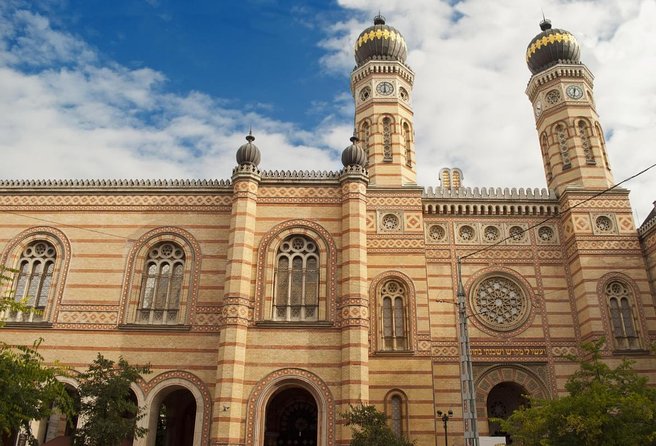
- Great Synagogue entry included: see the largest Jewish temple of Europe and learn how Hungarian Neologue Jewry shaped the story
- Wallenberg Park + Holocaust cemetery: you get the names and the timeline, not just vague facts
- Rumbach Synagogue inside: Otto Wagner’s Moorish design, recently reopened after renovations
- Street-level context: Király Street and Dob Street explain how Jewish life concentrated in Pest
- Carl Lutz and Emmanuel Tree of Life memorials: focused stop with survivor-level emotion and clarity
- Small group size: maximum 35 people makes Q and A realistic, even on a heavy topic
Why this tour works so well in Budapest
This is the kind of walk that helps you see Budapest as more than a pretty postcard city. The Jewish Quarter can feel confusing at first, because buildings change role over time, neighborhoods shift, and different synagogue styles sit side by side. A good guide matters here, and this tour leans hard on guided interpretation.
The strongest part is the balance. You get architectural wonder in the Great Synagogue and Rumbach Synagogue, then you get Holocaust context with specific memorial stops. In several accounts, guides like Milan and David are praised for care and for answering questions directly, even when the subject turns difficult. That kind of pacing matters because it keeps the tour from becoming either a pure lecture or a cold history list.
Timing also helps. You are not stuck outside for hours. The plan front-loads major interior visits, including admission, then fills in street scenes and memorials around them. You finish at the Rumbach Synagogue, which is a handy endpoint if you want to keep exploring the Jewish district on your own after.
Dohány Street Great Synagogue: what to notice before you look up
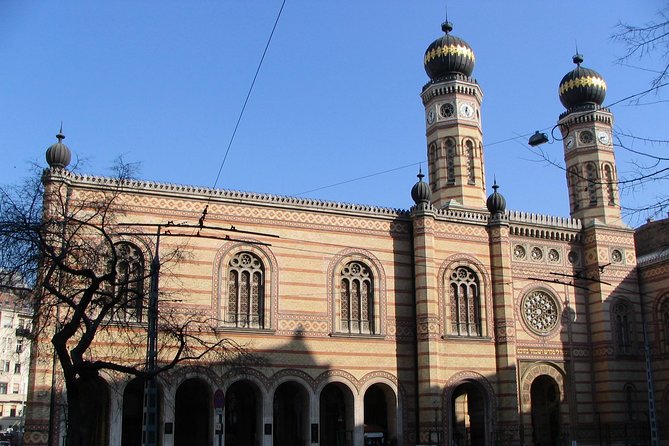
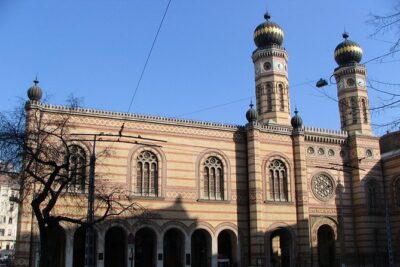
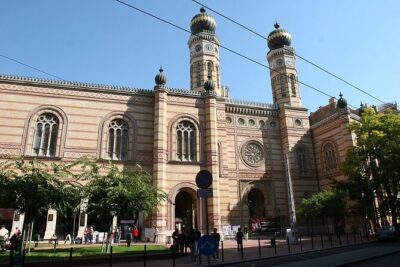
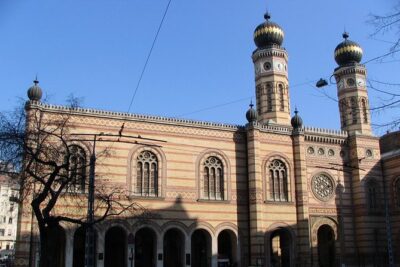
Your tour starts at Dohány u. 2-4, at the Great or Central Synagogue, also known as the Nagy Zsinagóga. This is the largest Jewish temple of Europe, and it shows. The guide will set you up before you go inside, explaining the Hungarian Neologue Jewish community and how Hungarian Jewish life developed with local cultural currents.
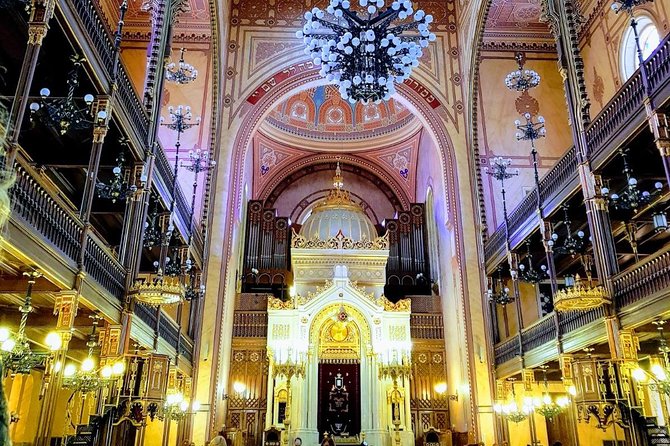
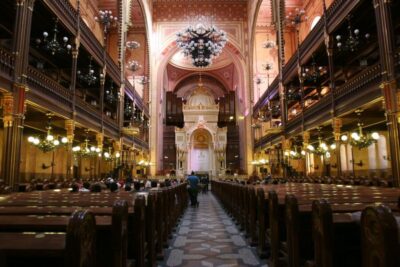
Inside, you are meant to slow down. The space is from the 1850s, and it has that big, confident mid-19th-century style that makes you realize synagogues were not only places of worship, they were also public statements. You’ll also hear about the organ played by Franz Liszt. Even if you know very little about music history, the guide’s framing helps it land, because it connects the synagogue to broader Hungarian arts and famous names.
This stop runs about 30 minutes, with ticket admission included. That time is enough to get the main architectural features and the key community story, without turning it into a rushed slideshow. Practical tip: go in expecting to look up a lot. If you are wearing thick layers, loosen one layer before you enter, since synagogues can feel cooler than the street but not always comfortable for people who run cold.
Deeper into the old Jewish Quarter
- Budapest Jewish Heritage Memorial Walking Tour & Synagogue Entry
★ 5.0 · 568 reviews - Budapest: Jewish Heritage Guided Tour with Synagogue Ticket
★ 4.8 · 533 reviews - Walking Tour Budapest incl. the Shoes on the Danube Bank
★ 5.0 · 387 reviews - Jewish Quarter of Budapest Walking Tour
★ 4.7 · 369 reviews
Raoul Wallenberg Memorial Park and the ghetto cemetery stops
Next you head to the Raoul Wallenberg Holocaust Memorial Park. This is where the tour stops being “architecture first” and becomes “history first,” in the right order.
You’ll learn about the Hungarian Holocaust and the role of the Righteous Gentiles who saved tens of thousands of Hungarian Jews while risking their own lives. This is also where the Emmanuel Tree of Life Memorial is visited, which gives the memorial story a more personal, human scale.
Then comes a critical piece: the Holocaust Cemetery created on the territory of the Budapest ghetto. More than 2,000 victims are resting here, and the guide’s commentary helps you understand what that means in practical, geographic terms. It is not abstract. You are standing on the ground connected to what happened.
This stop is about 20 minutes, and ticket admission is included. The value is not just the entry. It is the guide’s ability to keep the facts clear and the tone respectful. In a few accounts, participants highlight how guides shared personal and community-linked context. That kind of care tends to make this section easier to process, not harder.
Rumbach Street Synagogue: Otto Wagner’s Moorish masterpiece, reopened
One of the biggest “I had no idea” moments on this route is the Rumbach Street Synagogue. The stop runs about 45 minutes, and admission is included.
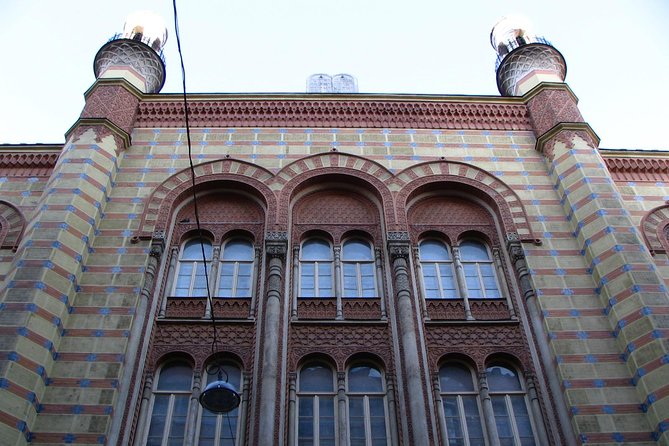
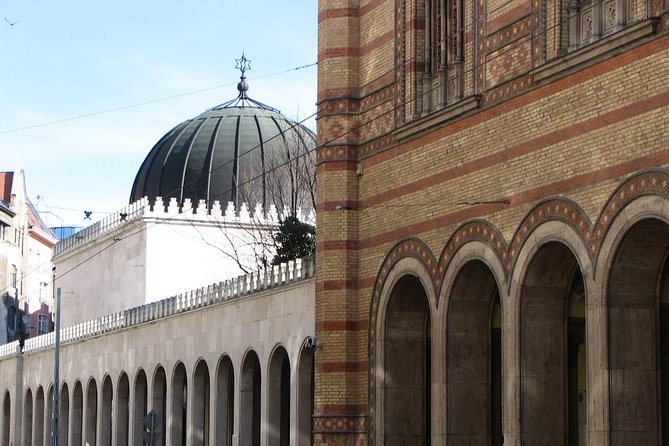
The building is credited to Viennese architect Otto Wagner, dated to 1872, and it is described as a Moorish design. That’s the phrase to keep in mind as you look around. Many visitors expect a traditional synagogue style. Rumbach surprises you by showing how Hungarian Jewish communities adopted and adapted broader European architectural language.
A practical bonus: the tour notes that the synagogue has recently reopened after years of renovations. That means you are seeing it during a period when the interior is available and the site feels ready for visitors again. If you like architecture, this is the stop where you can really spend your attention with the guide pointing out what makes it distinctive.
In multiple accounts, participants call this synagogue a standout discovery. The common thread is that it feels both hidden away in the district and unmistakably important once you see it. If you are short on time in Budapest and want one interior visit that goes beyond the most famous landmark, this is a strong candidate.
Király Street and Gozsdu Udvar: learning the neighborhood between stops
After you come down from the interior wow factor, you get street time that explains how Jewish life concentrated here in Pest.
You’ll walk Király Street, described as the high street of Pest in the 18th century and into the early 19th century. As a commercial and trade center, it became a cradle of Jewish life in Pest. Today, it is again active with commercial and cultural life, and the guide uses the location to connect the past to what you can still sense on the street.
The tour then spends time around Gozsdu Udvar, which is described as one of the most colorful spots in the Jewish district. Historically, the area is linked to kosher salami stores, food stores, and apartments. In the present, it is associated with entertainment and cultural activity, with local artists and artisans and plenty of places to eat and drink.
These street stops are shorter, around 10 minutes each, and ticket-free. That can be a double-edged sword. The good side is you keep momentum. The tricky side is that if you want a long wander and you hate tight timing, you might wish you had more time to explore on your own right after the guided explanation.
Still, for most visitors, this is the right length. It helps you build mental maps quickly, which makes the rest of Budapest feel easier later.
Carl Lutz memorial and the Spinoza theater stop
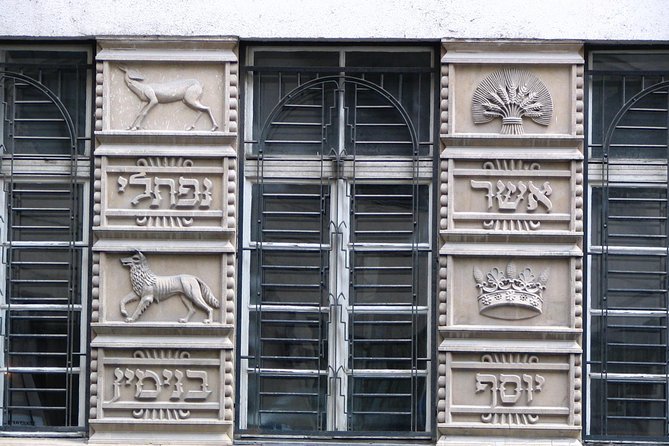
The tour then shifts into memorial and cultural references that help connect rescue stories and intellectual history to the neighborhood you are walking through.
At the Carl Lutz Memorial, you’ll meet one of the Righteous Gentiles who risked his life to save thousands of Hungarian Jews during the Holocaust. This stop is about 5 minutes, but it is meaningful because it anchors the story in a specific person, not just a general idea of rescue.
You’ll also see Spinoza Színház, described as a restaurant, gallery, cultural stage, and theater named after the Jewish Dutch philosopher with Portuguese Sephardi origins. The guide ties him to Enlightenment-era ideas from the 17th century. This is a clever stop for two reasons. First, it broadens the story beyond suffering. Second, it shows how Jewish identity in Budapest also shaped arts and thought.
Again, these are brief stops, around 5 minutes each. The goal here is orientation, not a full museum-style visit.
Other big views and set pieces we walked


Dob Street and Kazinczy Street Synagogue: Orthodox life and Art Nouveau streets
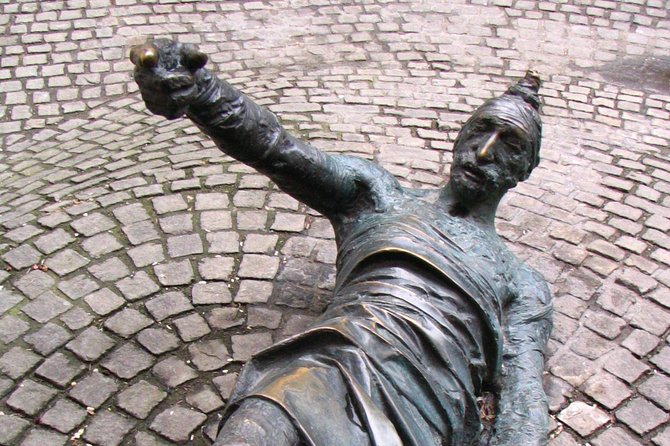
You’ll get another street segment on Dob Street, which runs parallel to Király Street. It is described as the central street of the Jewish district in Pest, and it also ran in the center of the Budapest ghetto. The guide uses that alignment to help you understand how narrow streets can hold enormous historical weight, even when today they feel like normal city streets.
You’ll also get a quick food moment. The tour includes a stop connected to one of the best-known places in Budapest for kosher flodni, a Hungarian Jewish cake. You may want to treat this as your timing cue. If you want snacks later, buy before the walking segment ends, so you do not feel rushed during the main synagogue interior blocks.
Then you’ll reach Kazinczy Street Synagogue on Kazinczy Street, which is described as a cultural street with ruin pubs and the Orthodox Jewish Center. This stop is about 15 minutes, and important detail: admission is not included. You can still appreciate what you see, but if you want to go in, you should plan for extra cost.
The synagogue and center are tied to Hungarian Orthodox Jewish community life, including a synagogue, a mikveh, kosher restaurants and cafes, schools, and kosher food stores. The architecture is noted as early 20th century Art Nouveau in Budapest, called Secession. If you like styles, this is a good contrast to the older mid-19th-century Great Synagogue and the Wagner-era Rumbach design.
Price, pacing, and practical tips that actually matter
The price is $63.52 per person for roughly 2 hours 20 minutes, and the tour includes all fees and taxes. The value equation is pretty clear if you look at what is included: ticket admission for the Great Synagogue, the Holocaust memorial park, and Rumbach Synagogue, plus a guided walking route through the district and memorial sites.
So you are paying for three big paid entries, plus interpretation that helps you understand the differences between synagogue communities and what the ghetto meant geographically. In plain terms, this is not just a sightseeing walk. It is a guided “how to read this neighborhood” session, which is why it scores so high for many people who want context fast.
Pacing is generally well-managed. In accounts of the tour, guides are praised for organizing timing and being flexible if something needs adjusting, like space availability inside. There is also mention of a bathroom break built in, which is a real quality-of-life detail on a tour with multiple interior stops.
Dress code is the one practical thing you should not ignore. Plan on covering shoulders and wearing clothing that reaches the knee before you go in. Cover-ups may be available for purchase on the spot, and head cover for men is available upon entry. Also, expect it to be chilly at times, since it is a walking tour in open streets between indoor visits. Bring a layer you can manage.
Weather matters too. The experience requires good weather, and if it is canceled due to poor weather you should be offered a different date or a full refund.
One more scheduling note: this tour is titled with Heroes’ Square, but the described route focuses on synagogues and ghetto-era memorial locations. If Heroes Square is a must-stop for your Budapest day, do not rely on this tour to deliver it.
Should you book this Budapest Jewish Ghetto and Synagogues tour?
If you want a single, well-structured way to understand the Budapest Jewish Quarter, I think this is a smart booking. You get major interiors with admission included, you get Holocaust memorial context with respectful specificity, and you get enough street time to feel oriented for your next walk.
Book it especially if:
- You care about architecture and want someone to explain what you are seeing.
- You want clear context on the Jewish communities of Hungary, not just facts on a sign.
- You prefer a guide who can handle heavy topics with care, as praised in multiple experiences.
Skip or adjust expectations if:
- You dislike walking between stops, or you need a lot of breaks beyond what the schedule provides.
- You are counting on Heroes Square as part of the route.
- You want Kazinczy Street synagogue entry covered, since admission there is not included.
Bottom line: for many visitors, this is the quickest path to turn names like Dohány, Rumbach, Wallenberg, and Carl Lutz into something real you can picture on a map.
More Tour Reviews in Budapest





Budapest From a Better Angle





The Jewish Quarter, Continued


Reviewed recently around Budapest
- Audio visual multi-sensory chefs journey dinner experience★ 5.0 · 3 reviews
- Tapolca Cave Lake and Tihany/ Balaton private tour from Budapest★ 4.5 · 3 reviews
- SzentEndre-SaintAndrew City Privately Shopping and Picturesque★ 4.5 · 3 reviews
- Sightseeing flight over Budapest★ 5.0 · 3 reviews
- Self Guided Tour In Budapest With 100 Captivating Audio Stories★ 5.0 · 3 reviews
- Private Danube Bend Visegrad and Szentendre Tour With Transport★ 5.0 · 3 reviews
Jewish Quarter and Heritage, compared.
 ★ 5.0Budapest Jewish Heritage Memorial Walking Tour & Synagogue EntryFrom $83568 reviews
 ★ 4.8Jewish Heritage Guided Tour with Synagogue TicketFrom $81533 reviews
 ★ 5.0Walking Tour Budapest incl. the Shoes on the Danube BankFrom $3387 reviews
 ★ 4.7Jewish Quarter of Budapest Walking TourFrom $2369 reviews
 ★ 5.0Best of Downtown and Jewish Quarter TourFrom $23312 reviews
 ★ 5.0Past and Present of Budapest Jewish District TourFrom $3264 reviews
 ★ 5.0Budapest City Walk in Jewish QuarterFrom $356218 reviews
 ★ 4.5Budapest Dohany Synagogue & Hungarian Jewish Museum & free extrasFrom $44218 reviews
Browse the lists this tour appears in