
Review · JEWISH QUARTER AND HERITAGE
Budapest Jewish Heritage: Synagogues, Shoes, Secrets & Flódni
Budapest tells its Jewish story street by street. This private 2 hour 45 minute walk ties together synagogues, ghetto landmarks from 1944, and the Danube memorial, all led by a genuine Jewish historian guide. You get a clear route through the neighborhood’s most important places, with time to ask questions along the way.
I love the emphasis on seeing how Jewish life worked in everyday buildings, not just through plaques. And I especially like the ending, because the tour finishes with an authentic flódni pastry, a simple sweet note that still feels connected to the place.
One consideration: synagogue entrance tickets are not included, so you should budget for that add-on when you book. If you want only deep Holocaust detail, you may find the approach is more about broader heritage and context than step-by-step survival stories.
In This Review
- Key highlights worth your time
- A Jewish Quarter walk that starts at Herzl Square
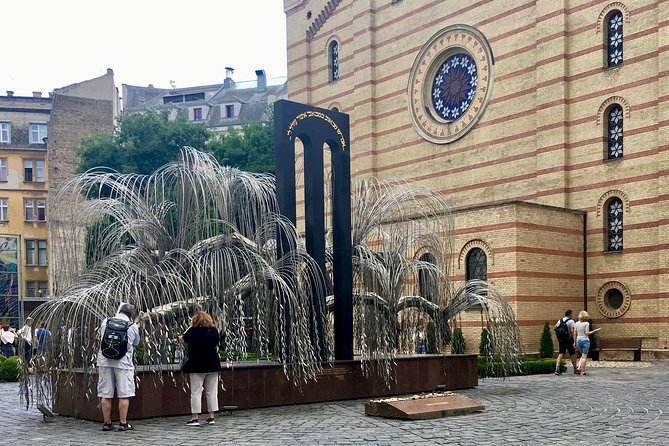
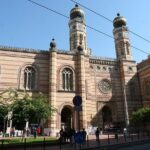
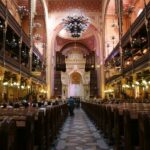
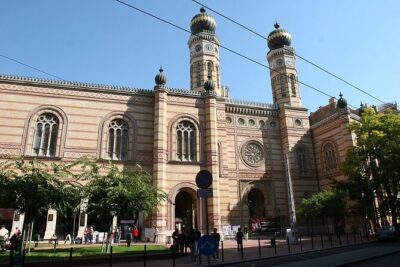
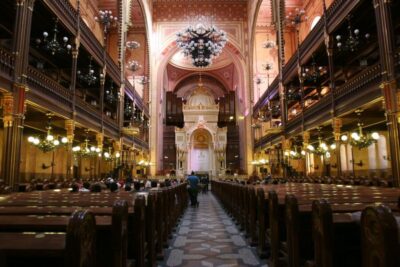
- Dohány Street Great Synagogue: Europe’s largest and Neolog life
- Rumbach Street Synagogue and Otto Wagner’s Moorish design
- Kazinczy Street Orthodox Synagogue: art nouveau details you can spot
- Carl Lutz Memorial: rescue told through one name
- Shoes on the Danube Bank: a memorial you cannot ignore
- The ghetto wall and WWII Budapest: reading the neighborhood
- Flódni time: finishing the tour with something you can taste
- Price, pacing, and who this fits best
- Practical tips before you go
- Should you book Budapest Jewish Heritage: Synagogues, Shoes, Secrets & Flódni?
- FAQ
- How long is the tour?
- Is this a private tour?
- Is pickup included?
- Are synagogue entrance tickets included?
- Is the Shoes on the Danube Bank memorial included?
- Is flódni included?
- What sites does the tour cover?
- What language is the tour in?
- What is the cancellation policy?
Key highlights worth your time
- Great Synagogue (Nagy Zsinagóga), Europe’s largest, with seating for about 3,000 and a focus on Neolog Judaism
- Rumbach Street Synagogue, designed in 1872 by Otto Wagner, with a Moorish look and a “moderate Conservative” community
- Carl Lutz Memorial, honoring the Swiss diplomat credited with saving tens of thousands of Jews in Budapest
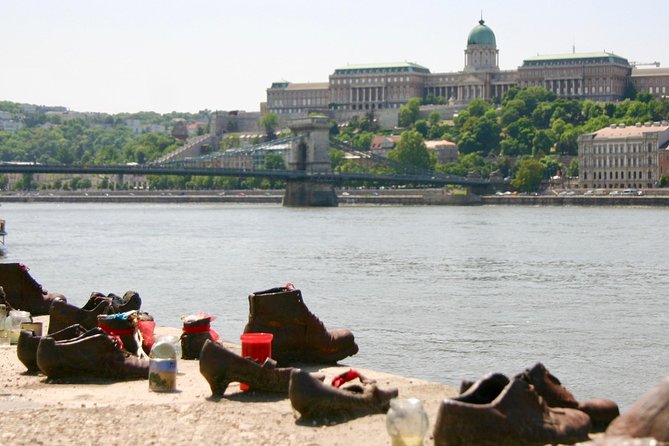
- Shoes on the Danube Bank, a powerful memorial where victims were forced to remove shoes before being shot
- Kazinczy Street Synagogue, an Orthodox synagogue from 1913 with art nouveau touches and Miksa Róth designed stained glass
- A food finish with flódni, included at the end of the walk
A Jewish Quarter walk that starts at Herzl Square
The tour begins near Herzl Square, then moves straight into the Jewish Quarter’s main historic corridor. You start with the Great Synagogue area and then work your way through several distinct synagogues, plus WWII memorial points nearby. It is a tight route, but it is built for walking and absorbing context.
The “private tour” part matters more than it sounds. Instead of rushing past everything, you can ask why certain buildings look the way they do, and how different Jewish communities in Budapest related to each other. Several guides associated with this experience are praised for being warm, conversational, and sensitive to what questions you bring.
If you are short on time in Budapest, this is also one of the more efficient ways to hit multiple big sites without cobbling together tickets and transport on your own. Still, it is a real walking tour, so wear comfortable shoes. The final stretch ends back at the meeting area near Dohány Street.
Dohány Street Great Synagogue: Europe’s largest and Neolog life
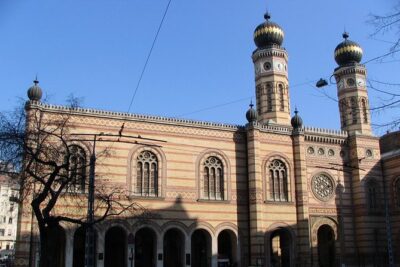
This is the headline stop. At the Great or Central Synagogue (Nagy Zsinagóga), you learn why it is considered the largest synagogue in Europe, with seating for around 3,000 people. More than the scale, the guide explains how the building functioned as a center for Neolog Judaism, the modern leaning movement in Hungary.
Expect two things here: architecture and historical meaning. You will get a guided look at what makes the building unique architecturally, then the story expands into what happened to Hungarian Jewry during the Second World War. The tour also points out notable Hungarian Jewish figures linked to the broader culture of Europe, not just religious leadership.
Practical detail: your visit time at this synagogue is about 20 minutes, and the admission ticket is not included. That means you may spend a little extra planning effort before you arrive, but the stop is long enough that ticket cost usually feels worth it for most people.
Deeper into the old Jewish Quarter
- Budapest Jewish Heritage Memorial Walking Tour & Synagogue Entry
★ 5.0 · 568 reviews - Budapest: Jewish Heritage Guided Tour with Synagogue Ticket
★ 4.8 · 533 reviews - Walking Tour Budapest incl. the Shoes on the Danube Bank
★ 5.0 · 387 reviews - Jewish Quarter of Budapest Walking Tour
★ 4.7 · 369 reviews
Rumbach Street Synagogue and Otto Wagner’s Moorish design
Next comes the Rumbach Street Synagogue, also known as the Rumbach Sebestyén utca Synagogue. This one has a very different vibe from the Great Synagogue. It was built in 1872 by Otto Wagner, an Austrian Secessionist architect, for a “moderate Conservative” community.
The guide highlights how the interior decorations create a particular atmosphere once the light hits them. You also get help spotting what makes this synagogue feel unusual compared with the nearby ones, even before the historical context starts. If you enjoy architecture that tells you something about identity, this is a great middle act.
Your time here is about 15 minutes, and again admission is not included. The upside is that the stop is structured, so you are not left standing around hoping you notice details. The downside is that if you were hoping for a long, slow, museum-style visit inside, this may feel like a “guided taste” rather than a full deep visit.
Kazinczy Street Orthodox Synagogue: art nouveau details you can spot
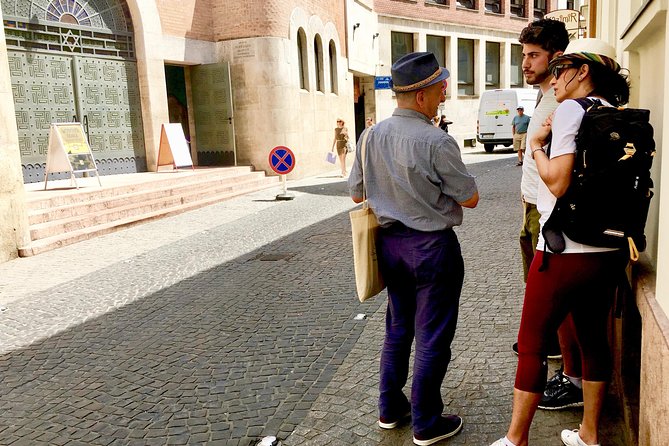
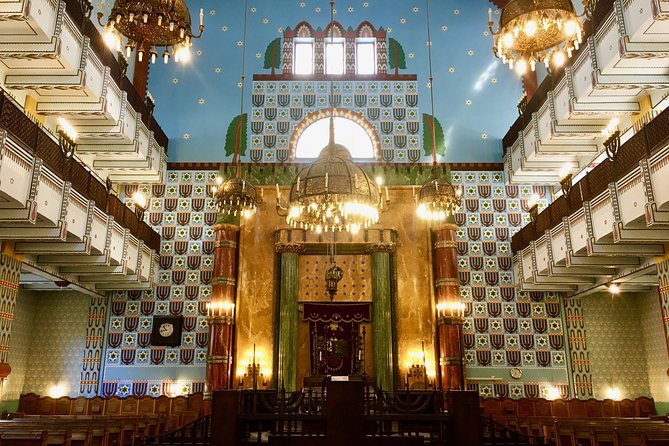
Then you slip into a smaller side-street for Budapest’s Orthodox synagogue on Kazinczy Street. Built in 1913, it was considered a modern design at the time, and it includes late art nouveau touches. You also get a strong visual theme: bright colors throughout, plus stained-glass windows in the ceiling.
One specific detail that helps you understand why this place is memorable is that the stained glass in the ceiling was designed by Miksa Róth. The guide uses that kind of fact to connect craft and community, so you are not just seeing decoration. You are seeing how artistic choices served religious and communal life.
This stop is about 10 minutes, and like the other synagogue visits, the admission ticket is not included. If you are the type who likes to compare places side by side, this is a good stop, because the differences in architecture and design line up with the differences in Jewish branches the guide explains.
Carl Lutz Memorial: rescue told through one name
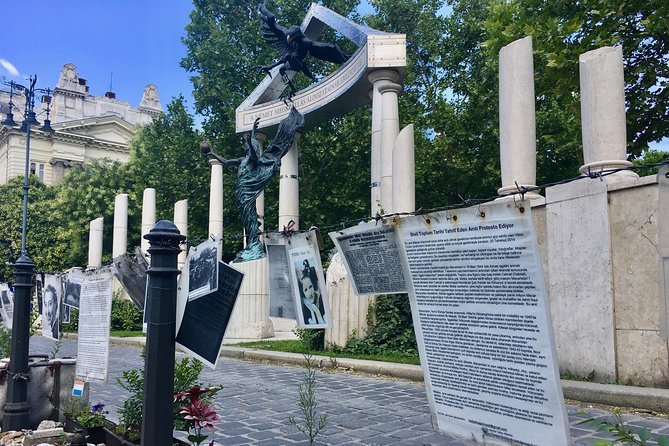
After the synagogues, the tone shifts to remembrance and moral action. You stop at the Carl Lutz Memorial, located in the area connected to the former Budapest ghetto. Carl Lutz was a Swiss diplomat, and the monument is dedicated to his role in helping save tens of thousands of Jews in Budapest from persecution and deportation.
This stop works well because it adds nuance. Synagogues and the ghetto wall teach what was lost and what was threatened, but the Carl Lutz story also teaches what saved lives. It is not meant to “balance” tragedy like a math problem, but it does show that individual action mattered inside an enormous system of cruelty.
Your time is about 10 minutes, and entry is not mentioned because it is a memorial stop. If you tend to feel emotionally heavy on WWII tours, this is one of the better “pause points” on the route. It gives you something concrete to reflect on besides the shock of what people endured.
Shoes on the Danube Bank: a memorial you cannot ignore
Then you reach one of Budapest’s most well known WWII memorials, the Shoes on the Danube Bank. The tour explains that the memorial was unveiled on April 16, 2005, and it commemorates Jewish victims who were murdered at this site during the Second World War. People were forced to remove their shoes before being shot at the riverbank, and the bodies were carried away by the Danube.
The sculpture depicts the shoes left behind, and that single image is why this stop hits so hard. The guide makes it more than a photo stop by framing why shoes were taken and how that detail fits the violence. You will likely find yourself looking longer than you planned, which is exactly the point.
Your stop here is about 10 minutes, and the admission is included. This is also the sort of site where a guide adds value, because you are not reading a single plaque and moving on. You are guided through what the memorial is trying to communicate.
History told a different way, elsewhere in Budapest
The ghetto wall and WWII Budapest: reading the neighborhood
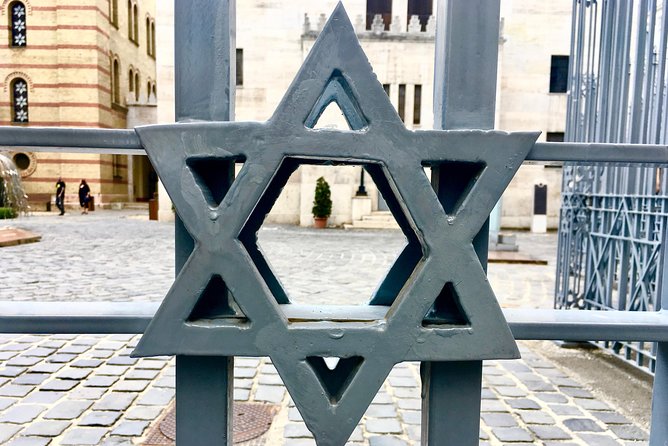
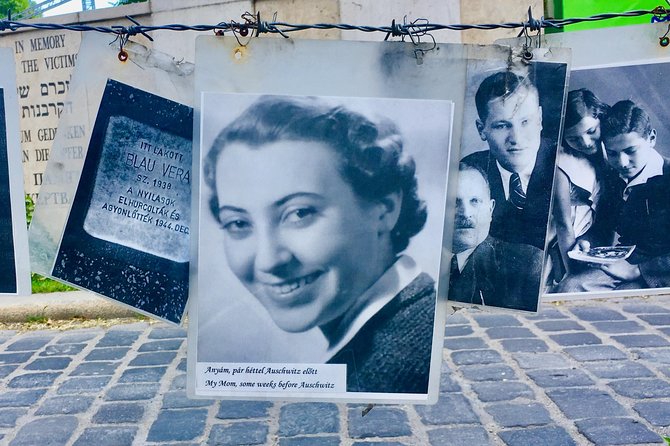
One of the tour’s strongest “secrets and stories” moments comes later, when you spend time at Budapest’s Jewish Quarter and near a small surviving section of the ghetto wall. During the Second World War, Jews in Budapest were herded into a ghetto, and a bit of the wall still stands in the heart of the city.
If you have ever walked past a remnant of history and wondered what it used to mean, this is how you learn to read it. The guide helps you imagine daily life in the ghetto, explains how people lived, and then brings the story to the grim outcome. Even though you cannot see the whole ghetto layout today, you can understand the logic of confinement once someone connects the street pattern to the events.
This stop is about 15 minutes, and it is free. That matters, because a lot of the emotional weight here is in understanding, not paying for entry. It also keeps the tour balanced, since you have paid for synagogue time earlier and now you are not being asked to add another ticket.
If you are someone who loves maps, you might find it helpful to pay attention to how the guide points things out around you. The modern neighborhood can look normal, and that contrast is part of the lesson.
Flódni time: finishing the tour with something you can taste
After the heavy memorial stops, the tour ends with a bite of history: flódni, a traditional Jewish pastry. The tour gives you about 20 minutes here, and the admission is free, which in practice means you are not paying extra for the treat at the end.
What I like about this ending is that it does not feel tacked on. Flódni is food you can actually hold in your hands, and it gives your brain a way to “land” after the WWII material. It is also a Budapest-specific flavor, so it ties the past to what you can still experience in the present.
If you have any food sensitivities, you should ask ahead of time. The tour data confirms a dessert snack is included, but it does not list ingredients. Otherwise, keep the timing in mind: this final stop is your last chance for the tour snack before it wraps up.
Price, pacing, and who this fits best
The price is listed at $102.95 per person, for a tour around 2 hours 45 minutes. For that amount, you are getting a private Jewish historian guide, hotel pickup, a flódni snack, and inclusion of the Shoes on the Danube Bank memorial admission. The synagogue entrance tickets are not included, so budget for that add-on.
Where this tour feels like strong value is in the guide-led structure. You are not just collecting stand-alone sights. You are getting a guided narrative that connects architecture, community identity, WWII persecution, and remembrance. The private format is also a cost driver, but it is what makes the pacing feel more humane.
I also like that it is offered in English and uses a mobile ticket. That reduces the friction of day-of logistics, especially if you are trying to fit this into a busy day of sightseeing.
This experience is best for:
- People who want several major Jewish sites in one walk, without handling all the logistics
- Travelers who appreciate context, including how different Jewish communities built different synagogues
- Anyone who wants a meaningful end point with flódni, not just photos
It may not be the best fit if:
- You want long, in-depth museum style time inside each synagogue
- You expect a very detailed breakdown of day to day survival tactics during the Holocaust. This tour is framed more around heritage and historical context, so the emphasis may feel broader than you want
If you are a non-Jewish visitor, you should still feel welcome. The guides tied to this experience are specifically praised for being sensitive to the questions people bring, including questions from those who do not know the background yet.
Practical tips before you go
This tour starts at Budapest, Dohány u. 1, 1074 Hungary, and it ends back at the same meeting point. That loop is convenient because it helps you plan the rest of your day nearby.
You should plan for walking between stops and allow yourself to slow down at the memorial sites. Shoes on the Danube Bank and the ghetto wall area are emotional places, and you will get the most if you do not rush to the next stop.
Because entrance tickets for synagogues are not included, I recommend you check what you will need before the day. Also note that the tour runs with a mobile ticket and confirmation at booking, so keep your booking email handy.
Finally, if you are booking close to your travel dates, do it earlier. The experience is commonly booked about 61 days in advance on average, which is a clue that popular time slots can fill up.
Should you book Budapest Jewish Heritage: Synagogues, Shoes, Secrets & Flódni?
I think you should book this tour if you want a focused, emotionally intelligent walk through Budapest’s Jewish Quarter that connects buildings to history, and history to remembrance. The Great Synagogue, Rumbach Street Synagogue, the Kazinczy Street Orthodox Synagogue, plus the Carl Lutz Memorial and Shoes on the Danube Bank create a route that feels purposeful, not random.
It is also a good choice if you like the idea of ending with flódni instead of sprinting off to your next stop. That pastry matters here because it turns the tour from something you only watch into something you taste, even if the story is heavy.
Skip or reconsider if your top priority is maximizing time inside synagogues or if you want very specific, granular accounts of how people protected themselves during persecution. This experience is designed more as a guided heritage and WWII context route, delivered by a guide who keeps the narrative human and personal.
If you match what the tour is built to do, it is an easy yes.
FAQ
How long is the tour?
The tour duration is approximately 2 hours 45 minutes.
Is this a private tour?
Yes, it is private, and only your group participates.
Is pickup included?
Hotel pickup is offered.
Are synagogue entrance tickets included?
No. Entrance tickets are not included for the synagogue stops.
Is the Shoes on the Danube Bank memorial included?
Yes. The tour lists admission for Shoes on the Danube Bank as included.
Is flódni included?
Yes. The tour ends with flódni, and it is listed as included.
What sites does the tour cover?
It includes the Great Synagogue (Nagy Zsinagóga), Rumbach Street Synagogue, Carl Lutz Memorial, Kazinczy Street Synagogue, Shoes on the Danube Bank, and the Jewish Quarter ghetto wall area.
What language is the tour in?
The tour is offered in English.
What is the cancellation policy?
Free cancellation is available. You can cancel up to 24 hours in advance for a full refund. If you cancel less than 24 hours before the start time, the amount paid is not refunded.
The Long Version of Budapest



More Tour Reviews in Budapest





The Jewish Quarter, Continued


Reviewed recently around Budapest
- Audio visual multi-sensory chefs journey dinner experience★ 5.0 · 3 reviews
- Tapolca Cave Lake and Tihany/ Balaton private tour from Budapest★ 4.5 · 3 reviews
- SzentEndre-SaintAndrew City Privately Shopping and Picturesque★ 4.5 · 3 reviews
- Sightseeing flight over Budapest★ 5.0 · 3 reviews
- Self Guided Tour In Budapest With 100 Captivating Audio Stories★ 5.0 · 3 reviews
- Private Danube Bend Visegrad and Szentendre Tour With Transport★ 5.0 · 3 reviews
Jewish Quarter and Heritage, compared.
 ★ 5.0Budapest Jewish Heritage Memorial Walking Tour & Synagogue EntryFrom $83568 reviews
 ★ 4.8Jewish Heritage Guided Tour with Synagogue TicketFrom $81533 reviews
 ★ 5.0Walking Tour Budapest incl. the Shoes on the Danube BankFrom $3387 reviews
 ★ 4.7Jewish Quarter of Budapest Walking TourFrom $2369 reviews
 ★ 5.0Best of Downtown and Jewish Quarter TourFrom $23312 reviews
 ★ 5.0Past and Present of Budapest Jewish District TourFrom $3264 reviews
 ★ 4.5Budapest Dohany Synagogue & Hungarian Jewish Museum & free extrasFrom $44218 reviews
 ★ 5.0Budapest City Walk in Jewish QuarterFrom $356218 reviews
Browse the lists this tour appears in