
Review · COMMUNIST ERA AND COLD WAR TOURS
Life Under Communism” with optional visit to the House of Terror
Budapest changes when you learn the rules. This 3-hour walking tour traces Communist-era Budapest through key squares and streets you can still see today, including a coffee stop at Bambi Presszó, the last stronghold of the era. You’ll pair the sights with real, guided context so the monuments stop feeling like background noise.
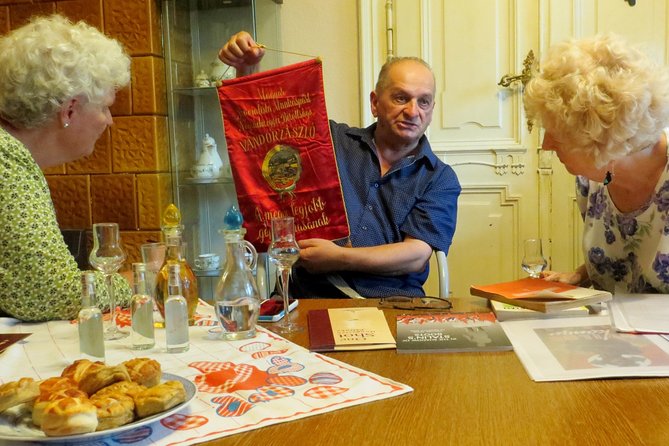
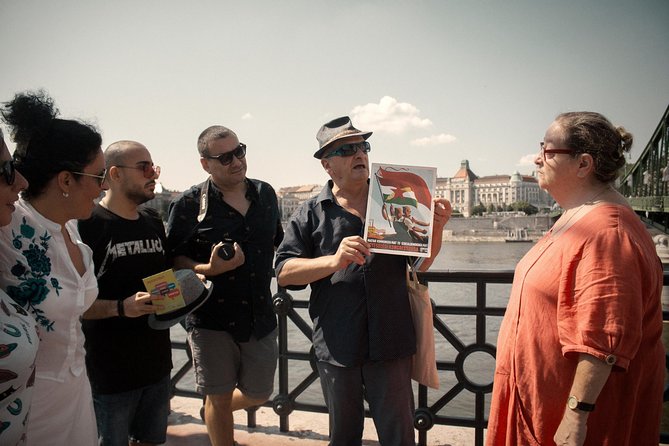
I like two things most. First, you get firsthand-style storytelling from guides such as Miklós, Balázs, and Agy, who take questions and bring the timeline to life without turning it into a lecture. Second, you walk to the places where 1956 happened, including Kossuth Square and Corvin köz, so you understand what people faced, not just what happened on a map.
One drawback to plan for: you must choose the right add-on. The House of Terror and Memento Park are optional, and one or two people have felt the experience did not match their expectations when the selection was misunderstood.
In This Review
- Key things that make this tour work
- Walking tour that reads like a timeline, not a slideshow
- Liberty Square Soviet memorial: where the story begins in 1945
- Szabadság tér: the space between empires and the urge to breathe
- Kossuth Square and the Parliament front line of 1956
- Petőfi Statue and Március 15 Square: life and memory in the same spot
- Corvin köz resistance and the bridge to Gellért Hill
- Coffee at Bambi Presszó: when history feels lived-in
- Optional add-on: Memento Park and why Budapest kept the statues
- Optional add-on: House of Terror, a museum built to confront you
- Price and value: what you’re really paying for
- The small-group format: easier questions, better pacing
- Who should book this tour, and who might not love it
- Should you book this Budapest Communist-era walking tour?
- FAQ
- How long is the tour?
- Is this a private tour?
- What language is the tour in?
- What is included if I choose Memento Park or the House of Terror?
- Are pickup and drop-off included?
- Is the tour family-friendly?
Key things that make this tour work
- Soviet Siege memorial at Liberty Square: a dramatic starting point that sets the tone for what comes next
- Kossuth Square and the 1956 firefight: you see the Parliament area where the revolution tension turned deadly
- Corvin köz resistance stories: you learn how local youngsters fought, including Molotov cocktails and stolen weapons
- A coffee stop with culture, not a souvenir vibe: Bambi Presszó is a small pause that adds texture to the story
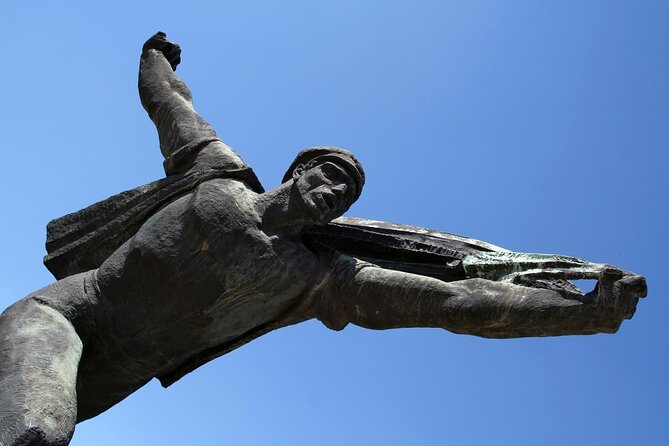
- Memento Park as a lesson in memory: statues saved after the fall, not destroyed
- House of Terror as architecture with intent: a renovated building designed to confront visitors, with a T-54 tank inside
Walking tour that reads like a timeline, not a slideshow
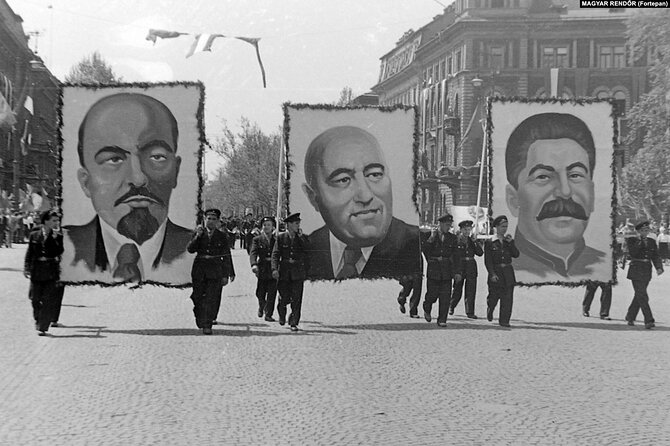
Budapest is packed with layers. This tour helps you sort them out, step by step, while you’re still out in the open air. The Communist era is not covered as one big blur. Instead, you connect the dots from WWII aftermath, to the 1956 revolution, to what survived after communism collapsed.
I especially like how the route is built around public space. You’re not stuck in a classroom version of history. You stand at the memorials, squares, and street corners where political power was displayed, and you get the human meaning behind the stone.
You also get handouts, plus a guide leading in English. That matters because the Communist era can feel abstract until someone gives you the missing context in plain language.
Liberty Square Soviet memorial: where the story begins in 1945
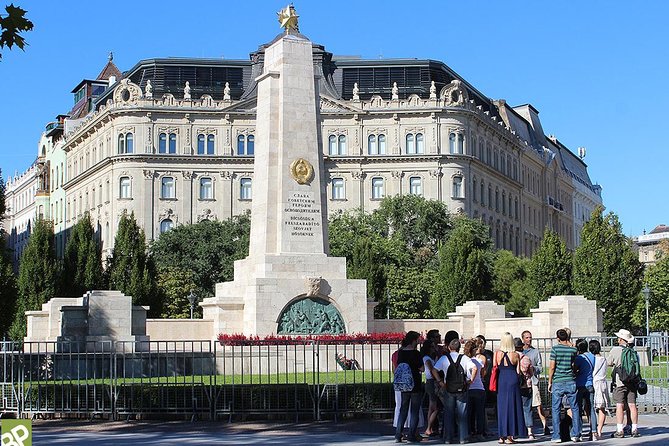
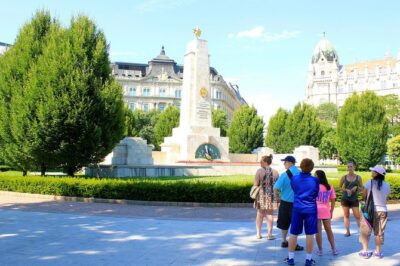
The walk starts at Liberty Square, where you’ll find a grand memorial to the Soviet army tied to the Siege of Budapest. It’s big, formal, and impossible to ignore, and that’s the point. This kind of monument is built to send a message about who controls the narrative.
From here, you’ll move into the idea that politics did not wait politely in the background. It arrived as public art, street names, and state-sponsored meaning. Even if you’ve seen other Communist sites elsewhere in the region, the scale and the wording here make it feel very Budapest, very specific.
A practical perk: this opening stretch helps you orient fast. You learn what to notice as the tour goes on, so later stops land with more impact.
More of the socialist decades, told on foot
- Budapest: Communist History Tour with House of Terror Option
★ 4.8 · 182 reviews - Communism in Hungary with a Historian
★ 5.0 · 70 reviews - Budapest: 3-Hour Walking Tour About Communism (Small Group)
★ 4.7 · 70 reviews - Lives of Hungarians Under Communist and Capitalist system
★ 5.0 · 59 reviews
Szabadság tér: the space between empires and the urge to breathe
Next comes Szabadság tér, one of the city center’s most spacious squares. The dimensions make sense once you hear its Habsburg-era context, when a fortress-like building footprint once stood here. Today, the green area gives your legs a small reset.
This stop is useful because it keeps the tour from becoming nonstop heaviness. You get a breather while the guide frames how different regimes shaped the city’s physical design. It’s a reminder that political power is often expressed through urban planning, not just propaganda posters.
If you prefer history that explains why a place looks the way it does, you’ll like how the square’s size and structure get translated into understandable cause and effect.
Kossuth Square and the Parliament front line of 1956
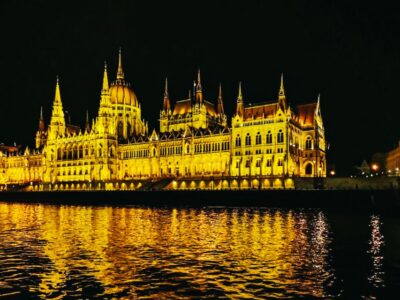
At Kossuth Square, you’ll see the Hungarian Parliament building, renamed in 1927 in honor of Lajos Kossuth. This matters because the Parliament is more than architecture. It’s also a symbolic stage, and in 1956, that stage became dangerous.
You’ll hear how the revolution’s violence ignited near the Parliament building, beginning as a firefight and spreading into chaos. The guide will talk about the mixed crowd in the square, with civilians alongside the demonstrators, including women, children, and the elderly. You’ll also learn that the exact number of demonstrators killed is still not fully known.
This is where the tour earns its emotional weight. The facts are heavy, but the guide keeps them grounded in what people on the ground would have felt: confusion, fear, and the sudden shift from protest to survival.
Tip for your own visit: keep your pace slow near the Parliament area. It’s easy to rush through a famous building, but this stop works best when you linger long enough to understand why people gathered there.
Petőfi Statue and Március 15 Square: life and memory in the same spot
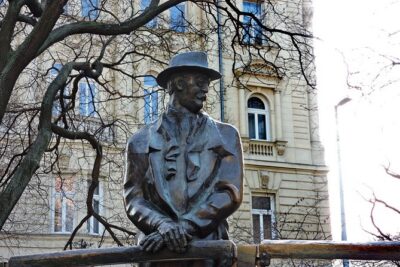
Then you’ll head toward Petőfi Statue and Március 15 Square at the foot of Erzsébet Bridge, in front of one of Budapest’s oldest churches. This stop is a nice change of rhythm because it connects political memory with daily city life.
The square is popular for social life, and a 2011 renovation made it even more visible as a meeting spot. For you, that means you’re not only looking at Communist-era remnants. You’re also seeing how Budapest reuses key spaces once the past moves on.
If you like your history with real-world texture, this is one of the calmer, more human moments of the walk.
Corvin köz resistance and the bridge to Gellért Hill
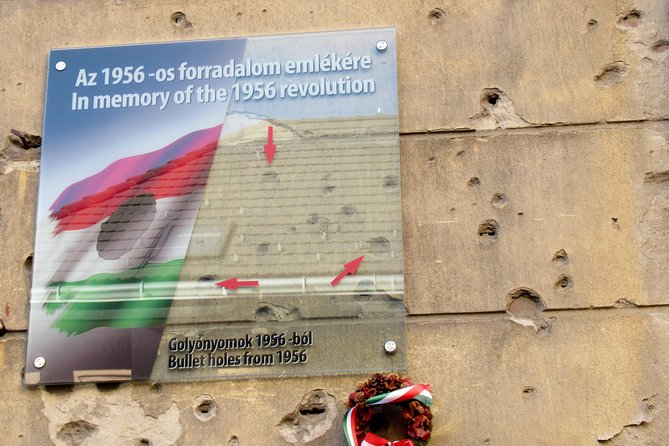
The tour moves to Corvin köz, known as a major resistance center during the 1956 uprising. Here, you’ll hear how local youngsters fought the invading Russians using Molotov cocktails and guns they reportedly stole from soldiers to take on Soviet tanks.
It’s hard to read a street-level story like that without feeling it in your body. This stop works because it’s not about abstract ideology. It’s about improvisation, bravery, and the gap between what people had and what they faced.
From Corvin köz, you cross one of Budapest’s beautiful bridges and make your way toward St Gellért Square at the foot of Gellért Hill. The view opens up, and you’ll see the Liberty statue, erected in 1947 to commemorate Soviet liberation. That statue is a strong reminder that even “liberation” was contested, framed, and marketed differently depending on who controlled the story.
This combo, street-level resistance plus a big viewpoint, is smart guiding. You get scale, then you get detail.

Coffee at Bambi Presszó: when history feels lived-in
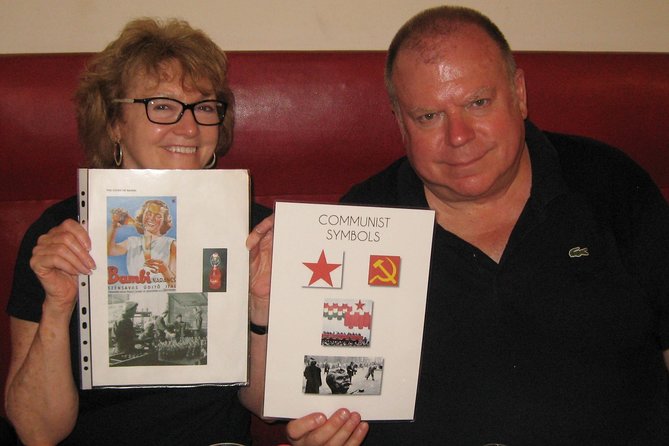
One of the highlights is a pause for coffee at Bambi Presszó, described as the last stronghold of communist culture. The key value here is not just the drink. It’s the chance to slow down and absorb what you’ve just walked through.
Coffee stops on tours can feel like forced breaks. This one tends to feel more like a context pause, where the guide can answer follow-up questions and help you connect the monuments you just saw to how people lived and talked.
One consideration: the tour notes that additional food and drink are not included. So plan to pay for what you order, and keep it simple if you’re watching your budget.
Optional add-on: Memento Park and why Budapest kept the statues
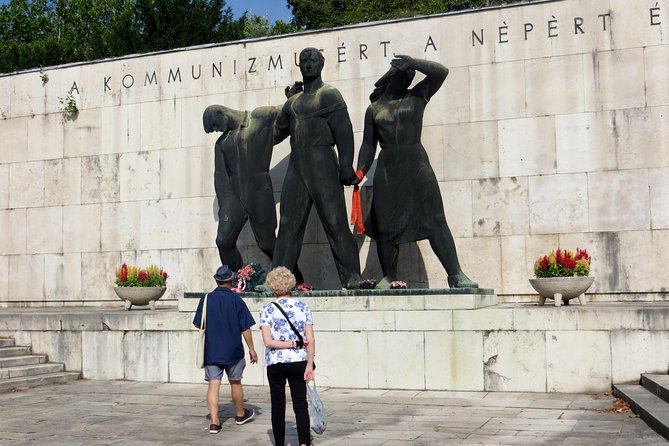
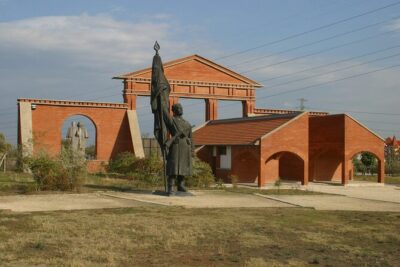
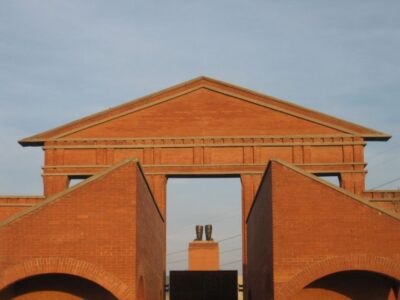
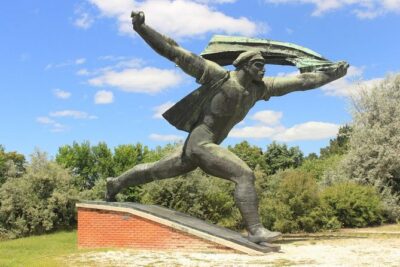
If you choose Memento Park, you’ll spend about an hour here, with admission included. The concept is straightforward but powerful. When communism collapsed in Hungary in 1989, Budapest had public works of art that celebrated the era.
Instead of destroying them, the city decided to save the statues in 1993, and the idea for Memento Park was born. For you, that means you see Communist-era symbolism in a setting where you can study it with distance. It becomes less like propaganda and more like documented visual culture.
This option is a great fit if you want to focus on how a society deals with its past. Do you erase it? Archive it? Frame it with context? Memento Park pushes you toward the third option.
Optional add-on: House of Terror, a museum built to confront you
If you choose the House of Terror Museum, admission is also included, with about an hour on site. The building itself is part of the message. It was renovated inside and out, and the reconstruction plans were designed by architects János Sándor and Kálmán Újszászy.
The exterior is black and monumental, giving the museum a framed, statement look along Andrássy Avenue. Inside, you’ll find a T-54 tank on display, which helps underline that this was not only about surveillance and paperwork. It also connects to force.
This is the better choice if you want a darker, more direct look at the machinery of repression. It’s also a good add-on if you like museums where objects, room design, and exhibits carry a strong narrative.
Small heads-up: one negative review you should take seriously is about audio and guide presence in the House of Terror experience. If you tend to get frustrated when a guide is hard to hear, consider requesting that they speak clearly and pace the museum with you.
Price and value: what you’re really paying for
The price is listed at $280.33 per group, up to 5 people. If you fill the group, that can work out to roughly $56 per person. That’s the math that makes a private guide feel more reasonable.
Here’s what you’re paying for, beyond walking:
- A local guide leading the story, not just directions
- Informative handouts
- Entrance tickets for the optional visits you select
If you add Memento Park or House of Terror, those admissions being included is a real value boost. If you skip the add-ons and stick to the walking portion, you’re paying mainly for the guide and the structure of the route, plus the handouts.
There’s also a timing note to consider. One response mentioned the tour lasting longer than advertised, which can be a win if the guide is able to tailor for your group. But it can feel like a mismatch if you’re trying to stick to a tight afternoon schedule.
If your day is already packed, you might want to reserve extra buffer time before and after. History takes longer than you think when you stop to ask questions.
The small-group format: easier questions, better pacing
This is a private tour for your group only, up to 5 people. That matters more than it sounds. With a small group, the guide can adapt, answer questions, and keep the pace aligned with how much you want to know.
In reviews, guides like Miklós and Balázs are praised for adjusting schedules based on what people care about. One guide response also mentions helping with public transportation so you can keep exploring afterward. That kind of practical guidance is where private tours often beat bigger group options.
If you love history but get annoyed when it turns into nonstop facts, you’re more likely to enjoy this style. You’ll hear personal stories and contextual explanations, not only dates and slogans.
Who should book this tour, and who might not love it
This tour suits you best if you want Communist-era Budapest explained through real places, not just headlines. It’s ideal for people who like political history with human stakes, and those who prefer walking over reading.
It can be a tougher fit if you want a light, casual city stroll. Some stops involve violent events and difficult questions, especially around 1956 and the museum option.
Also, double-check your add-on choice. One low rating mentioned confusion over whether House of Terror was included. If you’re booking online, confirm what you selected before you meet the guide, so you get exactly the experience you think you bought.
Should you book this Budapest Communist-era walking tour?
If you’re curious about how Budapest still shows Communist-era traces in plain sight, I’d book it. The combination of squares, street-level stories, and optional museums gives you multiple ways to understand the same era, depending on your mood and time.
Choose the walking portion if you want structure and context without committing to a museum. Add Memento Park if you’re drawn to memory and visual symbolism. Pick House of Terror if you want a direct confrontation with the darker side of repression.
Finally, if you’re a question person, bring your curiosity. This tour format is designed for dialogue, and the best parts usually happen when you ask what the monuments are really trying to say.
FAQ
How long is the tour?
The walking tour is about 3 hours.
Is this a private tour?
Yes. It is private, and only your group participates, up to 5 people.
What language is the tour in?
The tour is offered in English.
What is included if I choose Memento Park or the House of Terror?
Entrance tickets for the visit options are included, and each option is about 1 hour.
Are pickup and drop-off included?
Pickup is offered, but hotel pickup and drop-off is listed as not included, so it’s best to confirm what is arranged for your group.
Is the tour family-friendly?
Children must be accompanied by an adult. The tour also notes a moderate physical fitness level and allows service animals.
More Tour Reviews in Budapest




More From the Socialist Years




Reviewed recently around Budapest
- Audio visual multi-sensory chefs journey dinner experience★ 5.0 · 3 reviews
- Tapolca Cave Lake and Tihany/ Balaton private tour from Budapest★ 4.5 · 3 reviews
- SzentEndre-SaintAndrew City Privately Shopping and Picturesque★ 4.5 · 3 reviews
- Sightseeing flight over Budapest★ 5.0 · 3 reviews
- Self Guided Tour In Budapest With 100 Captivating Audio Stories★ 5.0 · 3 reviews
- Private Danube Bend Visegrad and Szentendre Tour With Transport★ 5.0 · 3 reviews
Communist Era and Cold War Tours, compared.
 ★ 4.8Communist History Tour with House of Terror OptionFrom $58182 reviews
 ★ 5.0Communism in Hungary with a HistorianFrom $5970 reviews
 ★ 4.73-Hour Walking Tour About Communism (Small Group)From $5770 reviews
 ★ 4.5Budapest Hammer & Sickle Communist Times TourFrom $7968 reviews
 ★ 5.0Lives of Hungarians Under Communist and Capitalist systemFrom $459 reviews
 ★ 5.0Guided Tour with Admission in Memento ParkFrom $3048 reviews
 ★ 4.5Memento Park TicketFrom $1046 reviews
 ★ 5.0Memento Park Visit with Private Trabant TransferFrom $30544 reviews
Browse the lists this tour appears in