
Review · JEWISH QUARTER AND HERITAGE
Private Jewish Heritage Tour of Budapest with Local Expert
A short walk, big stories. This private tour strings together major Jewish landmarks in Budapest, from Herzl Square into the synagogue triangle, with a guide who ties the places to the people who lived them. I like that it mixes World War II ghetto context with real, street-level sightseeing, not museum-style lecturing.
Two things I especially like: you get a private format where you can ask questions, and the tour includes a real food moment with flódni at Fröchlich Patisserie. A third plus is practical stuff too, like handouts and a coffee or tea break so you are not just walking and absorbing information nonstop.
One drawback to plan around: it is a tight 2.5 hours with many stops and only moderate walking, so if you want long time inside any site, you may feel a bit scheduled. Also, entrance tickets are listed as not included, even though several stops are described as free, so it is worth checking what is actually required at each location you stop for.
In This Review
- Key takeaways before you go
- The value of a private Jewish heritage walk in Budapest
- Herzl Square, the Jewish Quarter, and the flódni stop that ends the awkward hunger
- Dohány Street Synagogue area: seeing the scale without getting rushed
- Rumbach Street Synagogue: the Moorish interior vibe from the details
- Carl Lutz Memorial: honoring a WWII hero with real-world meaning
- Kazinczy Street Synagogue and the Orthodox Art Nouveau style
- Erzsébetváros and the “city within a city” idea
- Dob Street sweets and the Kazinczy area as a living neighborhood
- Castle Garden and the ritual baths photo moment
- Final stroll through the former ghetto streets in District VII
- Guides and consistency: what to expect, and the one risk to watch
- Practical tips to get the most from the 2.5-hour route
- Who this tour suits best
- Should you book this private Jewish heritage tour?
- FAQ
- How long is the private Jewish heritage tour in Budapest?
- How much does the tour cost per person?
- Is pickup available, and how do I meet the guide?
- Is this tour private, or will I be mixed with other groups?
- What is included in the price?
- Are entrance tickets included?
- What food is included?
- What sites will we see?
- What about mobility and physical fitness?
- Is there a cancellation window?
Key takeaways before you go
- Private, local-guided route through the Jewish Quarter and synagogue sites, designed for questions and conversation
- WWII ghetto storytelling connected to recognizable streets and landmarks
- Flódni at Fröchlich Patisserie plus coffee or tea to keep the walking comfortable
- Synagogue triangle route with Dohány Street, Rumbach Street, and Kazinczy Street viewpoints
- Righteous Among the Nations context at the Carl Lutz Memorial (the Hungarian Schindler)
- Nightlife and beer ruins tips and street-art notes tied to the Kazinczy area
The value of a private Jewish heritage walk in Budapest
Budapest is a city of districts that feel like chapters, and this route is built like one continuous read. You start with big-significance landmarks in the Jewish Quarter and move toward the famous synagogue cluster, so the geography itself helps the story make sense. It is a 2.5-hour walking tour with a local expert, so you are not just seeing addresses, you are learning why each one matters.
The price, $220 per person, will only feel fair if you care about guidance and context. For a private tour, that cost usually buys you something you cannot copy from an app: the order of stops, the way a guide explains WWII-era changes, and the small practical touches like handouts and a notebook with a souvenir pen.
There is also real value in how the tour is packaged. You get coffee and/or tea, plus free admission is referenced for stops, and you get pickup offered with a route near public transportation. That combination can save time and small hassles, especially if you are planning a full day in Budapest.
Herzl Square, the Jewish Quarter, and the flódni stop that ends the awkward hunger
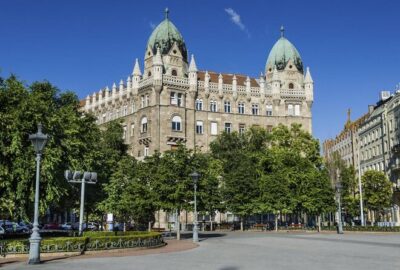
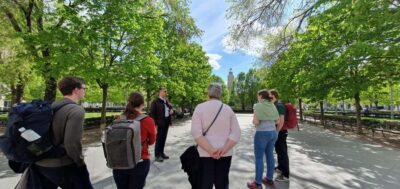
Most tours start with a landmark. This one starts with Herzl Square and the Great Synagogue area, then moves into the Jewish Quarter with a guided walk. You learn how Jewish culture flourished in District VII for more than 200 years and how the area became home to the largest and most active Jewish community in Eastern Europe.
From there, you will hear stories tied to Budapest’s WWII ghetto period, with specific attention to major landmarks related to 1944. The benefit of doing this while you are standing on the street is that you can picture how daily life got rearranged, not just read about it later.
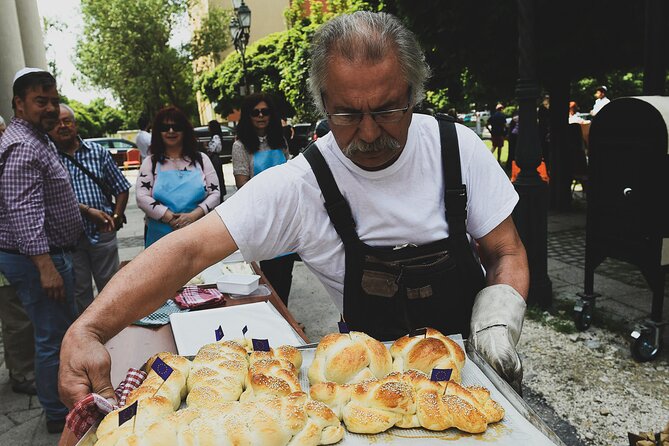
Then comes the food. You stop for flódni at Fröhlich Patisserie, and this is not a random snack break. Flódni is one of those modern Jewish desserts that locals recognize, so it works like a palate reset after heavier topics. If you are hoping for a tour that includes a real taste of the community, this is the kind of built-in moment that makes it memorable.
Possible drawback: because the pace is designed for a 2.5-hour tour, the Jewish Quarter time is not endless. At about 20 minutes plus a guided walk portion, you get a strong overview, but you will not linger the way you might if you planned a longer self-guided afternoon.
Deeper into the old Jewish Quarter
- Budapest Jewish Heritage Memorial Walking Tour & Synagogue Entry
★ 5.0 · 568 reviews - Budapest: Jewish Heritage Guided Tour with Synagogue Ticket
★ 4.8 · 533 reviews - Walking Tour Budapest incl. the Shoes on the Danube Bank
★ 5.0 · 387 reviews - Jewish Quarter of Budapest Walking Tour
★ 4.7 · 369 reviews
Dohány Street Synagogue area: seeing the scale without getting rushed
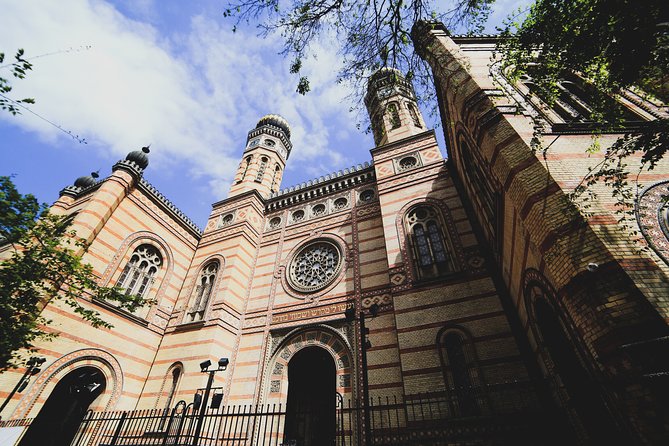
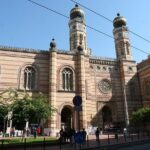
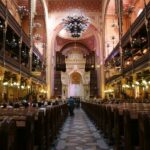
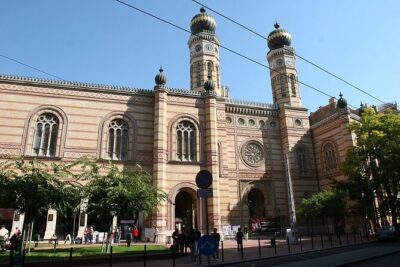
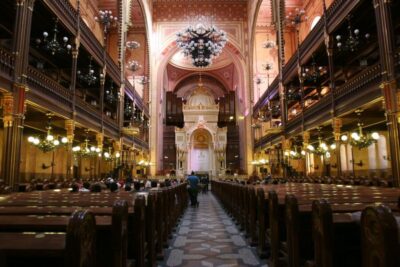
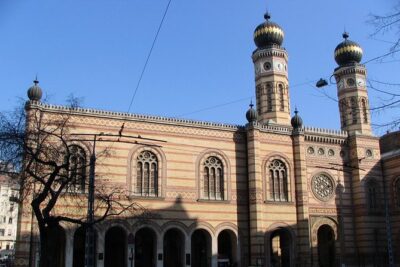
Dohány Street Synagogue is the headline stop, and the tour focuses on the synagogue vicinity. The main hook here is scale: this is described as the largest synagogue in Europe and the second largest in the world. Even if you mostly experience it from the outside or around the area, the size matters, because it signals how visible and established the community became.
This stop is about orientation as much as photos. You are building a mental map of where the important sites sit, so later stops in the triangle feel connected, not random.
Time here is tight, around 20 minutes. That is usually enough to understand why the site is central and to capture a few good angles, but it does mean you will want to move on quickly with your guide rather than linger for long conversations.
Rumbach Street Synagogue: the Moorish interior vibe from the details
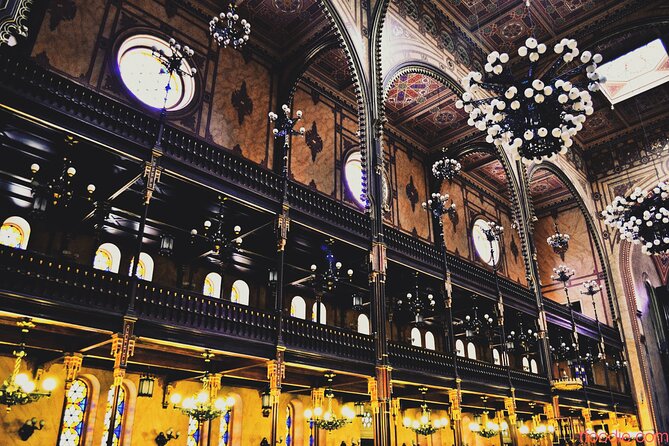
Next is Rumbach Street Synagogue, with a focus on the interior decorations described as shining in graceful light. That description matters, because it tells you this stop is about aesthetics and atmosphere, not just name recognition.
You get a shorter window here, about 15 minutes, so think of it as a focused taste of the design and style. If you love architecture, this is the stop where you will likely start noticing patterns, motifs, and how Moorish influences translate in a Budapest setting.
The drawback is the same as before: short timing. If you are the type who wants to sit, stare, and take notes for an hour, you may wish this stop was longer. Still, for most people, the quick hit works because the tour is building toward other sites and viewpoints.
Carl Lutz Memorial: honoring a WWII hero with real-world meaning
The tour includes the Carl Lutz Memorial, dedicated to Carl Lutz, one of the Righteous Among the Nations of the World. The tour also frames him as the Hungarian Schindler, which gives you a simple reference point for why his story is remembered.
This stop is important because it changes the mood in a useful way. After ghetto stories and synagogue sites, you get a clear human thread about rescue and moral courage. It helps the tour feel less like only about loss and more like about actions people took even under extreme pressure.
You will have about 20 minutes here. That is enough time to understand who Carl Lutz was in this context and to connect his story to the broader WWII narrative you heard earlier.
Kazinczy Street Synagogue and the Orthodox Art Nouveau style
Then you head toward Kazinczy Street Synagogue, described as one of the largest functioning Orthodox synagogues in Europe and built in an Art Nouveau style. This stop is a smart contrast to the earlier, larger headline synagogue. You get a different architectural language and a different feeling of religious continuity.
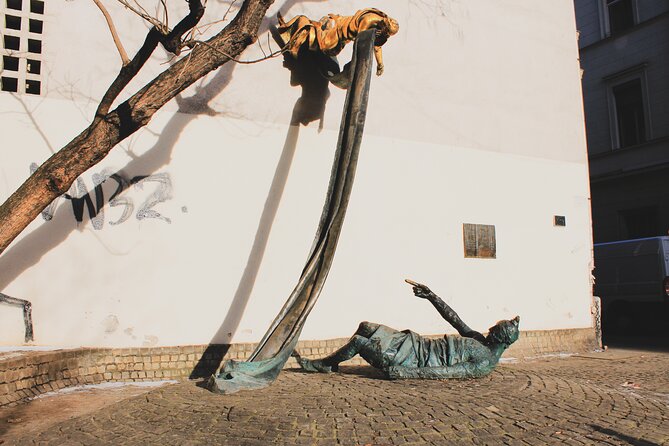
The tour also calls out local tips for beer ruins and nightlife, plus notes on street art and other secrets in the area. This is where the tour becomes more than a memorial route. You leave with practical ideas about where to go after you finish learning.
Time at this point is about 20 minutes, and you also get a chance to walk past the Passage to the State Courses area. Since that part of the route is more street-level than interior, it suits people who prefer looking and listening over sitting and waiting.
Private guides we booked in Budapest
Erzsébetváros and the “city within a city” idea
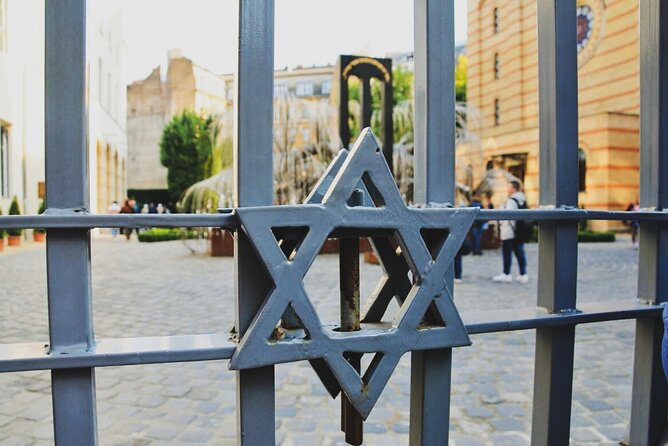
The tour then moves into Erzsébetváros, the historic Jewish quarter area often described as a city within a city. You get the big idea fast: within Budapest, there were 24 synagogues and prayer houses, and there are many monuments tied to Jewish history, culture, and religion.
This part is a good reset after the heavier storytelling stops. It helps you understand how the Jewish community functioned as a dense, organized neighborhood, not a vague concept. You also learn what people mean when they describe the former ghetto as sitting in the heart of old Budapest.
Time here is about 20 minutes. You will not see every monument, but you will get the logic of the district, which makes it easier to explore on your own afterward.
Dob Street sweets and the Kazinczy area as a living neighborhood
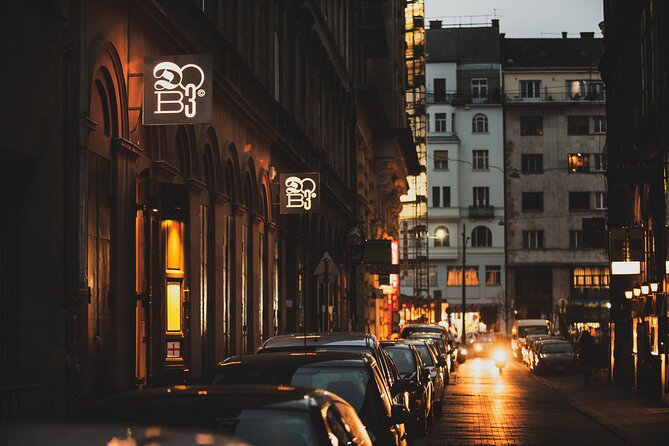
At Dob Street, the tour returns to Fröchlich Confectioner’s for Jewish delicacies beyond flódni. The list includes chanukkai donut and Purim Haman’s ears, plus other Jewish sweets. Even if you pick only one item, the point is that this is an edible map of seasonal Jewish traditions.
You will have about 20 minutes for this sweet stop. The advantage is that it keeps energy steady for the final section of the walk, instead of forcing you to wander around hungry.
After that, you walk through Kazinczy, described as the district’s central area, where there used to be a busy Jewish market surrounded by shops and restaurants and law firms. The tour notes that today the street can feel like a wine cellar vibe with kosher wine of good quality, and you get more local pointers for the area.
Time again is about 20 minutes, so this is not just a photo stop. You get enough context to recognize why Kazinczy feels different from other central Budapest streets.
Castle Garden and the ritual baths photo moment
Near the end, you visit Castle Garden for the oldest traditional Jewish baths, used for ritual purposes. The tour sets this up as a quick but meaningful photo and context stop, around 10 minutes.
Why it works: after synagogues and memorials, ritual spaces add another layer. Even if you only skim what you can see, you understand that community life included physical as well as spiritual practices.
The short time window is also a practical advantage. It gives you a final memorable moment without dragging. If you want to keep the momentum, the timing makes sense.
Final stroll through the former ghetto streets in District VII
You wrap up with a stroll through District VII and the Jewish Quarter, including streets of the former ghetto with synagogues, monuments, kosher restaurants, and kosher shops. This closing time is described as around 20 minutes, which is long enough to connect the last pieces and create a mental route you can follow again later.
What I like about a finish like this is that it gives you options. You can keep walking afterward in the direction you now understand, or you can step away and explore nearby cafés and shops with a clearer sense of what you are actually seeing.
The only caution: since this is still part of a 2.5-hour tour, you will want comfortable shoes and a willingness to keep moving. Moderate physical fitness is noted, so bring what you need and plan rest if you are tired.
Guides and consistency: what to expect, and the one risk to watch
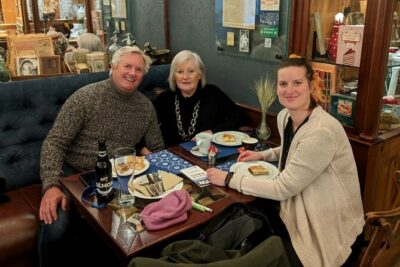
A strong private tour lives or dies by the guide, and this experience has some clear wins. One guide named Miklos is described as exceptional and on time, clear, and willing to take time to share lots of information without rushing you, which matters when your schedule is tight.
At the same time, there was at least one serious problem in a past booking, when the guide did not show up. In that case, the organizer reported the guide got sick and issued a refund after trying to reach the customer by phone.
So here is my practical advice: keep your contact details accurate when you book, and if you are traveling in a busy season, it is smart to confirm timing the day before. This is not about panic, it is about making sure you get the benefit you paid for.
Practical tips to get the most from the 2.5-hour route
This is a walking tour, so you want to travel light and dress for pavement. It lasts about 2 hours 30 minutes, with multiple stops that are mostly around 10 to 20 minutes each, which adds up quickly.
You should also plan for food pacing. The tour includes a flódni stop plus coffee and/or tea, so you are set for a snack. Since other food and drinks are not included, decide in advance if you will buy a bigger meal afterward.
If you want synagogue interiors, keep expectations flexible. Entrance tickets are listed as not included, even though the stops are described with free admission. That mix usually means you may be viewing from exterior areas or locations that do not require tickets, but it is still worth checking what is required for each site when you arrive.
Who this tour suits best
This tour is a great fit if you want Jewish heritage in Budapest with a guide who connects streets to stories, including WWII ghetto context. It is also ideal when you prefer a private group format and want to ask questions without juggling crowds.
I also think it works well for food-and-culture travelers because the flódni stop is built into the route, not tacked on at the end. If you like architecture and street atmosphere, the synagogue triangle layout gives you variety in a short time.
If you are mobility sensitive, stick to moderate expectations. The tour is noted for moderate physical fitness, so you will want to pace yourself and take breaks when offered.
Should you book this private Jewish heritage tour?
Book it if you want a structured walking route through the Jewish Quarter and synagogue cluster, with clear WWII context and a real local food stop. The private format and guide-led explanations are the main value here, and the Miklos highlight is exactly the kind of guide quality that makes a short tour feel complete.
Skip it or adjust expectations if you need lots of time at one site, or if you expect fully paid entry to interiors included. Also, because one past booking involved a guide not showing due to illness, it is worth being proactive about communication so you do not lose your day.
If you plan smart, wear comfortable shoes, and come ready to learn, this is one of those Budapest experiences that gives you a stronger sense of the city after you leave the last street corner.
FAQ
How long is the private Jewish heritage tour in Budapest?
The tour runs about 2 hours 30 minutes.
How much does the tour cost per person?
The price is $220.00 per person.
Is pickup available, and how do I meet the guide?
Pickup is offered, and the tour is near public transportation.
Is this tour private, or will I be mixed with other groups?
It is private. Only your group will participate.
What is included in the price?
It includes all fees and taxes, a notebook and a souvenir pen, visual handouts, and coffee and/or tea, plus the guided walking experience.
Are entrance tickets included?
Entrance tickets are listed as not included. The stops are described with free admission in the plan, so you may not need tickets, but it is best to confirm based on what you want to enter.
What food is included?
You can expect flódni at Fröchlich Patisserie, along with other Jewish delicacies listed for the confectioner’s stop. Other food and drinks are not included.
What sites will we see?
You visit the Jewish Quarter area, stops related to Dohány Street Synagogue, Rumbach Street Synagogue, the Carl Lutz Memorial, Kazinczy Street Synagogue, Erzsébetváros, Dob Street, Kazinczy Street, Castle Garden, and a final stroll through District VII.
What about mobility and physical fitness?
The tour is recommended for moderate physical fitness.
Is there a cancellation window?
You can cancel for a full refund up to 24 hours in advance of the experience’s start time.
More Tours in Budapest



More Tour Reviews in Budapest




The Jewish Quarter, Continued


Reviewed recently around Budapest
- Audio visual multi-sensory chefs journey dinner experience★ 5.0 · 3 reviews
- Tapolca Cave Lake and Tihany/ Balaton private tour from Budapest★ 4.5 · 3 reviews
- SzentEndre-SaintAndrew City Privately Shopping and Picturesque★ 4.5 · 3 reviews
- Sightseeing flight over Budapest★ 5.0 · 3 reviews
- Self Guided Tour In Budapest With 100 Captivating Audio Stories★ 5.0 · 3 reviews
- Private Danube Bend Visegrad and Szentendre Tour With Transport★ 5.0 · 3 reviews
Jewish Quarter and Heritage, compared.
 ★ 5.0Budapest Jewish Heritage Memorial Walking Tour & Synagogue EntryFrom $83568 reviews
 ★ 4.8Jewish Heritage Guided Tour with Synagogue TicketFrom $81533 reviews
 ★ 5.0Walking Tour Budapest incl. the Shoes on the Danube BankFrom $3387 reviews
 ★ 4.7Jewish Quarter of Budapest Walking TourFrom $2369 reviews
 ★ 5.0Best of Downtown and Jewish Quarter TourFrom $23312 reviews
 ★ 5.0Past and Present of Budapest Jewish District TourFrom $3264 reviews
 ★ 5.0Budapest City Walk in Jewish QuarterFrom $356218 reviews
 ★ 4.5Budapest Dohany Synagogue & Hungarian Jewish Museum & free extrasFrom $44218 reviews
Browse the lists this tour appears in