
Review · JEWISH QUARTER AND HERITAGE
A Journey through Jewish Budapest – Private Walking Tour
Jewish Budapest packs a lot into three hours. A private historian guide helps you connect the dots between sites like Dohány Street Synagogue and the streets around the old ghetto, without turning it into a textbook walk. I like that the pacing is built for understanding, and you can lean into questions as your group moves between landmarks.
My favorite part is how the tour mixes big, eye-catching places with smaller, story-driven moments that you can actually feel in your feet. You start with the Moorish Revival splendor of the synagogue complex, then keep walking through the neighborhood reality of District VII, including ghetto-area streets and even ruins on Castle Hill that hint at medieval Jewish life.
One possible drawback: several synagogue interiors require separate admission (and you’ll want shoulders and knees covered at Dohány and Kazinczy). If you show up underdressed or without time for ticket handling, the mood can get slowed right when you’re most eager to go in.
In This Review
- Key moments that make this tour worth your time
- A private Jewish Budapest walk that actually explains the place
- Price and value for a group up to 10
- Getting there: pickup, meeting point, and walking pace
- Entering Dohány Street Synagogue and the Temple of Heroes complex
- Kazinczy Street Synagogue, ghetto wall, and the ritual bath detail
- Rumbach Street Synagogue and why the Status Quo Ante matters
- Castle Hill ruins, District VII streets, and the ghetto neighborhood reality
- Shoes on the Danube Bank: the WWII memorial you will remember
- What you learn from a historian guide, not just the sites
- Practical tips so your visit runs smoothly
- Who should book this tour?
- Should you book this Jewish Budapest private walking tour?
- FAQ
- How long is the private walking tour?
- Where does the tour start and end?
- Is hotel pickup included?
- What time do morning tours depart?
- What language is the tour offered in?
- Are synagogue admission tickets included?
- Is the Shoes on the Danube Bank stop free?
- Is there a dress code?
- Is this a private tour?
Key moments that make this tour worth your time
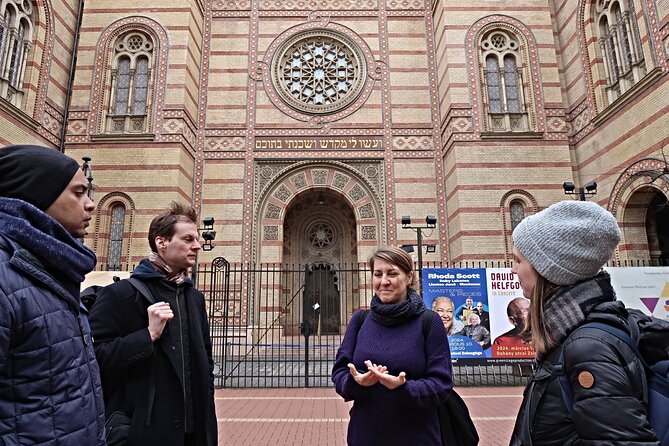
- Private historian guide for just your party, with flexibility if you want to spend extra minutes on a topic
- Dohány Street Synagogue and its Temple of Heroes, Jewish Museum, and Memorial Park inside the complex
- Ghetto Wall Memorial plus a walk through the former Pest Ghetto area and surrounding streets
- Kazinczy and Rumbach synagogues visited when open to the public, so you get more than exterior photos
- Shoes on the Danube Bank WWII memorial, a sobering stop that closes the loop on what you learned
A private Jewish Budapest walk that actually explains the place
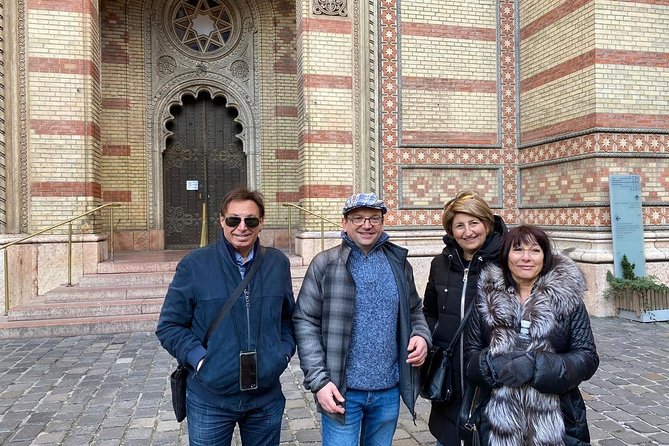
Budapest’s Jewish story is not one long, even chapter. It’s seasons of community life, cultural pride, forced separation, and then violence and loss, layered across neighborhoods. This private 3-hour walk gives you a clean path through that complexity, because it is designed around key locations you can see, plus context you can understand.
I also like the value angle here: you are paying for a guide to tailor the experience to your group size (up to 10). That matters when you have teenagers who need good pacing, or adults who want straight answers without getting steamrolled by a large group schedule. The reviews I’ve seen strongly emphasize how much guides bring to the conversation. For example, Andrew gets praised for passion and knowledge, while Kati and Kata are described as making the district history easy to grasp and engaging even for younger visitors.
Price and value for a group up to 10
The price listed is $396.52 per group, up to 10 people, for about 3 hours. That can look high if you are traveling solo or as a couple, but it can quickly become fair when you split it among friends or family.
Here’s the practical way to think about it. You are buying three things at once:
1) a private walking format, not a crowded van tour
2) a historian guide who can explain what you’re seeing
3) a tight route that hits major Jewish sites without you having to map everything yourself
If you are two or three people, you may feel the cost more. If you’re a small group of five to ten, it can be a strong deal compared with multiple separate ticketless guides plus the time you’d spend figuring out routes, entrances, and what matters.
Deeper into the old Jewish Quarter
- Budapest Jewish Heritage Memorial Walking Tour & Synagogue Entry
★ 5.0 · 568 reviews - Budapest: Jewish Heritage Guided Tour with Synagogue Ticket
★ 4.8 · 533 reviews - Walking Tour Budapest incl. the Shoes on the Danube Bank
★ 5.0 · 387 reviews - Jewish Quarter of Budapest Walking Tour
★ 4.7 · 369 reviews
Getting there: pickup, meeting point, and walking pace
This tour offers hotel pickup, and the guide can lead you by metro, tram, or on foot when sites are close. If you do not want pickup, or if you do not respond with an address, you meet the guide about 10 minutes before the start time at Cafe Synago Kavehaz (formerly Cafe Zenit) on Dohany utca 1/A.
The walk includes moderate walking, so comfortable shoes are a must. It’s not an all-day hike, but you will spend enough time on streets that you do not want blisters to steal your attention from the landmarks.
You also get a nice timing structure. Morning departures run at 10am year round, and afternoon departures are available in certain seasons. Morning tends to be a good choice if you want cooler streets and an easier start for synagogue entrances.
Entering Dohány Street Synagogue and the Temple of Heroes complex
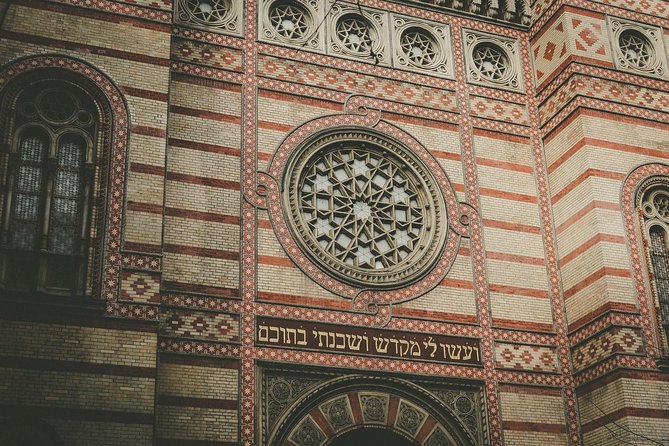
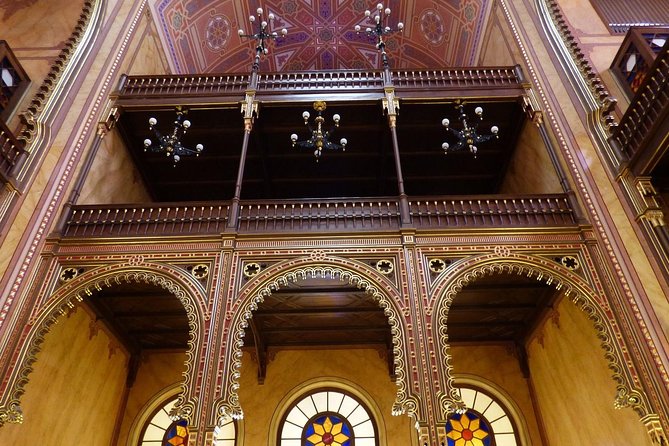
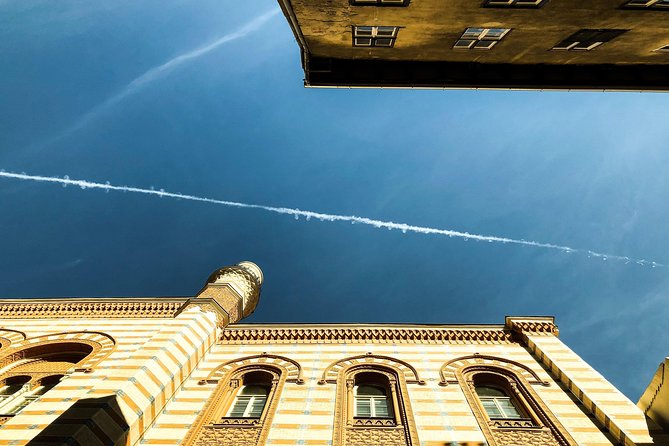
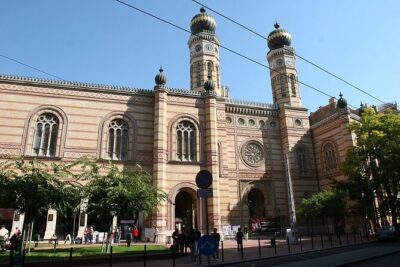
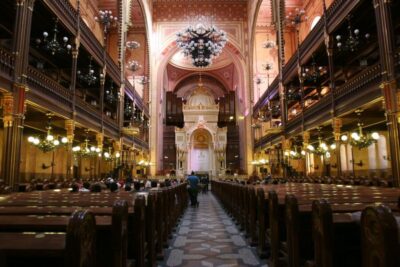
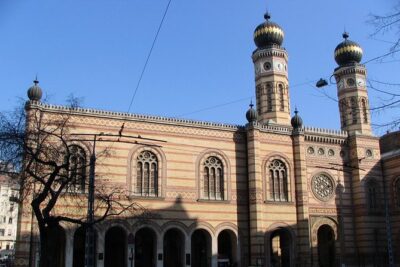
Your first major stop is the Great or Central Synagogue, known as the Nagy Zsinagoga on Dohány Street. The tour starts here because it sets the visual and emotional baseline. You get to see what the community built and how it wanted to present faith and identity in architecture.
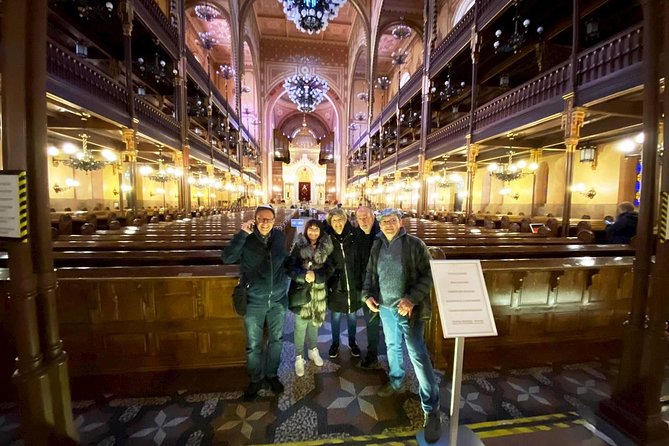
Expect a visit aided by a Jewish Studies Scholar. The building is described as Moorish Revival in style, and it is considered the second-largest synagogue in the world, while also being called the largest temple in Europe. That size is not just trivia. It changes the way you experience the space, because it feels like a public statement, not a small neighborhood room.
Inside the complex, you’ll also look at:
- the Temple of Heroes
- the Jewish Museum
- and a Memorial Park
Admission tickets for this stop are not included in the tour price. The operator also notes that tickets may be provided if you do not have a pass, so it’s worth planning for some ticket handling time. Also, you’ll want to follow the dress request: shoulders and knees covered for visitors at Dohány and Kazinczy.
What I like about starting with this complex is that the rest of the route becomes easier to follow. Once you understand the synagogue’s role, the later ghetto-area streets hit harder, and the WWII memorial stop makes more emotional sense.
Kazinczy Street Synagogue, ghetto wall, and the ritual bath detail
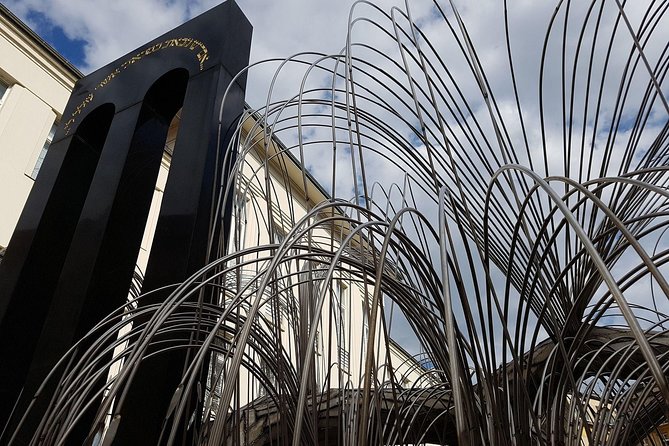
From Dohány Street, you keep walking toward Kazinczy Street, with several meaningful layers along the way. One stop on the route is the neighboring Ghetto Wall Memorial, erected in 2014. It marks the boundary experience, a physical reminder that the city’s map changed for Jewish residents during the era of the ghetto.
Then you pass a luxurious mikve, a ritual bath. Even if you’re not religious, this detail helps you understand how daily life and spiritual practice were connected in community culture. It’s also a helpful contrast to the memorial themes, because it shows the continuity of identity and tradition before and after catastrophe.
At Kazinczy Street, you’ll view the exterior of an Art Nouveau orthodox synagogue and, when it is open to the public, you will visit the interior as part of the tour. That interior access is one of the practical advantages of a guided walk, because it is easy to miss opening hours or entrance rules when you travel on your own.
Like Dohány, this stop lists synagogue tickets as not included. The same dress request applies here too, so plan outfit details before you arrive.
Rumbach Street Synagogue and why the Status Quo Ante matters
Next is the Rumbach Street Synagogue, a stop that gives you something more than architecture. The tour frames it through the Status Quo Ante stream of Judaism, which helps explain why different communities and traditions formed alongside each other.
You’ll start by observing the impressive facade, then you’ll visit the interior when the synagogue is open to the public. Admission tickets are listed as not included here as well, so expect that you might need to handle tickets or waiting briefly depending on how access works that day.
I appreciate this stop because it adds a social layer. It’s not only about one monument or one era. It’s about religious diversity within the broader Jewish story in Budapest, which makes the neighborhood feel more real and less like a theme park of plaques.
Other Budapest walks at a similar pace


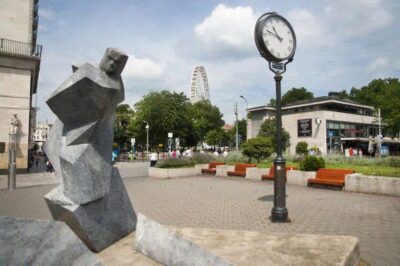
Castle Hill ruins, District VII streets, and the ghetto neighborhood reality
Between the synagogue stops, the walk covers the streets that were historically Jewish working-class neighborhoods, especially around District VII. This is where Budapest stops being a list of attractions and starts being a lived-in place.
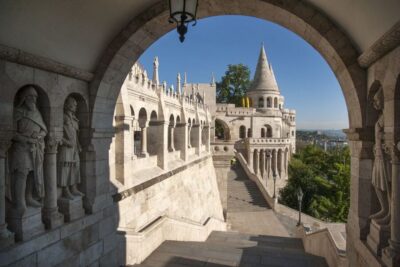
The tour also includes the former Pest Ghetto area and some ruins of synagogues dating to medieval times on Castle Hill. You won’t get the full dramatic scale of the Dohány complex here, but that is the point. Ruins and remnants can be more haunting because they suggest how much was lost and how long the neighborhood kept changing.
This section is also where a historian guide earns their fee. When you learn how these neighborhoods evolved, the geography clicks. You can stand on streets and understand why the ghetto-area path leads where it leads, and why the walking route is designed to bring you from community centers to the memorial spaces.
Shoes on the Danube Bank: the WWII memorial you will remember
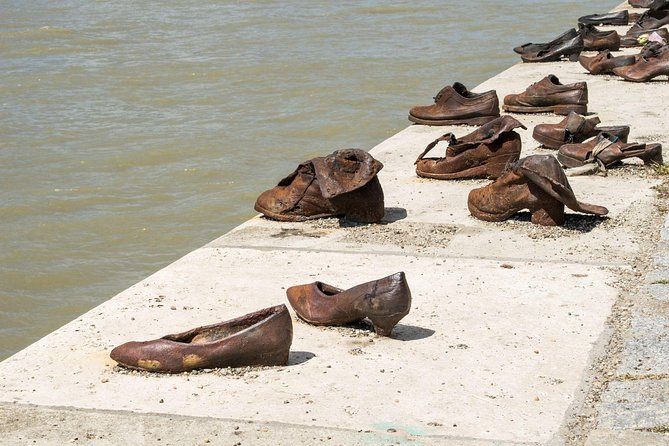
The tour closes at the Shoes on the Danube Bank, a memorial erected on April 16, 2005. It honors Jews massacred here during WWII. The story is specific and brutal: people were ordered to take off their shoes, were shot at the edge of the water, and their bodies fell into the river.
This stop is free and is worth giving your full attention. I like that the tour ends here because it forces a final emotional connection to everything you learned earlier. If you were focused only on architecture at the synagogues, this memorial makes it clear that the city’s story was also about destruction.
You finish in the Pest Ghetto area, and from there you can keep exploring on your own if you want. That optional freedom is useful because you might want to return for photos, or you may want to find a nearby café for a break after the heavier material.
What you learn from a historian guide, not just the sites
The best part of this tour is the way a good guide turns locations into meaning. The reviews I saw repeatedly stress guide passion and strong knowledge of Jewish culture and Hungarian Jewish history, especially when the guide can explain it in a way that works for mixed ages.
Andrew is described as passionate about Jewish culture and history, with deep knowledge about everything seen on the tour. Kati is praised for incredible knowledge that makes the Jewish quarter’s history feel understandable. Kata and Kati both appear in feedback as guides who kept younger participants engaged, which is not a small thing on a walking tour with emotionally heavy topics.
If your group includes teenagers or pre-teens, this matters. A private format means the guide can adjust tone and pace so the tour stays moving and not preachy or confusing.
Practical tips so your visit runs smoothly
A few real-world things help you get more from the tour.
- Dress for entrances: shoulders and knees covered are requested for Dohány and Kazinczy. Bring a light layer if you’re unsure.
- Expect tickets at key stops: the tour notes admissions for the synagogues are not included, though tickets may be provided if you don’t have a pass.
- Wear real walking shoes: moderate walking and street time add up in three hours.
- Plan your expectations for the WWII stop: Shoes on the Danube Bank is free, powerful, and not a quick photo-op. Give it a minute to sink in.
- Ask questions at good moments: if something connects to your family background or interests, this is the kind of route where the guide’s context makes those questions land better.
Who should book this tour?
This tour fits best if you want:
- a private, historian-led introduction to Jewish Budapest
- major synagogue stops plus the WWII memorial connection
- a walking route that includes ghetto-area streets, not just interiors
It is also a strong choice if you care about getting interiors when open. That’s not guaranteed when you travel independently, because openings change.
It may be less ideal if your group hates walking, or if you want a purely casual stroll without ticket timing or dress-rule planning.
Should you book this Jewish Budapest private walking tour?
If you’re trying to choose between a self-guided route and a guide-driven one, I’d lean toward booking this if you want meaning, not just landmarks. The price makes sense most when your group can share it, and the private format plus historian support is exactly what turns a dense topic into something you can actually carry with you.
Book it if you want to see Dohány Street Synagogue, step through the neighborhood story around the old ghetto area, and end at Shoes on the Danube Bank with a clear understanding of what those sites represent. Skip it only if you are short on walking tolerance, or you cannot accommodate synagogue dress rules and ticket handling on the day.
FAQ
How long is the private walking tour?
It’s approximately 3 hours.
Where does the tour start and end?
It starts at Budapest, Dohány u. 1, 1074 Hungary, and it ends at Shoes on the Danube Bank in Budapest, 1054 Hungary.
Is hotel pickup included?
Yes, hotel pickup is included. If you do not want pickup, or if you do not respond with an address, you meet at Cafe Synago Kavehaz (formerly Cafe Zenit) at Dohany utca 1/A.
What time do morning tours depart?
Morning tours depart at 10am year round.
What language is the tour offered in?
The tour is offered in English.
Are synagogue admission tickets included?
No. Admission tickets for the Dohány Street Synagogue, Kazinczy Street Synagogue, and Rumbach Street Synagogue are not included. Tickets may be provided if you do not have a pass.
Is the Shoes on the Danube Bank stop free?
Yes, it’s free.
Is there a dress code?
Yes. Visitors to the Dohány and Kazinczy Synagogues are requested to have shoulders and knees covered.
Is this a private tour?
Yes. It is private, and only your group will participate.
More Tours in Budapest




More Tour Reviews in Budapest





The Jewish Quarter, Continued



Reviewed recently around Budapest
- Audio visual multi-sensory chefs journey dinner experience★ 5.0 · 3 reviews
- Tapolca Cave Lake and Tihany/ Balaton private tour from Budapest★ 4.5 · 3 reviews
- SzentEndre-SaintAndrew City Privately Shopping and Picturesque★ 4.5 · 3 reviews
- Sightseeing flight over Budapest★ 5.0 · 3 reviews
- Self Guided Tour In Budapest With 100 Captivating Audio Stories★ 5.0 · 3 reviews
- Private Danube Bend Visegrad and Szentendre Tour With Transport★ 5.0 · 3 reviews
Jewish Quarter and Heritage, compared.
 ★ 5.0Budapest Jewish Heritage Memorial Walking Tour & Synagogue EntryFrom $83568 reviews
 ★ 4.8Jewish Heritage Guided Tour with Synagogue TicketFrom $81533 reviews
 ★ 5.0Walking Tour Budapest incl. the Shoes on the Danube BankFrom $3387 reviews
 ★ 4.7Jewish Quarter of Budapest Walking TourFrom $2369 reviews
 ★ 5.0Best of Downtown and Jewish Quarter TourFrom $23312 reviews
 ★ 5.0Past and Present of Budapest Jewish District TourFrom $3264 reviews
 ★ 5.0Budapest City Walk in Jewish QuarterFrom $356218 reviews
 ★ 4.5Budapest Dohany Synagogue & Hungarian Jewish Museum & free extrasFrom $44218 reviews
Browse the lists this tour appears in