
Review · JEWISH QUARTER AND HERITAGE
A Journey through Jewish Budapest – Walking Tour
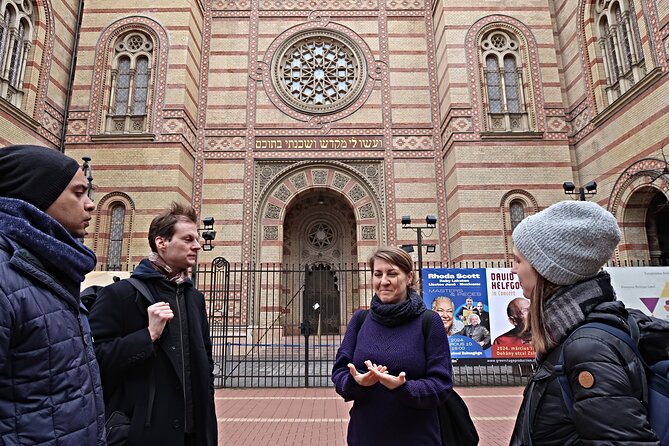
Synagogues, stories, and a sobering riverbank memorial. This 3-hour Jewish Budapest walking tour links places in the old Pest Jewish Quarter to the memory of wartime atrocities, with a historian guide setting the context as you move. I really like that the day is built around major sites, not random photo stops, and you also get a small-group feel, limited to six people (with a stated maximum of eight).
Two things I’d flag right away: you start inside the Great Synagogue complex with proper guidance from a Jewish Studies Scholar, and you end at the Shoes on the Danube Bank memorial, where the history lands in a quiet, direct way. One consideration, dress code and extra entry costs: tickets for the synagogues are not included, and you’re asked to cover shoulders and knees at the Dohány and Kazinczy synagogues.
You can choose a morning or afternoon start, and the tour meets right by the Great Synagogue at Kamara Café. Pickup is offered at the cafe across the street, and you’ll get a mobile ticket. Also note that synagogue interiors are visited only when open to the public, so timing can shape what you see inside each one.
In This Review
- Why This Jewish Budapest Walk Works So Well
- Key Highlights You’ll Actually Feel During the Walk
- Starting at Kamara Café, Right by the Great Synagogue
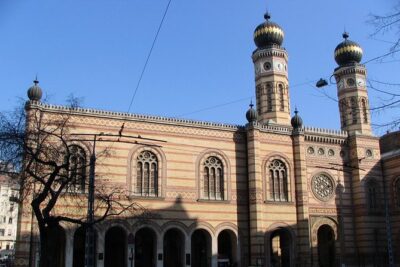
- Stop 1: Great or Central Synagogue (Nagy Zsinagóga) and the Dohány Complex
- Stop 2: Kazinczy Street Synagogue, Ghetto Wall Memorial, and a Ritual Bath (Mikve)
- Stop 3: Rumbach Street Synagogue and the Status Quo Ante Thread
- Stop 4: Shoes on the Danube Bank Memorial and Quiet Closure
- Small Group Size and the Guide Factor
- Value for Money: What You’re Paying For
- What to Wear and Bring for a Smoother Experience
- Best Fit: Who Should Book This Tour
- Should You Book This Jewish Budapest Walking Tour?
- FAQ
- FAQ
- How long is the Jewish Budapest walking tour?
- How much does the tour cost?
- Is the tour offered in English?
- What sites will we visit on the tour?
- Are synagogue admission tickets included?
- Is the Shoes on the Danube Bank memorial free?
- What should I wear for synagogue visits?
- Where does the tour start, and where does it end?
- Is there pickup or a mobile ticket?
Why This Jewish Budapest Walk Works So Well
This tour is designed for people who want a clear structure. You’re walking through the parts of Budapest that show up most often in Jewish history, then learning how different neighborhoods, institutions, and eras connect.
The small group matters. When you have only a handful of people, questions are easier and the guide can slow down for the details that usually get skipped on big bus tours. It’s also a practical way to see three synagogues in one go, without getting stuck figuring out schedules and entrances on your own.
Finally, the emotional pacing is handled well. It starts with major religious and cultural landmarks, then moves toward neighborhood memories, and ends at the Danube memorial. It doesn’t rush, and it gives you time to process.
Key Highlights You’ll Actually Feel During the Walk
- Three synagogues, one connected story, with expert guidance for each stop.
- Great Synagogue complex access with a Jewish Studies Scholar, including time at the Temple of Heroes, Jewish Museum, and Memorial Park area.
- Ghetto Wall Memorial and a Mikve visit, mixing public memory with lived religious practice.
- Status Quo Ante stream context at the Rumbach Street Synagogue, not just architecture.
- Shoes on the Danube Bank endpoint, a free memorial with a powerful WWII remembrance story.
- Small-group format, limited to six for a more personal pace, with a maximum of eight.
Starting at Kamara Café, Right by the Great Synagogue
The tour begins at Kamara Café near the Great Synagogue, at Dohány u. 1b (about as convenient as it gets). You’re meeting close to the complex you’ll be seeing first, which helps you get oriented quickly.
If you choose pickup, it’s also at Kamara Café, just noted as Dohány u. 1a, the cafe right opposite the Great Synagogue. After you book, you should receive your guide’s photo, phone, and bio, which makes it easier to locate them on arrival.
This is a walking tour, so give yourself a little extra time to get there. The start location is near public transport, but you’ll want to arrive calm, not sprinting.
Deeper into the old Jewish Quarter
- Budapest Jewish Heritage Memorial Walking Tour & Synagogue Entry
★ 5.0 · 568 reviews - Budapest: Jewish Heritage Guided Tour with Synagogue Ticket
★ 4.8 · 533 reviews - Walking Tour Budapest incl. the Shoes on the Danube Bank
★ 5.0 · 387 reviews - Jewish Quarter of Budapest Walking Tour
★ 4.7 · 369 reviews
Stop 1: Great or Central Synagogue (Nagy Zsinagóga) and the Dohány Complex
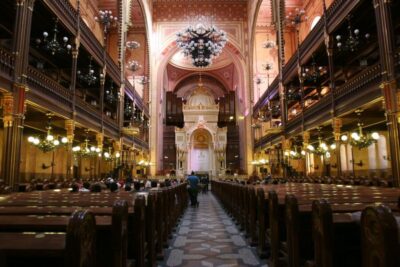
This is the big opener. You’ll explore the Dohány Street Synagogue complex with support from a Jewish Studies Scholar, which is a smart move because the building has layers of meaning that a quick look can’t cover.
What you’re taking in here:
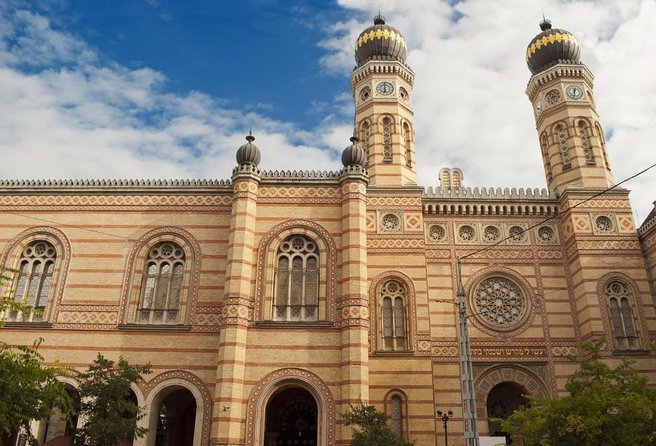
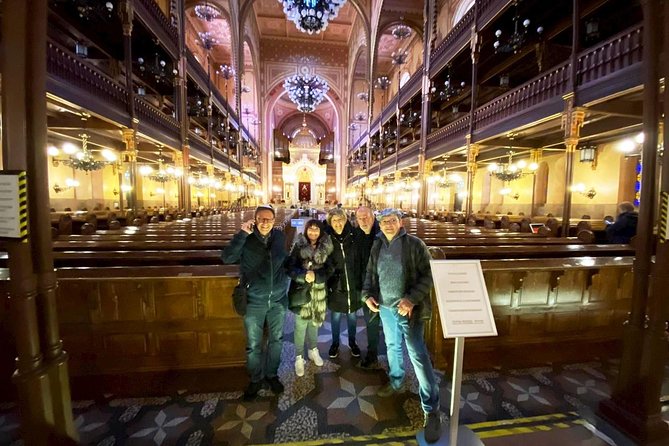
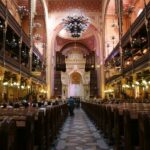
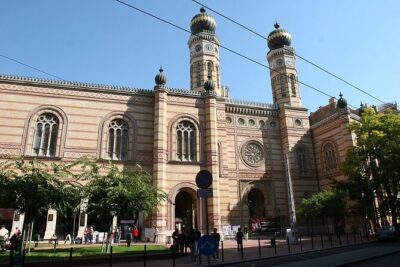
- The lavish Moorish Revival style, which is striking from both inside and out.
- The broader complex, not just one sanctuary stop.
- Time around the Temple of Heroes, the Jewish Museum, and a Memorial Park area within the same grounds.
Plan on about 30 minutes for this section. Admission tickets are not included, so you should budget for entry if you want full value from this first stop. One practical note: the tour requests shoulders and knees covered for visitors to the Dohány synagogue. If you forget, you might find it easier to have a light scarf or layer in your bag.
This first stop sets the tone. You’re seeing a major symbol of Jewish life and community identity in Budapest, then learning how that identity was shaped by the city around it.
Stop 2: Kazinczy Street Synagogue, Ghetto Wall Memorial, and a Ritual Bath (Mikve)
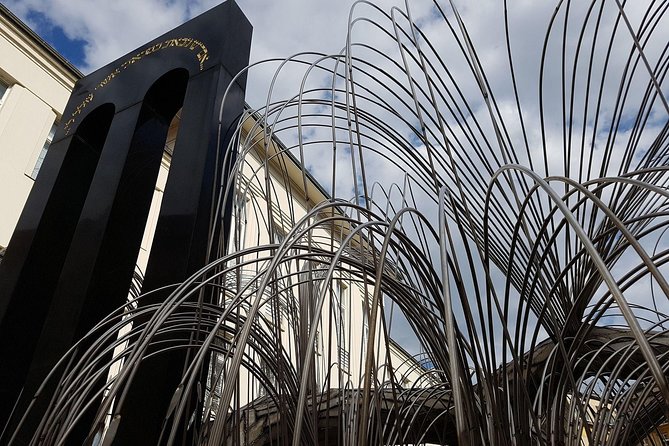
Next you head toward the former neighborhood context, walking to the Ghetto Wall Memorial, a memorial that was erected in 2014. That detail matters because it tells you Budapest is still actively shaping how it remembers this period.
Then comes a mix of architectural and cultural stops:
- A pass by a Mikve, or Jewish ritual bath, described as luxurious.
- The Art Nouveau orthodox synagogue on Kazinczy Street.
- When it’s open to the public, you’ll visit the interior of the synagogue.
This stop runs about 35 minutes, and again, synagogue admission is not included. Also, the dress code request (shoulders and knees covered) applies at the Kazinczy Synagogue, so keep your outfit practical.
Here’s why this stop is so valuable: you’re not just learning Jewish history as a timeline. You’re seeing how religious life was embedded in daily routines and community space. The Ghetto Wall Memorial adds the neighborhood memory, and the Mikve grounds it in practice.
One small drawback: because interiors depend on public opening times, you may not get every interior detail every day. The tour is clear that it visits interiors when open, so plan for a bit of flexibility.
Stop 3: Rumbach Street Synagogue and the Status Quo Ante Thread
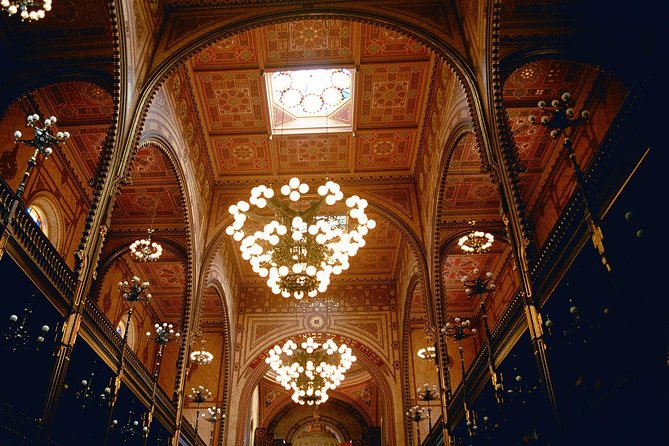
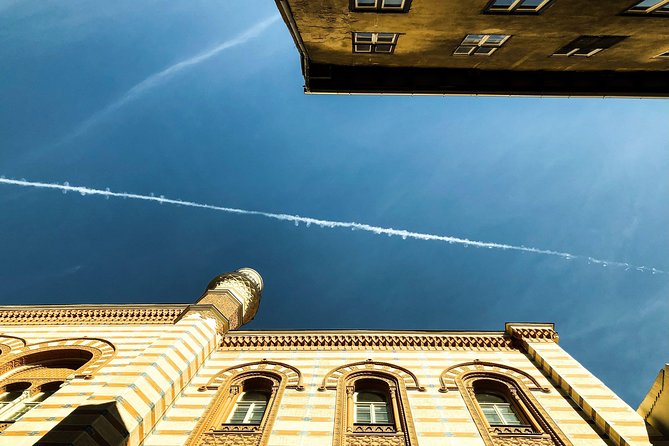
Rumbach Street Synagogue is shorter but conceptually important. You’ll discover the history of the Status Quo Ante stream of Judaism, while observing the synagogue itself.
You also get a chance to visit the interior if it’s open to the public. Expect about 25 minutes here, with tickets not included for this stop either.
Why I think this part lands well: it’s the kind of context that often gets skipped when tours focus only on famous buildings. This is where you start understanding that Jewish community life in Europe wasn’t one single uniform story. Different traditions, legal arrangements, and community structures shaped how people worshipped and organized.
Also, if you’re the kind of traveler who likes architecture but wants it tied to meaning, this is a strong fit. The guide can connect the visual and the historical, instead of treating the building like a backdrop.
Stop 4: Shoes on the Danube Bank Memorial and Quiet Closure
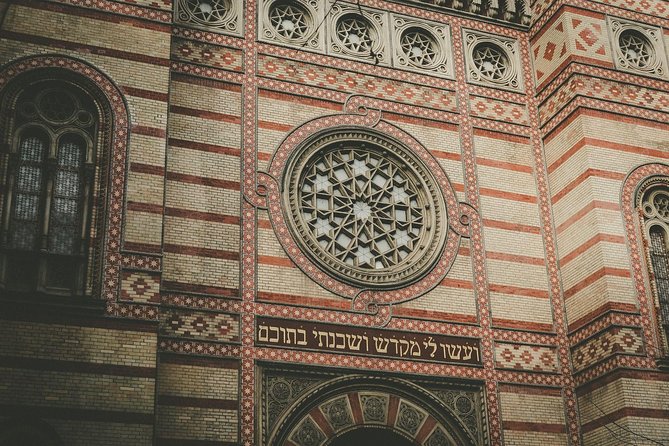
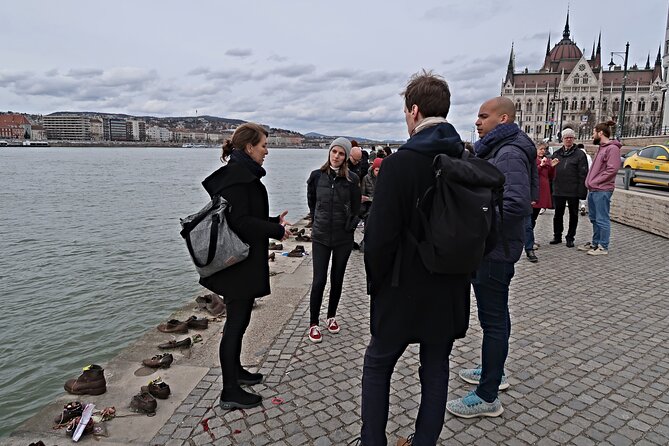
The tour ends at the Shoes on the Danube Bank memorial in Budapest 1054. This is free and it’s about 20 minutes, which is usually enough time to read and absorb without feeling rushed.
The memorial honors Jews massacred during WWII. The story explained here is direct: people were ordered to take off their shoes, were shot at the edge of the water, and their bodies fell into the river. The memorial represents the shoes left behind on the bank.
This is not a place for chatting loudly or treating it like a quick photo spot. The setting is open and the history is heavy, so even if you think you’re emotionally prepared, give yourself a moment. Let the guide’s framing do its job.
If you’ve spent the earlier part of the walk learning about community structures and religious life, this ending makes the contrast sharper. It shows you what was destroyed and what survives in memory.
Other Budapest walks at a similar pace

Small Group Size and the Guide Factor
This tour keeps the group small. The overview calls out a limit of six people for a personalized experience, and the maximum stated is eight.
Small group tours are especially helpful for heritage topics because questions come up naturally. You might want clarification on the differences between communities, why certain buildings look the way they do, or what specific memorials are meant to represent.
The reviews tied to this experience highlight how much the guide matters. Names that have shown up include Orsolya, Agi, Veronika, and Endre, and the common thread is that the guides bring the stories to life with strong historical and cultural context. One review even praised how a guide wove in local food knowledge and included recommendations like flodni cake, which is a nice reminder that history connects to the city you’re standing in.
Value for Money: What You’re Paying For
The price is $126.16 per person for an approximately 3-hour guided walk. On paper, that can seem steep until you look at what’s included and what’s not.
Included:
- A guided 3-hour walking tour
- A historian guide
Not included:
- Tickets for Dohány, Rumbach, and Kazinczy synagogues
So the value depends on whether you plan to fully use the ticketed interiors. If you want the museum and memorial spaces inside the Dohány complex and the interior synagogue visits when available, you should expect additional costs for admissions.
That said, you’re also saving time and stress. Instead of figuring out ticketed entry windows across three synagogues while also trying to learn the neighborhood story, you get it packaged with a structured route and a guide who can connect the dots in real time.
What to Wear and Bring for a Smoother Experience
Because there’s a shoulders and knees covered request for Dohány and Kazinczy, wear something you can adjust easily. If you’re traveling in warm weather, a light layer you can wrap around your shoulders is a practical hack.
Bring:
- Comfortable walking shoes, because this is a proper neighborhood walk
- A small day bag for tickets or anything you need for entries
- Water if you need it, since food and drinks are not included
Also, because synagogue interiors depend on being open to the public, be ready for slight variation. The outside parts and the memorial ending are fixed points, but interiors can shift.
Best Fit: Who Should Book This Tour
This tour is a great match if:
- You want an organized way to understand Jewish history and heritage in Budapest
- You’re seeing Budapest for the first time or you want a focused theme day
- You enjoy historical context beyond just looking at buildings
- You prefer small groups where questions are welcome
It may be less ideal if:
- You dislike walking or you need long seated breaks
- You don’t want to pay extra for synagogue admission tickets
- You’d rather explore independently without a guided narrative
If you’re traveling with teenagers or family, the small-group structure helps the pacing. One review highlighted how a family found the time flew by, largely because the guide kept the storytelling moving while still covering serious historical material.
Should You Book This Jewish Budapest Walking Tour?
I think you should book this if you want the most meaningful way to see the Jewish Quarter area in a short time. The route connects major institutions, neighborhood memory, and the Danube memorial in a way that feels intentional, not random.
If you’re on the fence, here’s the decision rule I’d use:
- Book it when you’re okay budgeting for synagogue tickets and you’ll appreciate context.
- Skip it if you want purely casual sightseeing and you’re not interested in the memorial history being explained clearly.
For planning, pick the departure time that best fits your day. A morning slot can set you up for a calmer afternoon, while an afternoon start may pair nicely with later dinner plans near the synagogues.
FAQ
FAQ
How long is the Jewish Budapest walking tour?
The tour lasts about 3 hours.
How much does the tour cost?
The listed price is $126.16 per person.
Is the tour offered in English?
Yes, it is offered in English.
What sites will we visit on the tour?
You’ll visit the Great or Central Synagogue complex, the Kazinczy Street Synagogue area including the Ghetto Wall Memorial and Mikve, the Rumbach Street Synagogue area, and you’ll end at the Shoes on the Danube Bank memorial.
Are synagogue admission tickets included?
No. Tickets for the Dohány Synagogue, Rumbach Street Synagogue, and Kazinczy Street Synagogue are not included.
Is the Shoes on the Danube Bank memorial free?
Yes. The Shoes on the Danube Bank stop is free.
What should I wear for synagogue visits?
Visitors to the Dohány and Kazinczy synagogues are requested to have their shoulders and knees covered.
Where does the tour start, and where does it end?
It starts at Kamara Café, Dohány u. 1b, 1074 Budapest, and ends at the Shoes on the Danube Bank (Budapest, 1054).
Is there pickup or a mobile ticket?
Pickup is offered at Kamara Café, and you’ll receive a mobile ticket.
More Tours in Budapest




More Tour Reviews in Budapest





The Jewish Quarter, Continued



Reviewed recently around Budapest
- Audio visual multi-sensory chefs journey dinner experience★ 5.0 · 3 reviews
- Tapolca Cave Lake and Tihany/ Balaton private tour from Budapest★ 4.5 · 3 reviews
- SzentEndre-SaintAndrew City Privately Shopping and Picturesque★ 4.5 · 3 reviews
- Sightseeing flight over Budapest★ 5.0 · 3 reviews
- Self Guided Tour In Budapest With 100 Captivating Audio Stories★ 5.0 · 3 reviews
- Private Danube Bend Visegrad and Szentendre Tour With Transport★ 5.0 · 3 reviews
Jewish Quarter and Heritage, compared.
 ★ 5.0Budapest Jewish Heritage Memorial Walking Tour & Synagogue EntryFrom $83568 reviews
 ★ 4.8Jewish Heritage Guided Tour with Synagogue TicketFrom $81533 reviews
 ★ 5.0Walking Tour Budapest incl. the Shoes on the Danube BankFrom $3387 reviews
 ★ 4.7Jewish Quarter of Budapest Walking TourFrom $2369 reviews
 ★ 5.0Best of Downtown and Jewish Quarter TourFrom $23312 reviews
 ★ 5.0Past and Present of Budapest Jewish District TourFrom $3264 reviews
 ★ 5.0Budapest City Walk in Jewish QuarterFrom $356218 reviews
 ★ 4.5Budapest Dohany Synagogue & Hungarian Jewish Museum & free extrasFrom $44218 reviews
Browse the lists this tour appears in