
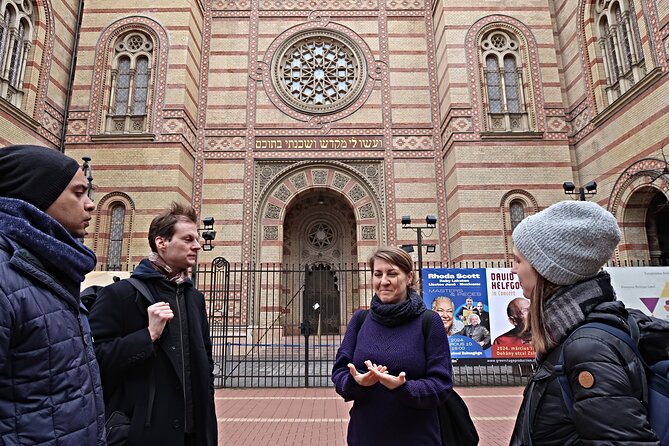
Review · JEWISH QUARTER AND HERITAGE
A Journey through Jewish Budapest – Walking Tour
Budapest tells its Jewish story in stone and steel. I love how a historian guide ties everyday life before WWII to specific street corners, and I love the impact of major stops like Dohány Synagogue and the Shoes on the Danube memorial. It is a 3-hour walk that turns big names into real human stories you can actually picture.
The only real snag is planning ahead. You will likely need an extra ticket for the Dohány Synagogue, and you must cover shoulders and knees before entry.
In This Review
- Key things that make this tour worth your time
- Why this 3-hour walk tells the story better than a museum day
- From Kamara Café to Herzl’s birthplace square, you start with the right energy
- Dohány Street Synagogue, the Moorish Revival showpiece, and what to look for
- The Ghetto Wall Memorial and the walk between sacred spaces and street-level life
- Rumbach Street Synagogue and the Status Quo Ante tradition, explained where it matters
- Shoes on the Danube Bank: the stop that slows you down
- What you can count on from the historian guide
- Price and value: what you get for $123, and what costs extra
- What to wear and how to pace yourself for a smooth experience
- Who this tour is best for (and who might want a different format)
- Should you book this Jewish Budapest walking tour?
- FAQ
- How long is the walking tour?
- How much does the tour cost?
- What is included in the price?
- Is the Dohány Synagogue entrance ticket included?
- What should I wear to enter the Dohány Synagogue?
- Where does the tour meet?
- Is the tour English-only, or are other languages available?
- Is this tour private or in a small group?
- Can I cancel and get a full refund?
Key things that make this tour worth your time
- Historian-led pacing: you get context, not just sightseeing
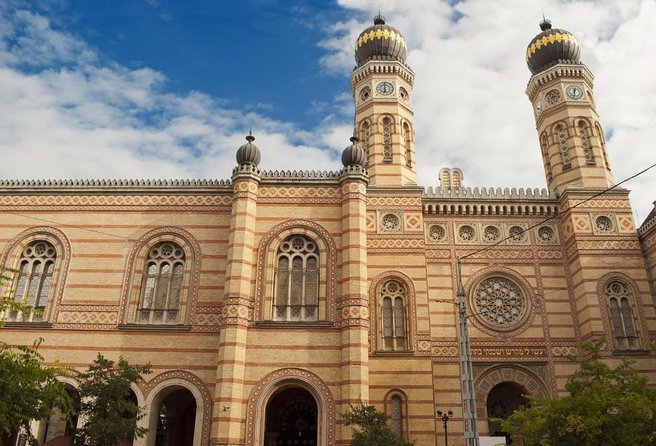
- Dohány Synagogue inside knowledge: including the Moorish Revival look and key areas of the complex
- Ghetto Wall Memorial (2014): a modern reminder placed in an old story
- Orthodox and ritual-life cues: the tour points out synagogues and even a Mikve along the way
- Status Quo Ante explained in plain terms: why different Jewish traditions mattered here
- Shoes on the Danube reflection: a solemn ending that slows you down
Why this 3-hour walk tells the story better than a museum day
This isn’t a quick photo loop. It is a guided route built around how Jewish life in Budapest worked on the ground, long before WWII changed everything. Before the war, about a quarter of the city’s population was Jewish, and that fact sets the tone for the whole experience.
I like that you are not stuck in one building. You move between monumental landmarks and the quieter edges of the city, so the story feels layered. You will also get a historian guide, with backgrounds ranging from professors and doctoral students to historians, journalists, and art critics. That matters because the tour spends time connecting architecture, community life, and tragic history.
One more thing, the ending at the Shoes on the Danube Bank memorial is not a casual stop. It is a moment made for reflection, and the tour’s flow helps you arrive there ready to pay attention.
From Kamara Café to Herzl’s birthplace square, you start with the right energy
Your walk begins at Kamara Café (Dohany utca 1/A). This is a good start point because it is right in the neighborhood where the tour’s big Jewish sites cluster. The route also follows a smart emotional arc: you start with ideas and identity, then you move into community life, and finally you land on remembrance.
A key early moment is the square where Theodor Herzl, often linked to modern Zionism, was born. Even if you only know his name from headlines, the guide frames why he matters in the broader Budapest story. You get a sense that Jewish life here was not one single track. It included cultural, political, and religious currents moving at the same time.
If you like tours that give you a map in your head, this opening helps. It is hard to understand any city’s Jewish story without first grasping the people and ideas that shaped it.
Deeper into the old Jewish Quarter
- Budapest Jewish Heritage Memorial Walking Tour & Synagogue Entry
★ 5.0 · 568 reviews - Budapest: Jewish Heritage Guided Tour with Synagogue Ticket
★ 4.8 · 533 reviews - Walking Tour Budapest incl. the Shoes on the Danube Bank
★ 5.0 · 387 reviews - Jewish Quarter of Budapest Walking Tour
★ 4.7 · 369 reviews
Dohány Street Synagogue, the Moorish Revival showpiece, and what to look for
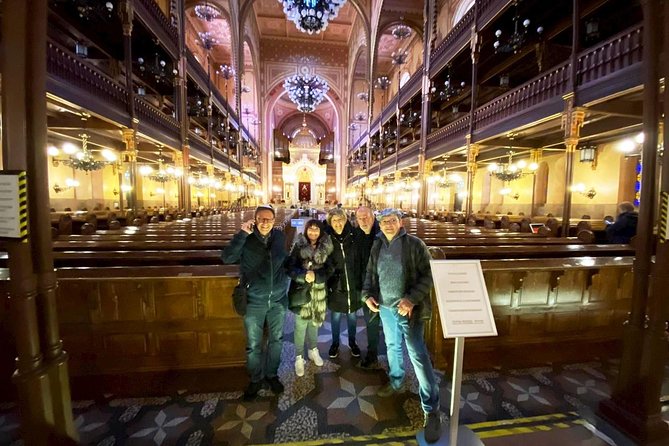
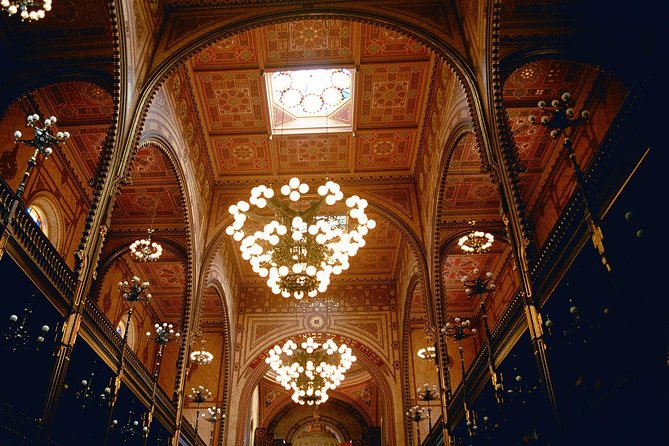
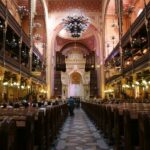
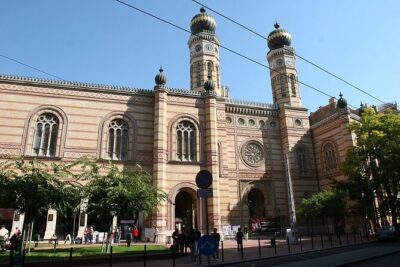
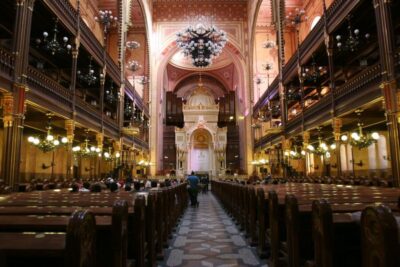
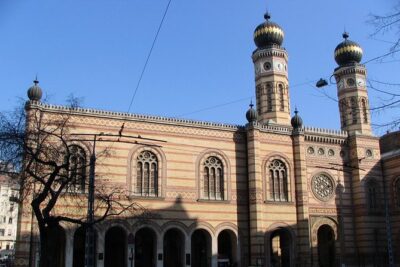
The Dohány Street Synagogue (also called the Great Synagogue) is the main anchor of the tour. You’ll see it as the greatest Jewish house of worship in Europe, and the style hits you fast. The building’s lavish Moorish Revival design is not subtle. It is designed to be seen, to signal presence, and to carry dignity.
You’ll explore this part with a Jewish studies scholar (or equivalent specialist guidance, depending on the guide). That extra layer matters. You are not just admiring a landmark, you are learning what it meant for the community that built it and for the generations who came after.
Inside the complex, you also visit key areas including the Temple of Heroes, the Jewish Museum, and a Memorial Park. Each space shifts the mood. The Temple of Heroes helps connect the building to collective memory and communal identity. The museum and memorial areas bring the larger story into focus, so the synagogue does not feel like a standalone monument.
Practical note: entry to the Dohány Synagogue itself requires a separate ticket (listed as 14500Ft for an individual). The tour guides can help you make sure you are ready, but you should budget for it.
Dress code is also essential. Visitors are requested to have shoulders and knees covered. If you’re coming from a hot day or short-sleeve shirt weather, plan accordingly so you do not waste time right before entry.
The Ghetto Wall Memorial and the walk between sacred spaces and street-level life
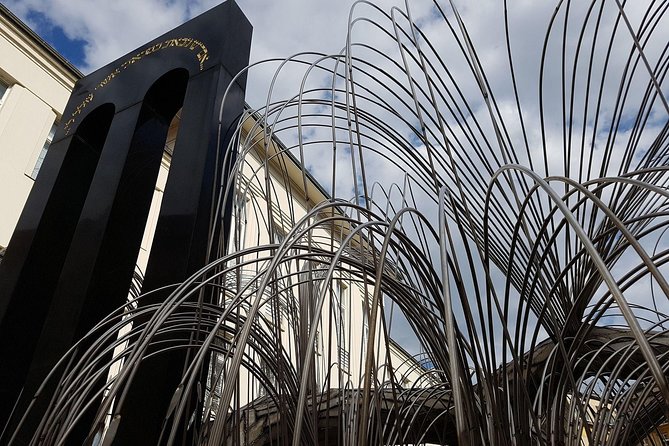
After Dohány, the tour moves toward the Ghetto Wall Memorial, erected in 2014. This is a modern marker set into an older reality, and the guide’s job is to connect the dots without making it feel like a history lecture. You are meant to see where the past leaves traces, even when the surrounding streets have changed.
From there, you pass a Mikve, a Jewish ritual bath. That is a small but powerful stop. Many visitors focus only on synagogues and think of Jewish life as religious-only. A Mikve is a reminder that lived practice, community routines, and tradition shaped everyday life too.
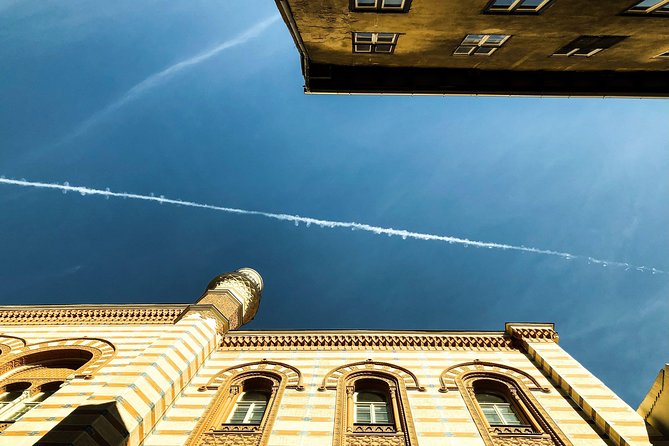
Next comes the exterior of the Art Nouveau orthodox synagogue on Kazinczy Street. The tour focuses on what you can see from the street rather than turning this into a long interior stop. Still, the exterior details matter because they show how different traditions and communities coexisted in the same wider city.
This stretch is where the tour earns its title A Journey through Jewish Budapest. You are watching the neighborhood evolve. Sacred spaces sit near daily life, and the guide keeps that relationship clear.
Rumbach Street Synagogue and the Status Quo Ante tradition, explained where it matters
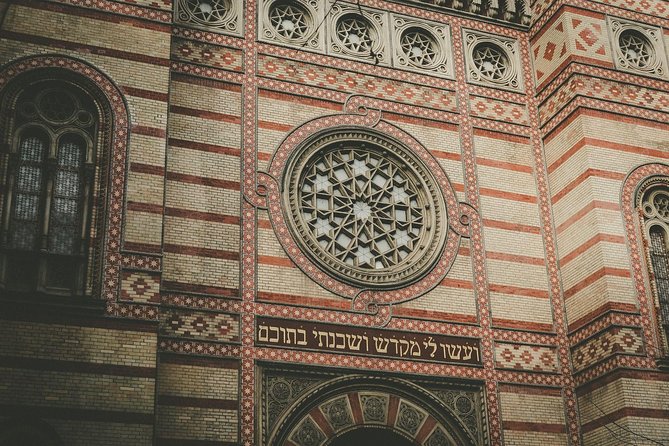
You’ll also stop at the Rumbach Street Synagogue, mainly to observe the impressive facade and learn the story around it. A highlight here is the tour’s focus on the Status Quo Ante stream of Judaism.
That phrase can sound academic. The value of putting it on a real building is that it becomes concrete. You get a clearer picture of how Jewish communities organized themselves, how religious practice could vary, and why those differences mattered in everyday community leadership and worship.
This part of the walk is not only about architecture. It is about power, tradition, and how communities maintained order and continuity. Even if you know very little about Jewish history going in, you can follow the logic because the guide frames it in terms of what you are looking at.
The quick takeaway: Budapest’s Jewish story is not one single uniform experience. The city contained different streams of Judaism, and you see that variety through the buildings and the way the tour connects them.
Shoes on the Danube Bank: the stop that slows you down
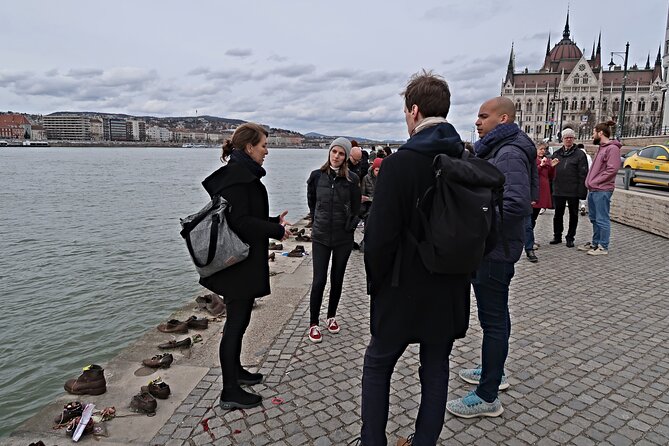
The final stretch brings you to the Shoes on the Danube Bank memorial. This is one of Europe’s most well-known Holocaust remembrance sites, and it is also one of the most emotionally difficult to visit.
The guide leads you through the context so you understand what the memorial represents. Then the group has time for reflection. The idea is not to rush past a heavy moment, it is to remember the Jewish lives lost at that riverbank and to consider how the Jewish community in Budapest has changed and revitalized in the present day.
I appreciate that the tour ends with a forward-looking note without turning the tragedy into something feel-good. The point is respect and honest perspective.
If you tend to get overwhelmed by memorials, this is still doable, but plan for it. Bring a calm mindset. This final stop is designed to make you pause.
Other Budapest walks at a similar pace

What you can count on from the historian guide
One of the most praised parts of this experience is the guide quality. The tour is led by live English-speaking guides with serious academic and professional backgrounds, including professors and doctoral students, plus historians, journalists, and art critics. That mix helps the storytelling feel both human and structured.
The best guides also keep the group comfortable with pacing. One guide name that has shown up for this tour is Orsolya, and her approach is described as thoughtful and thorough, with the pace adjusted by checking in before moving to the next place. Another guide, Endres, is noted for exceptionally detailed context, including how life changed for Budapest residents during the Nazi era.
That style matters because this tour covers more than monuments. It covers identity, community life, and the point where normal life breaks.
Also, this is a small-group format in practice. Some groups end up tiny, which makes it easier to ask questions and get a more personal explanation, especially in emotionally charged stops.
Price and value: what you get for $123, and what costs extra
At $123 per person for 3 hours, the price lands in the mid-range for a specialist, historian-led walking tour in central Budapest. The value comes from three things.
First, you are paying for expert interpretation, not just a route map. Second, you are covering multiple major Jewish sites in a tight timeline, so you are not spending your whole day hopping across the city. Third, the tour’s focus on the pre-WWII era and the mix of institutions (synagogues, museum spaces, memorials, and ritual life cues) gives the time a clear purpose.
Two budget notes are worth knowing up front:
- The Dohány Synagogue ticket is extra, listed at 14500Ft per individual.
- The tour’s duration is fixed at about 3 hours, so you need to be ready to walk and stay engaged for the whole route.
If you are also visiting independently afterward, you might want to plan around entry times at Dohány. It can take longer than you expect if you are trying to follow dress code rules and find the right entry process.
What to wear and how to pace yourself for a smooth experience
Because the tour involves synagogue entry and walking between sites, you’ll enjoy it more with a little practical preparation.
Wear comfortable shoes. This is a walking tour with multiple stops, including the final riverbank memorial area where standing still for reflection is part of the experience.
Bring light coverage for shoulders and knees. Even if you’re dressed for summer, you may need to adjust for entry rules at Dohány.
Finally, be ready for emotional content. The route includes Holocaust remembrance, including Shoes on the Danube Bank. That does not mean the whole tour is heavy all the way through, but it does mean the tone changes at the end.
Who this tour is best for (and who might want a different format)
I think this works especially well for you if:
- you want a guided explanation of Jewish Budapest before WWII, not just a list of famous landmarks
- you like learning how communities practiced religion and maintained identity through buildings and traditions
- you appreciate a structured, historian-led route with time for reflection
It may be a little less ideal if:
- you want a purely lighthearted sightseeing day with minimal background
- you dislike walking for 3 hours, even at a moderate pace
- you are not comfortable visiting solemn memorial sites
Still, even if you are cautious about sensitive history, the tour’s ending reflection time gives the experience a respectful shape.
Should you book this Jewish Budapest walking tour?
I’d book it if you want a clear, guided way to understand how Jewish life in Budapest worked before WWII, and you want major sites explained in context. The combo of Dohány Synagogue, the Ghetto Wall Memorial, the Kazinczy Street and Rumbach Street synagogue exteriors, and the Shoes on the Danube memorial gives you both scale and specificity.
Do book with two things in mind: the Dohány Synagogue entrance needs an extra ticket, and the dress code (shoulders and knees covered) is not optional. If you handle those, you should get strong value from the expert guidance and the thoughtful pacing.
If you are the kind of traveler who prefers meaning over selfies, this one fits your style.
FAQ
How long is the walking tour?
The tour lasts about 3 hours.
How much does the tour cost?
The price is $123 per person.
What is included in the price?
You get a 3-hour walking tour and a live historian guide in English.
Is the Dohány Synagogue entrance ticket included?
No. Dohány Synagogue tickets are not included, and the individual ticket price is listed as 14500Ft.
What should I wear to enter the Dohány Synagogue?
Visitors are requested to have shoulders and knees covered.
Where does the tour meet?
The meeting point is Kamara Café, Dohany utca 1/A.
Is the tour English-only, or are other languages available?
The live tour guide language is English.
Is this tour private or in a small group?
Private or small groups are available.
Can I cancel and get a full refund?
Yes, you can cancel up to 24 hours in advance for a full refund.
More Tours in Budapest




More Tour Reviews in Budapest





The Jewish Quarter, Continued



Reviewed recently around Budapest
- Audio visual multi-sensory chefs journey dinner experience★ 5.0 · 3 reviews
- Tapolca Cave Lake and Tihany/ Balaton private tour from Budapest★ 4.5 · 3 reviews
- SzentEndre-SaintAndrew City Privately Shopping and Picturesque★ 4.5 · 3 reviews
- Sightseeing flight over Budapest★ 5.0 · 3 reviews
- Self Guided Tour In Budapest With 100 Captivating Audio Stories★ 5.0 · 3 reviews
- Private Danube Bend Visegrad and Szentendre Tour With Transport★ 5.0 · 3 reviews
Jewish Quarter and Heritage, compared.
 ★ 5.0Budapest Jewish Heritage Memorial Walking Tour & Synagogue EntryFrom $83568 reviews
 ★ 4.8Jewish Heritage Guided Tour with Synagogue TicketFrom $81533 reviews
 ★ 5.0Walking Tour Budapest incl. the Shoes on the Danube BankFrom $3387 reviews
 ★ 4.7Jewish Quarter of Budapest Walking TourFrom $2369 reviews
 ★ 5.0Best of Downtown and Jewish Quarter TourFrom $23312 reviews
 ★ 5.0Past and Present of Budapest Jewish District TourFrom $3264 reviews
 ★ 5.0Budapest City Walk in Jewish QuarterFrom $356218 reviews
 ★ 4.5Budapest Dohany Synagogue & Hungarian Jewish Museum & free extrasFrom $44218 reviews
Browse the lists this tour appears in