

Review · COMMUNIST ERA AND COLD WAR TOURS
Born Under The Red Star – The History of Communism in Hungary – Private Tour
Budapest’s communist story hits hard. This private 3-hour tour strings together key sites tied to Soviet rule, Hungarian resistance, and the darker machinery of repression, with a guide who keeps the timeline clear. I especially like how it uses real locations instead of textbook storytelling.
Two things I really liked: first, the route balances chilling memory stops with big-picture landmarks like Liberty Square and the 1956 memorial. Second, the best guides bring the subject down to earth, with personal touches that make history feel less abstract and more human, including guides like Julia, Brigit, and Norbert who were praised for added context and flexibility.
One thing to consider: parts of the tour depend on on-site ticket rules, and there have been hiccups for some visitors about what counts as free admission, especially for St. Stephen’s Basilica. If you care a lot about getting exact ticket coverage, plan to confirm details with the guide on the day.
In This Review
- Key highlights to know before you go
- Soviet Heroic Memorial: a fast start with heavy symbolism
- House of Terror Museum: where repression is explained in plain, hard details
- St. Stephen’s Basilica: a landmark stop that may cost extra
- Liberty Square and the 1956 memorial: where change becomes visible
- Hungarian Parliament Building: the big exterior finish with modern context
- Price and logistics: what $108.14 buys you in real terms
- The Communist-themed bar and the retro soda stop
- How good guides change the whole experience
- Who this tour is for, and who should consider alternatives
- Should you book Born Under the Red Star?
- FAQ
- How long is the Born Under The Red Star private tour?
- Is this tour private?
- Does the tour offer pickup?
- What language is the tour in?
- What’s included in the price?
- Are the museum and monument admissions included?
- What is the cancellation policy?
Key highlights to know before you go
- Private pacing with pickup from your address, so you are not squeezed into a fast group schedule
- House of Terror stop at Andrássy út 60, a must for anyone serious about 20th-century repression
- Liberty Square plus the 1956 memorial, two places that show Hungary’s political pivot from Soviet pressure to uprising
- Soviet Heroic Memorial in a park setting, a quick but telling intro before the heavier stuff
- Retro Communist-themed bar drink plus coffee or tea, a light moment that still fits the theme
Soviet Heroic Memorial: a fast start with heavy symbolism
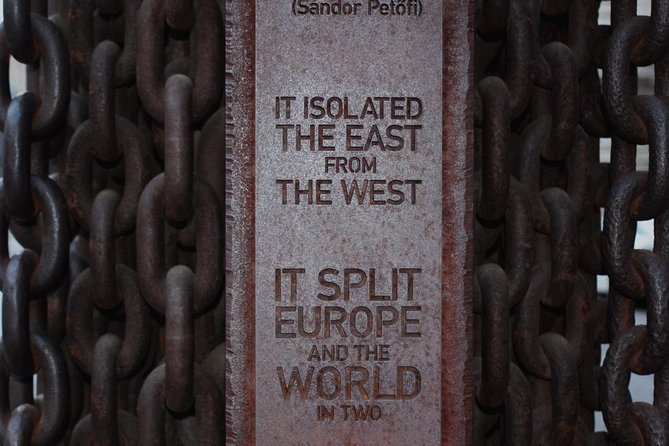
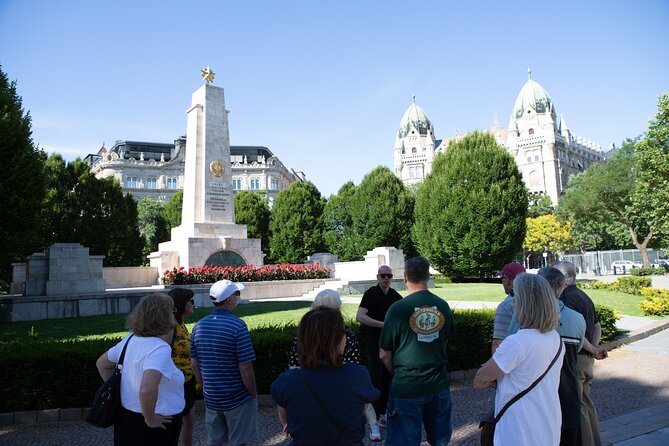
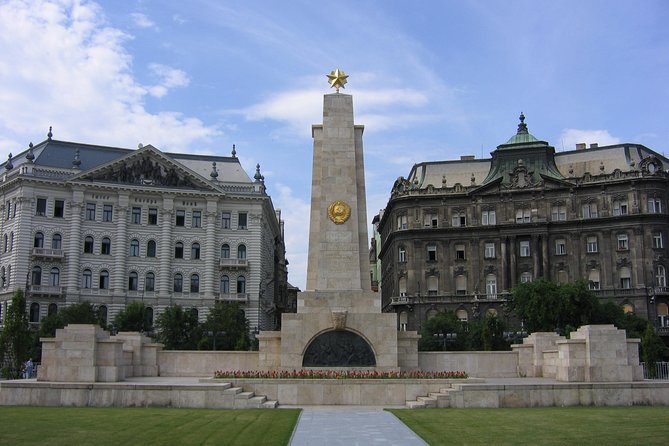
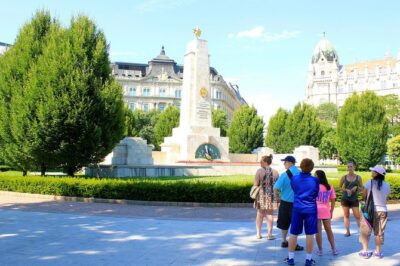
You begin with a short stop at the Soviet Heroic Memorial, a white obelisk in a landscaped park. It’s free and quick, but it sets the tone fast, because it presents WWII memory through a Soviet lens. In a short tour, this first stop matters, since it frames how power and history can be linked.
Look around the surroundings too. Even in a calmer park setting, the monument’s purpose is political, not just commemorative. This is a good warm-up for the darker places that come next.
The timing is tight, about 15 minutes. That’s enough to take photos, read what you can, and get your bearings before you head into the museum portion.
House of Terror Museum: where repression is explained in plain, hard details
Then you hit the core stop: the House of Terror Museum at Andrássy út 60. This is one of Budapest’s most direct “explain it on the walls” experiences, covering exhibits tied to the fascist and communist regimes in 20th-century Hungary. The building also serves as a memorial to victims who were detained, interrogated, tortured, or killed there.
This is not the kind of place where you want to rush. Even though the visit time is listed as around 15 minutes, I’d treat it as minimum time. If your guide pushes you to move quickly, you might miss how the museum pieces connect to each other, especially when you are learning what life under these regimes meant in daily reality.
I also appreciate that the tour keeps the theme focused. After the Soviet memorial, you are not jumping around to random sights. You’re moving from symbols into the systems behind them, which makes the whole narrative feel more coherent.
A practical note: there has been some confusion reported by past participants about admission coverage and what exactly was included. The museum is listed as free on the tour plan, so if this matters to you, it’s smart to ask the guide at the start how entry works that day.
More of the socialist decades, told on foot
- Budapest: Communist History Tour with House of Terror Option
★ 4.8 · 182 reviews - Communism in Hungary with a Historian
★ 5.0 · 70 reviews - Budapest: 3-Hour Walking Tour About Communism (Small Group)
★ 4.7 · 70 reviews - Lives of Hungarians Under Communist and Capitalist system
★ 5.0 · 59 reviews
St. Stephen’s Basilica: a landmark stop that may cost extra
Next comes St. Stephen’s Basilica. It’s one of Budapest’s best-known religious landmarks, and it’s named for Stephen, Hungary’s first king, whose right hand is housed in the reliquary. If you want a breather after the museum, this is it, because the cathedral atmosphere is different even when the subject matter remains political in the background.
On this tour, basilica admission is not included. That’s the kind of detail that can surprise people, especially when other stops are marked free. So if you want to go inside or see a specific area, you’ll likely pay separately.
Also, there has been at least one reported ticketing snag where a visitor found the free-admission expectation did not match what the guide arranged. The lesson is simple: if St. Stephen’s Basilica is a priority for interior access, ask the guide what’s included before you commit your time.
Even with that uncertainty, the outside and nearby views are still worthwhile for photos and orientation. Just budget a little patience, because church stops often come with entry rules and lines.
Liberty Square and the 1956 memorial: where change becomes visible
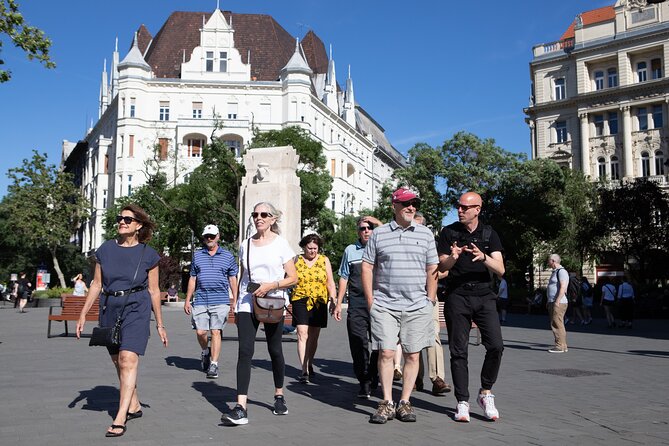
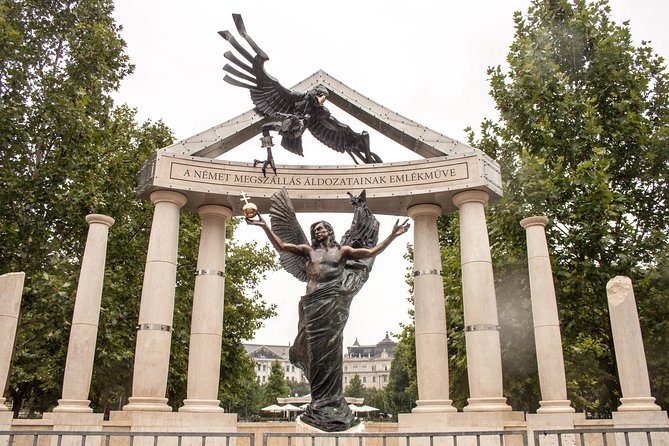
Liberty Square, or Szabadság tér, is a strong pivot point. It’s free on the tour plan and gives you two major anchors. On one side you see the monument to Hungarian Jewish victims of the Holocaust, and on another you see memorials tied to Soviet soldiers who liberated Budapest from the Nazis in 1945.
That mix is exactly why this spot is powerful. It forces the uncomfortable question, how do you remember liberation when the same power eventually becomes the occupier? A good guide will help you hold those facts at once instead of flattening them into an easy story.
The time here is about 25 minutes, which is long enough to take in the space and the relevant buildings nearby, including the US Embassy and the historicist-style headquarters of the Hungarian National Bank. Even if you only skim the exterior architecture, the setting tells you that politics is not just in museums. It’s in what governments choose to display publicly.
Then you move to the Memorial to the 1956 Hungarian Revolution and War of Independence. This one is free and short, around 15 minutes, but it hits with clear intent: it commemorates the uprising against the communist regime. For me, this is the emotional midpoint of the tour, because it shifts from explaining systems to celebrating resistance.
If you are visiting Budapest for the first time, the 1956 stop is the kind of place that helps you understand why the city remembers certain years so intensely.
Hungarian Parliament Building: the big exterior finish with modern context
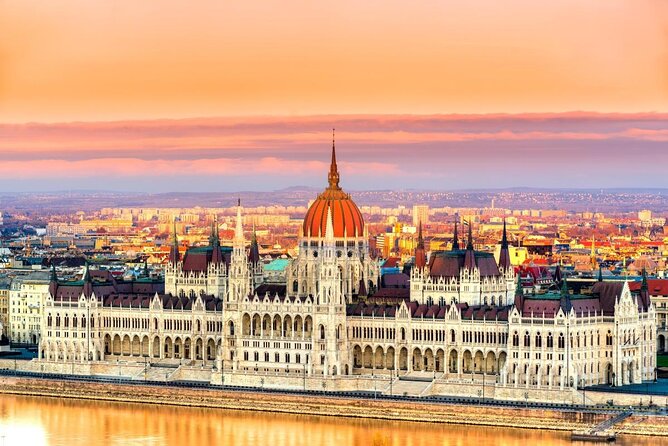
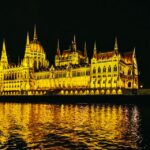
You end the sightseeing stretch near the Hungarian Parliament Building, known as Országház. The tour time at this stop is listed as about 15 minutes, and admission is not included.
Even without going inside, the exterior is worth something. It’s a recognizable civic symbol, and that matters after you’ve seen monuments and memorials tied to regimes that tried to control the narrative. Standing near a parliament building after learning about propaganda and repression is a strong contrast.
If you are interested in architecture, you’ll likely enjoy the exterior details and the chance to compare how Hungary represents itself in public buildings now versus during the 20th-century regimes you just learned about.
Because the stop is short, don’t expect a full lecture on the parliament’s history. Think of it as a visual bookend that grounds the tour in today’s state.
Price and logistics: what $108.14 buys you in real terms
At $108.14 per person for about 3 hours, you’re paying for a few things that add up fast in Budapest: pickup from your address, a private format, and time with a guide who can steer you through sensitive material without getting lost in trivia.
The included items also help the value feel practical. You get coffee or tea, plus a retro soda at a Communist-themed bar. You also get maps and further recommendations, which is useful because Budapest is easiest when you have a plan for your next day after you finish history.
Private tours are not always “better,” but they are often better for tours like this. If your guide is good, they can adjust pacing depending on how intense the museum feels for you. That flexibility is where private format shines.
Still, the one value risk is the ticket expectations. The tour plan shows several stops as free, yet there have been reports of confusion about what free admission covered in certain cases. If you want to avoid surprises, treat this as a “history walk with organized stops,” not a guarantee that every church dome or museum area is fully covered.
Private guides we booked in Budapest


The Communist-themed bar and the retro soda stop
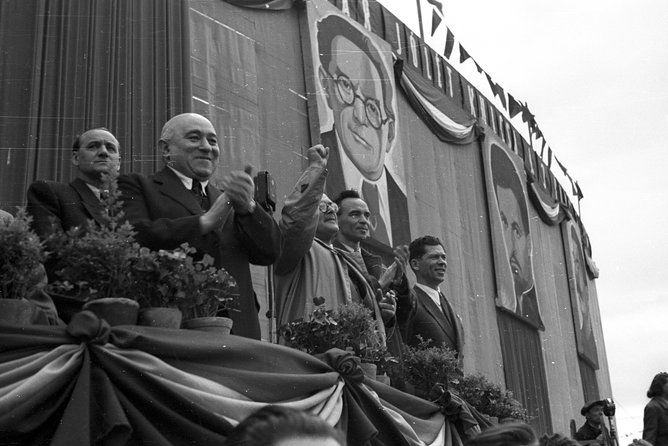
This tour includes a drink stop at a Communist-themed bar, where you’ll have a retro soda. It’s not about nightlife. It’s more of a theme-based pause that lets the guide connect what you just saw to how people lived, argued, and coped under the old system.
This kind of stop can be a win for your energy. After museums and memorials, your brain needs a moment to reset. Coffee or tea is also included, so you’re not stuck paying for refreshments mid-tour.
One more thing I like about this setup is that it gives you a chance for questions. If your guide brought the story to life, you’ll probably want to ask what parts connect to modern Hungary, and whether any elements changed after the communist era.
If you are hoping for a full meal, keep expectations modest. The plan says food and most drinks are not included unless specified. The soda and coffee or tea are the included items you should plan around.
How good guides change the whole experience
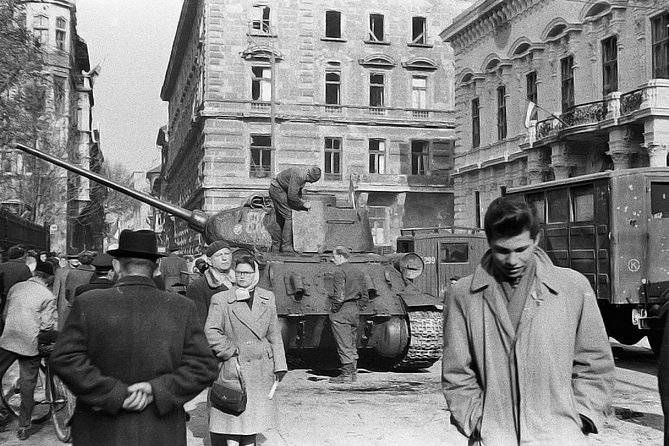
The subject is heavy, so the guide matters. Some guides on this tour have been described as extremely informative, with a lot of knowledge and clear explanations. Others were praised for making the experience feel more real through personal details, which is especially valuable at the House of Terror.
You may also get a guide who is great at logistics. One past experience described a guide as flexible and friendly, even using the subway to connect parts of the route when needed. That kind of calm problem-solving helps because Budapest can throw curveballs with timing and walking distances.
Names that stood out in past feedback include Leslie, Julia, Brigit, and Norbert. Different guides can steer emphasis differently, so if you get someone who can focus on everyday life under communism, you’ll likely feel you got your money’s worth.
On the flip side, there has been at least one complaint that the tour ended early and felt too talk-heavy on current events instead of life under communism. That’s a reminder that your experience can depend on how the guide structures time and how the day runs on the ground.
Who this tour is for, and who should consider alternatives
This is a great fit if you want a focused, short history tour that hits major locations tied to communist rule and resistance. It works well for first-time visitors who want a concentrated route without building it themselves.
It’s also a good choice if you prefer a guide who can explain context quickly, since the tour is about 3 hours and several stops are only 15 minutes. You’ll need a calm pace, but it’s not a strenuous hike.
You might want to think twice if you are expecting long museum time at the House of Terror or deep coverage of every aspect of communism. The tour is structured as a sequence of stops, so you should treat it as a guided overview rather than a multi-hour seminar.
You should also factor in ticket uncertainty for places where admission is not included, and potential on-site adjustments for free-entry expectations.
Should you book Born Under the Red Star?
I’d book this tour if you want a private, theme-driven walk that connects Soviet rule, the House of Terror, Liberty Square, and the 1956 revolution into one understandable storyline. For the price, the combination of pickup, a focused route, included drinks, and maps is good value when your guide keeps the narrative tight.
I’d be cautious if St. Stephen’s Basilica interior access is a must for you, or if you strongly rely on free admission for every stop without paying anything extra. On those days, send a quick question to your guide before you set out, so you know what you’ll need to buy.
If you can handle emotionally intense history, you’ll likely leave with a clearer sense of how Hungary remembers its past, and why those memorials are still part of the city’s public identity today.
FAQ
How long is the Born Under The Red Star private tour?
The tour lasts about 3 hours.
Is this tour private?
Yes. It’s a private tour, so only your group participates.
Does the tour offer pickup?
Yes. The guide meets you at your requested address, so pickup is offered.
What language is the tour in?
The tour is offered in English.
What’s included in the price?
Included features are hotel or apartment pickup, a retro soda in a Communist-themed bar, maps and further recommendations, and coffee or tea.
Are the museum and monument admissions included?
The tour information lists free admission for the Soviet Heroic Memorial, the House of Terror Museum, Liberty Square, and the Memorial to the 1956 Hungarian Revolution. St. Stephen’s Basilica and the Hungarian Parliament Building are listed as admission not included.
What is the cancellation policy?
You can cancel for a full refund if you do so at least 24 hours before the experience’s start time. Free cancellation is allowed up to 24 hours in advance. If it’s canceled due to poor weather, you’ll be offered a different date or a full refund.
More Tours in Budapest



More Tour Reviews in Budapest




More From the Socialist Years




Reviewed recently around Budapest
- Audio visual multi-sensory chefs journey dinner experience★ 5.0 · 3 reviews
- Tapolca Cave Lake and Tihany/ Balaton private tour from Budapest★ 4.5 · 3 reviews
- SzentEndre-SaintAndrew City Privately Shopping and Picturesque★ 4.5 · 3 reviews
- Sightseeing flight over Budapest★ 5.0 · 3 reviews
- Self Guided Tour In Budapest With 100 Captivating Audio Stories★ 5.0 · 3 reviews
- Private Danube Bend Visegrad and Szentendre Tour With Transport★ 5.0 · 3 reviews
Communist Era and Cold War Tours, compared.
 ★ 4.8Communist History Tour with House of Terror OptionFrom $58182 reviews
 ★ 5.0Communism in Hungary with a HistorianFrom $5970 reviews
 ★ 4.73-Hour Walking Tour About Communism (Small Group)From $5770 reviews
 ★ 4.5Budapest Hammer & Sickle Communist Times TourFrom $7968 reviews
 ★ 5.0Lives of Hungarians Under Communist and Capitalist systemFrom $459 reviews
 ★ 5.0Guided Tour with Admission in Memento ParkFrom $3048 reviews
 ★ 4.5Memento Park TicketFrom $1046 reviews
 ★ 5.0Memento Park Visit with Private Trabant TransferFrom $30544 reviews
Browse the lists this tour appears in