
Review · JEWISH QUARTER AND HERITAGE
Budapest: Jewish Heritage Walking Tour with Historian Guide
Budapest tells history through its synagogues. This 2-hour Jewish heritage walk in the Pest side of the city uses a historian guide to connect architecture, street life, and real survivor stories from the 18th century through the mid-20th.
I love how the tour pairs Rumbach Street Synagogue with time outdoors, so you understand what you are seeing instead of just checking boxes. The small group pace (up to 10) also makes it easier to ask questions and keep the story clear. One heads-up: the Kazinczy Street Synagogue is temporarily closed for restoration, so you will see it outside only.
In This Review
- Key highlights worth planning for
- A 2-hour walk that turns the Jewish Quarter into a story you can follow
- Meeting at Deák Square, then walking into the Jewish Quarter
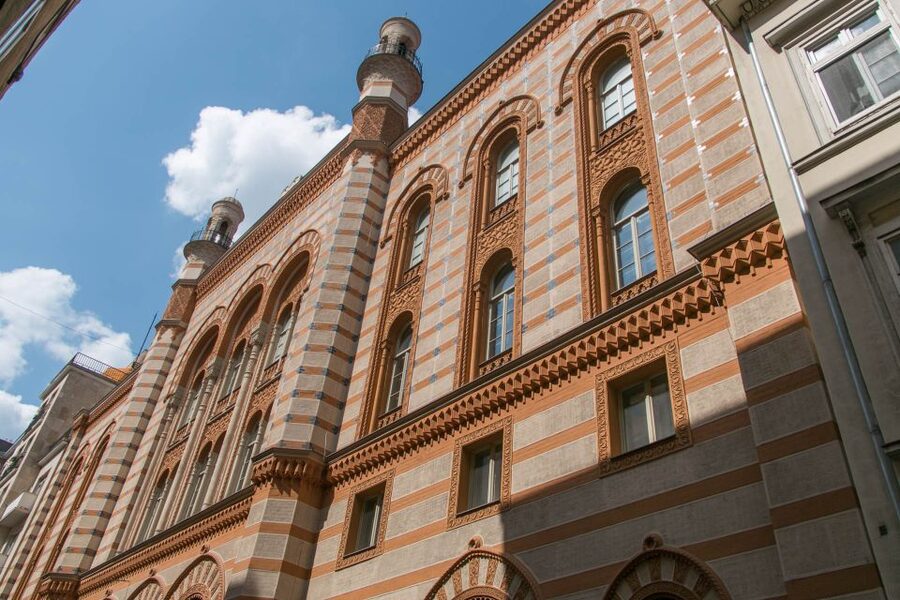
- Rumbach Street Synagogue: where the architecture does the talking
- Gozsdu Passage and the streets between synagogues
- Holocaust memorials you visit on foot: Carl Lutz and the Memory Wall
- Kazinczy Street Synagogue: outside views still tell you something
- The guide makes the difference: historian storytelling in a small group
- Price and value: what $62 buys you in Budapest
- Who should book this tour, and who might want a different option
- Should you book the Budapest Jewish Heritage Walking Tour?
- FAQ
- How long is the Budapest Jewish Heritage Walking Tour?
- Where do we meet for the tour?
- Which synagogues are visited during the tour?
- Is entry included for both synagogues?
- Do we visit Holocaust memorials on this tour?
- Is the tour guide language English?
Key highlights worth planning for
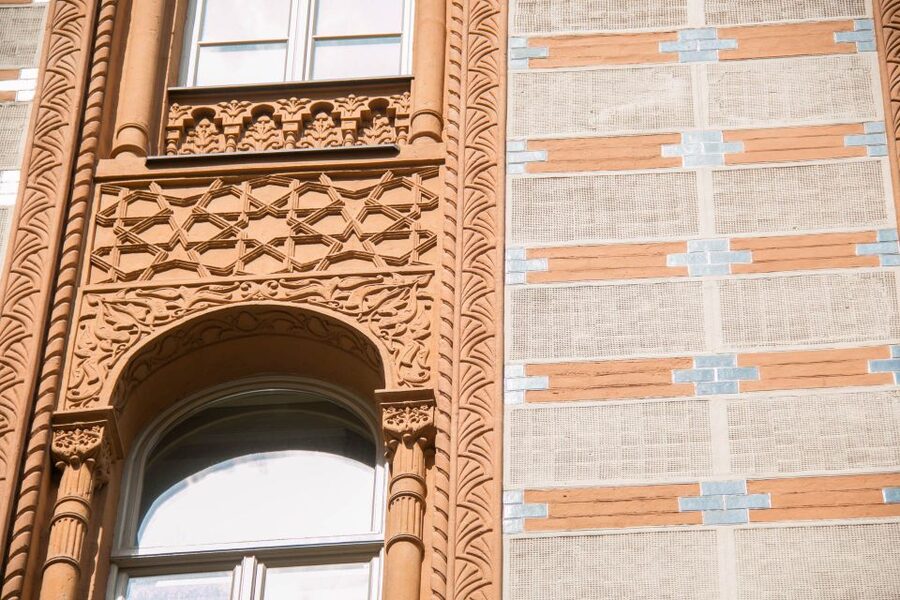
- Rumbach Street Synagogue interior visit with an entry ticket
- Historian-led stories focused on Budapest’s Jewish community over time
- Gozsdu Passage area photo stops for context in the Jewish Quarter
- Holocaust memorial sites including the Carl Lutz Memorial and the Memory Wall
- Small group size up to 10 for a more personal walking experience
- Kazinczy Street Synagogue outside view due to temporary restoration
A 2-hour walk that turns the Jewish Quarter into a story you can follow
Budapest can feel like a highlight reel if you rush. This tour slows you down just enough to connect buildings to people, and streets to events. You are not only looking at synagogues, you are learning how the Jewish community shaped this part of the city and how the city remembers what happened in the Holocaust years.
The format helps. It is only about 2 hours, with a compact route that stays in the core of the Jewish Quarter area. That matters because you get real context without spending your whole day commuting or bouncing between far-off locations.
Meeting at Deák Square, then walking into the Jewish Quarter
You meet at the entrance of the Lutheran Church at Deák Square, near the M2 metro entrance. This is a practical spot, easy to reach and simple to find, especially if you are already using the metro for getting around Budapest.
From there, you head into the neighborhood where Budapest’s Jewish life once ran deep. You’ll spend time walking, with photo stops along the way. Wear comfortable shoes. You are doing city walking on uneven sidewalks, and you will want your feet to be happy during a guided 2-hour loop.
Deeper into the old Jewish Quarter
- Budapest Jewish Heritage Memorial Walking Tour & Synagogue Entry
★ 5.0 · 568 reviews - Budapest: Jewish Heritage Guided Tour with Synagogue Ticket
★ 4.8 · 533 reviews - Walking Tour Budapest incl. the Shoes on the Danube Bank
★ 5.0 · 387 reviews - Jewish Quarter of Budapest Walking Tour
★ 4.7 · 369 reviews
Rumbach Street Synagogue: where the architecture does the talking
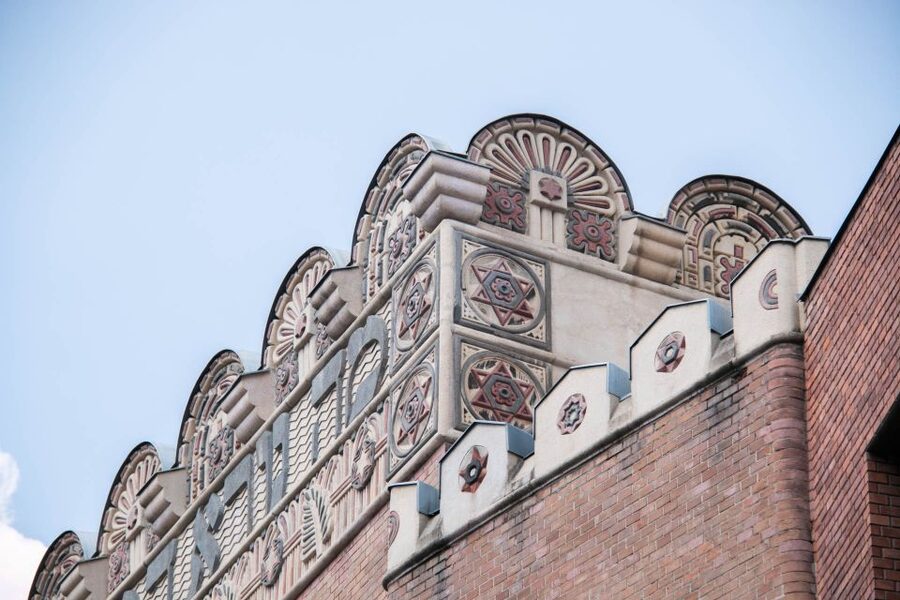
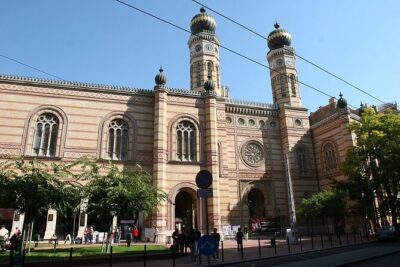
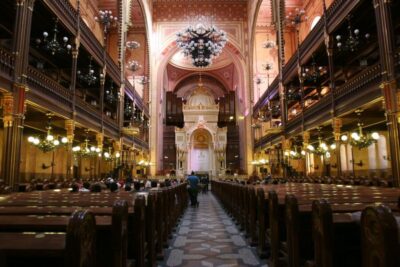
The tour’s first synagogue stop is Rumbach Street Synagogue. You get both sightseeing and a guided visit, plus the entry ticket is included. For me, that combination is the big deal. Outside, synagogues are dramatic. Inside, they can be emotional, and that is where a historian’s explanations really help you notice details you might otherwise miss.
This is also one of those stops where art history and human history overlap. You’re not just learning dates. You’re learning why a synagogue’s style and presence mattered to its community in its own time. The tour frames the synagogue as a historical memento, not as an isolated monument.
Photo stops here are useful because it gives you a visual anchor for later parts of the route. When you walk between sites, your memory catches up faster when you already have a couple of clear reference images.
Gozsdu Passage and the streets between synagogues
After Rumbach, the tour keeps moving through the Jewish Quarter area. You’ll make time for Gozsdu Passage / Gozsdu Udvar with a photo stop and guided context.
This is where the walking part earns its keep. Instead of treating the neighborhood like a background, the guide uses the streets themselves as teaching tools. You learn how the Jewish community lived here for generations, what kinds of public spaces mattered, and how different eras left different footprints.
If you enjoy “reading” a city, this stretch is satisfying. You start noticing how the urban layout shapes movement and community life. And you get those extra story threads, like where other synagogues stood in the district and later disappeared, including two that were demolished by the 1930s. Even if you have seen synagogue photos before, street-level context changes the way you understand what you are looking at.
Holocaust memorials you visit on foot: Carl Lutz and the Memory Wall
The emotional center of the tour is its Holocaust memorial section. You will see a remnant linked to the ghetto wall memorial area, and you will also visit the Carl Lutz Memorial and the Memory Wall.
These stops are not handled like a checklist. The tour emphasizes stories of survival and rescue, including “miracle-making” people who helped others live through the worst period of persecution. That framing matters because it keeps the focus on human decisions and courage, not only on tragedy.
You also get historical anchors, like how the memorials are physical reminders of what the community faced. Seeing these places in person, while you are walking through the neighborhood that surrounds them, tends to land differently than reading about them later on a screen.
Practical tip: take a slower moment at each memorial. It is tempting to keep moving for the next photo, but the value here is in letting the guide’s explanations settle. If you rush, you lose part of what the tour is trying to do.
Kazinczy Street Synagogue: outside views still tell you something
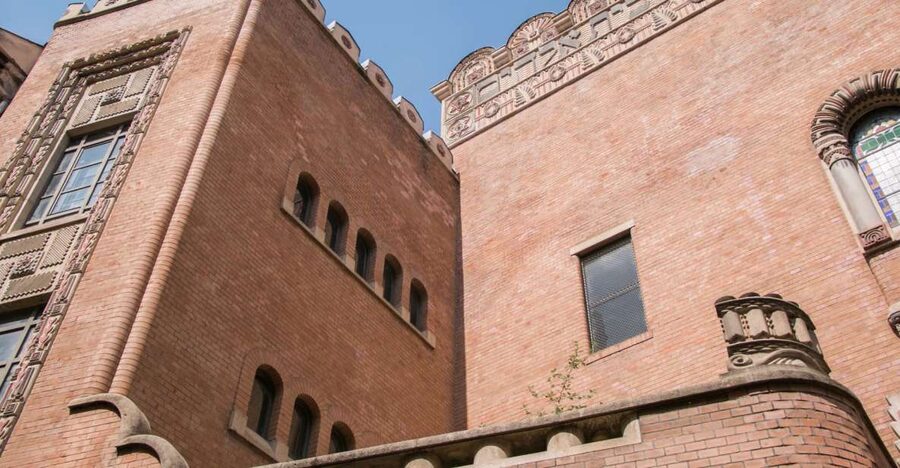
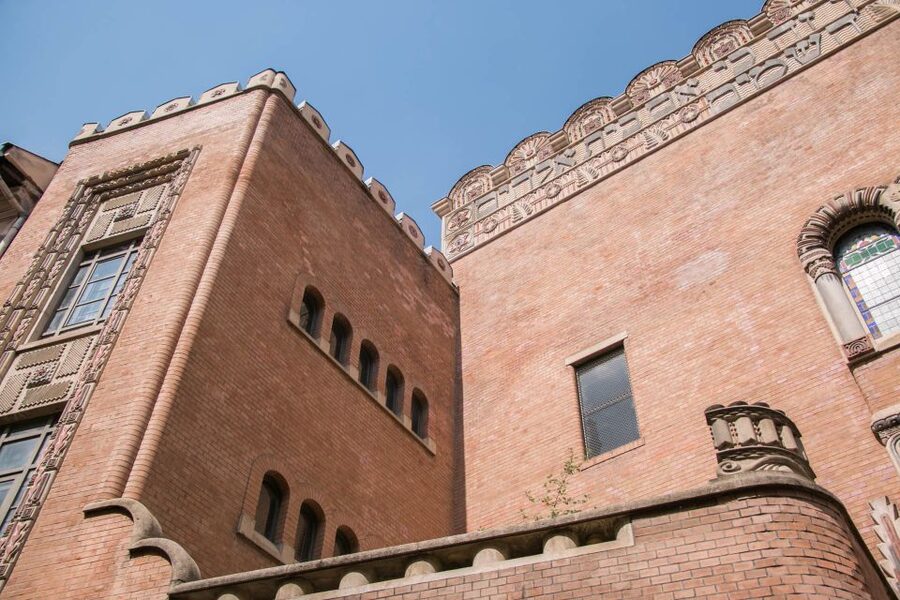
The last major synagogue focus is Kazinczy Street Synagogue. Here is the key detail: it is temporarily closed due to restoration, so your visit is outside only, and the entry ticket for the inside is not included.
This could be a letdown if you expected an interior visit at every stop. But even an outside view can be meaningful, especially when you already visited Rumbach and can compare architectural choices and visual presence in the same neighborhood.
Also, closures happen. If this is your one Jewish heritage tour in Budapest, the fact that you still see a real synagogue landmark, guided by a historian, keeps the experience worthwhile even without entry into Kazinczy’s interior.
If you really want interiors at both synagogues, you might plan a separate follow-up check closer to your travel dates. But for most people, this tour provides enough depth to connect the dots between sites.
Other Budapest walks at a similar pace

The guide makes the difference: historian storytelling in a small group
This tour is run by Kálmán Dániel, and the vibe is described as friendly and approachable, not stiff or academic in a way that shuts people down. The tour is in English, and it is limited to 10 participants, which is a sweet spot for a walking history experience.
That small-group size affects more than comfort. It keeps the pacing steady, and it makes it easier for you to ask questions when something clicks or when something feels confusing. For Jewish heritage sites, context matters, and a guide who can explain clearly helps you connect the architecture to the people behind it.
Also, a historian guide tends to do something practical: they point out what to notice during transitions. You’ll likely hear about how the neighborhood changed over time and how certain sites ended up where they are now, including the stories behind synagogues that no longer stand.
Price and value: what $62 buys you in Budapest
At $62 per person for a 2-hour tour, you are paying for three things at once:
- a live historian guide in English
- entry to Rumbach Street Synagogue
- entry to the Ghetto Wall Memorial area
That is more than a simple walking tour. Entry costs add up quickly in Budapest, especially when you want access to working historical buildings rather than only viewpoints from the street.
One part of the value equation is the Kazinczy situation. Since Kazinczy is temporarily closed, you are not paying for an interior ticket there. That keeps the experience balanced, but it also means your expectation should be “outside viewing plus story” rather than “two full synagogue interiors.”
If you want a short, structured way to understand Budapest Jewish heritage without sorting details yourself, this price starts to make sense. It’s not cheap, but you are not just paying for footsteps. You’re paying for guided interpretation plus key access points.
Who should book this tour, and who might want a different option
This is a great fit if you:
- like guided context, not just photo stops
- want Jewish heritage explained with historical reasoning
- appreciate a smaller group experience
- care about Holocaust remembrance sites and the stories tied to them
You might consider a different style of tour if you prefer pure architecture only, with less emphasis on the Holocaust memorials and survivor stories. This tour’s emotional weight is part of the design. It’s not only about buildings.
For a practical pairing, this works well as an early or mid-visit activity in Budapest. It gives you a “mental map” of what matters in the Jewish Quarter, so any other synagogue sightseeing you do later feels more grounded.
Should you book the Budapest Jewish Heritage Walking Tour?
I’d book it if you want a focused 2-hour introduction that connects Rumbach Street Synagogue, the Jewish Quarter streets, and the major memorial stops like the Carl Lutz Memorial and the Memory Wall. The small group size and historian-led storytelling are strong reasons to choose it over a self-guided walk, especially when you want the why behind what you are seeing.
Book it with one realistic expectation: Kazinczy Street Synagogue is outside only right now. If you’re okay with that, you’ll get a complete, meaningful route that turns a neighborhood into a readable history lesson.
If you want to squeeze out the most value, go in ready to walk, ask questions, and let the memorial stories take their time. That’s when the tour really clicks.
FAQ
How long is the Budapest Jewish Heritage Walking Tour?
The tour lasts about 2 hours.
Where do we meet for the tour?
You meet at the entrance of the Lutheran Church at Deák Square, near the M2 metro entrance.
Which synagogues are visited during the tour?
You visit Rumbach Street Synagogue and make a stop at Kazinczy Street Synagogue. Kazinczy is temporarily closed, so the visit is outside only.
Is entry included for both synagogues?
Entry ticket is included for Rumbach Street Synagogue. Entry for Kazinczy Street Synagogue is not included because it is temporarily closed.
Do we visit Holocaust memorials on this tour?
Yes. You visit Holocaust-related sites including the Ghetto Wall Memorial area, the Carl Lutz Memorial, and the Memory Wall.
Is the tour guide language English?
Yes, the tour is guided in English, and the group is limited to a small group size (up to 10 participants).
More Tours in Budapest




More Tour Reviews in Budapest





The Jewish Quarter, Continued



Reviewed recently around Budapest
- Audio visual multi-sensory chefs journey dinner experience★ 5.0 · 3 reviews
- Tapolca Cave Lake and Tihany/ Balaton private tour from Budapest★ 4.5 · 3 reviews
- SzentEndre-SaintAndrew City Privately Shopping and Picturesque★ 4.5 · 3 reviews
- Sightseeing flight over Budapest★ 5.0 · 3 reviews
- Self Guided Tour In Budapest With 100 Captivating Audio Stories★ 5.0 · 3 reviews
- Private Danube Bend Visegrad and Szentendre Tour With Transport★ 5.0 · 3 reviews
Jewish Quarter and Heritage, compared.
 ★ 5.0Budapest Jewish Heritage Memorial Walking Tour & Synagogue EntryFrom $83568 reviews
 ★ 4.8Jewish Heritage Guided Tour with Synagogue TicketFrom $81533 reviews
 ★ 5.0Walking Tour Budapest incl. the Shoes on the Danube BankFrom $3387 reviews
 ★ 4.7Jewish Quarter of Budapest Walking TourFrom $2369 reviews
 ★ 5.0Best of Downtown and Jewish Quarter TourFrom $23312 reviews
 ★ 5.0Past and Present of Budapest Jewish District TourFrom $3264 reviews
 ★ 5.0Budapest City Walk in Jewish QuarterFrom $356218 reviews
 ★ 4.5Budapest Dohany Synagogue & Hungarian Jewish Museum & free extrasFrom $44218 reviews
Browse the lists this tour appears in