
Review · COMMUNIST ERA AND COLD WAR TOURS
Rise Against the Soviet: The 1956 Revolution – Private Tour
Budapest gets personal when you track the 1956 Revolution in real places. This private tour strings together key Communist-era sites and the people tied to them, from Kossuth Square to Corvin Cinema, with a guide who can explain the long political build-up behind what happened next. I like that it is history with names and moments, not just dates, and I also like the hands-on feel: you get handouts and a small souvenir to take home. The one drawback to plan around is simple, the story is huge, so at about 3 hours the pace can feel tight if you want maximum depth on every single detail.
Because it is private, you get the freedom to ask questions and set your own tempo a bit. A strong guide can connect the events of 1956 to the bigger sweep of Hungarian political pressure and later change, which makes the walk through Budapest feel less random. Still, because the route covers multiple neighborhoods and several major stops, it is not the right fit if you want a slow, museum-style experience at each location.
In This Review
- Key highlights at a glance
- Why this tour hits harder than a museum stop
- Setting off from Kossuth Lajos Square, where demonstrations turned deadly
- Margaret Bridge and The White House: power on the Danube
- Bem Square’s student protest, plus Bambi Eszpresszó’s lasting mood
- Sándor Petőfi statue: a meeting point where words can become trouble
- Radio Budapest: the fight zone and the plea for international help
- Corvin Cinema and Corvin köz: resistance with homemade weapons
- Price and logistics, and whether it is worth it
- What makes the guide matter on this subject
- A balanced take: pacing is the main trade-off
- Who should book this tour
- Should you book Rise Against the Soviet: The 1956 Revolution?
- FAQ
- How long is the tour?
- Is the tour private?
- What is the group size limit?
- Do I need to buy admission tickets at the stops?
- Is pickup available?
- Is the tour offered in English?
- What is included in the price?
- Are public transportation tickets included?
- Is the tour suitable for people with moderate mobility needs?
Key highlights at a glance
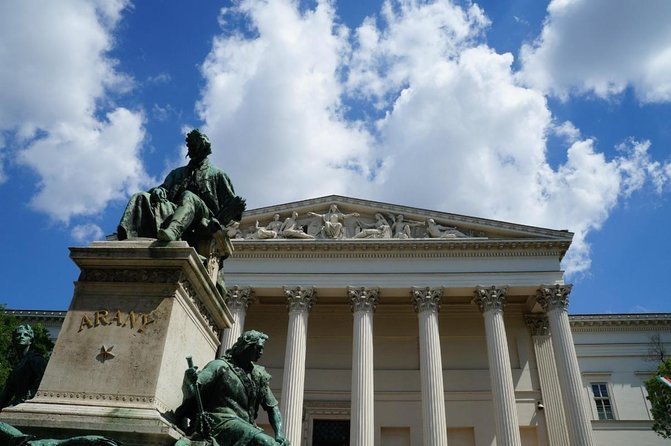
- Kossuth Lajos Square and the parliament area tied to the crackdown after 1956 demonstrations
- Margaret Bridge area including the Communist government HQ nickname The White House
- Bem Square student protest scale, plus time at Bambi Eszpresszó, a long-running intellectual hangout
- Sándor Petőfi statue as a living meeting point, with dramatic 1956 context involving actor Sinkovits Imre
- Radio Budapest fight zone where revolutionaries pleaded for help beyond Hungary
- Corvin Cinema and Corvin köz, focused on resistance tactics against Soviet tanks
Why this tour hits harder than a museum stop
You can read about the 1956 Hungarian Revolution, but Budapest has a way of making it stick. On this tour, you move through places where politics stopped being theory and turned into street-level stakes. The guide’s job is to turn stone, statues, and street corners into a timeline you can actually feel.
What makes this experience especially worth your time is the mix of big political landmarks and human-scale stories. You’ll hear about leaders, protests, and what it meant to live under Communist rule before and after 1956. The best versions of this tour also connect the seeds of resistance to earlier Hungarian political struggles, then carry the story forward to later change, including the fall of communism in 1990. That broader thread helps you avoid the common trap of treating 1956 like a one-off explosion.
Practical note: the tour is offered in English and lasts about 3 hours. You’ll meet your guide by hotel pickup anywhere in Budapest or from a central meeting point you agree on. It is private, so it is only your group, up to 5 people, which is great if you want questions answered without listening over other voices.
Setting off from Kossuth Lajos Square, where demonstrations turned deadly
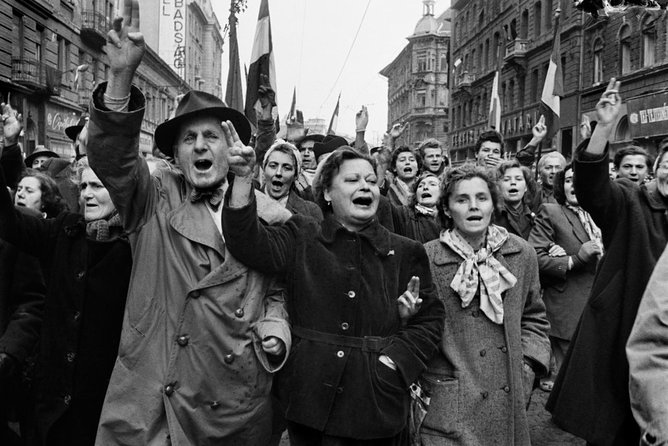
Your first stop is Kossuth Lajos Square, with the Hungarian parliament as the visual anchor. This square matters because it became the stage for a mass demonstration in 1956, after which dozens were massacred by the government. Standing in the area, you can see why symbols matter in political conflict: the seat of power is right there, and so is the public that tried to push back.
What I like about starting here is that it gives you a clear baseline. Even if you already know the headline story, the square helps you understand how fast things can go from protest to violence when the state decides to crush dissent. Your guide can also point out other notable buildings around the square, so the time feels more like orientation plus context than a single stop photo-op.
Since the stop is listed as free of admission, you are not spending time or money just to stand and listen. You get about 25 minutes, so you will likely leave with a sharp picture of what the crackdown represented, and how it framed everything that followed.
More of the socialist decades, told on foot
- Budapest: Communist History Tour with House of Terror Option
★ 4.8 · 182 reviews - Communism in Hungary with a Historian
★ 5.0 · 70 reviews - Budapest: 3-Hour Walking Tour About Communism (Small Group)
★ 4.7 · 70 reviews - Lives of Hungarians Under Communist and Capitalist system
★ 5.0 · 59 reviews
Margaret Bridge and The White House: power on the Danube
Next you head toward the Danube near Margaret Bridge, an area that feels calm until your guide fills in the history. In Communist times, a nearby building was nicknamed The White House, and it served as the Party HQ of the Hungarian communist government. That detail does a lot of work: it tells you this was not abstract ideology. Decisions and control were housed in a specific place, close enough to the center of public life that people could feel its proximity.
You also visit the statue of Imre Nagy, who was prime minister in 1956 and was later murdered. The statue is not just art here. It is a memorial to political fate, and your guide can help you connect why Nagy became both a symbol and a target.
This is a great stop for two reasons. First, it forces you to grapple with how leadership can matter, even when the outcome is brutal. Second, Margaret Bridge gives you a breather visually, so when the tour turns to protest sites and resistance, you have fresh context in your head.
Expect it to be quick, about 20 minutes, with a clear history focus. If you tend to zone out when walking between points, this is one of the best stops to stay alert, because the guide’s narrative makes the buildings around you feel like evidence.
Bem Square’s student protest, plus Bambi Eszpresszó’s lasting mood
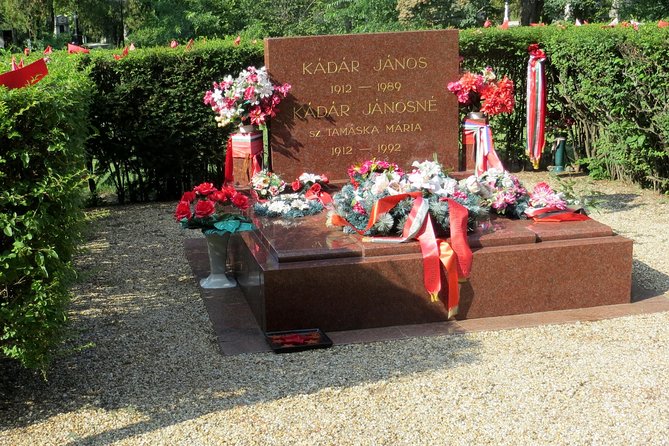
Bem Square is where you get scale. In 1956, 200,000 Hungarian students protested against Soviet rule there, and the rally had an origin in support for Polish workers. Your guide can explain how this was not only a Hungarian story. It was part of a wider pattern of solidarity and pressure across the region, which helps you understand why the Soviet response felt like an all-or-nothing threat.
This stop is timed around 30 minutes, which is just long enough to grasp the emotional weight without rushing. The square also gives you a chance to see how public spaces become political stages. Students in particular matter here, because they represent a kind of youthful urgency, the sense that history can change by collective action.
Then you add a very human counterpoint: Bambi Eszpresszó, a long-running café in Frankel Leó utca that has operated since the 1960s. It is described as a shelter for Buda-side intellectuals, and it has maintained the same atmosphere and interior design. That matters because it keeps the tour from turning into only tragedy and politics. Even in the same neighborhoods shaped by 1956, you can still experience daily life and social spaces that endured.
If you want a tour that includes more than grim monuments, this combination is one of the strongest reasons to book.
Sándor Petőfi statue: a meeting point where words can become trouble
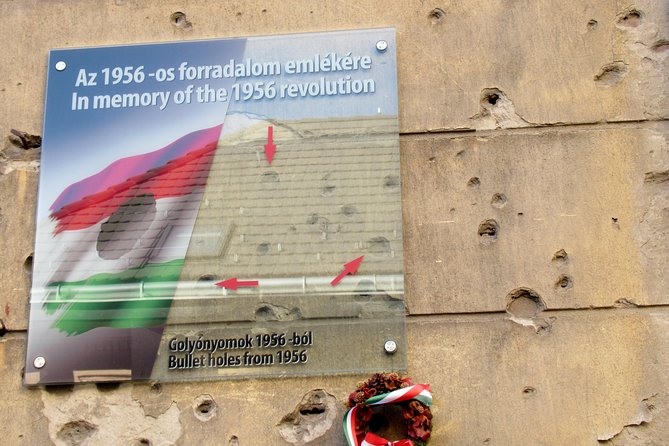
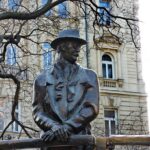
At the Sándor Petőfi statue, you move from protests to symbolism. Petőfi was a key figure in the 1948 revolution, and here he represents struggle against government. That is why the statue is still described as a meeting point for political events and protesters today.
What makes this stop especially vivid is the 1956 story tied to the actor Sinkovits Imre. In 1956, he recited words associated with Petőfi that incited revolution. After that, he was arrested and imprisoned. This turns a statue into a scene, and it shows how cultural figures and public performance could carry political risk.
The time here is about 15 minutes. That is short, but the content is dense, so keep your attention on what the guide emphasizes. If you like stories where art and politics collide, this is a good moment to ask questions. You will likely get answers that connect Petőfi’s revolutionary legacy to what people were trying to do in 1956.
Radio Budapest: the fight zone and the plea for international help
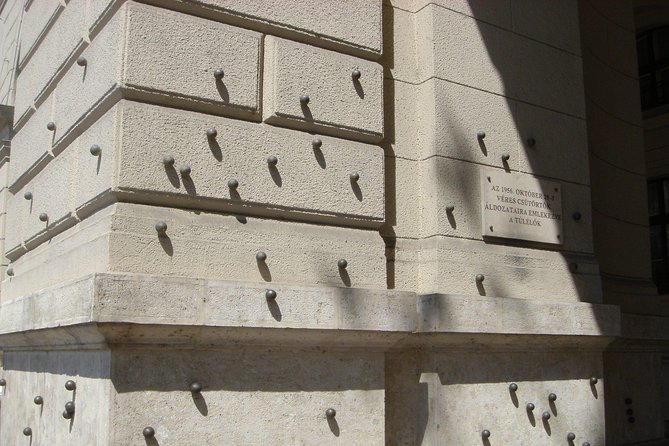
The next stop is along tiny, one-way Sándor Bródy Street, at the Budapest Magyar Rádió building, also known as Radio Budapest. This area is described as somewhat secluded from the city’s more busy thoroughfares, which helps you get the feel that this was a place of urgency, tucked into the city rather than staged for tourists.
Here is the historical core: in 1956, this radio building was an epicenter of fighting, and from there revolutionaries begged for help from the world at large. That sentence changes how you think about media in revolutions. A radio station is not just entertainment. It is a megaphone, a way to claim the narrative, and potentially a lifeline if other countries listen.
This stop clocks around 20 minutes. It is also described as free of admission, which is nice because you get the value of a key site without paying extra. Since it is an area that may feel quieter when you arrive, it helps if you let the guide set the scene first. Then look around at the building and street layout with those events in mind.
If you are the type who enjoys hearing how everyday infrastructure can become strategic during conflict, you will probably remember this stop the longest.
Private guides we booked in Budapest
Corvin Cinema and Corvin köz: resistance with homemade weapons
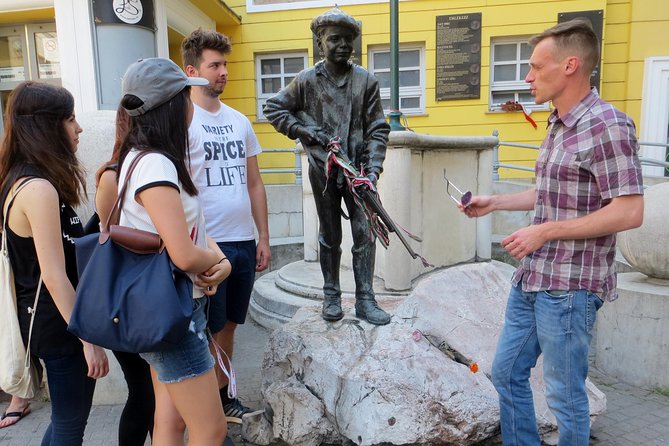
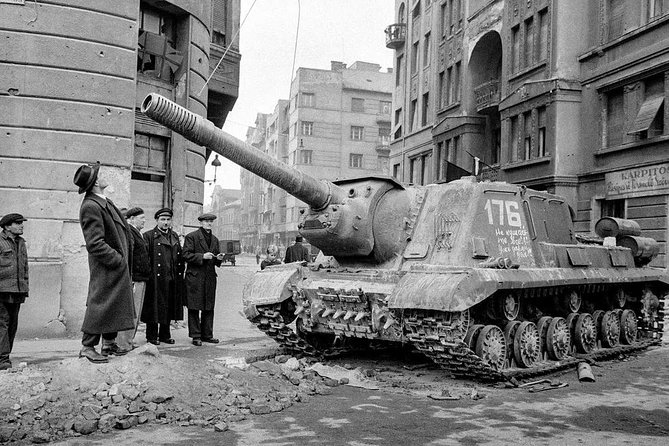
Finally, you reach Corvin Cinema and Corvin köz, described as the major resistance center. In 1956, local youngsters fought invading Russians with Molotov cocktails and with guns stolen from soldiers to fight Soviet tanks. That is the kind of detail that makes history feel real. You can picture young people improvising, not waiting for official permission or ideal conditions.
This is a 30-minute stop, which makes sense because you need time to understand not only the fighting but also the aftermath. Your guide talks through the invasion of 1956 and what followed, which helps you avoid the oversimplified version where the story ends at the first showdown.
Since the stop is free of admission, the main investment is your attention. Corvin köz is also a good capstone because the tour ends with agency and resistance rather than only crackdown and punishment. You leave with a clearer sense of how people tried to protect each other and push back, even when the odds were brutal.
Price and logistics, and whether it is worth it
The price is $228.66 per group for up to 5 people, for an experience lasting about 3 hours. That means your value depends on your group size.
- If you are traveling as two or three people, the per-person cost is higher, but you get privacy, pickup, and a guide who can tailor pace and questions.
- If you can go with up to five, the math improves fast, and it becomes a very good deal for a focused political-historical walk across multiple major sites.
There are a few cost-related practical points to know. Food and drinks are not included, and public transportation tickets or a pass are not included either. The good news is that the tour is near public transportation, and the route likely uses some transit links between neighborhoods, since the stops are spread out. Also, the tour includes handouts and a communism-related souvenir, so you do not leave empty-handed.
This is also a mobile ticket tour and your confirmation is received at booking. Service animals are allowed, and the tour notes a moderate physical fitness level, which usually fits comfortable walking with pauses.
What makes the guide matter on this subject
A 1956-themed tour lives or dies by the guide. The strongest versions of this experience tend to include personal insight, clear explanations, and the ability to slow down when needed.
Guides with deep knowledge of Budapest can connect dates into cause and effect. Names you may hear in different groups include Peter and Miklos. In one example, Miklos is described as living through the Communist era, and in another, Peter is described as having a library of Budapest history in his mind and making it easy to understand while still giving in-depth coverage. Both styles help you process the information instead of just collecting facts.
You might also experience small variations in what the guide emphasizes. For instance, some guides take time to include additional context such as a cemetery where victims were buried, or other memorial spaces tied to 1956. That is not guaranteed from the basics, but it is a signal of how flexible and human these tours can be, depending on your guide and your interests.
A balanced take: pacing is the main trade-off
This is not a slow, museum-by-museum experience. The revolution is massive, and Budapest contains a lot of related sites. At about 3 hours, you are going to move, listen, and absorb without fully exhausting any one location.
That is fine if you want a first serious pass with strong context. It is less ideal if you already studied the Revolution closely and are expecting a deep, exhaustive tour of every key site. One concern you should take seriously before booking is that the route may feel slightly general or fast if you planned on spending a lot of time on the core 1956 events at maximum depth. If that is your situation, consider pairing this with a follow-up activity later, maybe a second walk in one neighborhood, or reading a focused book on the uprising before you go.
Who should book this tour
I think this tour fits best if you:
- enjoy 20th-century European history and want the story tied to real city locations
- like guides who use names, places, and personal context to explain what life felt like before and after 1956
- want a private group experience, so you can ask questions without feeling rushed by others
- are comfortable with moderate walking and a route that may include public transportation links
It may not be the right choice if you:
- want an ultra-deep, point-by-point study of the 1956 Revolution alone
- prefer to spend long stretches at a single site without moving on
- are traveling with accessibility needs beyond a moderate walking plan (the tour does specify moderate fitness, but details are limited)
Should you book Rise Against the Soviet: The 1956 Revolution?
If your goal is to understand what happened in 1956 through the places where it played out, I would book it. You get a tight, well-chosen set of stops, plus handouts and a souvenir, and the private format makes it easier to match the guide’s pace to your group.
Use one piece of advice to decide: be honest about your expectations for depth. If you want a strong, memorable introduction that connects the political machinery, the protests, and the human cost, this tour is built for you. If you want to treat 1956 like a full academic unit, you may want to add extra time elsewhere.
Bottom line, the sites here are specific, the stories are grounded in real moments, and the guide is the difference between reading history and actually understanding it.
FAQ
How long is the tour?
The tour lasts about 3 hours.
Is the tour private?
Yes. It is a private tour/activity, and only your group participates.
What is the group size limit?
The tour price is per group, for up to 5 people.
Do I need to buy admission tickets at the stops?
Admission tickets are listed as free at the stops included in the route.
Is pickup available?
Yes. Pickup is offered, and you can meet the guide at your hotel or at a central point agreed with the provider.
Is the tour offered in English?
Yes. The tour is offered in English.
What is included in the price?
Handouts are included, along with a communism-related souvenir.
Are public transportation tickets included?
No. Public transportation tickets or a pass are not included.
Is the tour suitable for people with moderate mobility needs?
The tour notes a moderate physical fitness level.
More Tours in Budapest


More Tour Reviews in Budapest


More From the Socialist Years


Reviewed recently around Budapest
- Audio visual multi-sensory chefs journey dinner experience★ 5.0 · 3 reviews
- Tapolca Cave Lake and Tihany/ Balaton private tour from Budapest★ 4.5 · 3 reviews
- SzentEndre-SaintAndrew City Privately Shopping and Picturesque★ 4.5 · 3 reviews
- Sightseeing flight over Budapest★ 5.0 · 3 reviews
- Self Guided Tour In Budapest With 100 Captivating Audio Stories★ 5.0 · 3 reviews
- Private Danube Bend Visegrad and Szentendre Tour With Transport★ 5.0 · 3 reviews
Communist Era and Cold War Tours, compared.
 ★ 4.8Communist History Tour with House of Terror OptionFrom $58182 reviews
 ★ 5.0Communism in Hungary with a HistorianFrom $5970 reviews
 ★ 4.73-Hour Walking Tour About Communism (Small Group)From $5770 reviews
 ★ 4.5Budapest Hammer & Sickle Communist Times TourFrom $7968 reviews
 ★ 5.0Lives of Hungarians Under Communist and Capitalist systemFrom $459 reviews
 ★ 5.0Guided Tour with Admission in Memento ParkFrom $3048 reviews
 ★ 4.5Memento Park TicketFrom $1046 reviews
 ★ 5.0Memento Park Visit with Private Trabant TransferFrom $30544 reviews
Browse the lists this tour appears in