
Review · COMMUNIST ERA AND COLD WAR TOURS
Budapest: Hammer & Sickle Communism Walking Tour
Communism in Budapest feels close up. This 2.5 hour Hammer & Sickle walking tour ties together everyday details, big turning points, and the exact streets where the story played out, with stops like Liberty Square and the Hungarian Parliament area.
I love how the guide keeps the focus on day to day life, down to Trabant cars and what people did at work. I also love the way the 1956 Revolution material is handled, with a dedicated exhibition stop that gives you context before you hit the street monuments.
One consideration: you will be on your feet for about 2 hours of continuous walking, and the tour is not a good match if you have mobility limits or need a slow pace.
In This Review
- Key highlights worth your time
- Starting where Budapest and the Iron Curtain meet
- What you learn about everyday life under communism
- The 1956 revolution exhibition, and why it changes the walk
- Liberty Square and the Soviet Memorial stop
- Parliament area walking, where symbolism meets politics
- The Trabant and work-life details that make it believable
- Price and value: is $72 worth it?
- Walking time, comfort, and when to choose a different day
- Who should book this tour, and who should skip it
- Quick guide for making the most of your 2.5 hours
- Should you book the Hammer & Sickle Communism Walking Tour?
- FAQ
- How long is the Hammer & Sickle Communism Walking Tour?
- Is there a lot of walking?
- Where is the meeting point?
- What language is the tour in?
- What refreshments are included?
- Is pickup included?
- What is the age recommendation?
- Is the tour suitable for mobility impairments?
- What should I bring?
- Can I cancel for a refund?
Key highlights worth your time
- Meet at Deak Ferenc ter at the Lutheran Church steps, a dead easy downtown starting point
- Everyday communism stories like passport hassles, school life, and work routines
- A focused 1956 revolution exhibition stop that anchors the whole walk
- Liberty Square Soviet Memorial stop, tied to the end of an era
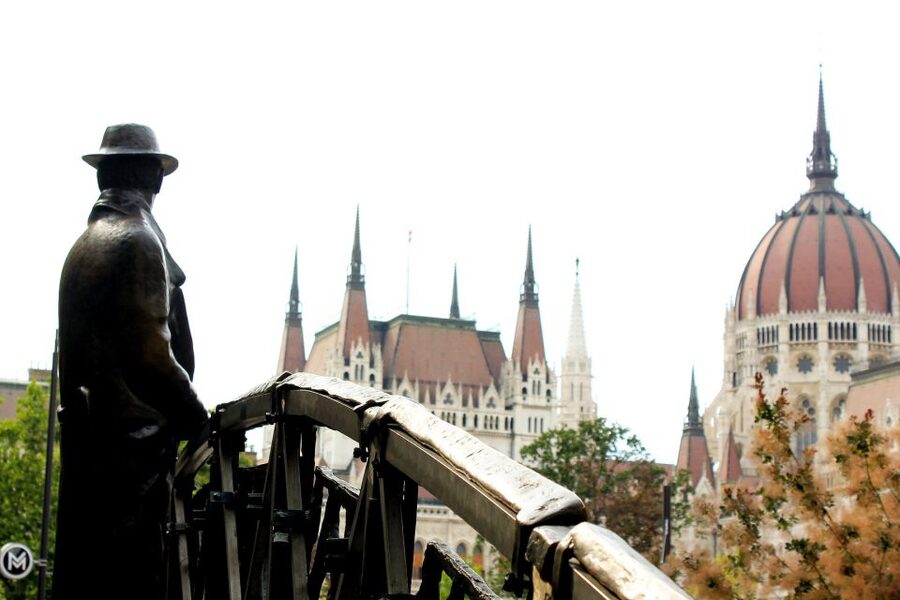
- Parliament and nearby streets where history and politics overlap in real space
- Professional guide energy, with multiple mentions of guides who stay prepared and engaging
Starting where Budapest and the Iron Curtain meet
Budapest’s downtown is compact, which is great for a walking tour like this. You meet at 1052 Budapest, Deak Ferenc ter 4, in front of the Lutheran Church, pale yellow, on the church steps. If you use transit, this is also the kind of place where you can find your bearings fast, before you even think about heading off into the side streets.
From there, the tour aims to do something smart. It doesn’t treat communism like a distant museum topic. It treats it like something people had to manage day after day. That matters because you are not just looking at the architecture. You are learning how citizens negotiated daily life under pressure.
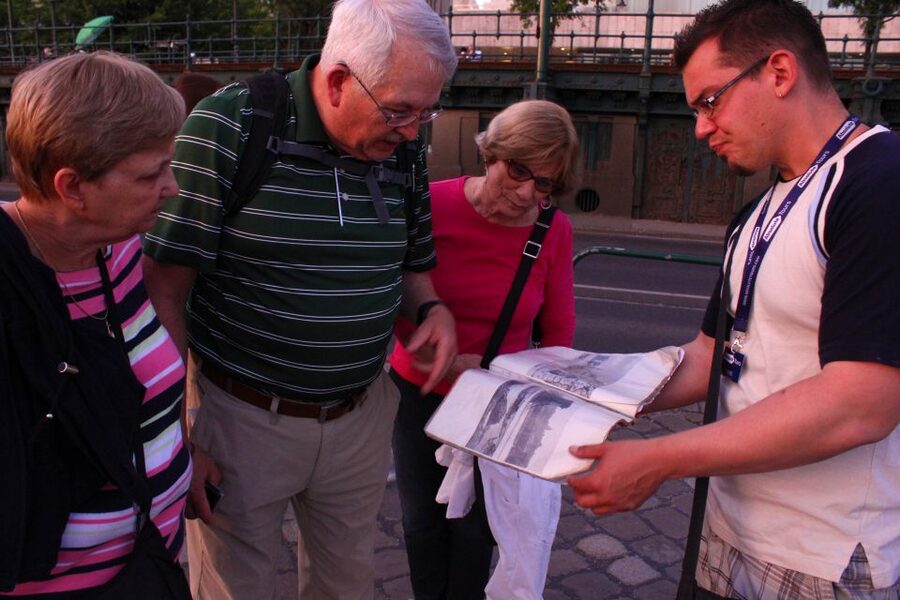
The tour runs in English and is led by a licensed guide. It also works as a small group or private option, which usually means you can ask questions when something clicks for you, like how passports were handled or what school felt like when the state set the rules.
What you learn about everyday life under communism
The heart of the experience is the everyday layer. This is where the tour feels most real, because it moves beyond slogans and timelines and talks about what regular people actually dealt with.
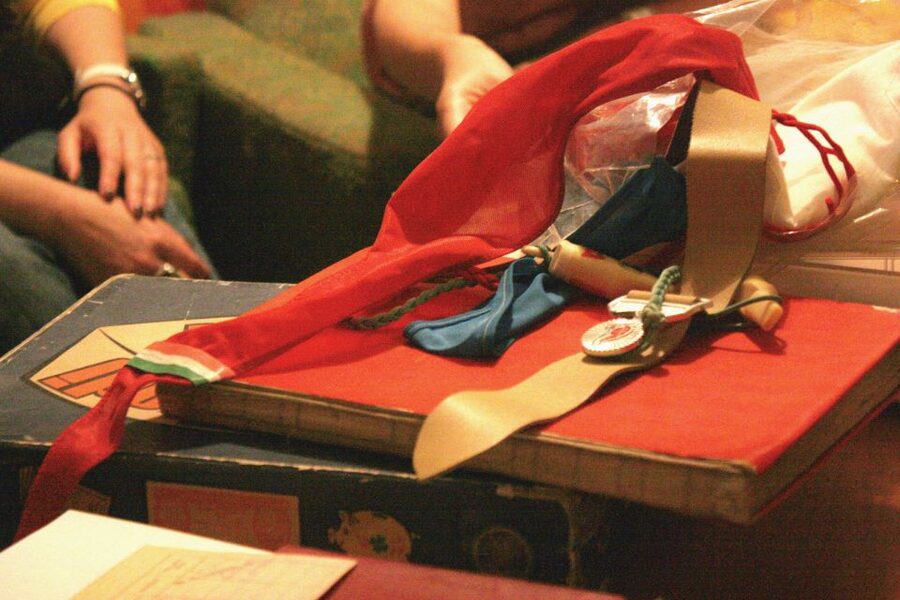
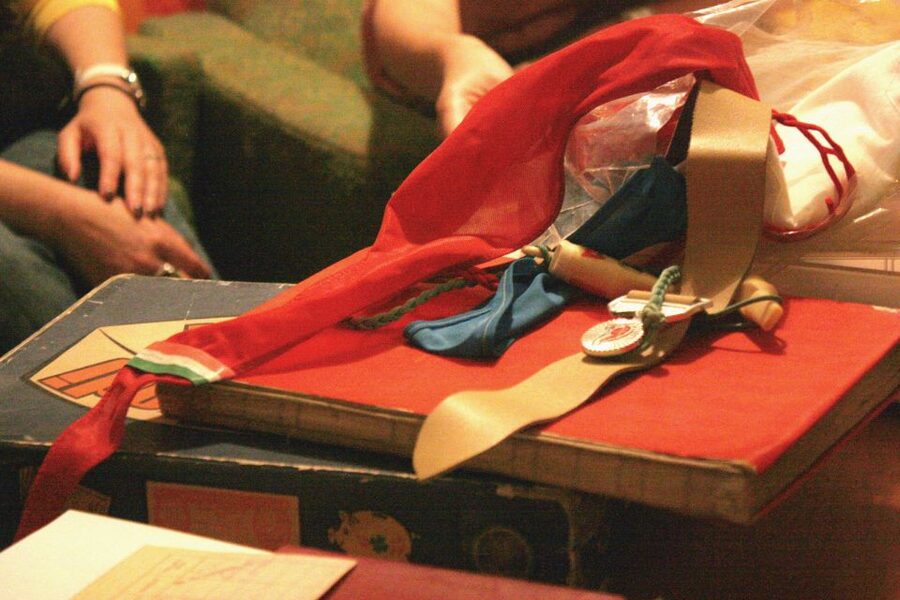
You’ll hear about life behind the Iron Curtain over the decades of communist rule, including how people got around in practical terms, what they drank at work, and how Trabant cars showed up in daily routines. That is the kind of detail that makes the era stick in your mind, because it is concrete. You can picture it. You can understand why it would shape people’s choices, habits, and even conversations.
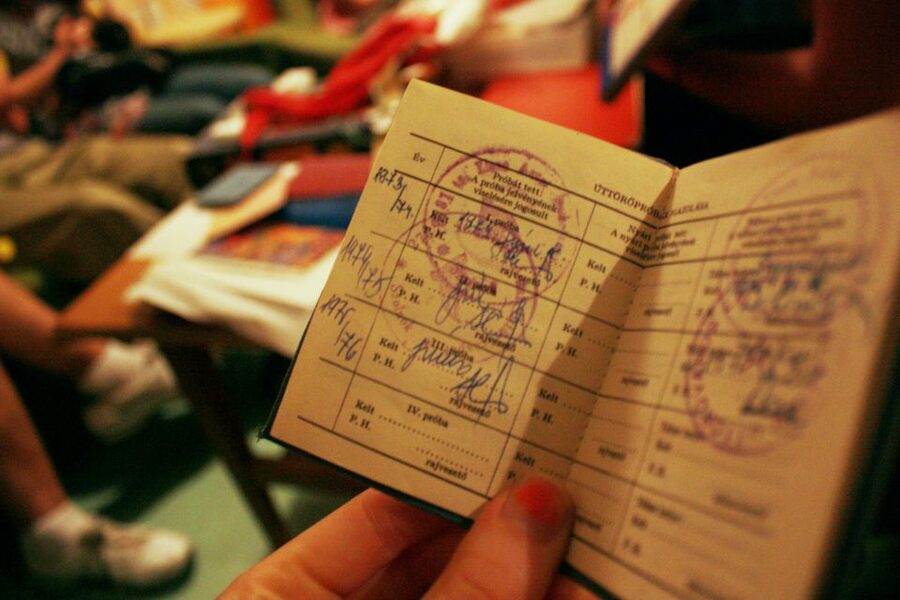
The guide also connects the dots to systems that touched everything. You will learn about how residents negotiated things like getting a passport and what school life was like. Even if you know the broad history already, this part gives you the texture you don’t get from a quick read.
And here is the value for you: when you understand the daily mechanics, you can look at the monuments and political symbolism with better eyes. Liberty Square and Parliament stop being just big landmarks. They become checkpoints in a story about control, resistance, and eventual change.
More of the socialist decades, told on foot
- Budapest: Communist History Tour with House of Terror Option
★ 4.8 · 182 reviews - Communism in Hungary with a Historian
★ 5.0 · 70 reviews - Budapest: 3-Hour Walking Tour About Communism (Small Group)
★ 4.7 · 70 reviews - Lives of Hungarians Under Communist and Capitalist system
★ 5.0 · 59 reviews
The 1956 revolution exhibition, and why it changes the walk
Every city has a famous revolution story. Budapest has 1956, and this tour treats it as more than a headline.
You visit an exhibition about the 1956 revolution. The goal is to give you a clear frame for what you are about to hear, and what you will later see in the public squares. The walk also includes discussion of the first protests, the fight back against an unethical regime, and the moment when ordinary people started refusing to stay quiet.
A smaller exhibition stop adds to this, tied to commemorations connected to the events of that period. The tour’s approach is to connect those threads to what happened around the streets you walk through. So the story is not just dates on a wall. It is a sequence of actions, choices, and consequences.
For me, the best part of this section is how it turns attention into context. When you reach the Soviet-era symbolism later, you will understand why it was placed where it was and why it matters now.
Liberty Square and the Soviet Memorial stop

Liberty Square is one of those places where your brain automatically tries to interpret the politics in the stone. That is normal. What this tour does is help you do that with less guesswork.
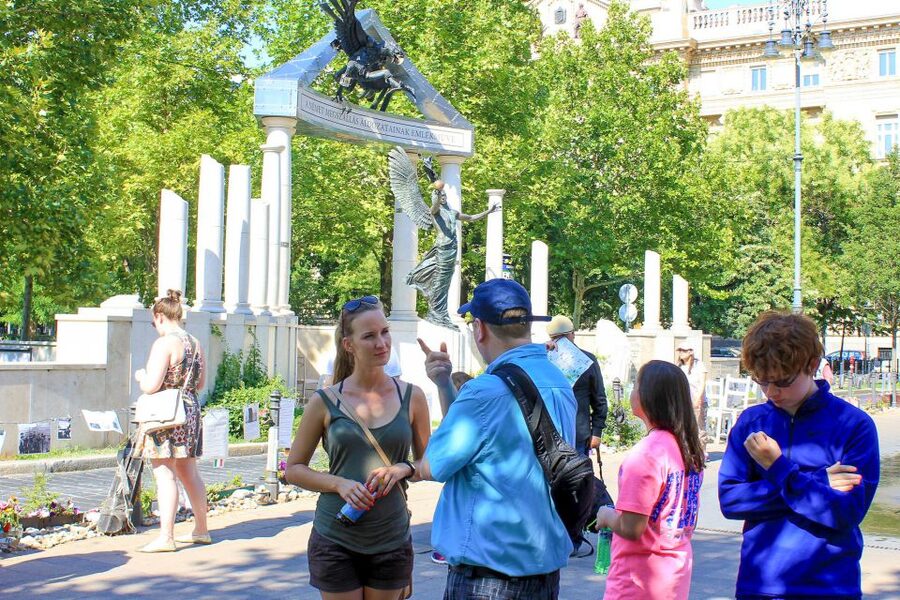
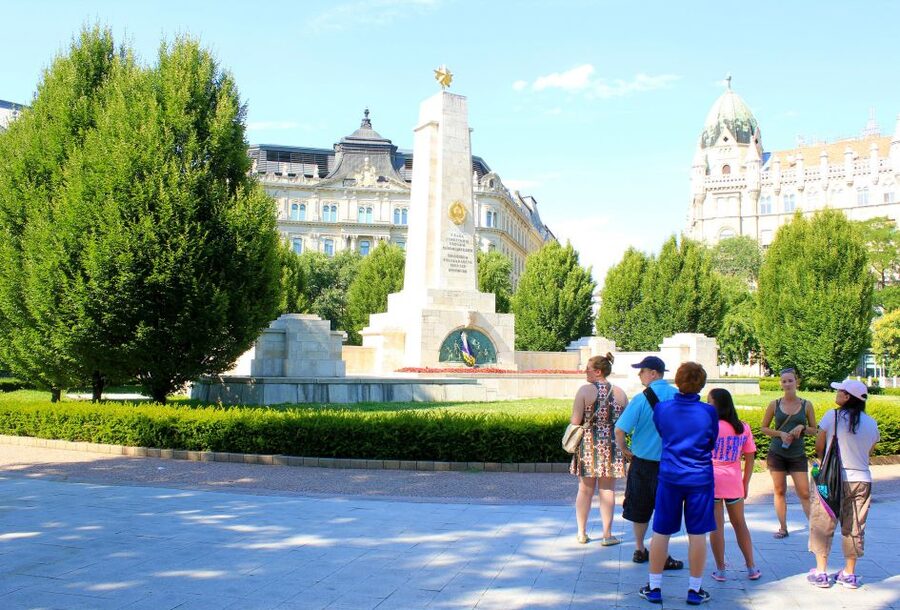
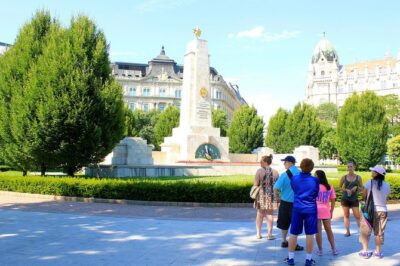
You walk to Liberty Square and the Soviet Memorial, including the reference point of the last Soviet monument. This isn’t presented as a scary history scare tactic. It is presented as a visible reminder of how Soviet influence shaped public life and public space.
The guide ties this stop to the broader narrative, including what resistance looked like early on and how the city’s identity shifted as the communist era weakened. As you stand in the square, you’re not just reading the scene. You’re seeing it as part of a timeline.
Practical tip: bring your weather plan. Liberty Square is open space, so on windy or rainy days it can feel harsher than the sheltered streets around it. Dress for the outdoors, even if your starting point looks indoors-friendly.
Parliament area walking, where symbolism meets politics

After Liberty Square, the walk continues through downtown streets of Pest where the action happened. This is the stretch where you shift from monument viewing to street reading.
You end up walking toward the Parliament area and the square linked with it. Even without technical explanations, you can feel the difference in tone when you reach the political center. The scale and the official architecture make the communist-era themes easier to grasp. You can contrast the idea of a state with the reality of citizens trying to live their lives anyway.
The tour’s framing helps here. Instead of treating Parliament as a generic landmark, it becomes a point in the story of how political power was contested and reshaped. If you are the type who likes to understand what a place meant at the time, you’ll get a lot out of this section.
Also, since this is part of a 2.5 hour walk, pacing matters. Expect the guide to keep you moving while still allowing short stops for stories, explanations, and questions. The focus stays on meaning, not on long detours.
The Trabant and work-life details that make it believable
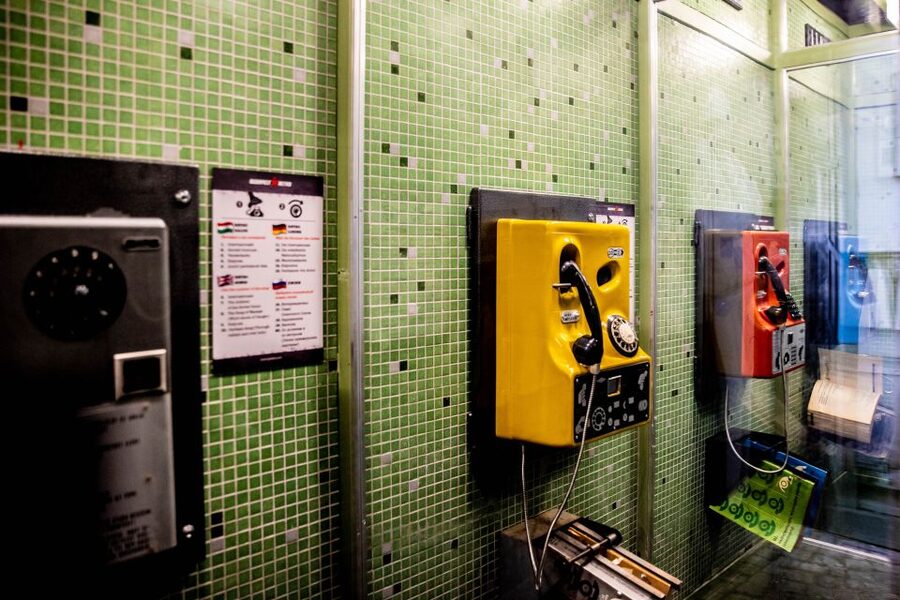
One reason this tour can land so well is that it doesn’t only talk about big events. It makes communist life feel usable, like it existed in people’s mornings and evenings.
You’ll hear about Trabant cars, including how they factored into everyday mobility and the feel of life under the system. You’ll also hear about spirits and drinking at work, which is the kind of detail that surprises people at first. It also makes sense in context, because social habits often reflect workplace culture and what people were allowed to say and do.
You may also get a refreshment break along the way, with options like coffee, tea, or a soft drink. In addition, one of the most positive notes tied the coffee break to a traditional Hungarian sweet connected to a Trabant moment. Even if your specific break feels simple, the interruption is useful. It gives you a reset so the history doesn’t run together.
And that is the main win here. When you can connect a story to a physical object, like a Trabant, the entire era stops feeling abstract.
Other Budapest walks at a similar pace

Price and value: is $72 worth it?
At $72 per person for 2.5 hours, this tour sits in the mid-range for guided experiences in Budapest. The value comes less from the sightseeing checklist and more from the guide-led storytelling that connects daily life to major events.
Here’s what you get for your money:
- A licensed expert guide in English
- Refreshment, like coffee, tea, or soft drink
- A walk that ties together everyday communism, the 1956 revolution, and major public squares
What you do not get:
- Pickup and drop-off
- Food beyond the included refreshment
- Any required gratuity, though tipping is optional
So the question is not just cost. It is whether you want interpretation. If you enjoy history but get bored by lecture-only tours, this one is built to keep you watching the city while learning the context. On the other hand, if you already know a lot of Hungarian communist history and you want only monuments, you might feel the price more sharply.
Walking time, comfort, and when to choose a different day
Two hours of continuous walking is the key detail to respect. The tour is designed for people who can keep a steady pace and focus while moving. You’ll be in small streets around downtown Pest, and that means uneven sidewalks and frequent turns.
Wear comfortable shoes and clothes for the weather. The tour operates in all conditions, so plan for rain or chill rather than hoping the day cooperates.
It is also not recommended for children under 14, and it is not suitable for people with mobility impairments. If you are traveling with teens or adults who can handle history on foot, you’ll likely be fine. If anyone in your group needs frequent rest stops, this may feel like too much.
Who should book this tour, and who should skip it
This is a strong pick if you want a Budapest walk that does more than point. You’ll enjoy it if you:
- Like history explained through daily life, not just political slogans
- Want the 1956 revolution framed before visiting Soviet-era symbolism
- Enjoy guides who can keep the story conversational and relevant as you move
- Prefer learning by walking through real neighborhoods
It may be a weaker fit if you:
- Want a low-walking, sit-everywhere tour
- Are looking for kid-focused content (the official guidance is age 14 and up)
- Have mobility limitations that make long continuous walking hard to manage
If you are visiting for a short time, this tour works as a useful anchor. It gives you the background you can carry into other sights, especially those connected to government, resistance, and the city’s political identity.
Quick guide for making the most of your 2.5 hours
You can boost your enjoyment with a few simple choices:
- Arrive early enough to spot the pale yellow Lutheran Church steps at Deak Ferenc ter 4
- Bring comfortable shoes because the itinerary is built for motion
- Keep an eye on the weather, since the tour runs in all conditions
- Have a few questions ready, especially about passports, school life, and how daily routines were shaped
Also, think about your own curiosity level. If you want to know how ordinary people adapted, you will get a lot here. If you want only the broad story, you can still enjoy it, but you may want extra background reading later to connect it to what you already know.
Should you book the Hammer & Sickle Communism Walking Tour?
My take: if you’re the kind of traveler who likes history with human details, book it. This tour earns its place by connecting everyday life under communism to the exact squares and landmarks where the legacy is still visible. The 1956 exhibition stop is a smart turning point, and Liberty Square plus the Parliament area make the political themes easier to understand without needing to be an expert.
I would skip it only if you know you cannot handle about 2 hours of continuous walking, or if the topic is not what you want right now. And if you already have deep Hungarian communist knowledge, ask yourself whether you still want the guide interpretation and street context, or whether you should spend your time on other sights.
If you decide to go, wear real shoes, show up on time at the church steps, and lean into the guide’s stories. You’ll finish with a clearer picture of what life was like, not just what happened.
FAQ
How long is the Hammer & Sickle Communism Walking Tour?
The tour lasts 2.5 hours.
Is there a lot of walking?
Yes. The tour includes 2 hours of continuous walking.
Where is the meeting point?
Meet at 1052 Budapest, Deak Ferenc ter 4, in front of the Lutheran Church (pale yellow), on the church steps.
What language is the tour in?
The tour is offered in English with a live guide.
What refreshments are included?
Refreshments are included, such as coffee, tea, or a soft drink.
Is pickup included?
Pickup is not included, but it is optional if you provide pick up details for centrally located accommodations when booking.
What is the age recommendation?
The tour is not recommended for children under 14.
Is the tour suitable for mobility impairments?
No. It is not suitable for people with mobility impairments.
What should I bring?
Bring comfortable shoes, comfortable clothes, and weather-appropriate clothing.
Can I cancel for a refund?
You can cancel up to 24 hours in advance for a full refund.
More Tours in Budapest




More Tour Reviews in Budapest





More From the Socialist Years




Reviewed recently around Budapest
- Audio visual multi-sensory chefs journey dinner experience★ 5.0 · 3 reviews
- Tapolca Cave Lake and Tihany/ Balaton private tour from Budapest★ 4.5 · 3 reviews
- SzentEndre-SaintAndrew City Privately Shopping and Picturesque★ 4.5 · 3 reviews
- Sightseeing flight over Budapest★ 5.0 · 3 reviews
- Self Guided Tour In Budapest With 100 Captivating Audio Stories★ 5.0 · 3 reviews
- Private Danube Bend Visegrad and Szentendre Tour With Transport★ 5.0 · 3 reviews
Communist Era and Cold War Tours, compared.
 ★ 4.8Communist History Tour with House of Terror OptionFrom $58182 reviews
 ★ 5.0Communism in Hungary with a HistorianFrom $5970 reviews
 ★ 4.73-Hour Walking Tour About Communism (Small Group)From $5770 reviews
 ★ 4.5Budapest Hammer & Sickle Communist Times TourFrom $7968 reviews
 ★ 5.0Lives of Hungarians Under Communist and Capitalist systemFrom $459 reviews
 ★ 5.0Guided Tour with Admission in Memento ParkFrom $3048 reviews
 ★ 4.5Memento Park TicketFrom $1046 reviews
 ★ 5.0Memento Park Visit with Private Trabant TransferFrom $30544 reviews
Browse the lists this tour appears in