
Review · COMMUNIST ERA AND COLD WAR TOURS
Communist History Evening Walking Tour of Budapest
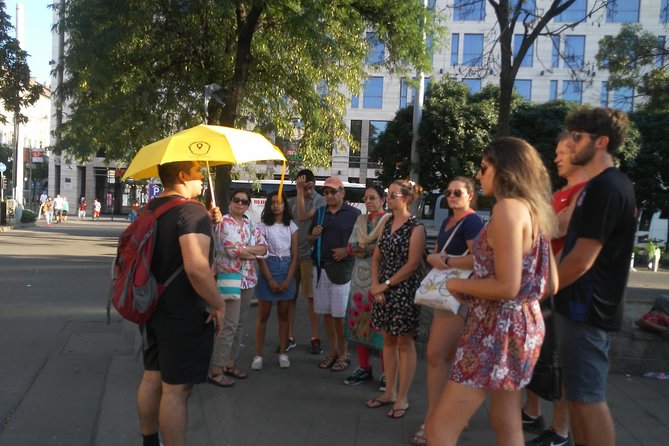
Politics, explained on foot. This is a Communist History walking tour of Budapest that uses the city streets as your textbook, and it works because the group stays small and personal with English-speaking guide Victoria. I also like that it connects big events to what you see today, so you are not just staring at buildings, you are understanding why the past still shapes the present.
The one thing to plan for is the practical side of an evening walk: you need to be comfortable walking about 3 km, and the start area can be busy and a bit noisy.
In This Review
- Key things I’d mark on your map
- A Communist History Evening Walk in Budapest that Actually Explains the City
- From Blaha Lujza tér to Parliament Square: Simple Logistics, Clear End Point
- Andrássy Avenue: Where the Guide Reads Change Off the Streets
- St. Stephen’s Basilica: Religion, Politics, and One Escape Story
- Liberty Square: Stock Exchange Closings and Protests That Turned Violent
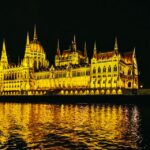
- Hungary’s Parliament Building: 1956 and the Meaning Behind the Facade
- How Victoria Makes the Politics Stick (Small Group, Clear English, Real Stories)
- Pace, Weather, and How Much Walking You Should Expect
- Price and Value: What $36.01 Buys You in Budapest
- Best Fit: Who Should Book This Communist History Walking Tour
- Should You Book It?
- FAQ
- Where does the Communist History Evening Walking Tour of Budapest start and end?
- What time does the tour begin?
- How long is the tour?
- Is the tour offered in English?
- Is bottled water included?
- How much walking is involved?
- FAQ
- Is the tour wheelchair-friendly and are service animals allowed?
- What if the weather is bad?
- How many people are in the group?
- Do I need admission tickets for the stops?
- What is the cancellation rule?
Key things I’d mark on your map
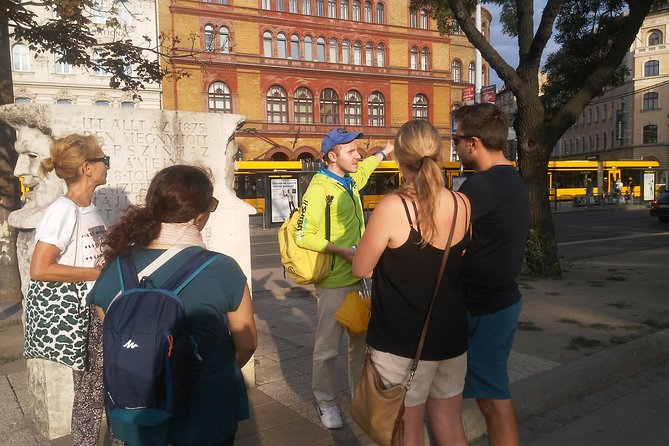
- Andrássy Avenue first impressions: you start by reading how the neighborhood changed, and the guide sets the political context fast
- St. Stephen’s Basilica and religion under communism: the tour ties church life to wider state pressure and personal stories
- Liberty Square context: you connect the square to the Stock Exchange closing at the start of communism and protests that turned violent
- Hungarian Parliament and 1956: you walk away knowing why that building sits at the center of Hungary’s anti-communist memory
- English guide Victoria’s teaching style: clear explanations, lots of detail, and real answers to questions in a small group setting
A Communist History Evening Walk in Budapest that Actually Explains the City
Budapest has layers. This tour helps you put those layers in order, without turning it into a history lecture that loses you after 10 minutes. The format is simple: you walk, you stop, and you learn what each place meant during Hungary’s communist era and how that meaning lingers.
I like that the story is not only about walls and dates. You also get day-to-day perspective on how the regime affected religion and public life, plus why later resistance matters when you look at Budapest today. It is a smart way to see the city because the buildings make more sense once you understand what was at stake.
You can also treat this as a great warm-up for deeper museum time. If the topic grabs you, you might want to pair it with the Museum of Terror, since the subject matter fits naturally after a city walk like this.
From Blaha Lujza tér to Parliament Square: Simple Logistics, Clear End Point
The tour starts at Budapest, Blaha Lujza tér, and it ends at Budapest, Kossuth Lajos tér 1-3 on Parliament Square. That end point is convenient because you finish right by the political heart of the city, with easy transit nearby, including the Kossuth red line metro station or tram 2.
It runs about 2 hours and starts at 6:00 pm. An evening departure is handy if you want to avoid daytime crowds in big landmarks, and it also gives the guide room to connect history with how the city feels now. You will still be walking outdoors, so dress for the weather.
Your ticket is a mobile ticket, and you should receive confirmation at booking time. The group size is capped at 15 travelers, which matters here, because it keeps the pace conversational rather than rushed.
More of the socialist decades, told on foot
- Budapest: Communist History Tour with House of Terror Option
★ 4.8 · 182 reviews - Communism in Hungary with a Historian
★ 5.0 · 70 reviews - Budapest: 3-Hour Walking Tour About Communism (Small Group)
★ 4.7 · 70 reviews - Lives of Hungarians Under Communist and Capitalist system
★ 5.0 · 59 reviews
Andrássy Avenue: Where the Guide Reads Change Off the Streets
Before you reach the big landmark stops, the tour begins down Andrássy Avenue. This is where you get an orientation, and it is a good move because the rest of the evening becomes easier to follow when you know what parts of the city are tied to older symbols and institutions.
The guide explains how areas changed over time and what happened to former monuments. That kind of explanation is more useful than it sounds, because Budapest street scenes can look “normal” even when the political message behind them shifted dramatically.
If you tend to love city walks where the guide gives you something to watch for, this opening will set you up well. You learn where to look, not just where to stand for photos.
St. Stephen’s Basilica: Religion, Politics, and One Escape Story
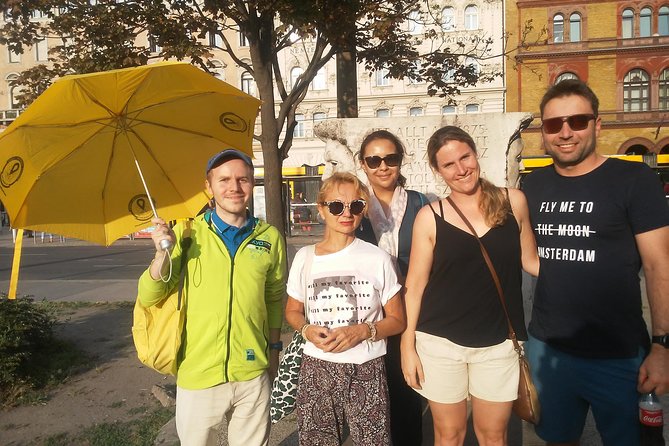
Your first landmark stop is St. Stephen’s Basilica (Szent Istvan Bazilika). Even though it is a stunning church, the focus here is not only architectural. You learn how communism impacted the Hungarian church and religion, and how state power created pressure on religious life.
One of the most interesting parts is a personal connection the guide shares: a famous Hungarian football player who fled the communist system, and was later buried at the church. That is the kind of human detail that turns a political topic into something you can picture.
Also, the stop is listed with free admission, so you are not losing your momentum to ticket lines. You can spend the time listening and looking, then move on before you feel museum-tired.
Liberty Square: Stock Exchange Closings and Protests That Turned Violent
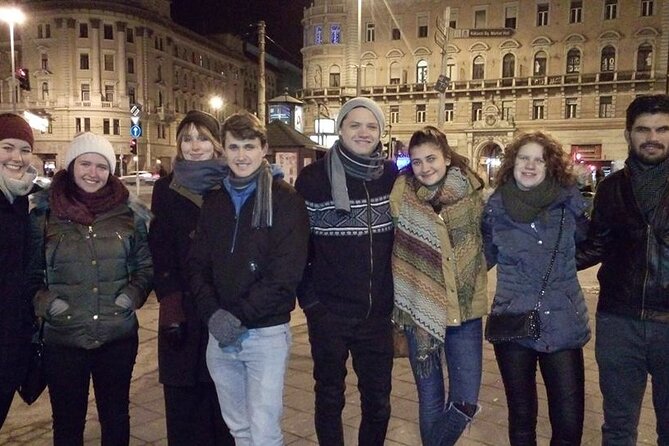
Next up is Liberty Square. This stop is a reminder that political power controls more than speeches and posters. Here, you focus on the fact that the Stock Exchange was located there and closed down at the start of communism, which tells you how tightly the new system reshaped the economy and public institutions.
The square is also tied to protests, including moments described as bloody protests. That matters because it reframes the space: you are not only seeing open public area, you are seeing a site where tension escalated and people paid for resisting.
The time here is about 15 minutes, and that length works well for a walking tour. It gives you enough detail to understand why the square matters, without dragging so long that you lose the storyline.
If you like history that connects to real places where conflict happened, Liberty Square is one of the stronger stops.
Hungary’s Parliament Building: 1956 and the Meaning Behind the Facade
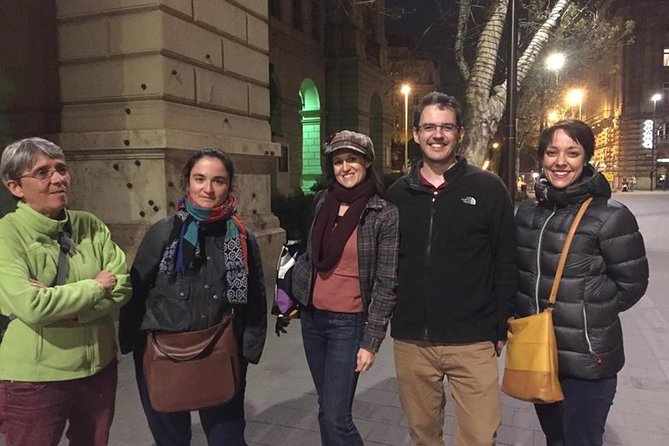
The tour finishes at the Hungarian Parliament Building area, with a stop timed for about 15 minutes. This is one of those locations where the building itself almost forces a serious mood, and the guide uses that to explain what happened here in 1956.
You learn that the 1956 uprising against the ruling Communist party took place in this political setting, with considerable bloodshed. That context changes what you notice when you look at the Parliament complex, because you stop treating it like just a photo spot and start seeing it as part of a long memory of resistance.
It is also a fitting ending location, since you finish on Parliament Square (Kossuth Lajos tér). After two hours of connecting the past to the present, you get to stand at the end point and let it all click.
Other Budapest walks at a similar pace
How Victoria Makes the Politics Stick (Small Group, Clear English, Real Stories)
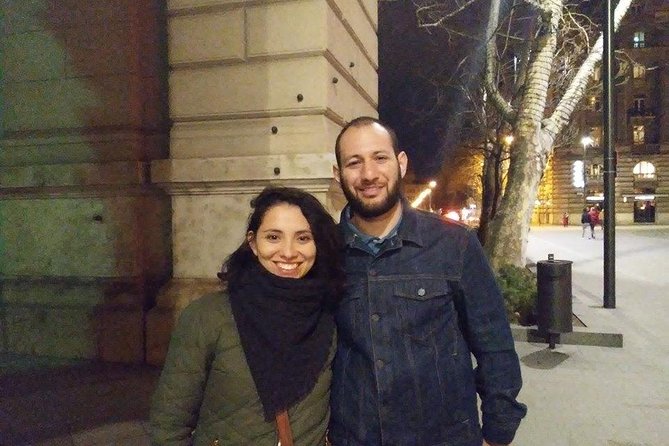
The biggest reason this tour works is the way guide Victoria teaches. From the way people describe her, she is not doing canned talking points. She brings a professor-like depth, with clear speech and strong storytelling.
I also love the tone. The guide mixes detail with an easy delivery style, including a sense of humor, and that keeps you from zoning out when the topic gets heavy. Most importantly, Victoria is able to connect history to present-day life in Budapest, so the communist era does not feel like a sealed chapter.
And because the group is capped at 15 travelers, you get a more personal feel. You are not just listening from the back, you can ask questions and get answers that fit what you actually want to understand.
Pace, Weather, and How Much Walking You Should Expect
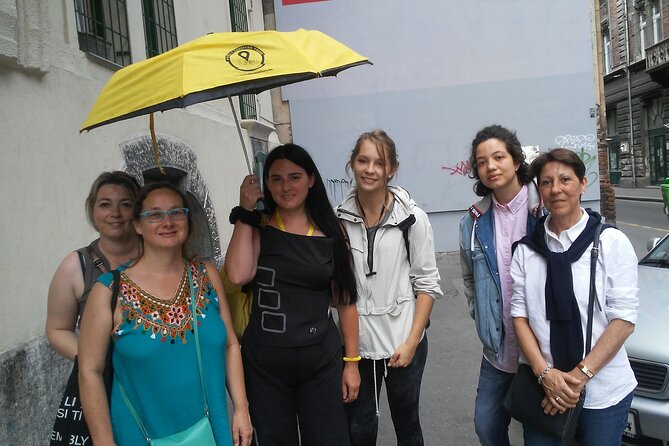
This is a walking tour, not a sit-and-stare history lesson. You need to be able to walk (or wheel) yourself 3 km, and that is the key planning number.
The tour is designed to move at a steady pace with short stops. You are outdoors for the entire experience, so weather matters, and the tour requires good conditions. If the weather turns, the tour can be rescheduled or refunded, which is useful to know when you are planning an evening out.
In real life, the street environment is part of the experience. One small consideration: the meeting spot can be busy, with normal city noise and crowds around it. If you arrive a few minutes early, you will find your group more easily and start with less stress.
Price and Value: What $36.01 Buys You in Budapest
At $36.01 per person for about 2 hours, this sits in the “worth it if you care about the topic” category. You get more than a route, you get a guided interpretation of what you are seeing and why it mattered.
The included bottled water is a small but genuinely helpful touch, especially for an evening walk when you are out longer than you think. Add in the small group size and the fact that it is offered in English, and the price starts to make more sense.
Also, this tour can save you time. Instead of piecing together fragmented context from different sources, you get the connecting thread while you are standing in front of the key locations. That is often better value than spending extra hours wandering with no framework.
Best Fit: Who Should Book This Communist History Walking Tour
This is a great pick if you want history you can feel in the streets. You will likely enjoy it most if you:
- are curious about how communist rule affected Hungarian religion and public life
- like political stories tied to specific buildings and public squares
- want an English guide who can explain clearly and answer questions
- prefer a focused walking format over a full museum day
If you are only looking for casual sightseeing and light background info, this might feel too topic-driven. But if you want real context while you explore central Budapest, it is a strong match.
Should You Book It?
Yes, book it if communist-era Hungary is on your “I want context, not just photos” list. The combination of Victoria’s teaching style, the tight route, and the way the guide connects sites like St. Stephen’s Basilica, Liberty Square, and the Parliament area makes the evening feel purposeful.
If you hate walking at night or you are not comfortable with about 3 km on foot, skip it. Otherwise, this is an effective way to see Budapest with sharper eyes, and it pairs nicely with further stops if the subject keeps pulling you in.
FAQ
Where does the Communist History Evening Walking Tour of Budapest start and end?
It starts at Budapest, Blaha Lujza tér, 1085 Hungary and ends at Budapest, Kossuth Lajos tér 1-3, 1055 Hungary on Parliament Square.
What time does the tour begin?
The tour begins at 6:00 pm.
How long is the tour?
The duration is about 2 hours.
Is the tour offered in English?
Yes, it is offered in English.
Is bottled water included?
Yes. Bottled water is included.
How much walking is involved?
You must be able to walk (or wheel) yourself 3 km.
FAQ
Is the tour wheelchair-friendly and are service animals allowed?
Service animals are allowed. The tour requires participants to be able to walk (or wheel) themselves 3 km, which is the key accessibility requirement listed.
What if the weather is bad?
The experience requires good weather. If it is canceled due to poor weather, you will be offered a different date or a full refund.
How many people are in the group?
The tour has a maximum of 15 travelers.
Do I need admission tickets for the stops?
The listed stops include free admission for St. Stephen’s Basilica and the other highlighted sites.
What is the cancellation rule?
You can cancel for a full refund up to 24 hours before the experience start time. If you cancel less than 24 hours before, the amount paid is not refunded.
More Tours in Budapest


More Tour Reviews in Budapest



More From the Socialist Years



Reviewed recently around Budapest
- Audio visual multi-sensory chefs journey dinner experience★ 5.0 · 3 reviews
- Tapolca Cave Lake and Tihany/ Balaton private tour from Budapest★ 4.5 · 3 reviews
- SzentEndre-SaintAndrew City Privately Shopping and Picturesque★ 4.5 · 3 reviews
- Sightseeing flight over Budapest★ 5.0 · 3 reviews
- Self Guided Tour In Budapest With 100 Captivating Audio Stories★ 5.0 · 3 reviews
- Private Danube Bend Visegrad and Szentendre Tour With Transport★ 5.0 · 3 reviews
Communist Era and Cold War Tours, compared.
 ★ 4.8Communist History Tour with House of Terror OptionFrom $58182 reviews
 ★ 5.0Communism in Hungary with a HistorianFrom $5970 reviews
 ★ 4.73-Hour Walking Tour About Communism (Small Group)From $5770 reviews
 ★ 4.5Budapest Hammer & Sickle Communist Times TourFrom $7968 reviews
 ★ 5.0Lives of Hungarians Under Communist and Capitalist systemFrom $459 reviews
 ★ 5.0Guided Tour with Admission in Memento ParkFrom $3048 reviews
 ★ 4.5Memento Park TicketFrom $1046 reviews
 ★ 5.0Memento Park Visit with Private Trabant TransferFrom $30544 reviews
Browse the lists this tour appears in